
Appropriately, on the eve of St Edmunds Day in November 2024, we paid a visit to St Edmund’s church in Hunstanton in Norfolk (“we” being myself, my wife and our dog).This mid-Victorian church is VERY Anglo-Catholic as can be gathered from the photographs of Figure 1 which show the crucifix in the chancel arch, the baptistry at the west end (with the chapel of Our Lady at Walshingham on the right), and the raised altar in the chancel. I doubt I could ever have managed to get up and down those altar steps safely in a cassock or alb, and certainly now, if I were ever to preside there (which is unlikely in the extreme), I would certainly need a stair rail, and possibly, given the current state of my right knee, a stair lift*. That being said, it is an impressive church interior.
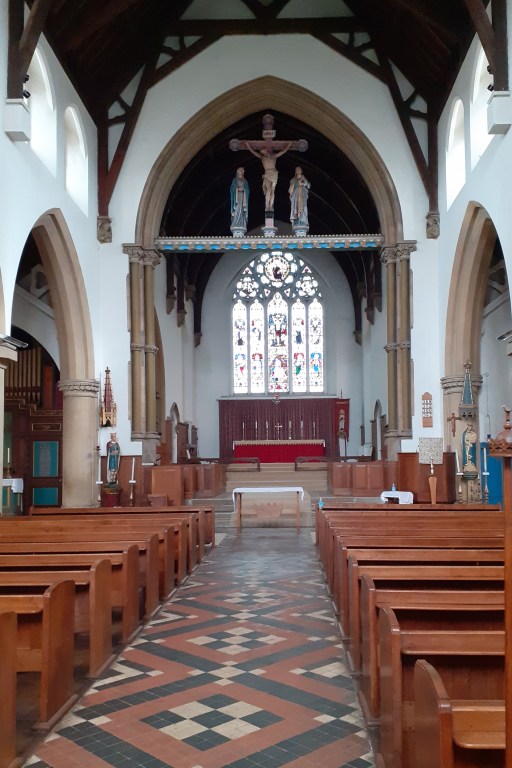

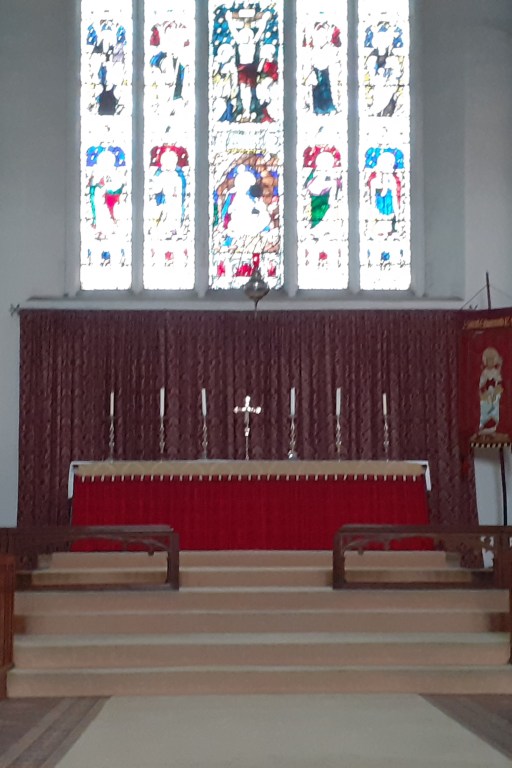
Figure 1. The interior of St. Edmund’s
Now whilst there are some fairly conventional depictions of biblical events and saints in the windows in the church, those that I found of most interest are the series of windows that depict the life and death (and afterlife) of King Edmund. In reality, very little is known about him other than the entry in the Anglo Saxon Chronicle of 870.
In this year the raiding army rode across Mercia into East Anglia and took up winter quarters at Thetford. That winter King Edmund fought against them, and the Danes had the victory and killed the king and conquered all the land.
However, a much more fulsome legend of his life soon appeared. and the events of this legend are related in the windows that are shown below in Figure 2. The perspective of some of these is a little odd, largely because I was trying to avoid the above-mentioned dog and his lead whilst taking the photographs. The windows show Edmund’s landing from Saxony at Hunstanton; his coronation; Edmund reading from the psalms, showing hospitality and assisting at mass (illustrating his devotion and humility); Edmund in Winchester (not sure why); his martyrdom at the hands of the Viking Great Army (but not his later beheading); his welcome into heaven and being brought before God by the East Anglian saints Humbert, Felix, and Lady Julian of Norwich; and his shrine at Bury St Edmunds. There is a lot of detail in the windows that reward close scrutiny,

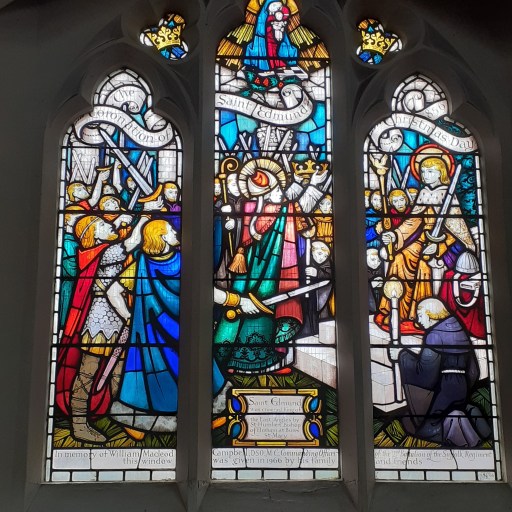


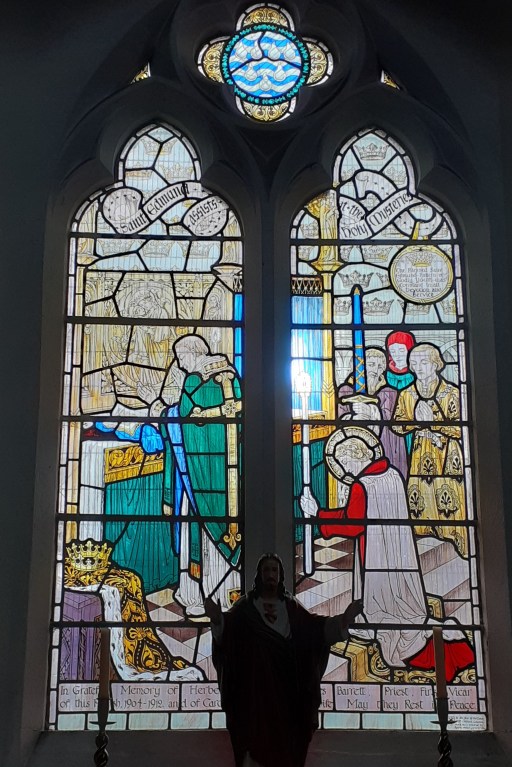
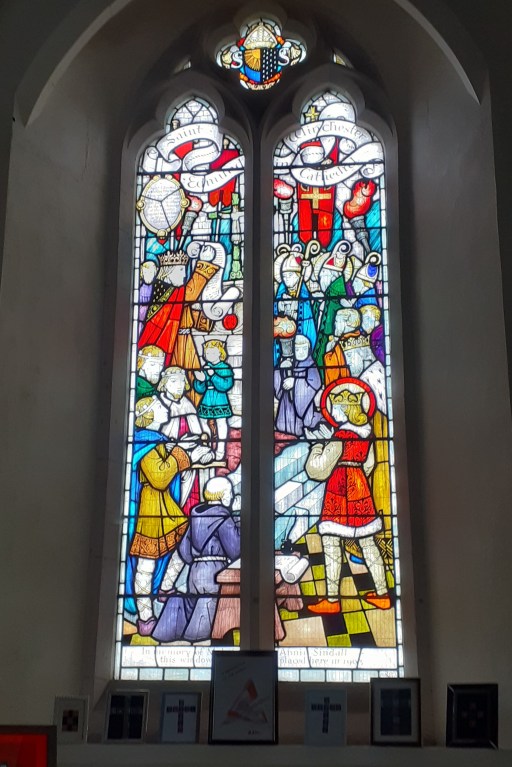
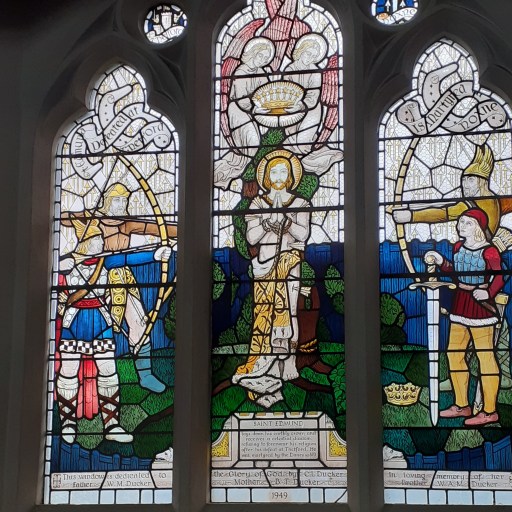


Figure 2. The St. Edmund windows
To the north of the village there is another site of relevance to St. Edmunds – the ruins of the old medieval chapel dedicated to the saint, allegedly built to mark the point of his arrival into England – see Figure 3 below. The last photograph shows a wolf carving – commemorating the legend, probably arising from the supposed fact that Edmund was a member of the Wulfinglas dynasty, that the followers of St Edmund, after his death and beheading, found his head protected from further harm by a wolf.


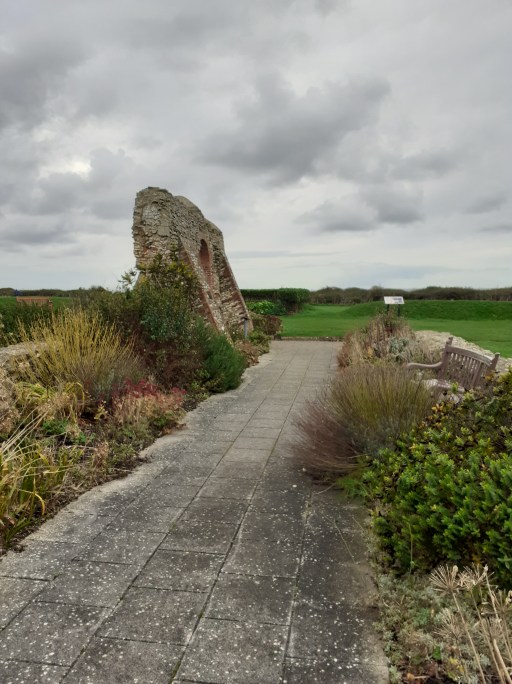

Figure 3. Ruins of St. Edmund’s chapel
* Any such ecclesiastical stair lift should of course have changeable cushions in the correct liturgical colours.
 Engineering, history and ecclesiology