
All Saints church in Oakham is not particularly well endowed with memorials to individuals and events, and there are no spectacular carvings. However some of those that do exist enable interesting stories to be told. In this post I present a number of these, with links to more information, and highlight those memorials that require further investigation. The post is very much a work in progress, and I will edit it as more information becomes available.
Note – to read some of the inscriptions below readers may well need to magnify them. Even then, some will take a little patience to read, particularly the brasses where it is difficult to take photographs without reflections obscuring the text.
Vestry
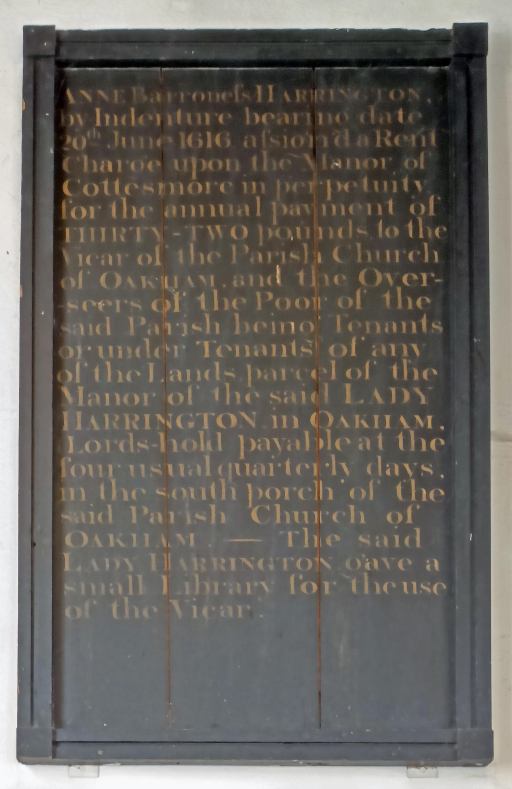
Chancel
A transcript of this plaque in the Chancel is given in the post From Oakham to Mandalay and a little more information is given on the career of Henry Jerwood.

Lady Chapel
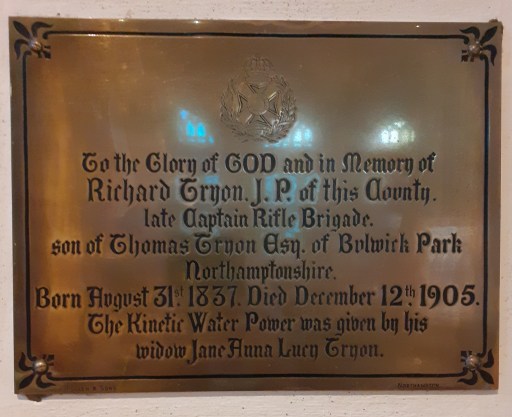
A transcript of this plaque in the Lady Chapel is given in the post Kinetic Water Power, and information is given there about Richard Tryon and (at some length) the Kinematic Water Power apparatus.
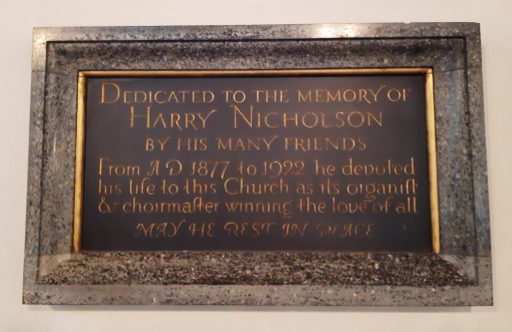
The life and times of long term organist of All Saints church and the founder of the Oakham Choral Society are well described in a blog from the Rutland County Museum.
Pulpit
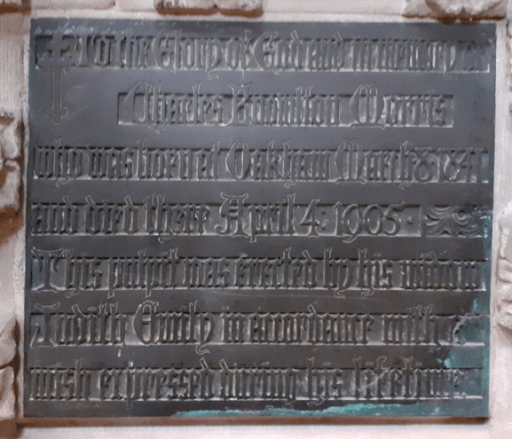
The pulpit has a dedicatory plaque, very low down near the foot of the steps. It reads as follows
To the Glory of god and in remembrance of Charles Knowlton Morris, who was born in Oakham March 18 1841 and died there April 4 1905. This pulpit was erected by his widow Judith Emily in accordance with his wish expressed during his lifetime.
Charles Morris was a brewer and a coal merchant. A window in the church has a similar dedication from his wife and is described in the following way
Depicting Endurance, Humility, Innocence, Love, Principle, Sympathy, Fortitude, Charity and Justice, as mostly portrayed by scenes from Jesus’ life. The badge of the Vale of Catmose lodge of the Independent Order of Oddfellows is at the bottom.
South Transept
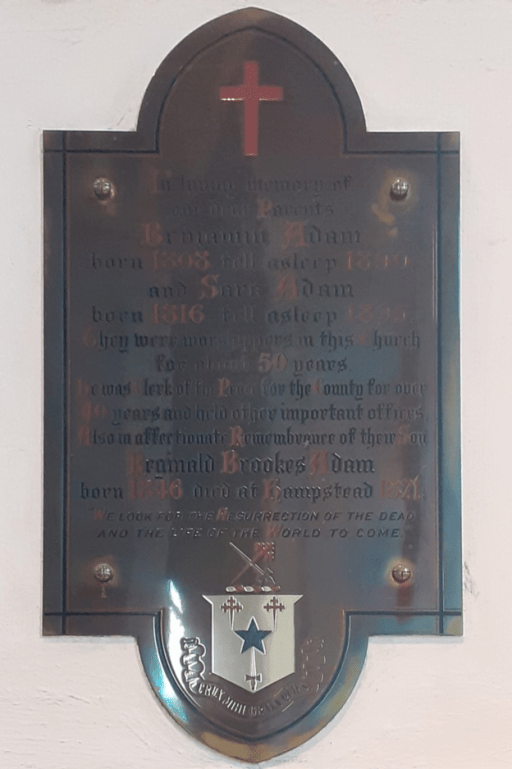
This difficult to read memorial is to Benjamin Adam (1808-1890?), his wife Sara (1816-1895?) and their son Reginald Brookes Adam (1846-1871?). We are told that Benjamin and Sara were worshippers at All Saints for over 50 years, and that Benjamin was Clerk of the Peace for the County (a legal officer) for over 40, and that he also held other important positions.
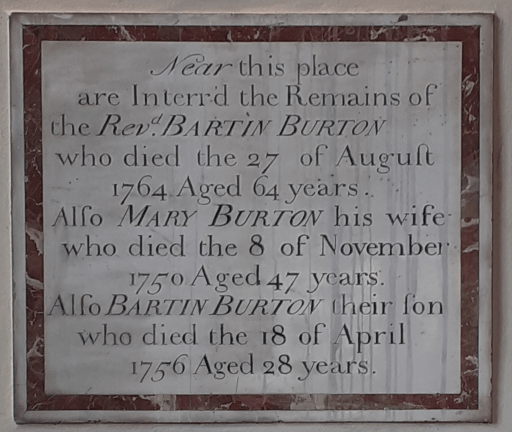
The Church of England Clergy database reveals that Bartin Burton was born in Oakham and served as Curate in the parish of Rockingham, Rector at Oxendon (both in Peterborough diocese) from 1728 to 1729 and Vicar of Ravenstone in Buckinghamshire (Lincoln diocese) from 1747 to 1764.
North Transept
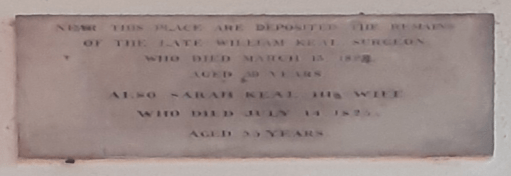
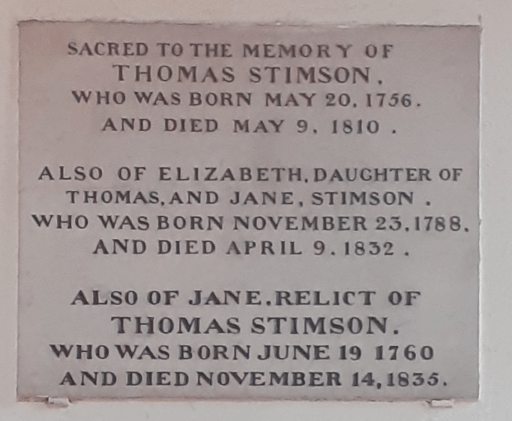
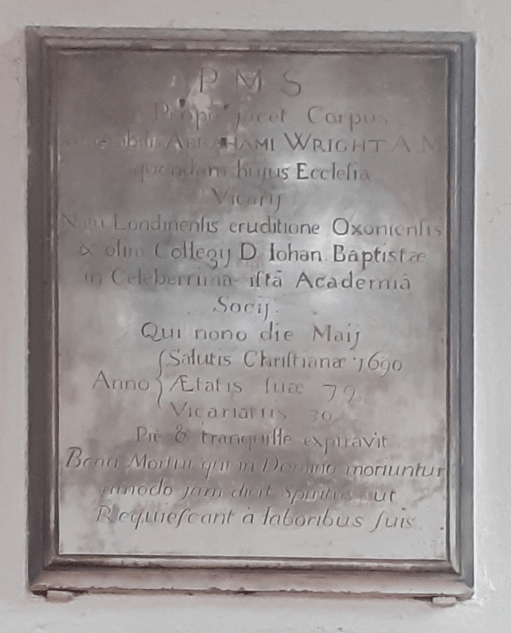
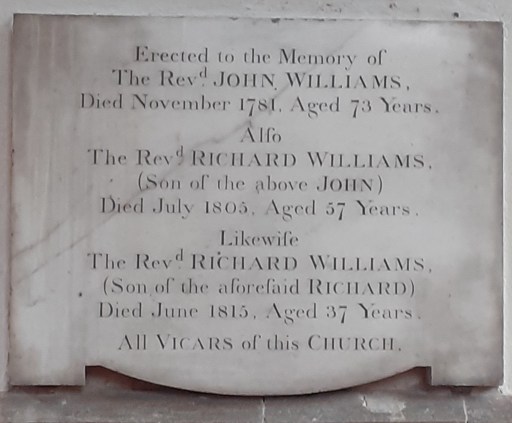
These four memorials in the north transept are placed one above the other in the order shown to the left. The top one commemorates William Keal, a surgeon (d1824?) and his wife Sara (d1825). The one below it commemorates the lives of Thomas Stimson (1756-1810), his wife (relict) Jane (1760-1835) and their daughter Elizabeth (1788-1832).
The third is in Latin and commemorates John Abraham Wright (d1690) aged 79, vicar for 30 years, during and after the Commonwealth period. In the first instance he served only one year (1644-5) before he was and replaced by the parliamentary favourite Benjamin King. He took up his post again after the Restoration in 1660.
The lower memorial is to three generations of Vicars of the parish – John Williams (d1781), Richard Williams (d1805) and Richard Williams (d1815). More details of their appointments at Oakham and elsewhere can be found in the Church of England Clergy Database.
South Aisle
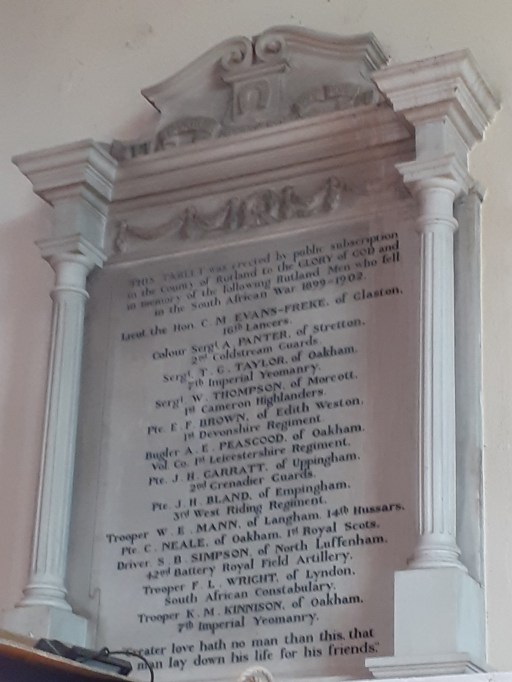
This Boer War monument is now above the choir vestry in the South aisle and not easily accessible – or indeed to photograph. The expertise of a military historian is probably required to unpack and present the stories of those listed here.
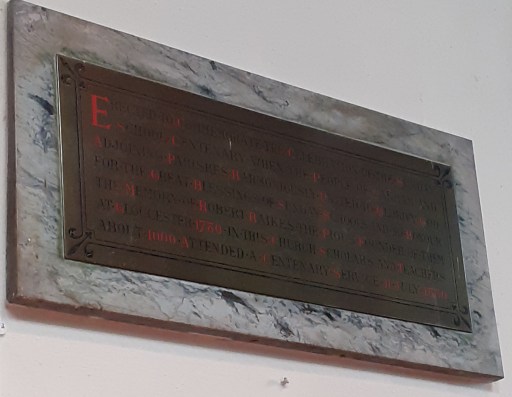
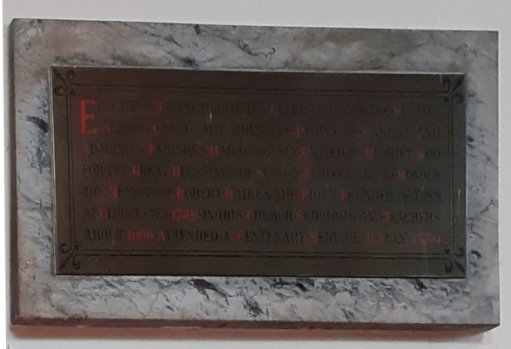
The monument above was both difficult to photograph (to avoid reflections) and difficult to read. It is shown in two forms – as originally taken, and with an attempt made to remove the effect of perspective. It commemorates the 100th anniversary celebration of the Sunday School movement, which around 1000 people attended, and commemorates its founder, Robert Raikes of Gloucester.
North aisle
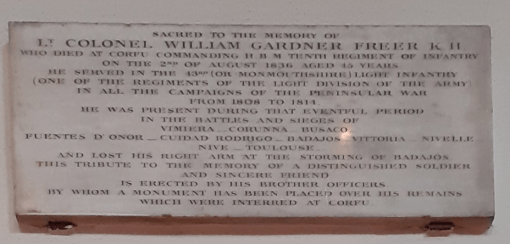
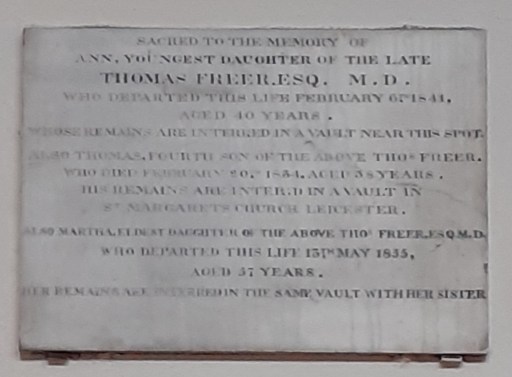

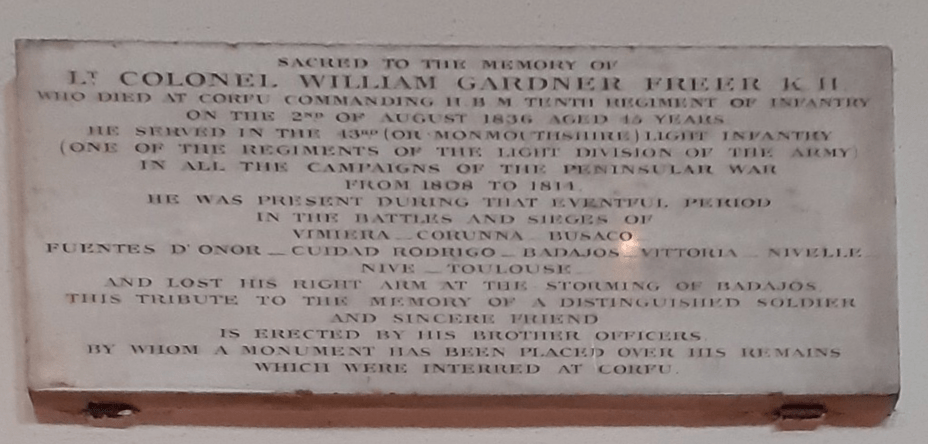
These three monuments are placed above each other in the north aisle in the order shown. The top one is too small to read easily from ground level. They all refer to the Freer family from the early 19th century. The bottom memorial is to Thomas Freer, a doctor, who died in 1835, his wife Martha who died in 1827, and his third son, Edward Gardner who fell in action in the Pyrennees in 1813 aged 20. The second memorial commemorates Thomas and Matha’s youngest daughter Ann (d 1844), their fourth son Thomas (d 1834) and buried in Leicester, and their eldest daughter Martha (d 1835). Finally the upper memorial describes in very small text, Lt. Colonel William Garner Freer who died in Corfu in 1836, whilst commanding the 10th Infantry Regiment. His long military career is outlined, including the loss of his right arm at the storming of Badajos. He is buried in Corfu.
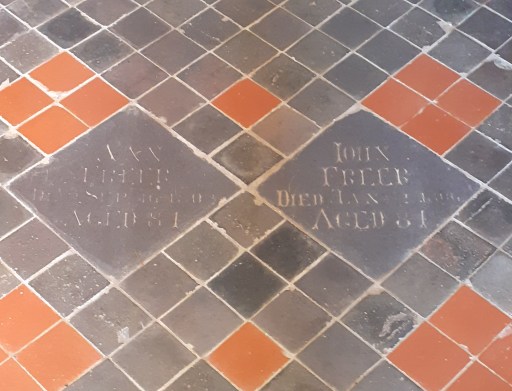
The Freer’s are also commemorated in two tiles in the nave aisle – much faded as they are on the main thoroughfare through church. They are dedicated to Ann and John who, as far as I can make out, died in the early 1800s.
West End
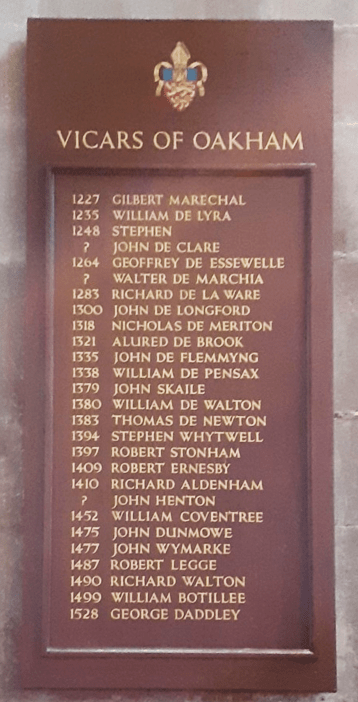
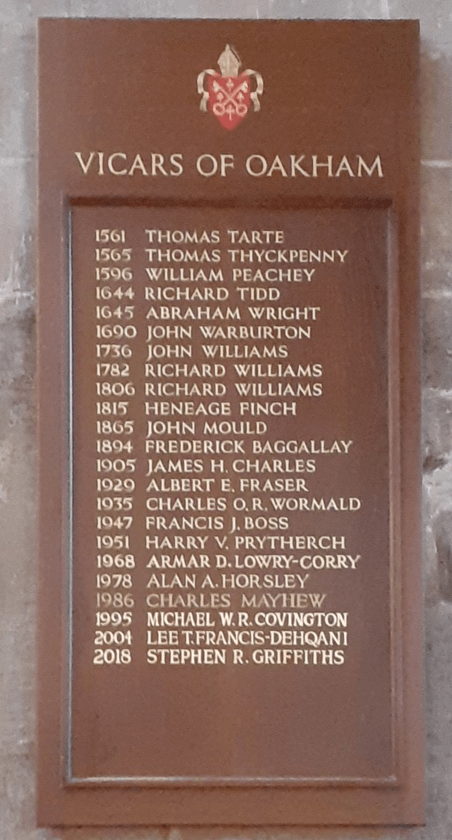
More details of the Vicars of Oakham can be found in the church guide. The Church of England Clergy Database also includes records for both vicars and curates of the parish, and of the surrounding chapels from the mid-sixteenth to the early nineteenth centuries.
 Engineering, history and ecclesiology