
Preamble
One of my recent tasks as a member of the committee of the Black Country Society has been to help organise an exhibition of photographs and other material at Dudley Archives entitled “From Agenoria to Beeching – the first and last days of steam in Dudley”, which ran from October 2025 to January 2026. This brought together material on the first Railway in the area (the Shutt End or Kingswinford Railway) and its locomotive, the Agenoria, with photos from the 1950s and 1960s that illustrate the last days of steam in the area. As the exhibition drew to a close, I prepared a web version which included the majority of the material in the exhibition and gave it some sort of long term presence. When this online exhibition went live, it resulted in some very interesting email exchanges and conversations with a number of those who looked at it. One of these was with Mr. David Marlow from Northumbria who provided two items that are now actually included in the online exhibition. The first is a photograph of a plaque on the wall on the old (and then derelict) John Bradley and Company factory in Stourbridge (now renovated as the Lion Health Centre), which commemorated the locomotives Agenoria and its sister locomotive, the Stourbridge Lion, that were built there. The second was a copy of a posed picture of the Agenoria with a number of workmen / managers. The original was donated to the National Railway Museum in the 1990s. From Mr. Marlow’s perspective, this photograph was particularly interesting as the “driver” of the locomotive was his great great grandfather Edward Stockton. Both these items raise some interesting chronological questions about the timelines of the Agenoria and the Stourbridge Lion, and these issues are probed in what follows.
Construction and operation
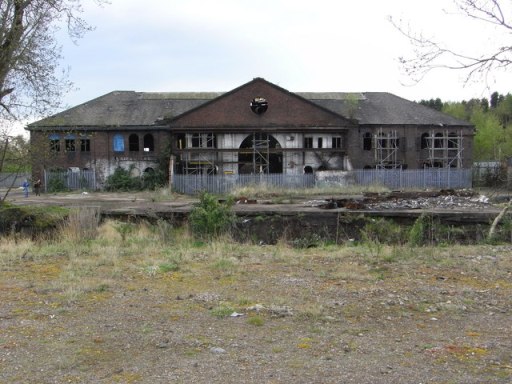
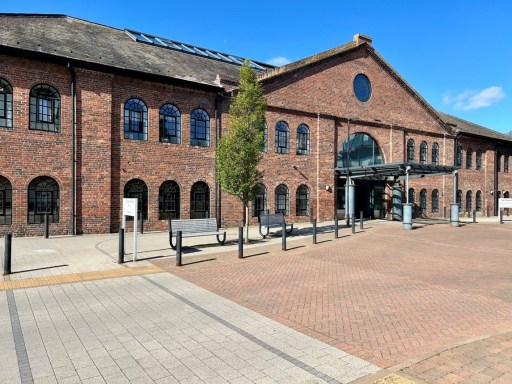
Figure 1. The derelict John Bradley factory in the early 2000s and the renovated building, now the Lion Health Centre
The Agenoria and the Stourbridge Lion were built at the John Bradley factory in Stourbridge in the 1820s (figure 1). The first was to run on the Shutt End Railway in Kingswinford for over 30 years, and is now preserved in the National Railway Museum in York. The second became the first locomotive to run under steam in the USA, although it was not much used because the tracks provided were not sufficiently robust. The careers of both locomotives are well outlined in “Two Stourbridge Locomotives” by Bill Pardoe and Michael Hale, Black Country Society Studies in Industrial Archaeology No. 3, published by the Black Country Society.
On a Black Country Society Industrial Archaeology Group visit to the derelict John Bradley foundry in 2005, Keith Hodgkins took a photo of a plaque that had been placed there by the Newcomen Society in 1959, commemorating the Stourbridge Lion and the Agenoria (Figure 2a). In our recent correspondence Mr. Marlow sent a photo of another plaque from the same building, apparently placed there to replace the Newcomen Society plaque by the Stourbridge Locomotives Celebrations Committee in 1988 (Figure 2b). The current whereabouts of these plaques is not known. But my interest was aroused by the dates on the plaques – Stourbridge Lion 1828 and Agenoria 1829 on the first, and Agenoria 1828 and Stourbridge Lion 1829 on the latter. There is clearly some chronological confusion here – which of the two engines should have the chronological priority?
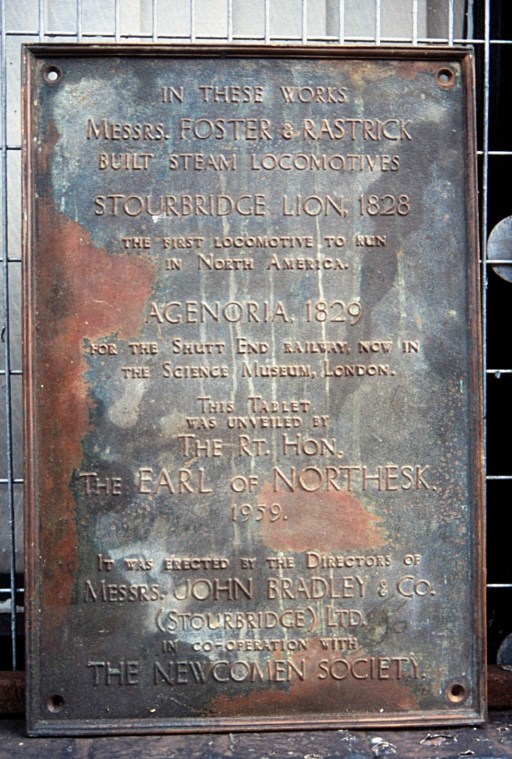
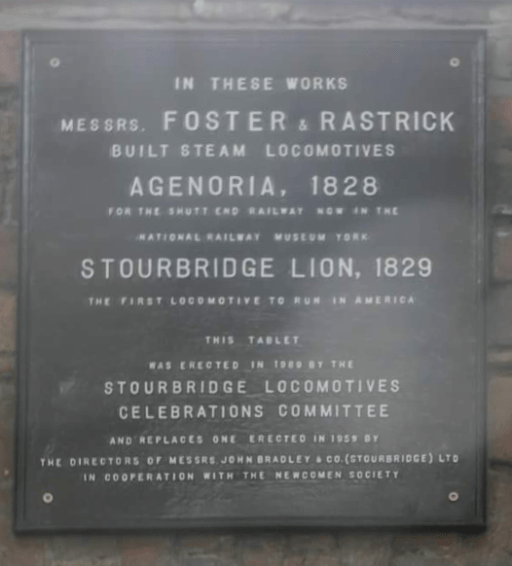
Figure 2. Plaques celebrating the Agenoria and the Stourbridge Lion
From the historical record, we can trace the timeline of the construction and operation of the locomotives to some extent. The Shutt End Railway was first proposed in the early 1820s to connect the mines and the developing Iron Works in the area to the Staffordshire and Worcestershire Canal to the west, to enable coal and iron products to be shipped to market. Eventually in January1827 an agreement to build the line was signed between the Dudley Estate and James Foster of the Shutt End Iron Works, which was itself owned by John Bradley and Company, coal and iron masters of Stourbridge. Construction took place soon after the signing of the agreement and the line was opened with great celebrations on June 2nd 1829. The Agenoria locomotive was built by Foster Rastrick and Co at Stourbridge (at the works of Figure 1). The Foster was the same James Foster who owned the Shutt End works, and John Rastrick was a noted locomotive engineer and builder.
In 1828 Horatio Allen, went on a railroad research tour of England on behalf of the Delaware and Hudson Railway in the USA. By July 1828 he had ordered four locomotives – three from Foster, Rastrick and Company and one from Robert Stephenson and Company. Stourbridge Lion was one of these three locomotives built by Rastrick, but Stephenson’s shop completed their locomotive, the Pride of Newcastle, before any of Rastrick’s locomotives, and it arrived in America nearly two months before the Stourbridge Lion, which was transported from Liverpool aboard the ship John Jay, arriving at New York in mid-May 1829. The two other Foster, Rastrick & Co locomotives that had been ordered by Allen, Delaware and Hudson, arrived in New York in August and September 1829. The Lion however was the first to be used, running on the Delaware and Hudson Railway on August 8th 1829. Although the locomotive performed well, the track laid for it was unable to adequately take its weight and it never found operational use.
So which of the Agenoria and Stourbridge Lion should have priority. Certainly the Agenoria ran along tracks at Shut End in June 1829 a few months before the Lion did the same in the USA. But the Lion is the first recorded in the historical record on its shipment to the US in May that year. But, in my mind it is likely that the Agenoria was under construction and seen by Allen before he placed his order in July 1828. Certainly the Agenoria must have been complete by early 1829, as it is almost certain that there would have been extensive trials on the Shutt End line before the public opening in June that year. So I would suggest that Agenoria was probably completed first, sometime in late 1828, and the Lion a few months after that. Thus of the two plaques, the second, from 1988, is probably correct, although it would be fairer to say that both were probably constructed if not completed in 1828, and first ran in operation in 1829. But Agenoria should have the historical priority in both construction and operation.
Retirement and Restoration
The Agenoria ran along the Kingswinford Railway from the top of the incline at Ashwood Basin in the west to the bottom of two inclines close to Kingswinford church in the east. See the map from “Two Stourbridge Locomotives” shown in Figure 3.
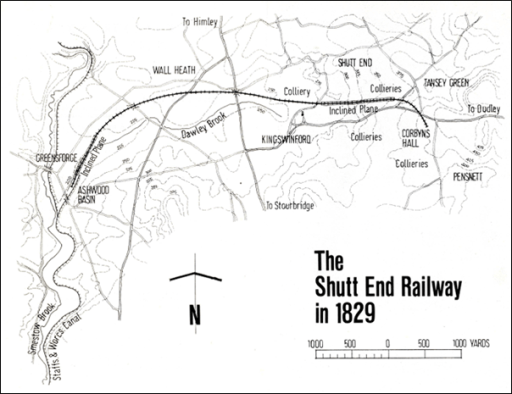
Figure 3. The Shutt End Railway – from “Two Stourbridge Locomotives” by Bill Pardoe and Michael Hale, Black Country Society Studies in Industrial Archaeology No. 3
One incline (shown in Figure 3) took the railway itself to the mines around Corbyn’s Hall in Pensnett, and one (not shown on the Figure) provided access to and from the works of John Bradley and Co. Both inclines can be assumed to have been cable hauled. The Engine Shed and presumably other maintenance facilities was close to the foot of the two inclines. The Kingswinford Railway was only connected to the wider Earl of Dudley’s Railway network (the Pensnett Railway) in 1865, through a junction several hundred yards to the west of the bottom of the inclines. Correspondence in 1864 between the mineral agent of the Dudley Estate (Frederick Smith) and William Orme Foster who had taken over control of John Bradley and Co Iron Works from his uncle James Foster, implies that Agenoria was owned by John Bradley and Co, rather than by the Dudley Estate, as was the Locomotive Shed and the maintenance facilities. The correspondence was about the state of the Kingswinford Railway infrastructure and led to improvements being made and a new locomotive being purchased by Foster in 1865 – a Manning Wardle 0-4-0 saddle tank. It is generally assumed that it was around that time that the Agenoria was taken out of service.
The next mention of Agenoria in the historical record is in 1880, when Edward Marten (Chief Engineer at the Midland Steam boiler Inspection and Insurance Co in the 1860s, and later the engineer in connection with the South Staffordshire Mines Drainage and Improvement Act of 1873) sought to gain support for restoring and preserving the locomotive whose components by that time seem to have been scattered around Shut End Iron Works. This led to a restored Agenoria being exhibited at Wolverhampton Fine Arts & Industrial Exhibition in 1884, before being formally donated to the Science Museum in 1885 by William Orme Foster. The implication here is that, after the Agenoria had been taken out of service, it was taken into the Iron Works, either by being hauled up the incline or (possibly more likely) taken around a less steep but more circuitous connection into the works that was in place by 1880 and possibly a couple of decades earlier.
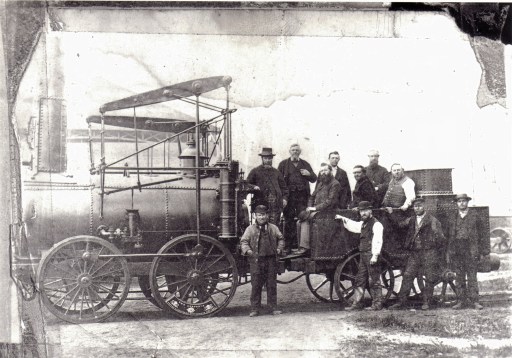
Figure 4. The Agenoria and workers (from Mr. D. Marlow)
Now consider the photograph that was sent to me by Mr Marlow, shown in Figure 4 above. Mr. Marlow believes the figure closest to the boiler on the photograph, in the driver’s position, is his great great grandfather, Edward Stockton, and family tradition has it that he was one of the drivers of the locomotive. Figure 5a shows an expanded version of Figure 4 where the driver is shown in better definition, whilst figure 5b shows an (admittedly poor) photograph that is certainly of Edward Stockton and his wife Ellen from the 18890s or later, also supplied by Mr. Marlow. These both, in my view, seem to show the same person, and I am reasonably confident that the driver of the footplate is indeed Edward Stockton.
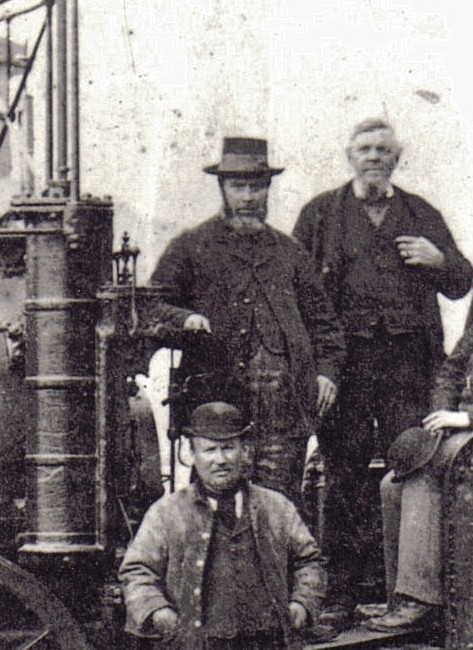
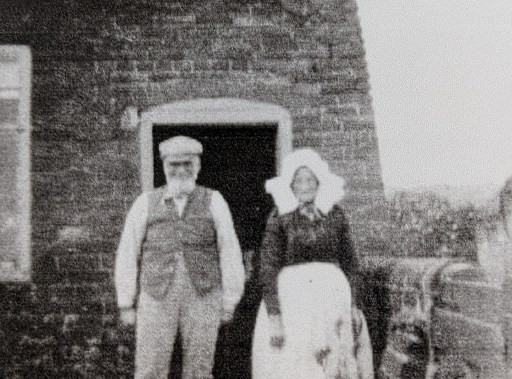
Figure 5 Edward Stockton – (a) from Figure 4 and (b) showing Edward and his wife Ellen
Edward Stockton was born at Moreton Cobbett in Shropshire in 1824, Some time before the 1851 census he had moved to the Pensnett area as he married an Eliza Farringdon at Dudley Parish Church in November 1847. She died within a very short time and Edward then married her sister Ellen two years later, this time at Kingswinford Parish Church. In the 1851 census he is identified as a Furnace Man, in 1861 as a Labourer, in 1871 as a Labourer in Iron Works and in 1881 as a Farm Labourer, always living in the vicinity of the Shutt End Iron Works. Nowhere is he identified as an Engine Driver as might be expected. Of course this might simply be due to the idiosyncrasies of how he completed the census returns, but it seems to me more likely that Stockton became an Engine Driver sometime after the 1871 census. This suggests that the Agenoria, after being withdrawn from the Kingswinford Railway, had a brief afterlife as a locomotive in the Shutt End works, where an extensive railway system was developing in the 1870. Supposing the photo to have been taken between 1871 and 1875, this would put Edward in his late 40’s / early 50’s at the time, which seems consistent with the photograph. The occasion of the photo might be to mark the start of Agenoria’s Iron Work’s career (which would imply that it was not moved into the works till the 1870s, or perhaps we have here a picture of the reconstructed engine in 1880 or early 1881 before the census of that year. However at this time Edward was a farm labourer and presumably working elsewhere. The first occasion seems to me to be more likely.
 Engineering, history and ecclesiology
Great article as usual! Such an interesting railway – and you can still evidence of where it used to run!
LikeLike