The diaries of William Baker 1907 to 1919 – Part 3. Local people and events

Related blog posts

The diaries of William Baker 1907 to 1919 – Part 1. Introduction
The diaries of William Baker 1907 to 1919 – Part 2. The family entries
The diaries of William Baker 1907 to 1919 – Part 4. National people and events
The diaries of William Baker 1907 to 1919 – Part 5. Woodside Iron works

Introduction

The local entries in the diaries are very heterogeneous, but for the sake of convenience we divide them into three categories – Pensnett People, The Earl of Dudley’s Railway, and Accidents and Disasters.

Pensnett People

Most of the entries in this category are simple records of marriages and deaths, and I suspect many of them are simply those whom William knew as neighbours and friends However there are some entries whose names I recognize from elsewhere.  From September 1st 1906

The Rev C H Cole-Webb died at Holyhead in his 70th year. He came to Pensnett in the year 1875 and left in1883 to go to Penn.

Cole-Webb was the incumbent who followed Rev Charles Atherton. I have written extensively about the events of his incumbency, and the events that shook the village at that time. Cole-Webbs role would thus have been to bring some stability – and to continue the efforts to stop St. Mark’s church falling down old mine workings.

On January 24th 1907 we read of William Barlow, formerly of the Tiled House, a stalwart of St. James New Connexion chapel on Chapel Street, and, in his role as a liberal member of the National School board, was often a vociferous opponent to the tory views of Cole-Webb.

Mr. W Barlow celebrated his 93 birthday and he’s quite well considering his great age.

And two weeks later, on February 12th.

Mr. W Barlow, late of Pensnett, died at Stourbridge Aged 93.

On 20th November of the same year we read of the death of another old Pensnett worthy, Cornelius Chambers.

Mr C Chambers died at Moss Grove Kingswinford aged 69 years.

Chambers was one of the chief characters in the Atherton saga noted above, and I would consider him the chief villain, although that may be unjust. He was an Iron Works Manager and a liberal councilor.

Another to get a mention was David Clark (Figure 1), a pioneering teacher in the area, whom I have written about here. From October 10th 1914

Mr David Clarke of Kingswinford died at the age of 83 years. Late Headmaster of Bromley School

Figure 1 David Clark at the age of 80 in 1911

The deaths of the owners of local engineering firms is also noted – David Parsons of Shut End and the Parsons Engineering Works at the Hollies on May 19th 1909; John Glaze of Glazes Tin Works who lived at Asquith House on Commonside on March 5th 1915; H S Pitt of Shut End Colliery on the 5th April of that year; and George Hingley of N. Hingley and Sons, and Harts Hill Iron Co.

On October 30th 1906 the marriage of a relative of William’s employer, Walter Cochrane, is also noted.

The marriage of Mr J B Cochrane’s oldest daughter Alice Beatrice to Mr R H Boyd Parnall, Solicitor (Christ Church, Monmouth). Married at Pedmore

The  later entries from 1915 onwards report those who have enlisted in the army and, more somberly, those who were killed in action. Just one example, from Christmas Day 1917.

Fred Higgins died from being gassed, in base hospital in France. His brother James was wired for as he was in France when he passed away but he did not see him die.

Not all the personal entries related to deaths however, and there are a few that relate to St. James Chapel, which suggest that William and his family were part of that congregation. From August 18th 1907

Mr Jones of Dudley approved organist of St James, Pensnett

It would seem he didn’t last long and from 24th January 1909.

Mr Tart appointed organist at St James Pensnett ….. house costs £255

Earl of Dudley’s Railway

A significant number of entries relate to accidents on the Earl of Dudley’s railway (or the Pensnett Railway) . I have written about accidents on this system here, but did not include those below. Details of some of them however can be found in the British Newspaper Archive if the correct search terms are used, and I will probably put these into a blog sometime in the future.

5/4/1909  Richard Salters while working on a Lord Dudley Engine slipped and had his two legs cut off and died while going to the hospital.
28/1/1911 A Runaway from Baggeridge New Colliery,  which a collision with the Countess Engine. A youth injured and taken to the General hospital.
6/1/1913 Hiram Plant, son of G Plant Church St, Pensnett,  was killed on the ED railway Sunday.
27/1/1913 Runaway at Himley with the Countess Engine. ED Driver W Mase
17/11/1913 Ada Granger had her left leg cut off with the wagon on the ED railway by the Sampson Bridge.
3/4/1914 Railway accident. Near Sampson Bridge. 4 wagons smashed and one damaged. E.D.
20/11/1914 Robinson Albert of Pensnett had his leg cut on the ED railway coming back from taking his father’s dinner.
17/10/1915 Harry Southall aged 12 had one of his legs crushed very bad.  He had it amputated at the Guest Hospital and the other foot was ….. on the EDR……
29/3/1917 Railway Accident on Barrow Incline with No 13 Engine and 26 wagons. The engine crashed into the Goods shed and was badly damaged. Some wagons damaged.

ED of course refers to the Earl of Dudley’s Railway. The railway was clearly a dangerous place for both those who worked on it and those who crossed it, and safety considerations were not taken as seriously as today.  It was also an organization where there was sporadic industrial unrest. From the 9th of January 1918.

The ED loco drivers and stokers went on strike for the 12½% they were informed of by a man from London that they should either have the 12½% wages advanced so they agreed to go on from day to day.

The exact sense is not clear, but there was clearly some national level involvement in the decision to strike.

Other accidents

William seemed to have a particular fondness for noting accidents of different types, as well as those on the Earl of Dudley’s railway, the more spectacular the better. Firstly there were industrial accidents.

7/7/1906 Cradley Heath Boiler Explosion (More details can be found here.)
3/4/1913 Two sinkers killed in Himley Colliery.
17/9/1913 Samuel Elgeton died from his accident at the Oak Brickyard.
2/12/1913 No 17 pit fired and 4 horses ……. had to be left in the pits.
26/1/1914 Thomas Jones had his hand crushed and was taken to the Guest Hospital.
24/4/1914 Accident at Shut End colliery overwinding.
10/10/1914 Accident at Harts Hill Ironworks. Engine man fell off boiler side and died in the Guest hospital.
3/12/1914 George Burton Engine Driver at No 6 pit Himley  Colliery was scalded when the hooks ….. the roofs lid off at the pump. He lived at 41 High St Pensnett and died in the Guest Hospital. He was 51 years of age.
22/10/1915 A mine explosion at Pennant Hill Colliery Rowley. 5 victims. (More details here.)

Then there were drownings in the canal or the feeder pools.

15/7/1906 Mrs Plovey, the wife of J Plovey,  was found drowned in the canal at 5 o’clock am, the right side of Hadley’s Bridge. She was pulled out by J Harries and S Young.
12/12/1906 A son of Mr Oliver of Pensnett aged … was drowned in Brockmoor Canal.
17/2/1909 John Oakley was found drowned in the canal by No 5 bridge Woodside.
8/8/1911 Man the name of Cooper was drowned in the Middle Pool and got out.
31/1/1913 Two girls Sally Hill and Elizabeth Jevons were dragged out of canal….Brettell.
7/2/1913 Woman found in canal at …. Lane bridge.
27/6/1913 Sarah Ann Green from New Chapel St was drowned in Middle Pool

Suicides were also noted.

2/3/1911 Joseph Whise of Church St Pensnett committed suicide by cutting his throat and was buried at Pensnett Church on March 8.
26/5/1913 The wife of G Dean of Kingswinford hung herself and son cut her down

Finally a couple of tram accidents are reported.

16/1/1916 Tram smash at Dudley near to the Guest Hospital. One died at Guest Hospital and one at Wolverhampton hospital
2/2/1917 Dudley. Tram accident at Scotts Green with J Thompson going to Dudley  ….. One coming from Kingswinford. The driver of the Kingswinford was killed . John Morgan aged 53 from Kingswinford. The driver of the…. was Joseph Wright of Round Oak

A number of the above incidents can again be found in the British Newspaper Archive, and may well be the subject of future blog posts.

The diaries of William Baker 1907 to 1919 – Part 2. The family entries

Related blog posts

The diaries of William Baker 1907 to 1919 – Part 1. Introduction
The diaries of William Baker 1907 to 1919 – Part 3. Local people and events
The diaries of William Baker 1907 to 1919 – Part 4. National people and events
The diaries of William Baker 1907 to 1919 – Part 5. Woodside Iron works

The Family Tree

A very simplified family tree is shown in Figure 1, containing the names of most of those mentioned in the diaries, together with some who are not mentioned, but are important in the family story. We will consider specifically the diary entries relating to William’s wife Dinah and his four children John Simeon, William Henry, Joseph Richard and Eliza Jane. We then consider entries relating to other in Figure 1.

Figure 1. A simplified family tree.

Dinah Baker (nee Chambers)

The first mention of Dinah is an entry for March 8th 1909, where we are told  

Dinah was operated on and a polp was taken out of her back passage

Polp is presumably a polyp. This raises all sorts of questions about who did the operation, what the procedure was etc.. Later that same year on September 2nd, we are told

Dinah went to Dudley station and had consent to get on with the job

Again the lack of detail is regrettable. Did she work at Dudley station, or was she employed by a railway company in another way? The other entries are mainly of visits that Dinah paid, often with Eliza to various places in the locality, including to see her brother Joseph in Smethwick.

On January 30th 1916, William wrote

We had photo taken at W Clarke  2 ….. St. Brierley Hill

And two weeks later on February 13th

Mr W Clarke brought ….. photo and post cards

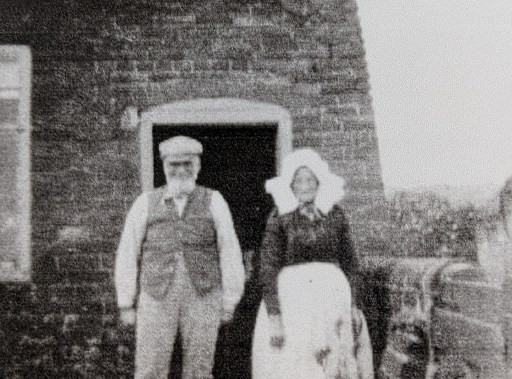
Rather wonderfully that photo has survived and is shown in Figure 2.

Figure 2. William and Dinah Baker, 1916

At this point we also include in Figure 3 another photo of Dinah, taken perhaps 35 years later, after Williams death. She cuts a somewhat formidable figure!

Figure 3. Dinah Baker c 1940

John Simeon Baker

The diary entries for John Simeon, William’s oldest son, are extensive, and give hints of more complex events that are not explained. We read first that on June 17th 1907, when he was 14, he began work at Parson’s Leys Foundry. Just two days later he finished working there – why that position only lasted two days isn’t explained. On the 14th of July 1908 he started to work at CIC……… Ltd Bridge End (an almost illegible entry), which probably refers to Bridge End mine in Bromley. The next entry concerning him is from March 24th 1909.

John received last pay of compensation

And a week later

John started to work after his accident at No 16 Colliery

So it would seem that at some point between July 1907 and March 1909 he was injured in some way – presumably quite seriously if compensation were paid.  He remained at the Colliery until June 1910 when he began work at J. Glaze’s Tin Works, and he was clearly still employed there at the 1911 census when he is referred to as a Tin Works labourer. In the next two years he was employed at WW Round Oak, Roberts and Coopers, Brockmoor and at another illegible location. Then on the 7th July 1913 we read of him as being sent to the convalescent home at Clent (see Figure 4). One wonders if these multiple changes of job, and his period at Clent,  were in some way a result of whatever accident he suffered in 1909. After coming out of the home, this succession of jobs continued – Roberts and Coopers at Brockmoor again, J Glazes, Cartwrights at Harts Hill, somewhere in Brettell Lane and on the 6th December 1915, the Earl of Dudley’s Steel Works (Round Oak). And there the entries end. There is no indication that he attempted to enlist in the army as did his brothers (see below). On the 13th April 1916 he married Miriam Blanche Cotton in a civil ceremony in Stourbridge. Mirian was 5 months pregnant at the time, so clearly whatever accident John experience, had no effect on his fertility. But there is no mention at all of his marriage, or of Miriam, in the diaries. Does this hint at some sort of family estrangement perhaps?

Figure 4. Clent Convalescent Home (from an old postcard)

Miriam Blanche was the daughter of James Cotton, a miner from Kingswinford. It can be seen from Figure 1 that her mother Phoebe had died in 1915 and prior to her marriage she worked as a tailoress. After the marriage, John left his Chapel St. home and he and Mirian began their married life with their eldest child at 32, Commonside in Pensnett. In the 1921 census John is described as  a Blacksmith at the  Earl of Dudley’s Ironworks Round Oak, where he had started in 1915, so perhaps he found stable employment at last. In the 1939 register he is described as a constructional fitter. Figure 5 shows a photograph of John and Miriam outside the Commonside house, sometime in the late 1930s, before they moved to a house in Tiled House Lane.

Figure 5 John Simeon and Miriam Blanche in the late 1930s

William Henry, Joseph Richard and Eliza Jane Baker

In contract to the entries concerning John Simeon, the entries relating to his siblings are much more straightforward. William Henry began work around 1910 and in the 1911 census he is described as 1911 Apprentice engine fitter. This may have been at Parson’s works in the Hollies where he remained till 1915. He enlisted in the army on the 21st September 1915 and served in France. The entries thereafter simply give times and dates for his periods of leave when he returned to Pensnett. The 1921 census records him working as an Engineers Fitter at Gibbons and Co. There is no record that he married, and he does not appear on the 1939 register, so presumably died before then.

It is not clear when Joseph Richard started to work, but in 1913 he is recorded as having his foot bruised. He seems to have begun work at Cochranes and Co in Woodside in February 1914 (the same place as his father). In August 1914, at the age of 16, he enlisted and was sent to a Foot Camp at Looe in Cornwall. For some reason he was discharged on January 1st 1915 (perhaps again as a result of an earlier injury) and on January 12th he began to work at “Mr Shaw’s Foundry”. He clearly enlisted again in 1917/18 and we read of further visits home on leave. On the first of May 1919, presumably after his discharge we read,

Jo was taken ill coming home from work and Doctor Plant was sent for. He came to see him

Dr Plant was one of the dynasty of Pensnett doctors from that family, who lived at the Plantation, formerly Shut End House, on he High Street in Pensnett. A few days after this incident Joseph was sent to the convalescent home at Clent where he stayed for two weeks. In the next two years, he found employment at Woodside Iron Works (again), Beans at Tipton and in the local police force. The last that records tell of him is that at the 1921 census he was a patient at a hospital in Birmingham.  Again there seems to be an ongoing history of illness of some form.

Eliza Jane clearly took up the position of domestic worker at home, as was so common for girls in that era. She is recorded in September 1915 as collecting her glasses from Dudley so she clearly had issues with her eyesight – issues which certainly have appeared elsewhere in the family line, not least with me. From January to June 1916 she worked at Dixons’ Green in Dudley, before moving to Miss Rushworth in Dudley High Street, on a wage of 2s 6d per week. Miss Rushworth’ business, whatever it was, folded in 1918 and Eliza went to work at Mason’s Accounts in Wolverhampton St. in Dudley as a clerk. By 1921 she was again engaged in domestic duties. In the 1939 register she was living with Dinah, then recently widowed, and is described as a “Female Examiner. Inspector of Naval Ordinance”. She was to marry in 1941 at the age of 40 and lived until 1974. I remember her as rather a severe unsmiling lady – with very thick spectacles!

Other family members

A number of other relatives are mentioned in the diaries. William’s brother Henry, a Railway Guard for the GWR living at first in Birmingham and then in Stourbridge, was a regular visitor, often with his wife Annie Mary. It may well be that some of the entries that relate deaths in the area refer to one of William’s five sisters under their married names. One such was certainly Merriah Jones who dies on February 3rd 1916.  There were also references to various members of the Chambers family in Smethwick with whom Dinah clearly kept in touch, but it is difficult to determine the precise family relationships here.  Perhaps of most interest, one James Chambers is recorded as having emigrated to Canada in 1910.

The entry that most surprised (and indeed shocked) me however was to James Cotton, Miriam’s father, and my great grandfather.  For June 22nd 1916 we read

James Cotton was killed at the Sampson Colliery Netherton

A little more detail can be found in the Dudley Chronicle of June 24th.

DUDLEY COLLIERY ACCIDENT –  BURIED BY FALL OF COAL. Two miners were buried by a fall of coal at the Dudley Sampson pit, owned by Stourbridge Brick Co., on Thursday, and one—James Cotton, of Commonside, Pensnett—was dead when released. The other, a man named Thomas Treater, had a remarkable escape. He was practically uninjured when liberated, and was able to walk home. The fall was caused by timber supports giving way.

James’ name was given as “Cloteon” in the transcript on the British Newspaper Archive – a result of the fallibility of the OCR system that the Archive uses. This explains why I had hadn’t picked out this accident in earlier searches. In terms of the family it means that Miriam Blanche and her siblings would have lost both parents in a very short time. We find one of them, her younger sister Gertrude Gladys Cotton, living with John and Miriam in the 1921 census.

The diaries of William Baker 1907 to 1919 – Part 1. Introduction

Related blog posts

The diaries of William Baker 1907 to 1919 – Part 2. The family entries
The diaries of William Baker 1907 to 1919 – Part 3. Local people and events
The diaries of William Baker 1907 to 1919 – Part 4. National people and events
The diaries of William Baker 1907 to 1919 – Part 5. Woodside Iron works

Background

Somewhere around 1980, my mother gave me two small notebooks that contained William Baker’s (her grandfather) “diaries” for the period from 1907 to 1919. At that time Willian (1866-1936) worked at the Woodside Iron Works as a Stationary Engine Driver, and lived in Chapel Street in Pensnett. The diaries were far from easy to read, and although my wife and myself transcribed a small portion of them not long after they came to us, we never completed the task. The diaries were put away in a drawer in a large chest that moved from house to house over the coming years without being emptied, and we largely forgot about them. Recently however I have come across them, and, with the leisure that retirement apparently offers (although I remain unconvinced about that), I decided that I would try to transcribe them in full and see what they contained. And they did indeed contain material of interest, even if the grammatical style and spelling is somewhat wobbly throughout. This is thus the first in a series of blogs that describe these diaries and their contents and hopefully illustrates something of the life and times of a Black Country Ironworker in the first two decades of the 20th century. This post gives a brief description of the diaries and their context, and then sets out the different categories of material that they contain – family matters, matters of local and national interest, and details of life at the Woodside Iron Works.

The diaries

The diaries, if that is not too grand a name for them, are two small notebooks (3” x  6”), clearly produced by the Great Western Railway, with GWR embossed on the front cover – see figure 1. They are now in a poor state of repair. They each contain around 80 or 90 sheets of thin paper, written on both sides. In addition a few loose leaves were bundled with them, and the isolated cover of a (missing) third volume. The entries date from June 1907 to June 1911 for the first notebook and July 1911 to September 1919 for the second. In each volume the entries begin both at the front of the back and work towards the middle. Although there is a tendency for each of the resulting four series of entries to differentiate in terms of subject matter (see below) this is far from always the case the case, and there is much  jumbling up of dates, as entries are added retrospectively. The earlier entries tend to be in pencil and are much faded and difficult to read, but are more frequently in ink for the later entries – see Figure 2. William’s hand is reasonably neat, but not always easy to understand, and his grammar is odd and spelling very inconsistent. Punctuation doesn’t exist.

Figure 1. The diaries

Figure 2. Sample pages – from 1910 (pencil) and 1915 (ink)

The author

William Baker (1866 – 1936) was the son of John Baker (1833 – ) and Hannah Jones (1835 – ). His family are recorded as living on Church St.  in Pensnett in the Black Country.  He married Dinah Chambers from Smethwick in 1892, who he met whist she was working at a Draper’s shop in Dudley. The records show that they lived in Queen St. in Pensnett (1893), Vine St. in Harts Hill (1901) and then at 37, Chapel St in Pensnett in 1911 and 1921. In 1891 the young William is described as a  labourer, and in 1901 and 1911 as a blast furnace engine driver. The 1921 census expands this description somewhat to identify him as a  hoist engine driver at the blast furnaces at  Cochrane and Co. Ironworks at Woodside.  William and Dinah had four children who will feature in later blog posts – John Simeon (my grandfather) born in 1893, William Henry born in 1896, Joseph Richard born in 1898 and Eliza Jane born in 1901.

The contents

To put the material into a workable form, all the entries were transcribed into an EXCEL spreadsheet, where they could be ordered by date and classified by type. This was, inevitably, quite a tedious process, but in the long term very useful. In total the diaries contain just over 1200 entries (although there is considerable interpretation involved in the definition of what makes for an entry). These can be conveniently divided into four categories.

  • Family. Entries concerning family members –  105 entries.
  • Local. Descriptions of local people and events in the Pensnett / Woodside  / Dudley area – 306 entries. The majority of these are recordings of deaths and burials, but contain some material relating to enlistments in the army and major occurrences in the area (often accidents of one sort or another).
  • National.  Descriptions of national and international events or famous people that had come to William’s notice – 62 entries. There are many reports of executions and major disasters included – but surprisingly little about the events of World War 1.
  • Woodside Iron Works. Detail of the operation and personnel at William’s place of work – 734 entries.

These four categories of diary entry will be discussed in turn in the four posts that follow.

 At this point it is perhaps worth noting that there are duplicate entries (written at different ends of the same notebook) and there is little consistency in the recording of sequences of events that are related to each other. Thus it is sometimes difficult to pin down series of events and their consequences and in the blogs that follow there is much conjecture.  Also the commonplace things relating to day to day living and relationships are not recorded – they would simply have been part of the recurring background of William’s life.

Finally it should be noted that in the quotes of diary entries that are given in the following blog posts, spelling and presentation has been “cleaned” up to avoid the reader being distracted. The sense of the entry, and the order of words has not been altered however.

John Louis Petit – then and now

Introduction

An Exhibition of the East Midlands paintings of John Louis Petit was held at Rutland County Museum from August to October 2025. During the preparation for that exhibition, I looked at whether the scenes that Petit painted were still recognisable today, and built up a collection of “then and now” photographs. Some of these have already appeared on various social media channels. In this post I show around 20 such comparisons and give brief notes as to locations and vantage points. Some of the modern photographs were taken by me, whist others were taken from publicly available sources. They are divided into the four sections used in the exhibition – Leicestershire and Rutland, Peterborough and Northamptonshire, Lincolnshire and Cambridgeshire and Further Afield. I hope they will be of interest to some readers.

(Click on the pictures for full view versions)

Leicestershire and Rutland

St. Mary de Castro, Leicester – JLP 1845, Author 2025. The obvious difference between the 1845 and the modern picture is the lack of a spire- this was removed for safety reasons in 2013.

St Martin’s, Leicester – JLP 1845, Author 2025. St Martin’s became Leicester Cathedral in 1927 and has been considerably extended since Petit’s day, not least with the bones of Richard III. The 1845 view is now much obscured by trees and the new work.

St Luke’s, Thurnby – JLP 1845, Tim Glover, Creative Commons  license. Petit painted his picture in the period in the period the church was without its chancel. The church was substantially rebuilt in 1870 by Slater and Carpenter with a new chancel and south aisle.

St Mary’s, Melton Mowbray – JLP 1850, Author 2025. Obtaining the modern picture required sitting on the ground at low level in a car park. One hopes the ground level was different in Petit’s day. There are some interesting differences between the pictures – specifically a door in the right hand aisle in Petit’s picture, and one in the left hand aisle in the modern picture – perhaps as a result of the restoration by Scott of the 1860s and 70s?

Kirby Muxloe Castle – JLP 1845, Ashley Dace 2010, Creative Commons license. The pictures are from very similar vantage points, and show little difference in the tower.

Oakham Castle and All Saints Church – JLP 1850, Author 2024. Both pictures are from the same vantage point. The major difference between them is the extent of the outbuilding on the right hand side.

Oakahm Buttercross – JLP 1850, Author 2024. Again the pictures are from very similar, but not identical positions – the position from which Petit painted is now behind a hedge in the Oakham School grounds. The house roof lines and windows in the background are very similar. The building on the right hand side in 1850 has been replaced by the Sorting Office in the modern photograph.

St Peter and St Paul, Exton – JLP 1845, Author 2024. The locations of the two pictures are similar but not identical – to achieve Petit’s position would have required climbing over a fence and a boundary between the churchyard and the Exton Estate of the Gainsborough’s. The photograph was taken from very close to the church and significant perspepctive correction was required.

Peterborough and Northamptonshire

St Andrew’s, Northborough – JLP 1841, J Haywood, Creative Commons Licence 2025. The Petit line drawing is from his book “Remarks on Church Architecture” from 1841. The two views are very similar

St Peter’s, Irthlinborough – JLP 1830,1841, Discover Northampton 2025. The line drawing is again from “Remarks on Church Architecture”, and was drawn for the 1830 painting. The tower in the modern picture shows the results from a major rebuild in the 1890s.

St Mary’s, Higham Ferrars – JLP 1830, Bearas 2024, Creative Commons license 2025. The major change here is to the chancel which was substantially rebuilt with a lower roof in the 19th century.

St Kynerburghia, Castor – JLP 1845, Alan Murray-Rust, Creative Commons license 2016. Both painting and photograph are from a position below the central tower. Petit’s painting shows a much more cluttered interior in the chancel area – possibly indicating an Elizabethan communion room arrangement.

Peterbrough Cathedral North Aisle – JLP 1845, Author 2024. The modern picture shows the location of the tomb of Catherine of Aragon. This was behind the screen that fills the aisle in the 1845 painting.

Peterborough Cathedral North Tower Pinnacle – JLP 1845, Author 2025. Petit painted the pinacle on the north tower from a location on the roof of the tower itself. It is looking east along the nave and chancel. I had neither the access or the inclination to get to the same vantage point, so the modern photo is from ground level, looking west from the side of the north aisle.

Lincolnshire and Cambridgeshire

Crowland Abbey – JLP 1845, Author 2025. The location of the 1845 picture, possibly one of Petit’s most impressive, is now in the midst of a clump of trees, so the modern picture is from a slightly different location. The tree growth around the Abbey is significant.

South Kyme – JLP 1845, British Express 2025. The vantage points of both painting and photograph are very similar – and the tower has changed little in the interim.

St Peter and St Paul, Wisbech – JLP 1845, BBC 2023 (after Geograph/Richard Humphrey). Another case of significant tree growth obscuring the view that Petit painted.

Crowland Trinity Bridge – JLP 1861, Author 2025. I managed to take the photo of Trinity Bridge in Crowland from almost the exact position from which Petit painted it and it can be seen the bridge is little changed. However Petit did not have to contend with cars and lorries wanting to occupy the same space.

Crowland Trinity Bridge – JLP 1861 (x2). Finally I include a comparision of two pictures of Trinity Bridge in Crowland, almost certainly painted on the same day from slightly different vantage points. The right hand picture has recently been sold on eBay and is a screen shot from that site. The very similar representations of detail is astonishing, showing the accuracy of Petit’s representations.

Further afield

Both of these pictures are not really “then and now” – more “then and then” – and show the view that Petit painted against other historical views.

Crystal Palace – JLP 1867, Historic England 1859. The views are from similar vantage points, but show different exhibits in the same space. Comparing Petit’s painting of the superstructure with the photograph shows the accuracy of his representation.

Locmariaquer – JLP 1851, Postcard c 1900, Cartorum, Jules Coignet 1836, Public Domain. Petit painted his view of the dolmen at Locmariaquer in 1851. The painting by Jules Coignet is 15 years earlier, and the postcard view around half a century later. The similarities is in the rock formation in all three are striking, indicating again something of the accuracy with which Petit painted.

Closing Remarks

Perhaps the major point to emerge from this exercise for me is how Petit seems to have painted views from vantage points that were difficult to access, or from locations that most others would not have chosen. There are many churches for which I have not been able to make a comparison of Petit’s picture with the modern day situation, simply because there seem to be no published photographs from the location Petit used. He seems to have sought out the unusual viewing points.

Links

A Choral Evensong to celebrate the work of John Louis Petit as a clergyman and theologian

All Saints Church in Oakham October 5th 2025

John Louis Petit was an Anglican clergyman, ordained deacon in 1825 and priest in 1826, both at Lichfield Cathedral. He served two curacies – the first from 1825 to 1828 at St. Michael’s Lichfield and the second from 1828 to 1832 at Bradfield in Essex. He then retired from parish ministry to concentrate on his artistic and architectural interests. He remained a priest however, and was much interested in the theological developments of the mid-19th century – in particular the revelations of the earth and astronomical sciences. At his death he left a long unfinished poem “The lesser and the greater light” that was a meditation of the relationship between theology and science, which was edited and published by his sister. This poem has many contemporary echoes and reveals that Petit was a serious theological thinker.

To celebrate and reflect on Petit’s role as a clergyman and theologian, a Choral Evensong was held at All Saints church at 6.00pm on Sunday October 5th with the service sung by the Laudamus (Oakham Team Ministry) choir. The choral setting and hymns reflected Petit’s period and an address was delivered by Revd. Professor Chris Baker on the subject matter of “The lesser and the greater light” and its implications for both the Victorian period and for today. All Saints church was itself heavily restored by Gilbert Scott in the 1850s.

In this post we gather together some material associated with the event – the advertising poster, a copy of The Lesser and the Greater Light, the Order of Service and a transcript of the address.

Evensong flyer
The Lesser and the Greater Light (from Google Books)
Evensong Order of Service
Transcript of the address

Links

An exhibition of John Louis Petit’s East Midlands paintings

Rutland County Museum, Oakham, August 23rd to October 4th, 2025

During his career Petit painted many thousands of pictures, but his work was never sold, and after his death in 1868, they were passed on to relatives. A century later they were discovered in an attic in Surrey, dumped in auctions and were widely scattered. Only now is their artistic merit and historical value being recognised. The art critic Andrew Graham-Dixon the greatest re-discovery in British Art for a generation, and the first book about his art, by the chairman of the Petit Society, describes him as Britain’s lost pre-impressionist. Petit’s art of the East Midlands is part of this re-discovery. Close to his home base in Lichfield, Petit visited and painted across the region many times. Often, he paints locations and subjects no other historical artist touched. Some 40 of these pictures were gathered together to be shown to the public for the first time ever at an exhibition held in Rutland County Museum between August and October 2025.

In this blog post we gather together a range of material related to the exhibition – the advertising material and display boards; photographs of the exhibition area itself; and the exhibition catalogues and slideshow that was shown on the screen in the exhibition area.

Exhibition flyer and display boards

Exhibition flyer
Exhibition display boards

The flyer formed the basis of advertising the exhibition and was widely distributed by email and Social Media, with a small number of hard copies distributed locally around Oakham. There were five display boards – a general introduction (A1) and four others relating to the four geographical sections of the exhibition – Leicestershire and Rutland, Northampton and Peterborough, Lincolnshire and Cambridgeshire and Further Afield (A2).

The Exhibition

Catalogue and slide presentation

The simply produced catalogue contained brief details and a small photos of all the pictures that were planned to be exhibited. In the event a small number were not hung due to space limitations. These were shown as a slide presentation on a screen in the exhibition area, together with pages from an 1830 Album (see catalogue for description) and a selection of other East Midlands paintings.

Exhibition Catalogue
Slide show

Acknowledgements

The contributions of the following groups of people to the success of the exhibition need to be mentioned – the sponsors who provided much needed financial support; those friends of the organisers who helped with transport, mounting pictures and catering at the opening event; those who loaned paintings that were shown (identified in the catalogue); and most importantly the staff at Rutland County Museum for making the exhibition space available and constructing the exhibition. The help of all of them is very gratefully acknowledged.

Links

An ancient solar alignment in Oakham?

Preamble

In a post “A possible Anglo-Saxon church group at Oakham in Rutland” from May 2024, I noted that All Saints Church in Oakham, and Our Lady’s Well to the north east were on what could be a mid-summer sunrise / mid-winter sunset solar alignment. I went no further than simply noting this, and didn’t speculate further about what it might imply. One always needs to be cautious about such alignments – they can be simple coincidences, and, if they are being looked for, can be found in the most unlikely places. For example from Borrowcop Hill in Lichfield, possibly an ancient burial mound, there was until recently a perfect alignment with the medieval spires of Lichfield Cathedral and the cooling towers of Rugeley power station, the latter sadly now demolished, which can hardly be of ancient origin. That being said, a reader of the May 2024 post sent me some further information that suggests that a cluster of Stone Age / Bronze Age / Iron Age remains have been found to the north east of Our Lady’s well that could also be on the same alignment. Looking at this further, I realised that several kilometres to the north east of that, and again on much the same alignment, we have Alstoe Mount, another historic monument. These are all shown on the Ordnance Survey map extract of Figure 1 below. The nature of this possible alignment, along the axis of the mid-summer sunrise and mid-winter sunset is discussed further in this post.

Figure 1. The possible alignment. The sites are shown as red circles – from the south west to the north east these are All Saints church in Oakham, Our Lady’s Well, the historic monuments and Alstoe Mount.

The sites

All Saints church, Oakham

All Saints Church is Oakham (Figure 2) is a twelfth century church with thirteenth to fifteenth century additions. Internally it is pure Victorian, having been restored by Gilbert Scott. However it almost certainly stands on the site of an Anglo-Saxon church, and a church in Oakham is mentioned in the Domesday book. A compendium of historical information is given on the church website.

Figure 2. All Saints Oakham and Oakham Castle (photograph by the author)

Our Lady’s Well

Our Lady’s Well is a historically well-attested pilgrim site to the north east of All Saints church – see Figure 3. To quote from Leicestershire and Rutland’s Holy Wells by Bob Trubshaw from 2004;

Our Lady’s Well was once famed for curing sore eyes – providing that a pin was thrown in first. In 1291 indulgences could be obtained by visiting Oakham Church during its patronal festival and, for a price, joining a pilgrimage to Our Lady’s Well. In 1881 it was visited by the future Queen Alexandra. The well is to the north-east of the town, in a somewhat overgrown area between the Cottesmore road and a modern housing estate (NGR SK:866095).

It’s current condition is no better, and it is now impossible to access the well, in an overgrown plot of wasteland, which seems a shame.

Figure 3. Location of Our Lady’s Well from the 1880 Ordnance survey Map (All Saints church is at the bottom left, and the well at the top right.)

The Stone Age / Bronze Age / Iron Age monuments

The material I was sent concerning the Stone Age / Bronze Age / Iron Age monuments came from “Land off Burley Road Oakham, Vision and Delivery Document” produced by Pigeon Investment Management with regard to a proposed hosing development. Figure 4 is taken from that document and shows the location of Our Lady’s Well and the relevant monuments.

Figure 4. The Stone Age / Bronze Age / Iron Age monuments (from Land off Burley Road Oakham, Vision and Delivery Document)

The monuments are listed as follows, where the numbers are those on the Historic England National Heritage list.

MLE5587 – Possible Mesolithic site west of Burley Road
MLE5592 – Late Iron Age/Roman site west of Burley Road
MLE5593 – Bronze Age burial, west of Burley Road
MLE5594 – Neolithic pit circle site west of Burley Road

Alstoe Mount

The substantial mound of Alstoe Mount (Figure 5) is described on the Ordnance Survey map as a Motte and Bailey. That is almost certainly not true. It was probably the Moot location for Alstoe Hundred. Details of the mound and the surrounding deserted village are given in the Historic England list entry.

Figure 5. Alstoe Mount (photograph from Historic England by Alan Murray-Rust, 2016)

The possible solar alignment

A current mid-summer sunrise / midwinter sunset direction from Oakham is 47.5 degrees east of north (from SunCalc). However obtaining a precise value to compare with the possible alignment shown in Figure 1 is difficult for two reasons. Firstly the actual direction of sunrise and sunset has varied over the millennia – and as things stand, we have no date for which a calculation can be made. This change is however small – of the order of 0.2 to 0.5 degrees. Also the apparent direction from any point depends upon the precise topography of the horizon over which the sunrise / sunset is observed – and as we know nothing about the observation point or the direction of observation, this is again not possible to specify. This again results in an uncertainty of around 0.5 degrees. So all we can probably say is that we are looking for an alignment of 47.5 +/-1.0 degrees east of north.

The actual directions between All Saints Oakham and the other sites is as follows.

Oakham to Our Lady’s Well – 46.3 degrees
Oakham to Stone Age / Bronze Age / Iron Age monuments – 47.1 degrees
Oakham to Alstoe Mount – 47.8 degrees

Again there is uncertainty here – particularly in the specification of the precise site at Our Lady’s Well of any structure that might have been visible from All Saints, and similarly the precise position of any relevant structure in the monument field. The location point for All Saints (taken as the centre of the building) could be around 10m to the east or west. This can have an effect of the bearings of Our Lady’s Well and the monuments by around 0.25 degrees. Considering these uncertainties the above bearings and a sunrise / sunset direction of 47.5 degrees seem broadly consistent, and thus there does seem to be some evidence for all four sites lying along a solar alignment of some significance.

But there is another issue – that of elevation. A cross section along the proposed alignment is shown in Figure 6. From this it is clear that Alstoe Mount would not be visible from Our Lady’s Well or from the Monument field, and would only just be visible from All Saints if any observation platforms that existed there and at Alstoe were raised off the ground by a metre or so. Beacons however would have been visible.

Figure 6. Section through the proposed alignment (from Google Earth Pro.).

Discussion

So what does the above analysis lead to. Firstly I think there is plausible (but far from conclusive) evidence for a mid-summer sunrise / mid-winter sunset alignment, at least between the Monument field / Our Lady’s Well and All Saints, and possibly between Alstoe Mount and All Saints. but the available evidence gives us no chronological information as to when the alignment might have been of significance. Our Lady’s Well is first mentioned in the late Middle Ages and All Saints and Alstoe Mount can only be said to become of important in the pre-conquest period. There is no evidence at all, except in the monument field, for the other sites being important in the Stone Age / Bronze Age / Iron Age. So in my view it is probably better to stop at this point – acknowledging that there may be a solar alignment, but not taking speculation any further. The boring, cautious approach I guess, but I don’t think there is much more to be said.

A cross country experience

Preamble

For family reasons, I often make the journey from Oakham to the Chesterton area of Cambridge, travelling by train from Oakham station to Cambridge North, changing at Ely, and then either walking or taking one or more buses to reach my destination. The last leg is actually quite time consuming, and adds considerably to the overall travel time. Now in July 2025, I learnt of the existence of a new bus service from Huntingdon to Fenstanton and then along the Cambridge Busway, through Chesterton to Cambridge, passing very close to my destination (the Whippet Coaches T1). This seemed to me to offer an interesting, and potentially quicker journey, travelling to Peterborough by Cross Country trains, then to Huntingdon on Thameslink, and then onto the bus to my final destination. What follows is a report on the journey there and back via this route, highlighting both its good and bad points.

The journey

I trevelled to Cambridge very early on a Saturday morning, catching the 5.47 East Midlands Trains service from Oakham to Peterborough, and then, after a 9 minute connection, the 6.24 Thameslink service to Huntingdon. The connection was straightforward, although there was some conflict between the online information and what actually happened on the ground with regard to the platforming of the Thameslink train at Peterborough. I arrived at Huntingdon on time at 6.38.

Now the weather that day was “interesting” to say the least, as can be judged from the weather radar screen shot below (Figure 1). The T1 was due to leave the station at 7.19, so I was anxious to find somewhere dry to wait. On leaving the Huntingdon station buildings, I found a convenient bus turning circle, with a respectable shelter (Figure 2). The only problem was that this was obviously not in use, and I was directed to a bus stop on the side of the ring road outside the station, which had no facilities other than a bus lay by and a stop sign (Figure 3). Why this change had occurred I have no idea – presumably something to do with operational convenience – but it had nothing to do with the comfort and convenience of passengers. Not good.

I was not anxious to wait to get soaked in such a situation, so I followed the signs to Huntingdon Bus Station, about a 5 to 10 minute walk away (including crossing the ring road) where the T1 was due to call after the railway station. This was a perfectly acceptable facility, with covered seating and adequate information – the only problem was that it wasn’t at the railway station (Figure 4).

The bus arrived precisely on time. The driver was cheerful and efficient and everything ran smoothly. the bus ran non-stop to Fenstanton, then travelled quite slowly over some minor roads (with cars very dubiously parked) to the Busway at Swavesey. From there the trip was fast and smooth along the busway. The weather by this time was horrible as can be seen from figures 5 and 6. Loadings were light throughout, perhaps because it was a wet Saturday morning. It left the Busway at Milton Road in the north of Cambridge, and stopped at a number of stops along that road (unlike the standard Busway buses that run limited-stop into the city centre). I arrived at the stop I wanted a little after 8.00. The journey time was about 2 hours and 20 minutes, even with the 40 minute sojourn in Huntingdon. That was about the same time that the journey would have taken by train to Cambridge North. It was however rather cheaper, partly thanks to my Bus Pass!
The return journey was uneventful, except for the weather. Around about Fenstanton, the persistent rain became a deluge which persisted until after the bus arrived at Huntingdon. The drop off in the layby outside Huntingdon station and the walk into the station building was unpleasant to say the least. I got on the bus at around 12.30 and arrived back at Oakham at 14.20 – half an hour quicker than the outward journey thanks to good connections in Huntingdon and Peterborough.

Reflections

So what was my overall view of the journey. The T1 bus service itself was very pleasant and convenient and Whippet Coaches are to be congratulated. The journye times and stopping places suited me very well. The service has the potential to be more than just a local service and could have a more inter-urban role, if the connections into the rail network were better. The hourly service inevitably means some extended connection times at Huntingdon and / or Peterborough and a more frequent service would be nice, although whether this would be financially viable is perhaps doubtful.

The unpleasant part of the journey was the lack of proper bus connection facilities at Huntingdon station. It is difficult to see how this could have been made worse, and is a classic example of the neglect of the most basic principle of integrated transport. Whoever is responsible (Cambridgeshire County Council perhaps?) should hang their heads in shame.

St Michael’s Lichfield blogs – a compilation

A compilation of some of my blog posts from the past few years about St Michael’s church in Lichfield.

Saddlebacks and serendipity. A brief post that identifies the occupant of the notable Saddleback grave in St. Michael’s churchyard (3rd January 2025)

The changing face of death. A blog post introducing a statistical analysis of the interment records and monuments of St Michael’s churchyard in Lichfield from 1813 to 2012, looking at the changes in funerary patterns over that period. (February 24th 2023)

100th Anniversary of the dedication of the choir vestry at St Michael’s church in Lichfield. A short blog post describing the occasion in 1923 (February 19th 2023)

The Churchyard at St. Michael’s, Lichfield – registers and records. An introduction to the web pages of the same name that collate a range of information from memorials and burial registers at St Michael’s from 1813 to 2012 (November 15th 2022)

James Jordan Serjeantson – Rector of St. Michael’s church in Lichfield, 1868 to 1886. This takes material from earlier blog posts and appeared as an article in the February 2022 edition of the Parish Magazine. (January 3rd 2022). Updated with information from the British Newspaper Archive in January 2023.

The seventeenth century graves of St Michael’s churchyard. A brief examination of some of the older grave monuments in the churchyard of St. Michael-on-Greenhill in Lichfield (June 10th 2021)

The St. Michael Chalice of 1684. A very brief blog post with a photograph of a 1684 communion chalice from St Michael’s Lichfield, sold in the 1850s to pay for something more modern. (December 30th 2020)

For some more similar posts  see https://profchrisbaker.com/historical-studies/lichfield-history/  

For links to my four part e book which contains most of the above material, and much else, go to https://profchrisbaker.com/historical-studies/st-michael-on-greenhill-lichfield-a-history-the-ebook/

All Saints Oakham blogs and presentations – a compilation

Some summer reading and viewing – a compilation of some of my recent blog posts and a presentation on the history and heritage of All Saints church in Oakham.

Blog posts

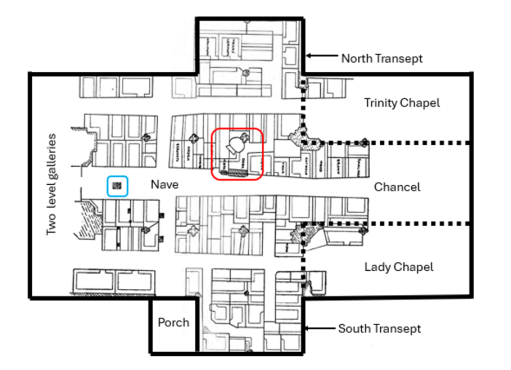
The memorials of All Saints Oakham. Photographs and brief descriptions of the wall mounted memorials at All Saints church in Oakham (May 19th 2025)

From Oakham to Mandalay. The story of a young curate from Oakham and his brief service as a missionary in Burma before his early death (April 29th 2025)

Kinetic Water Power – some odd words on a memorial in All Saints Oakham led to some interesting findings about how church organs were powered at the start of the 20th century (25th April 2025)

The Harrington Bequest. Two posts that consider the bequest of Anne, Lady Harrington in 1616. Part 1- The charityPart 2 – Oakham Parish Library (31st March 2025)

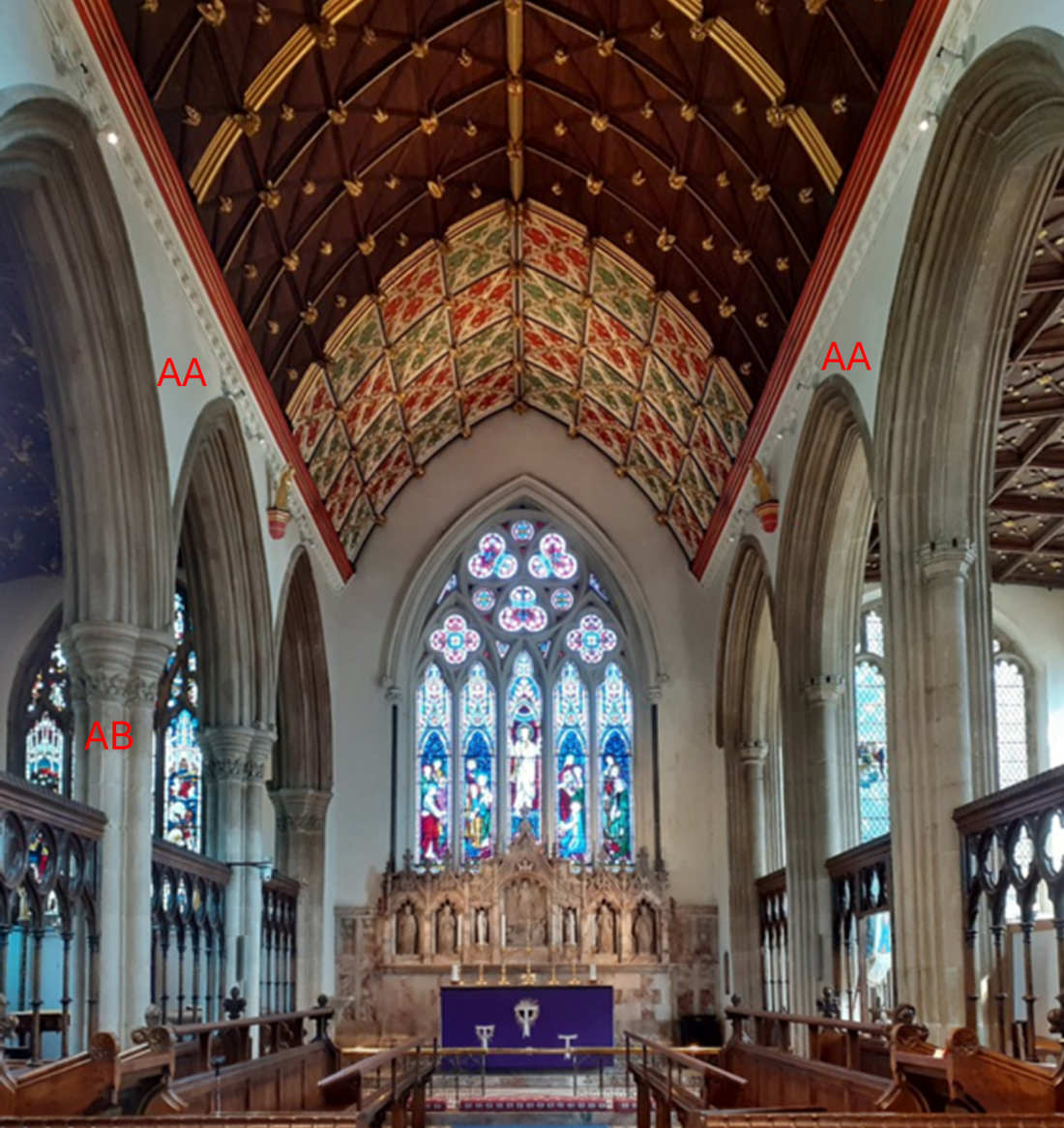
The chancel and chapels of All Saints church Oakham – Gilbert Scott’s legacy. A post looking at some aspects of the restoration of All Saints Oakham in 1858 (November 5th 2024)

A time to mourn, and a time to dance – the All Saints season through the ages. The recording and transcript of a  talk given at All Saints Oakham on 31/10/24  (November 3rd 2024)

The 1858 Restoration of All Saints church in Oakham. Part 1Part 2, Part 3 Three linked posts giving the transcripts of press reports of the restoration and re-opening of All Saints church in 1858, including the condition report by Gilbert Scott (October 9th 2024)

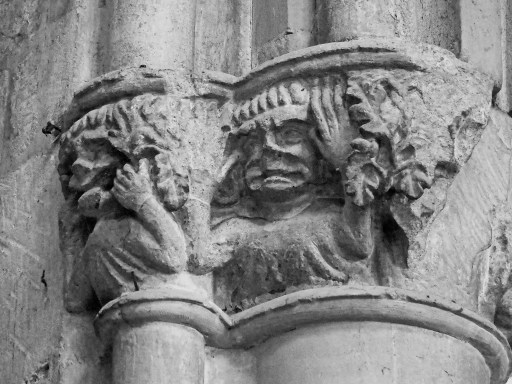
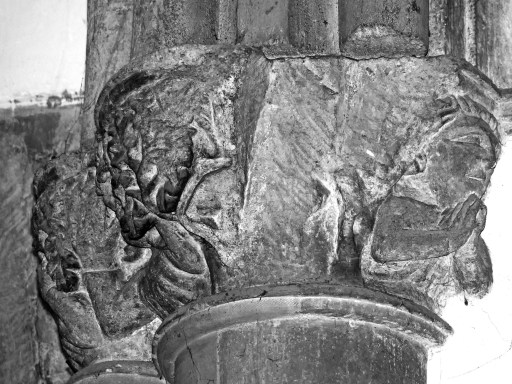
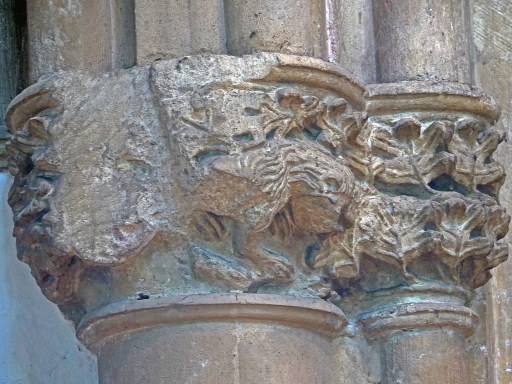
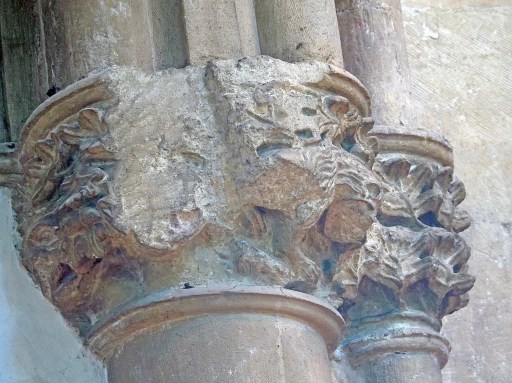
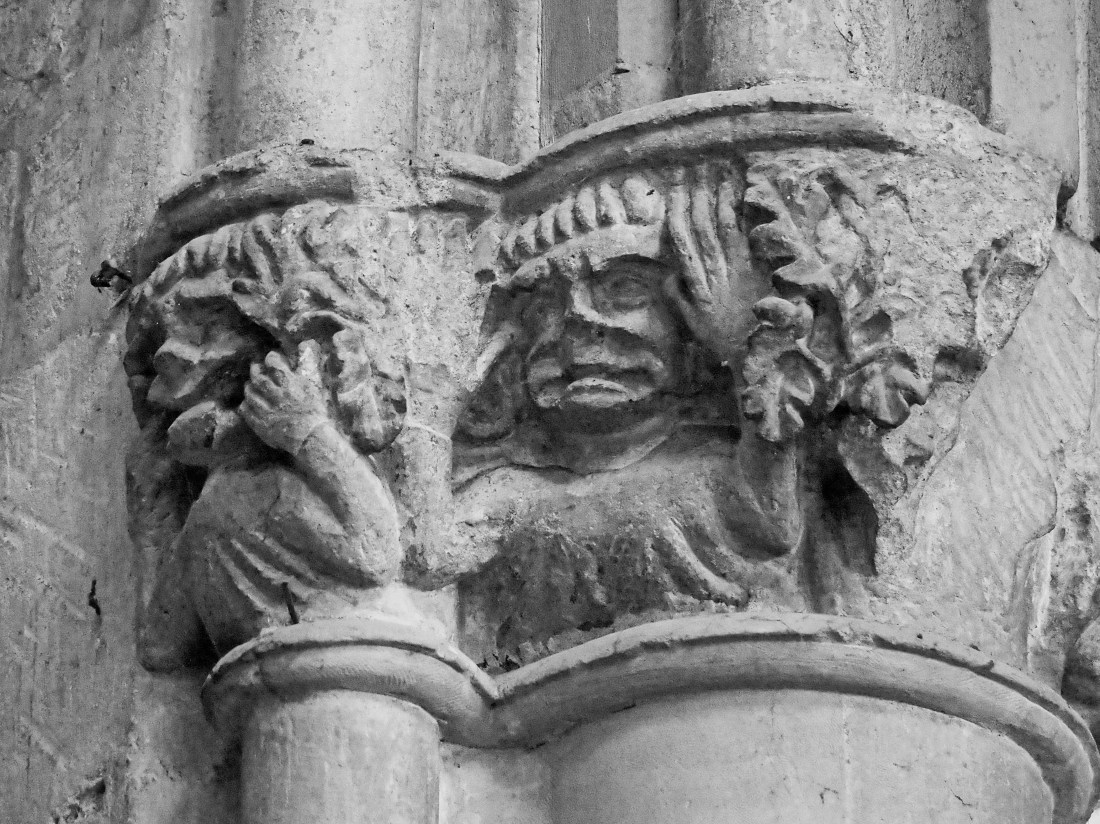
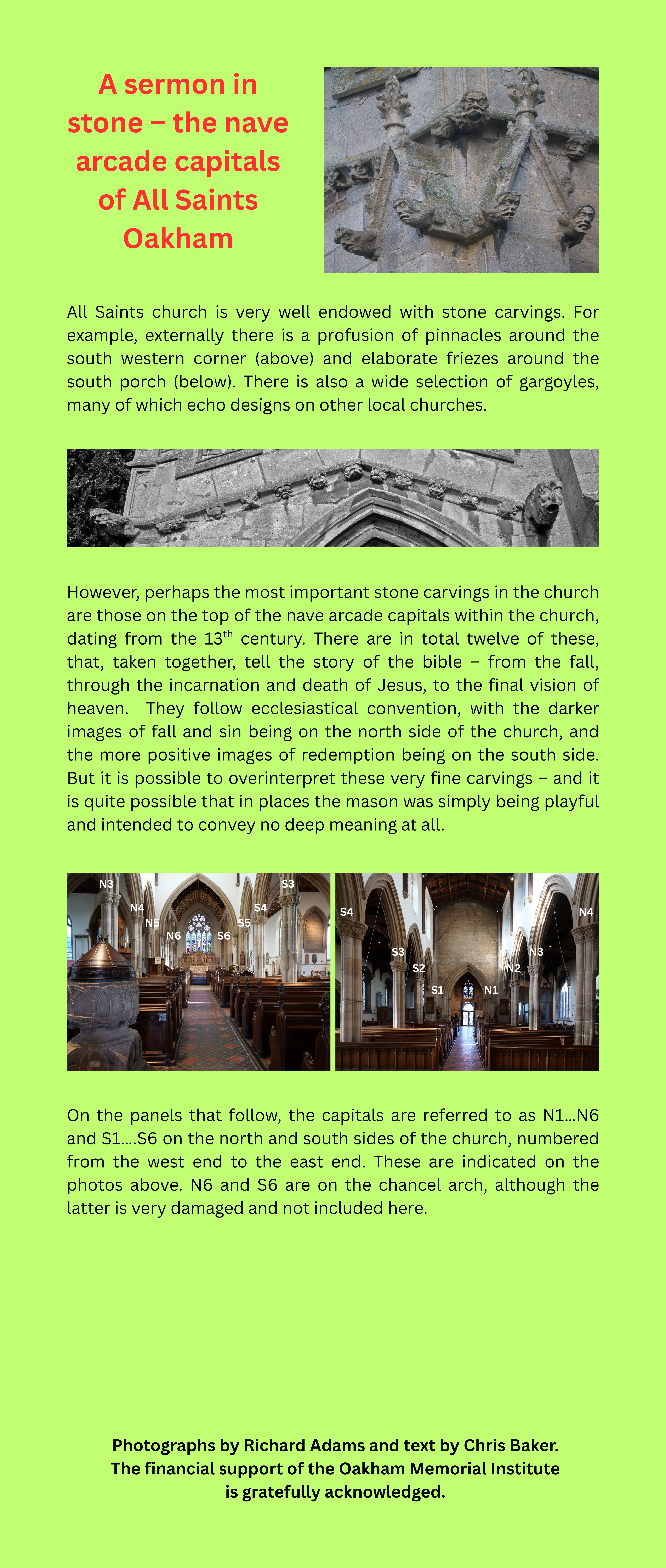
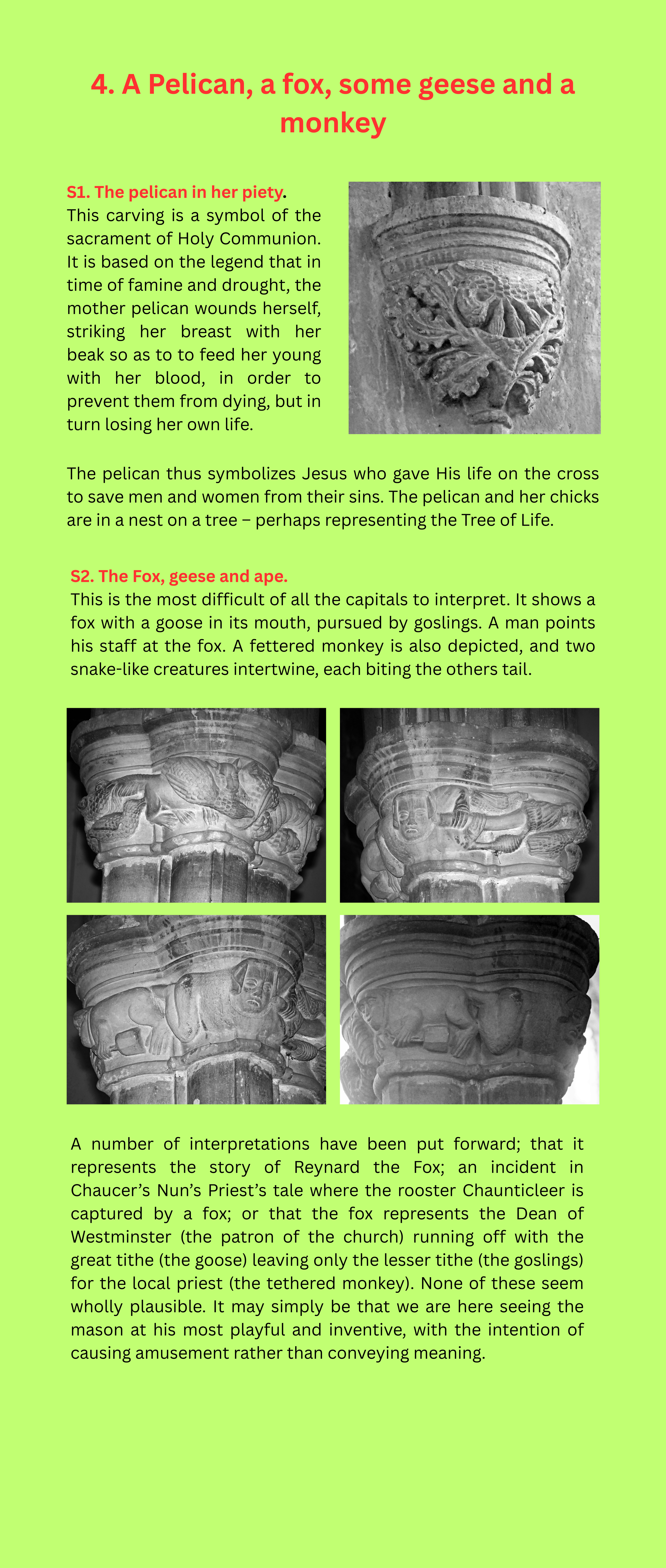
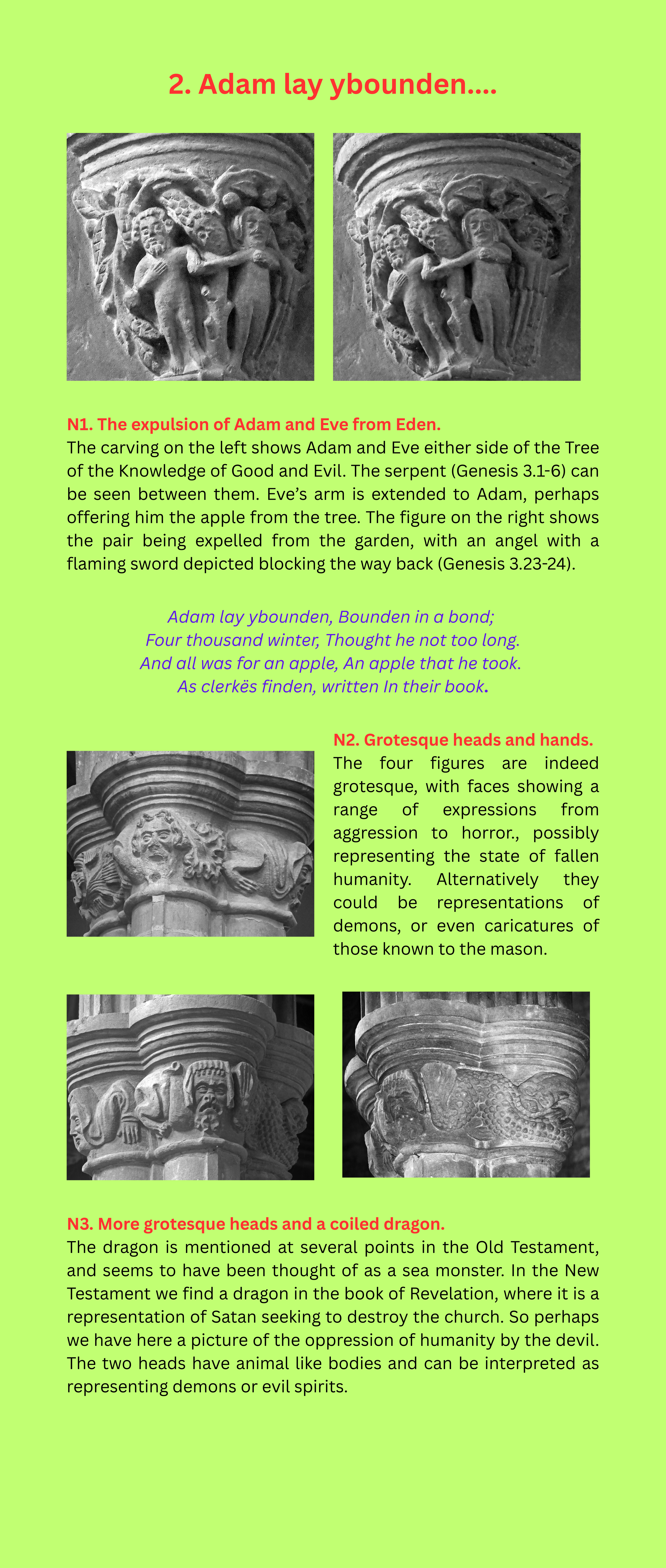
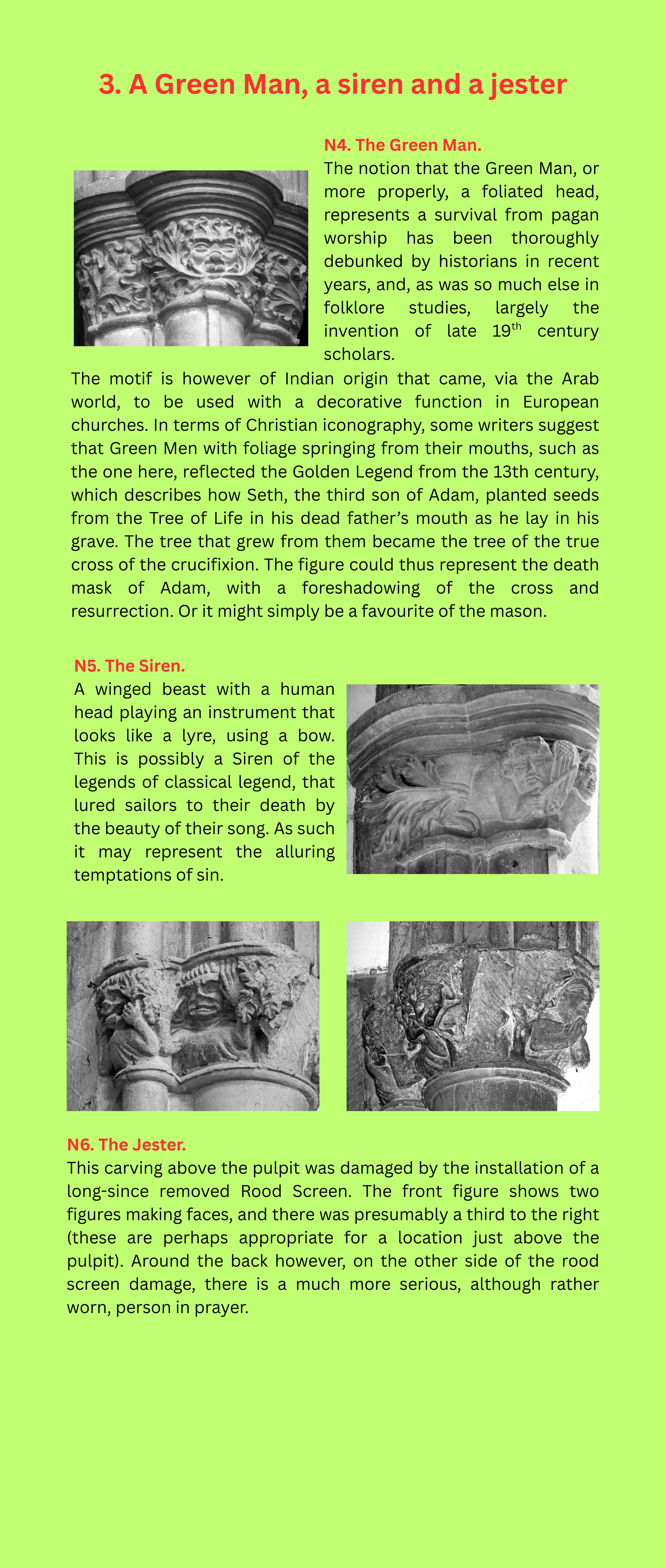
The good, the bad and the grotesque – the decorated capitals of All Saints church in Oakham. An examination of some wonderful medieval stone carvings in Oakham Parish Church (3rd February 2024)

For more see https://profchrisbaker.com/ecclesiastical-studies/ecclesiastical-blog-posts/

Presentation

A time to mourn and a time to dance. A time to mourn and a time to dance – the All Saints season through the ages. The video of a talk given at All Saints Oakham on October 31st 2024