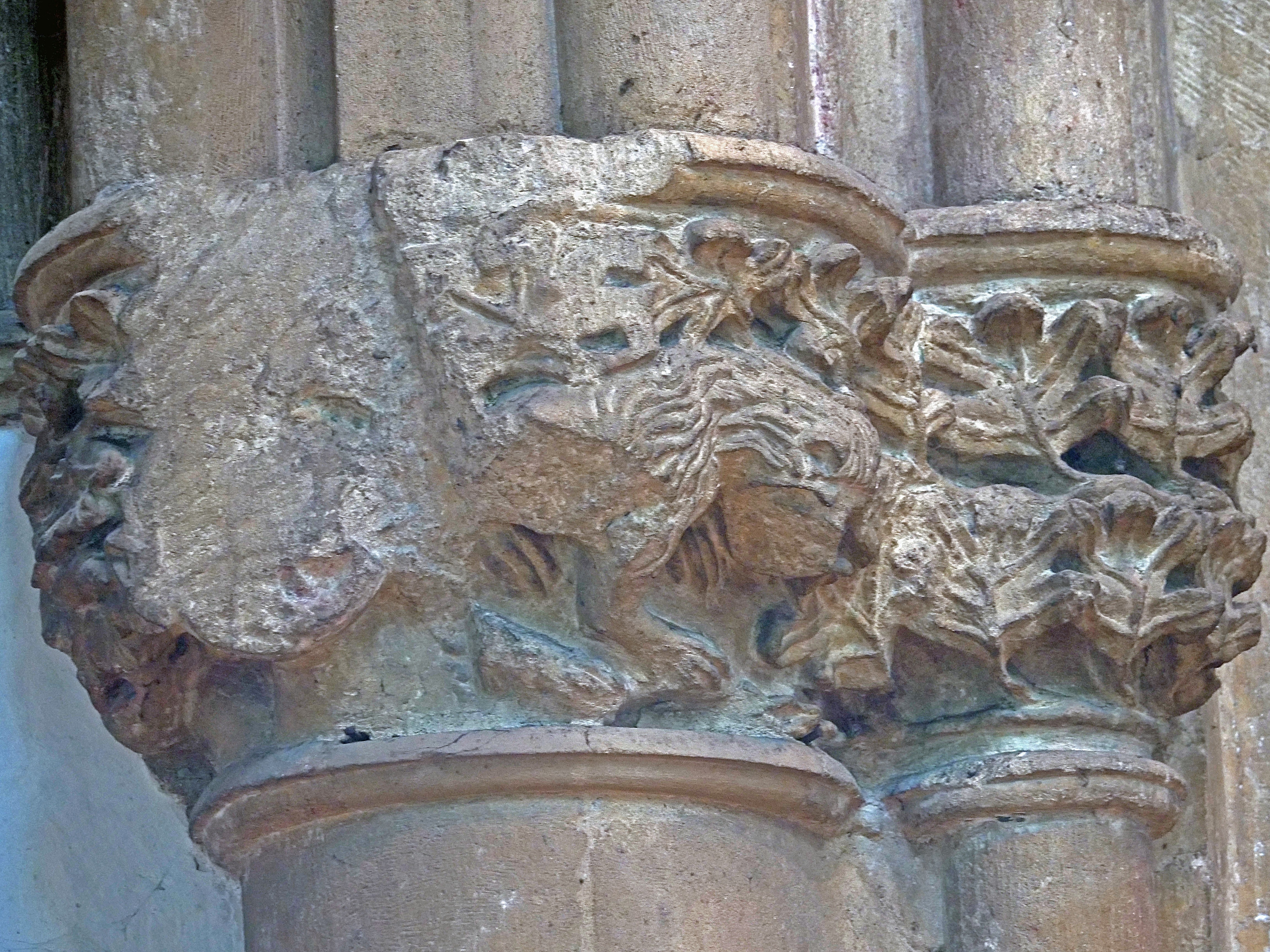

In a recent post I have described the exhibition “A sermon in stone” at All Saints Oakham which features photographs of the 13th century nave arcade capitals. That exhibition builds on work set out in an earlier blog post. The carvings feature biblical, classical and folklore themes and between them appear to tell the salvation story from the fall of Adam and Eve to the resurrection of Jesus and beyond. In this post I include a photograph and brief discussion of a carving that didn’t feature in the exhibition, as it was felt to be too badly damaged.
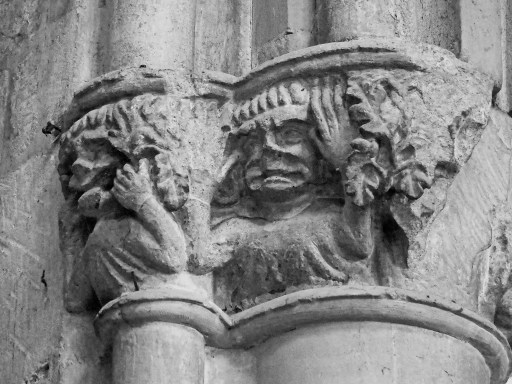
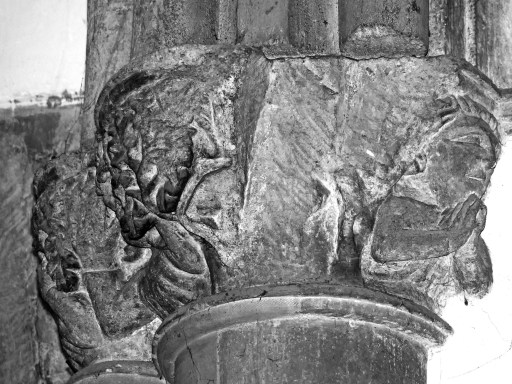
Figure 1. Making faces and praying
Most of the carvings are around the capitals on the pillars in the nave arcade, but two are actually on the chancel arch at the same height as on the arcade. Both have been damaged at some point it the past by the installation of a rood screen. One of these features in the “Sermon in Stone” exhibition – that on the north side of the chancel arch of jesters making faces above the pulpit with a more serious praying figure looking into the chancel (figure 1). The other, on the south side, was thought at the time to be too damaged to include. However when a high resolution photograph was taken (by Richard Adams who took all the photos for the exhibition) it was found that there was considerable detail remaining – see figure 2, which shows a lion like figure, in an oak leaf surround.
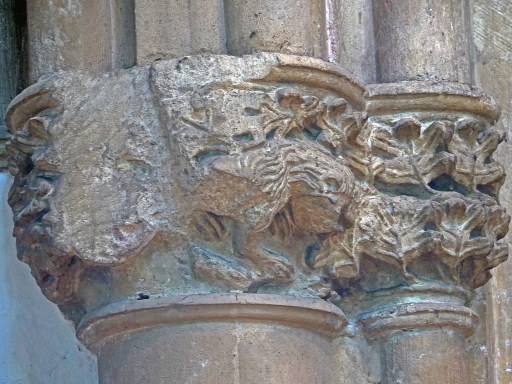
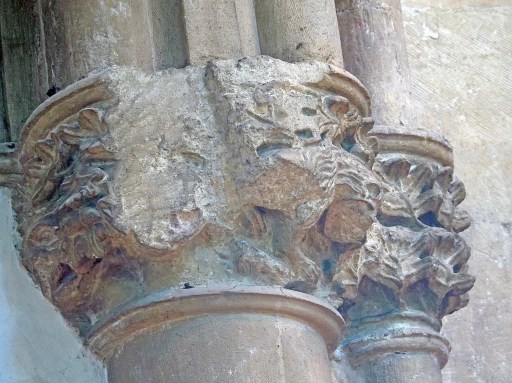
The question then arises as to whether or not this carving has any meaning in the overall salvation theme of the carvings. It is clear from the overall arrangement that those carvings on the north side represent the dark side of salvation history – the fall, the devil, temptations to sin – and those on the south side the light side of redemption and restoration – the eucharist, angels and evangelists, the annunciation and crowning of the Virgin. The jester on the north side fits into this theme quite well, as displaying a range of unredeemed human qualities, and on this basis one would expect the figure on the south side to represent something more positive. Now in scripture, the symbolism of a lion is nearly always negative, as a creature that attacks and destroys, except in one place in the book of Revelation where Jesus is described as a lion of the tribe of Judah (Revelation 5.5).
Then one of the elders said to me, ‘Do not weep. See, the Lion of the tribe of Judah, the Root of David, has conquered, so that he can open the scroll and its seven seals
So perhaps in this carving we perhaps see a representation of Jesus, identified as the Lion of Judah, sat on the throne of God in heaven. This would be appropriate in its position as next to the capital that shows the crowning of the Virgin and the Harrowing of Hell, which are also eschatological themes. But, as ever with these carvings, this identification must be quite speculative.

