Pensnett history blogs and presentations – a compilation

Some summer reading and viewing for those interested in the history of Pensnett (which includes the area that used to be known as Shut End).

Blog posts

The railways of Shut End and Corbyn’s Hall A detailed look at the industrial railways within and around the iron works at Corbyn’ Hall and Shut End. (March 2nd 2020)

The Shut End Primitive Methodist Chapel. These three posts are based on the Baptismal Register of the Shut End Primitive Methodist Chapel in Tansey Green, and look at the life of the chapel in the mid to late 19th century. Part 1 Introduction and Chapel Building Part 2 The Baptismal Register Part 3 Ministers and Families (March 21st 2020)

Coal mining in the Shut End and Corbyn’s Hall area This post looks the coal mines in the Shut End and Corbyn’s Hall area, using the extensive database on the Coal Authority website. (April 18th 2020)

Cricket and Football in Pensnett in the Nineteenth Century. a brief description of the sporting scene in Pensnett from around 1860 to 1900. (November 21st 2020). I have also posted an amplification of part of this post (the single wicket cricket match on the Black Country Society web site at Cricket, but not as we know it (September 29th 2022)

The Pensnett Saxhorn Band. A post describing the life and times of the Pensnett Saxhorn Band in the mid-nineteenth century, giving a snapshot of some aspects of Black Country cultural life at the time. (March 30th 2021)

The fields that survived. An investigation of a small unit of land consisting of three late 17th century Black Country fields that escaped the ravages of mining, colliery waste and urban development to remain more or less intact to the present day. (July 23rd 2023)

The early history of the Crooked House. A post looking at the history of the Crooked House, or Glynne Arms, up to the 1870s, mainly based on early maps of the area (September 23rd 2023)

For more blog posts about Pensnett and the wider Black Country see https://profchrisbaker.com/historical-studies/black-country-history/

Presentations

A tale of two maps – the 1822 and 1840 Fowler Maps of Kingswinford. A version of a talk given at a conference entitled “A landscape of the end of the world: the industrial revolution and the Black Country c. 1706-1914” at the Black Country Museum in July 2023

A policeman’s life – Samuel Hicklin (1858-1924). A policeman’s life – Samuel Hicklin (1858-1924). This presentation that describe the remarkable life of Sam Hicklin, the son of a farm labourer who was to progress to the highest ranks of the Staffordshire Constabulary (via Pensnett).

An Ecclesiastical Affair The video tells a true story from 1870, with many contemporary resonances, about the Victorian Black Country parish of Pensnett where the errant clergyman had a flirtation with a pupil teacher at the local school, that led to scandal in the village, a clergy discipline trial, a series of anonymous broadsheets circulating in the village making all sorts of accusations about church members (some comical, some rather nasty), and a nationally reported libel trial. Wayward clergy, scandal and libel – all the hallmarks of a good story!
A Black Country poet – Jim William Jones

On November 9th 2024 as part of the Black Country History Day to be held the Black Country Living Museum in Dudley, I will be presenting (with help from Emma Purshouse) some of the poetry of the Black Country poet Jim William Jones, to illustrate the industrial, social and built environment of the region in the second half of the 20th century. Jones was a sharp eyed observer of his beloved Black Country and his poems give a deep insight into the area and its people over that period. This is a rather different way of “doing” history, but hopefully one that will both entertain and inform. I write below to give some brief details of his life and work, since this information is not generally available elsewhere.

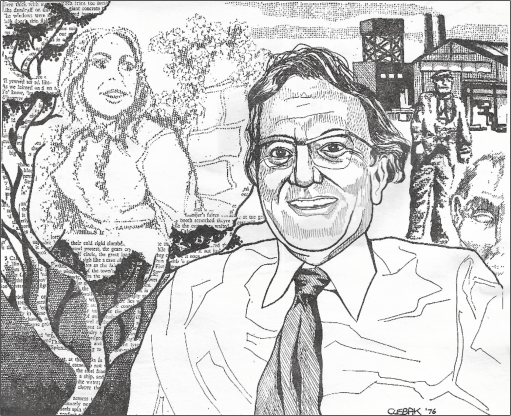
J W Jones by CLEBAK, From Black Country Society Calendar collection 1976

Jim William Jones was born in Coseley on February 15th, 1923, and spent his childhood and school years there. After leaving school he began work with the engineering firm Joseph Sankey and Sons as a junior clerk. He was conscripted into the army at the age of 18 in 1941, taking part in the Normandy landing in 1944 and also serving in India and Ceylon, reaching the rank of Warrant Officer. After the war he returned to Sankey’s and was trained in works management, before leaving industry to join local government in 1955 where he worked in education administration, marrying Jesse Ralphs at Wednesbury in that year. He was a qualified teacher of speech and drama and a member of amateur dramatic societies, hosting a radio programme on Beacon Radio and working with the Black Country folk music group Giggetty. He had a strong Christian faith and was a gifted speaker and Methodist local preacher. He became a very well-known Black Country poet, both for his dialect poetry (Black Country ballads) and for his poetry in more conventional English. Some of these can be found in three small publications by the Black Country Society – “From under the smoke” from 1972, “Factory and Fireside” from 1974, and “Jim and Kate” from 1986, all sadly long out of print. He contributed numerous poems to the first 25 years of the Society magazine, the Blackcountryman from 1967 to 1992. He died in 1993.

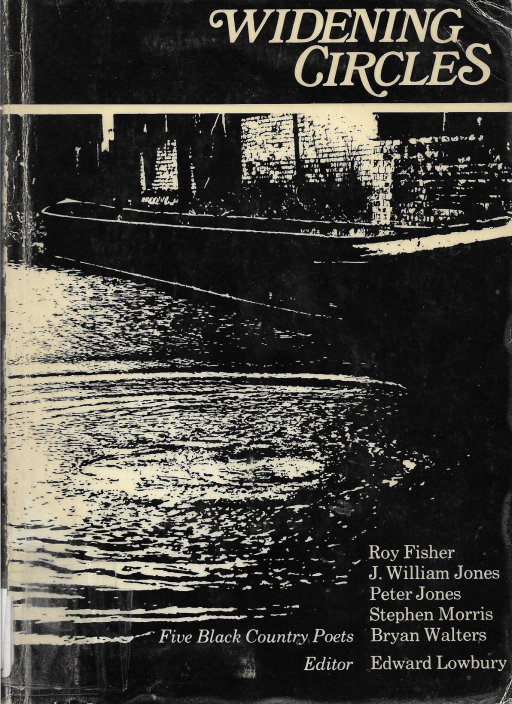
Some of Jim Jones poems were included in a 1976 anthology “Widening circles” edited by Edward Lowbury. Following Jones’ death, Lowbury wrote an appreciation for the Blackcountryman (26.4, 1993). He acknowledged the humour and the pathos in the dialect ballads, which at the time of publication of “Widening Circles” he felt to be more successful than the poems in standard English. By 1992 however he had somewhat modified his views and concluded that his standard English poems were perhaps “nearer to the heart of poetry than the more immediately entertaining dialect ballads”.

In a much later Blackcountryman article (45.3, 2012) Trevor Brookes again writes in appreciation of Jim Jones, and in particular his dialect poetry, emphasising that as well as humour, they contained much that showed a profound understanding of people and their lives. He regretted that these were not easily available, being scattered across many newspapers and other publications, and not accessible to modern readers.

Personally, I first became aware of Jim Jones work in the early 1970s, when my mother gave me a copy of “From under the smoke” as a Birthday present. This little volume became a prized possession and has travelled around the country with me over the last 50 years, regularly read and re-read.

To enable others to either reacquaint themselves with his work, or to enjoy it for the first time, some of Jones’ poems have ben published in a short series of Black Country Society blog posts from 2022 that can be found at the links below.

The Blackcountryman poems of Jim William Jones Part 1

The Blackcountryman poems of Jim William Jones Part 2

The Blackcountryman poems of Jim William Jones Part 3

In addition, the Black Country Society has scanned “From under the smoke” and “Factory and Fireside” and these are available for members on the Society web site (password required). I have also produced a compilation of 33 of his poems that span the period from 1968 to 1992 – from “From under the Smoke”, “Factory and Fireside” and the Blackcountryman. This is again available to Society members on the web site. These three volumes will be available for purchase as pdfs from the Society online shop at some point in the near future.

Most, but not quite all, of the poems in the compilation are in standard English. Another volume could easily be produced containing a selection of his dialect poetry, but as Trevor Brookes noted, these are more scattered, and the collection of them would be a major task. Nonetheless it is perhaps something I will attempt in the future.