
Author’s note
This post contains the text of a tribute to Julian Hunt that I delivered (through a recording) to the Wind Engineering community gathered at London Ontario for the Conference Dinner of the Computational Wind Engineering Conference in June 2026. I cannot claim to have known Julian well – he would have regarded me as a simple acquaintance – and much of the material below is derived from other public sources. However it does contain some personal memories, that are of particular relevance to those in the wind engineering discipline and I hope it will be of some interest to readers in that community. Note that the tribute as delivered was somewhat shorter than that contained below because of the restrictions of time.
Other obituaries
Other obituaries can be found via the following links.
- Trinity College, Cambridge
- University of Cambridge
- Royal Meteorological Society
- Royal Society
- Cambridge Environmental Research Consultants
- The Times
- The Guardian
- The Telegraph
The tribute
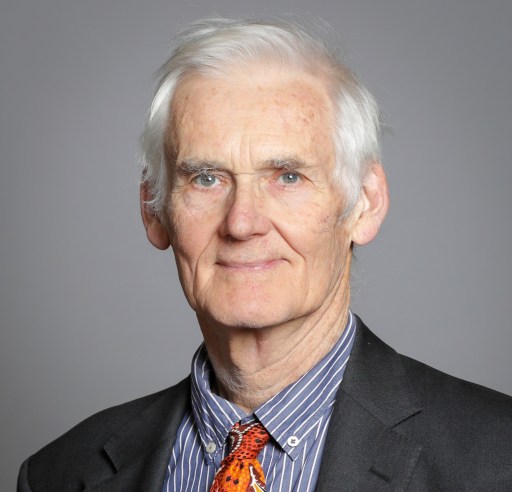
Julian Charles Ronald Hunt was born in Madras in British India in 1941, where his father was a civil servant and diplomat, but spent most of his childhood in England with relatives. He attended Westminster School and Trinity College Cambridge, where he read Mechanical Sciences and graduated with a 1st Class BA in 1963, before carrying out postgraduate research in the field of magnetohydrodynamics, for which he was awarded a PhD in 1967. He had been elected a Fellow of Trinity College in 1966 and in 1967 he undertook post-doctoral research as a Fulbright Scholar at Cornell. From 1968 to 1970, he was a research officer with the Central Electricity Generating Board where, amongst other things, he studied the collapse of the Ferrybridge Cooling Towers. On his return to Cambridge in 1970 he was made a university lecturer in applied mathematics and engineering, and was later appointed Reader and Professor of Fluid Dynamics in 1990. He held numerous visiting professorships, and was also a visiting scholar at the United States EPA in 1977 and the National Center for Atmospheric Research in 1983. He was a founding director of Cambridge Environmental Research Consultants in 1985, which developed his academic work into practical applications, and remained as Chairman of the company until 2022.In 1989 he was elected as a Fellow of the Royal Society and in 1992, became Director General of the Meteorological Office. In 1997 he became Professor of Climate Modelling at University College London, from where he retired in 2008.
Julian Hunt married Marylla Shephard in 1965 and they had three children: novelist Jemima; medical doctor Matilda; and historian and former Member of Parliament, Tristram. He was politically active and joined the British Labour Party in the 1960s, and was served as a Councillor on Cambridge City Council from 1971 to 1974, being leader of the Labour Group in 1972. He was created a life peer as Baron Hunt of Chesterton (a suburb to the north of Cambridge) in 2000. He died on April 20th 2026.
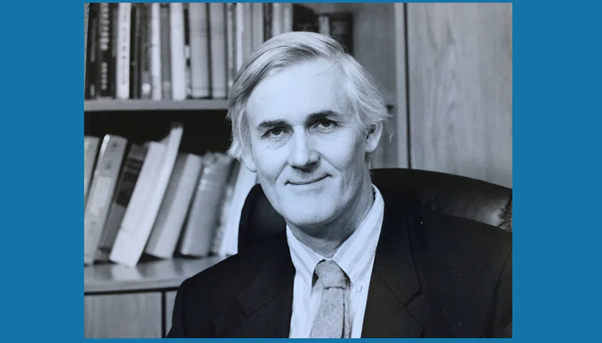
I first came across Julian as a final year undergraduate at Cambridge in the early 1970s when he lectured to me – a short course on vorticity and a longer course on pollutant dispersal based on Gaussian plume modelling, which emphasised the importance of the Richardson number, named after the noted mathematician and meteorologist Lweis Fry Richardson. It was some years later that I realised that he was Julian’s great uncle. Julian’s lectures were always entertaining, but more than a little chaotic and taking any sort of coherent notes was far from easy. Nonetheless mucgh of the narerial he covered was to inform my research and scholarship for many years afterwards. I undertook my Bachelor’s project in the Hydraulic Laboratory of the Department of Engineering, where there was a prominently displayed photograph of Julian Hunt as a research student from a few years previously, with a suitably 1960s flowing hair style, collecting signatures for an anti-Vietnam war petition.
I saw rather more of him as a PhD student, where his work on flow topology helped me in the interpretation of oil flow visualization of horseshoe vortices. He gave a seminar on this topic in the Department of Applied Mathematics on this work, and it was there that I observed one of the few occasions when he appeared unsure of himself, wondering what the audience of very able mathematicians would make of his essentially observational topological work.
On another memorable occasion, as I was walking through Cambridge to do some shopping, he cycled towards me, braked heavily on seeing me, took out a notebook and paper and, whilst still astride his bicycle, sketched out how my smoke flow visualization of horseshoe vortices could be used to check his theory of flow between two buildings. This brief encounter was to result in a short paper in one of the early editions of the Journal of Wind Engineering and Industrial Aerodynamics.
Throughout the following decades, Julian was an ever present in the Fluid Mechanics and Wind Engineering Community, at conferences and seminars, and was very supportive in the early days of the UK Wind Engineering Society. His talks were always stimulating even if the style remained a little chaotic and always delivered with confidence. On one occasion I remember him walking into a meeting of the Hazards forum a little late and finding his name down to give a presentation, that he had clearly forgotten about. For the next 20 minutes he sat at the back of the room and wrote one out (it was the days of OHP acetates, not PowerPoint) and then proceeded to give a coherent presentation that gave no clue as to its recent genesis.
Whilst perhaps best known to the wider world for his work on meteorology, climatology and hazard prediction Julian Hunt’s contribution to the development of wind engineering has of course been significant, laying the basis for the study of wind effects on pedestrians, wind flow over hills, wind forces on and flows around buildings and the dispersion of pollutants, all based on his fundamental work on the nature of atmospheric turbulence. Much of his work on pollutant dispersion has been incorporated in the ADMS modelling suite which is used worldwide as a powerful design tool.
But, as well as these very real achievements, I would suggest Julian’s greatest gift was his ability to analyse a problem, identify the most significant parameters, and develop simple theoretical approaches that could be both practically useful and offer considerable and generisable insights. With our current abilities to generate very large experimental and computational datasets that can so easily cloud our basic understanding of the phenomena we study, cultivating such an approach is perhaps more important than ever, to underpin the huge advances in technology that we are experiencing.
Ladies and Gentlemen, as I am recording this well before you all sat down to eat this evening, I have no idea what will be the state of the meal you are enjoying, but if you still have something left in the glass before you, I would ask you to raise it in a toast, to the memory of Professor Lord Julian Hunt FRS, Baron Hunt of Chesterton.

