

Just for fun – a montage of photographs from the Settle Flowerpot festival – with all the figures made from flowerpots.
Category: Miscellaneous
A miscellany of blog posts

Whilst sorting out my electronic archives, I came across a chace of blog posts / essays from an old (dead) website. Many of these are now outdated, as is the case with such posts, but a number may still be of some interest. Links to them are given in the table below, in date order. It can be seem that they are indeed a miscellany and relate to environmental issues, transport, cricket and football and a few other things. A compilation of all of these can be downloaded using the button beneath the table.
| Global warming and the Christian (article in Church Times) | 3rd September 2003 |
| Natural disasters – Personal and Social Responsibility (talk delivered to the Lunar Society) | 14th August 2006 |
| Journeys by rail, coach and bus in the East Midlands | 14th August 2006 |
| Cricket League Tables | 2006 |
| Gene Mapping | 25th September 2006 |
| Gene Mapping again | 2nd October 2006 |
| An analysis of the Duckworth Lewis method | 7th February 2011 |
| Kidderminster Harriers – the early years | 4th May 2014 |
| Thoughts arising from a reading of “Re-imaging the Railway” by John Dora and John Beckford | 18th May 2014 |
| On corporate Christmas Cards | 30th December 2015 |
| Rail Connectivity in the Midland Engine | 5th June 2017 |
| Contextual data in university admissions. | 1st November 2017 |
| War on Motorists | 16th January 2018 |
| Driverless vehicles – the road ahead | 16th January 2018 |
A cross country experience

Preamble
For family reasons, I often make the journey from Oakham to the Chesterton area of Cambridge, travelling by train from Oakham station to Cambridge North, changing at Ely, and then either walking or taking one or more buses to reach my destination. The last leg is actually quite time consuming, and adds considerably to the overall travel time. Now in July 2025, I learnt of the existence of a new bus service from Huntingdon to Fenstanton and then along the Cambridge Busway, through Chesterton to Cambridge, passing very close to my destination (the Whippet Coaches T1). This seemed to me to offer an interesting, and potentially quicker journey, travelling to Peterborough by Cross Country trains, then to Huntingdon on Thameslink, and then onto the bus to my final destination. What follows is a report on the journey there and back via this route, highlighting both its good and bad points.
The journey
I trevelled to Cambridge very early on a Saturday morning, catching the 5.47 East Midlands Trains service from Oakham to Peterborough, and then, after a 9 minute connection, the 6.24 Thameslink service to Huntingdon. The connection was straightforward, although there was some conflict between the online information and what actually happened on the ground with regard to the platforming of the Thameslink train at Peterborough. I arrived at Huntingdon on time at 6.38.
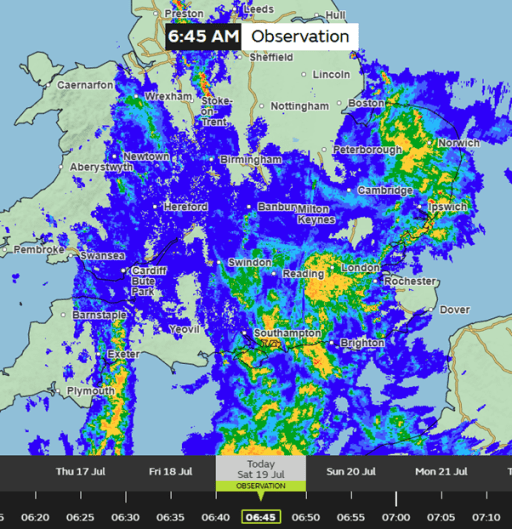
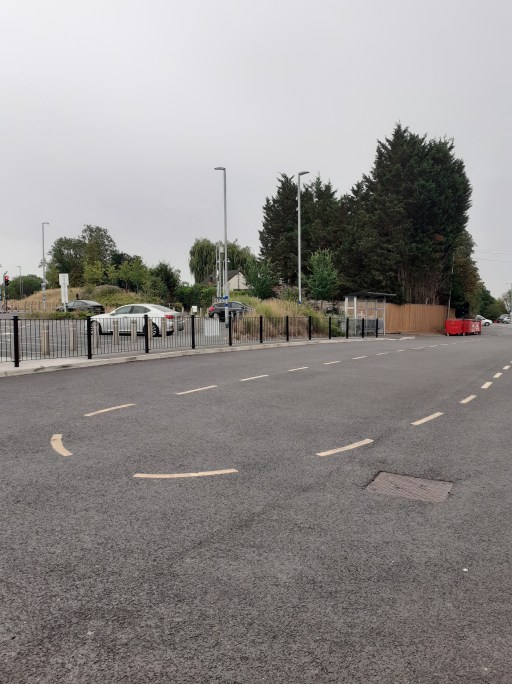
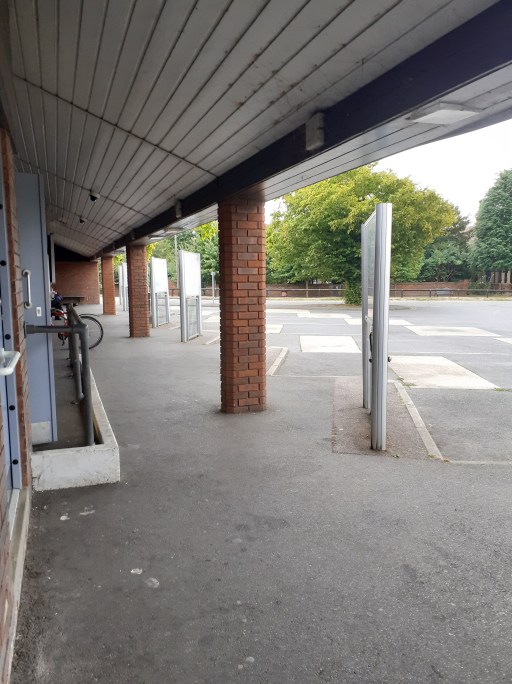
Now the weather that day was “interesting” to say the least, as can be judged from the weather radar screen shot below (Figure 1). The T1 was due to leave the station at 7.19, so I was anxious to find somewhere dry to wait. On leaving the Huntingdon station buildings, I found a convenient bus turning circle, with a respectable shelter (Figure 2). The only problem was that this was obviously not in use, and I was directed to a bus stop on the side of the ring road outside the station, which had no facilities other than a bus lay by and a stop sign (Figure 3). Why this change had occurred I have no idea – presumably something to do with operational convenience – but it had nothing to do with the comfort and convenience of passengers. Not good.
I was not anxious to wait to get soaked in such a situation, so I followed the signs to Huntingdon Bus Station, about a 5 to 10 minute walk away (including crossing the ring road) where the T1 was due to call after the railway station. This was a perfectly acceptable facility, with covered seating and adequate information – the only problem was that it wasn’t at the railway station (Figure 4).

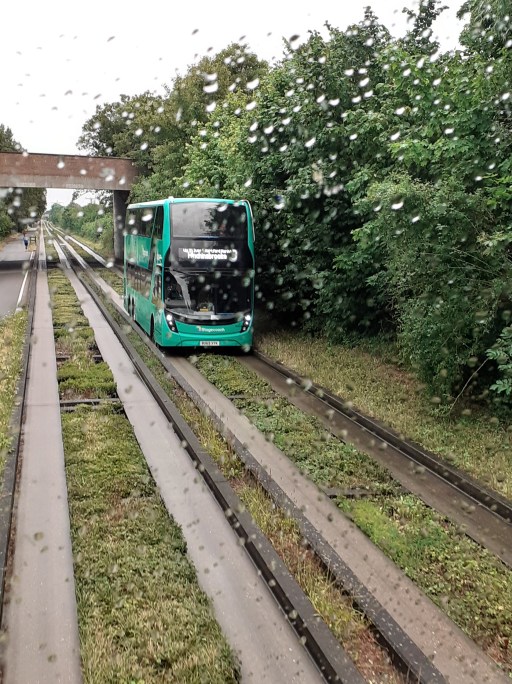
The bus arrived precisely on time. The driver was cheerful and efficient and everything ran smoothly. the bus ran non-stop to Fenstanton, then travelled quite slowly over some minor roads (with cars very dubiously parked) to the Busway at Swavesey. From there the trip was fast and smooth along the busway. The weather by this time was horrible as can be seen from figures 5 and 6. Loadings were light throughout, perhaps because it was a wet Saturday morning. It left the Busway at Milton Road in the north of Cambridge, and stopped at a number of stops along that road (unlike the standard Busway buses that run limited-stop into the city centre). I arrived at the stop I wanted a little after 8.00. The journey time was about 2 hours and 20 minutes, even with the 40 minute sojourn in Huntingdon. That was about the same time that the journey would have taken by train to Cambridge North. It was however rather cheaper, partly thanks to my Bus Pass!

The return journey was uneventful, except for the weather. Around about Fenstanton, the persistent rain became a deluge which persisted until after the bus arrived at Huntingdon. The drop off in the layby outside Huntingdon station and the walk into the station building was unpleasant to say the least. I got on the bus at around 12.30 and arrived back at Oakham at 14.20 – half an hour quicker than the outward journey thanks to good connections in Huntingdon and Peterborough.
Reflections
So what was my overall view of the journey. The T1 bus service itself was very pleasant and convenient and Whippet Coaches are to be congratulated. The journye times and stopping places suited me very well. The service has the potential to be more than just a local service and could have a more inter-urban role, if the connections into the rail network were better. The hourly service inevitably means some extended connection times at Huntingdon and / or Peterborough and a more frequent service would be nice, although whether this would be financially viable is perhaps doubtful.
The unpleasant part of the journey was the lack of proper bus connection facilities at Huntingdon station. It is difficult to see how this could have been made worse, and is a classic example of the neglect of the most basic principle of integrated transport. Whoever is responsible (Cambridgeshire County Council perhaps?) should hang their heads in shame.
Traws Cymru – a trip around North Wales
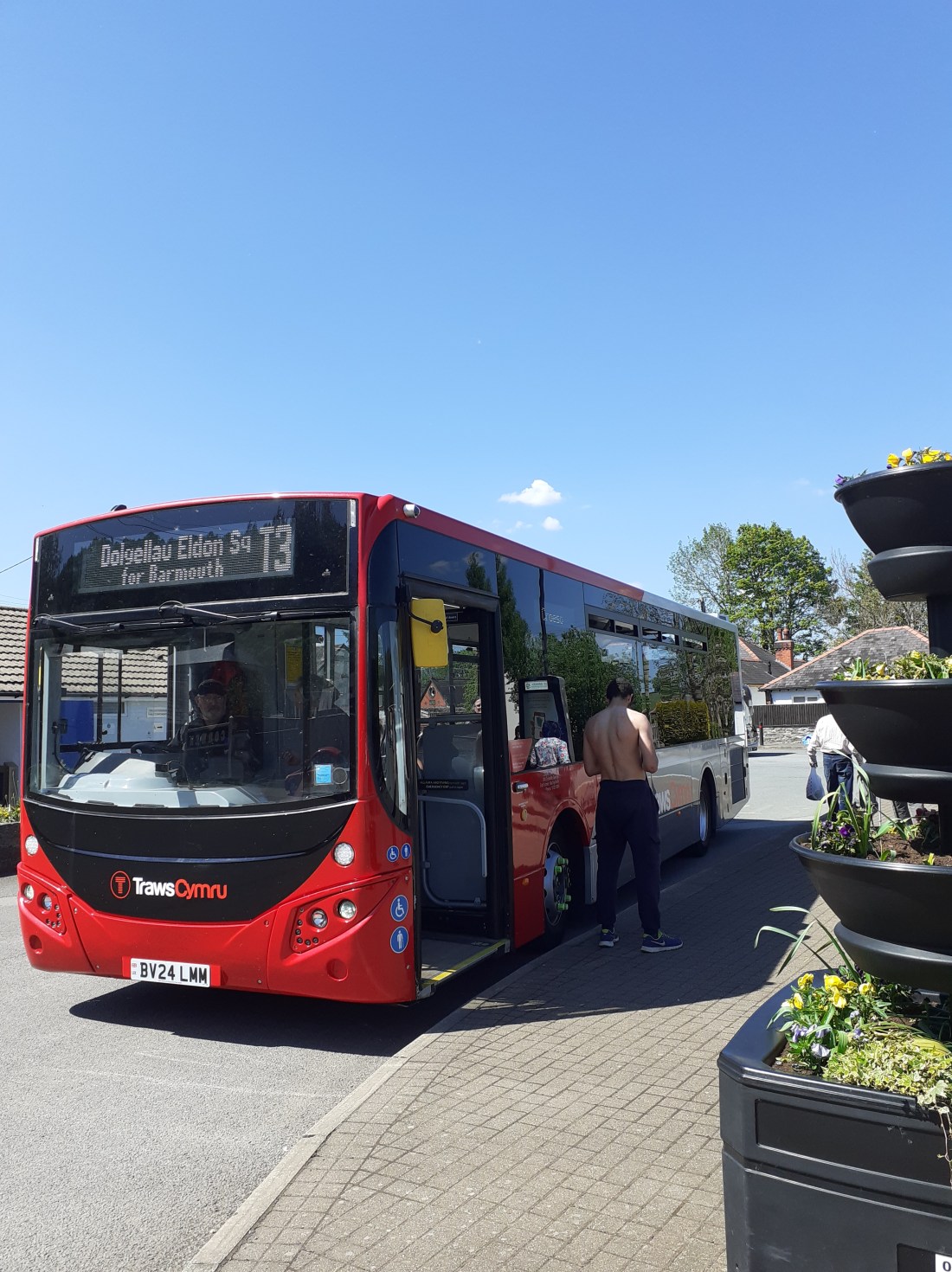
Introduction
In mid-May 2025, I made a journey that I have had in mind for a number of years – a circular trip around North Wales mainly by inter-urban bus. I had a number of reasons for wanting to make this trip. Firstly it involves travel through some of the loveliest countryside anywhere in Britain. Secondly, it allowed me to indulge my obsession with looking at heritage railway stations, three of which are shown below – I will leave it to the reader to identify them. And thirdly, and for the purpose of this post most importantly, it allowed me to travel on the Traws Cymru bus network. I have watched this network develop from afar over the years, and have often thought I would like to look at it more closely.
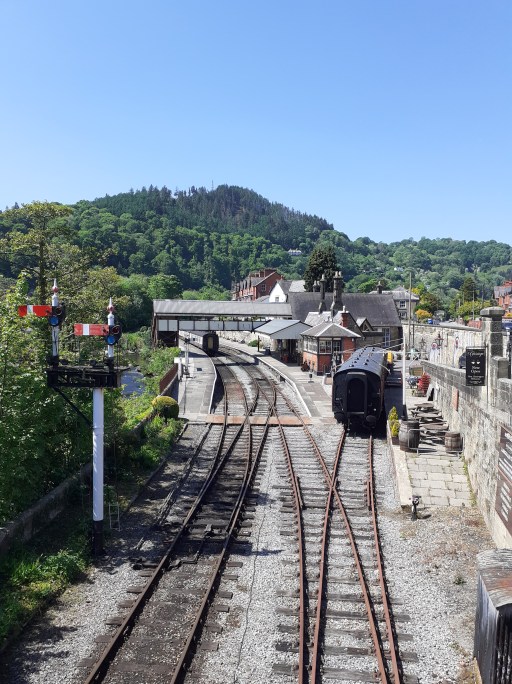
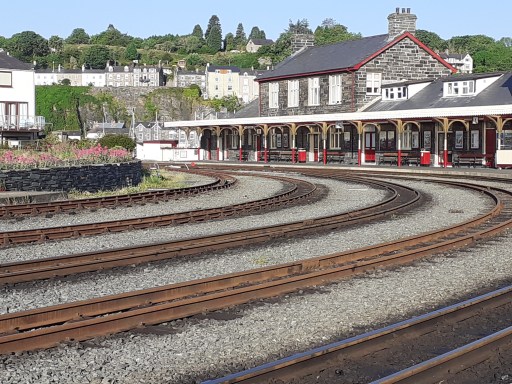
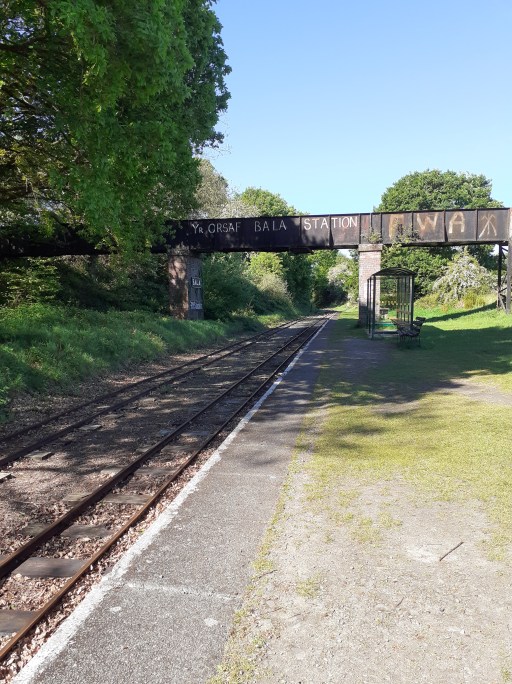
In what follows I firstly describe the route that I took and comment on some general aspects. I then consider the vehicles that I travelled on, and then the infrastructure – bus stops and interchanges. Finally I make a number of comments on the good and bad points of the trip.
The route
The first step of my journey was to travel from my home in Oakham in Rutland to Ruabon on the Welsh border by train. This involved changes ta Birmingham New St and Shrewsbury. There were no problems either on the way there or the way out, with all journeys running close to time. At the start of the journey there was the perennial feeling of relief when it became clear my Cross Country train was really running and had not been cancelled, that turned into a feeling of surprise when it actually arrived at Oakham on time. But, as I say, the journey worked well and I arrived at Ruabon around noon as planned.

The Traws Cymru inter-urban bus network in North Wales is shown in the figure above. My first bus was not however part of the Trwas Cymru network, but rather the Arriva 5 from Wrexham to Llangollen that I boarded at Ruabon. I took this rather than wait an hour and a half for the first Traws Cymru T3 bus, and it gave me time for a brief look around Llangollen and a look at the railway station. On boarding this bus I asked for a concessionary 1bws ticket (£4.70 for all day travel on buses in North Wales for English bus pass holders – excellent value). The driver looked a bit mystified but eventually gave me the correct ticket. The bus was quite full – over 50% loaded – but fairly comfortable and made up some of the time after a 10 minute late departure from Ruabon. From then on my journeys were all (bar one) on the Traws Cymru network as follows (approximate loading given in brackets).
- Llandudno 13.39 to Corwen 14.04 – T3 (60%)
- Corwen 14.15 to Betws-y-Coed 15.03 – T10 (5%)
- Betws-y-Coed 15.05 to Caernarfon 16.23 – S1 (30 to 50%)
- Caernarfon 17.05 to Porthmadog 18.05 – T2 (100%+)
And the following day.
- Porthmadog 8.05 to Dolgellau 9.02 – T2 (30%)
- Dolgellau 9.03 to Bala 9.33 – T3 (5%)
- Bala 11.33 to Ruabon 12.39 – T3 (25%)
All the journeys kept time very well, and none was more than 3 or 4 minutes late at the point where I disembarked. Throughout the trip, the drivers were helpful and friendly, which makes a hige difference to the passenger experience. The journey not on the Traws Cymru network was the Sherpa S1. I chose to change onto this, rather than continue on the T10 to Bangor and catch the T2 to Caernarfon and Porthmadog there, simply because the ride up to Pen-y-Pass at the foot of Snowdon must be one of the most spectacular and exhilarating in the country.
The vehicles
I am by no means a bus expert, but from what I could gather from various websites, I travelled on the following vehicles.
- 5 – ADL Enviro400 City, operated by Arriva
- Traws Cymru T2 and T3 – Volvo B8RLE MCV Evora operated by Lloyds Coaches.
- Traws Cymru T10 – ADL Enviro200 MMC operated by K and P coaches.
- Sherpa S1 – ADL Enviro400 operated by Gwynfor coaches.
Photographs of all but the first of these are shown below
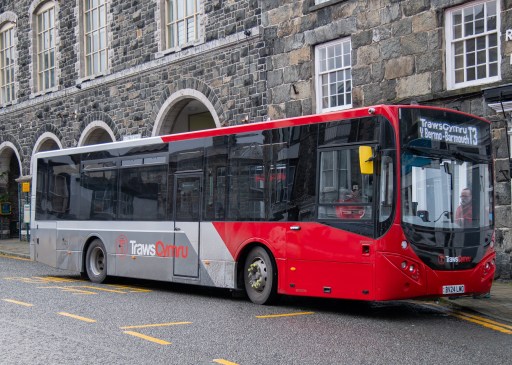
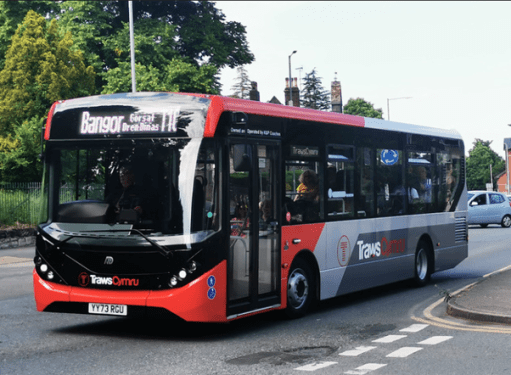
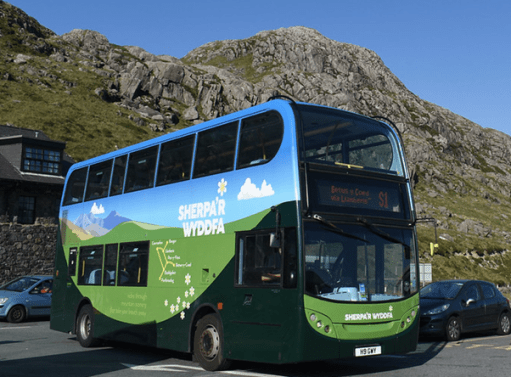
From my point of view as a passenger, the Traws Cymru and Sherpa vehicles were all basically buses – comfortable enough, with nice seats, but not of express coach standards. All vehicles had working USB charging points (something that many rail franchises don’t seem to be able to provide), and two of the Traws Cymru vehicles had WiFi, although this tended to drop out in the more rural areas. Most had screens that could potentially be passenger information screens, although they were not in use. As someone who isn’t terribly well acquainted with the area, the use of such screens to tell me which stop was coming next would have been really useful, and would have meant that I did not have to rely upon Google maps. In general though, I found the buses a pleasant and efficient way to travel, although I doubt I would have found them terribly comfortable for journeys of much more than an hour.
Bus stops and interchanges
Bus stops and interchanges are an integral part of any public transport journey, but in my experience receive far less attention and allocation of resources than they should. These feelings were reinforced on the journey described in this post
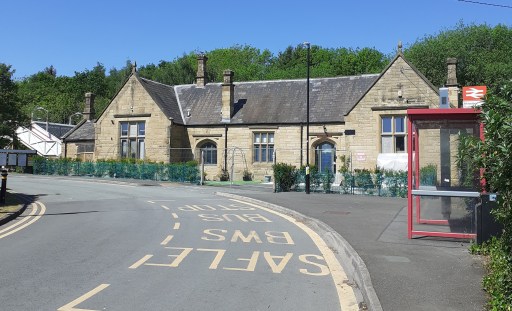
At Ruabon the Traws Cymru stop was just outside the station building. It contained basic information about timetables, but no real time information. The shelter was functional but nothing more. I actually only used this stop on my return journey – the Arriva 5 left from a stop at the end of the Station Drive. Here the same information (about northbound buses to Wrexham only) was being displayed in the shelters on either side of the road, which was confusing to say the least. If one didn’t have a basic grasp of the geography of the area, it would be easy to have got on the wrong bus.
At Llangollen I got off and on the bus at the Bridge Hotel stop. This can be seen to be a roadside stop of the most basic sort. Fortunately it wasn’t raining. There was a timetable displayed, but no real time running information.
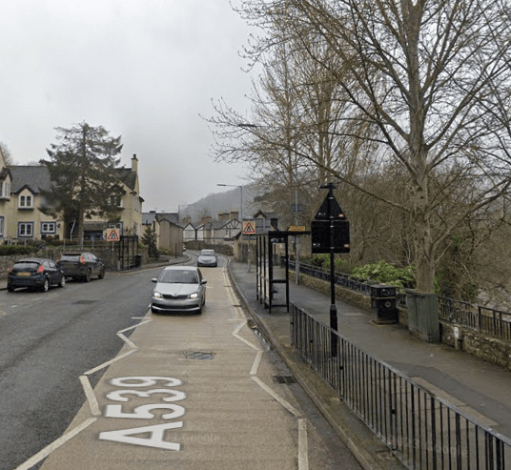
Corwen was very different. Here there are proper interchange facilities with good, real time information, a solid shelter and space to wonder in the bus stop area. I think I could make out a toilet block too, but didn’t investigate it. This is a nice facility. It would probably benefit from not being branded as “Corwen Car Park” – although it is indeed in the centre of a car park. It is much better than such a name would suggest. My only worry would be that the shelter would not be large enough for all those changing vehicles on a wet day. But this is how it should be done.
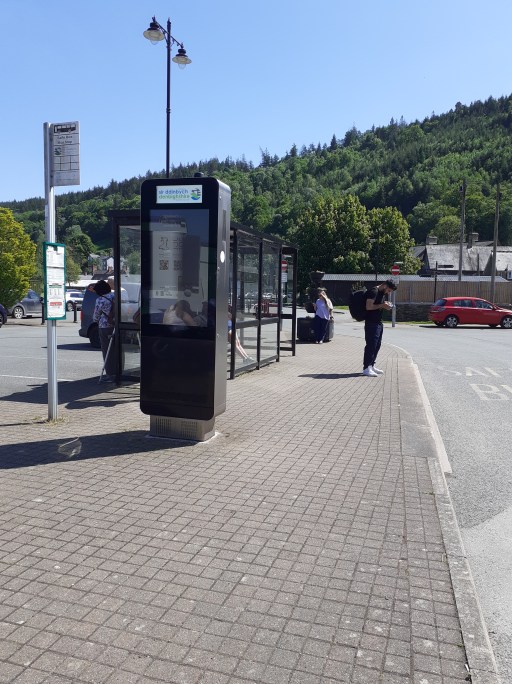
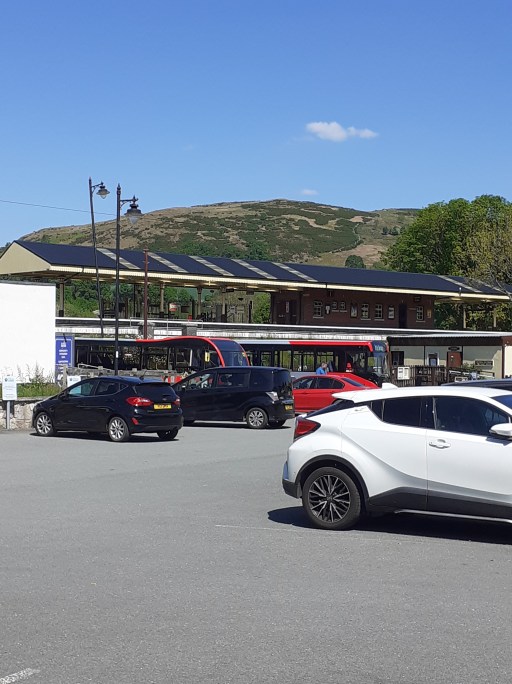
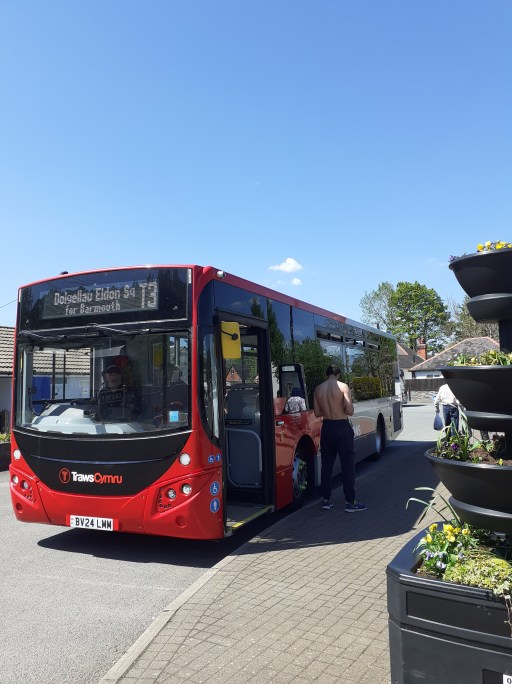


Betws-y-Coed is a strange place. It seems to be drowning in an ever expanding sea of car parks that have obliterated whatever it was that attracted folk there in the first place. The interchange is close to the station, and whilst there is shelter and some timetable information, I found the interchange, with four buses parking in an area that simply wasn’t large enough, very confusing and unsettling. Indeed I boarded the wrong bus at my first attempt. I think that there is scope for producing something like Corwen here, but it will cost I guess. Sadly the adjacent railway line, with its not-quite three hour interval service simply isn’t part of the interchange game here, which is based on a regular two hourly frequency.
Caernarfon bus station is simply a row of three of four bus stop and bays along a narrow street. However there is good passenger information and the provision of shelters is adequate. No problems here from my perspective.

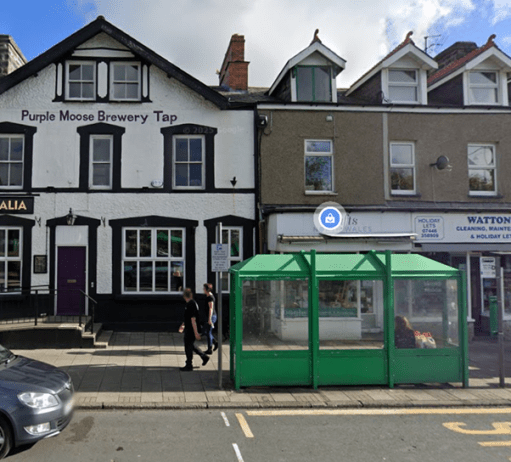
I began my second day at the bus stop outside the Australia in Porthmadog. It is simply a roadside stop. Passenger information and creature comforts are minimal. Porthmadog deserves better.
With my trip almost over, it reached its low point – Eldon Square in Dolgellau. This was perhaps the most chaotic bus interchange I have ever experienced with four buses double parked in wholly inadequate, highly trafficked space. There may have been public information systems, but such was the chaos I couldn’t find anything. The place is simply not fit for purpose. It is clear from a web search that its inadequacy is well appreciated and there have been long term discussions about how to overcome the issues. Maybe something will be sorted out in future, but of all my memories of the trip, Eldon Square is the one that remains with me. I will do my utmost to avoid ever having to use it again.

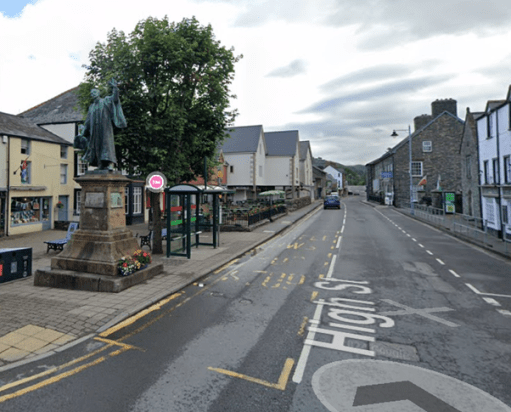
My final change of buses was at Bala – simply alighting at the stop in the centre and getting on the next bus in two hours time. again, it was a simple roadside bus stop. with only a paper timetable provided, amongst a sea of notices pasted to the stop itself. Very oddly, one of these was advertising a vacancy for a clergyman in East Sussex!
Some closing thoughts
On balance I was quite impressed by the Traws Cymru network. The regularity and timekeeping were impressive (although I suspect the latter might suffer when the traffic is busier in the high season) and the tickets were excellent value. The buses were comfortable, at least for journeys up to an hour or a little longer. It would be good if more use could be made of the on board information screens, particularly for passengers who don’t know the area well. The bus stops and interchanges were not so impressive however, with only just tolerable information provision (and hardly any in real time) and shelter provision in most places. I suspect if the weather had been wet, I would have been less impressed by the experience. The contrast between my experience at the well thought out interchange at Corwen and the chaos of Eldon Square in Dolgellau was quite stark. Something really does need to be done about the latter.
A recent news item indicates that an express North / South Wales coach service is under consideration, over the route of the current T2 to Aberystwyth and the T1 from there to Carmarthen, which would only have a relatively small number of stops in the larger towns. From my perspective this is to be welcomed, but I would urge anyone involved in implementing such a scheme not to forget the passenger infrastructure where the coach calls. If a premium service is to be provided by high quality coaches, then this must be matched by higher quality passenger facilities at its calling points, with good quality shelter and information systems – and ideally toilets and access to refreshments. Good interchange with the rail network should also be provided, with something better than a bus stop in the station carpark, Without such provision I fear any such experiment will fail.
The lighter side

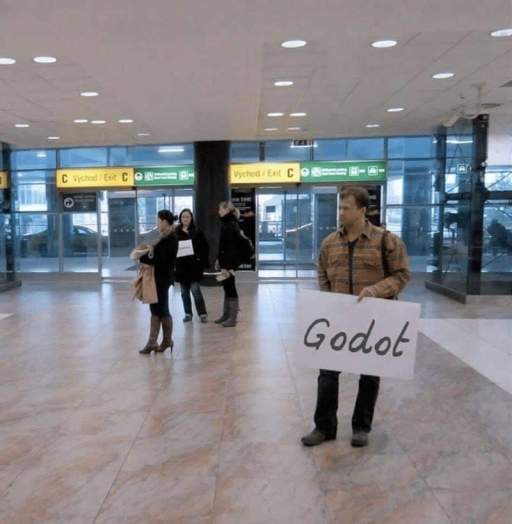
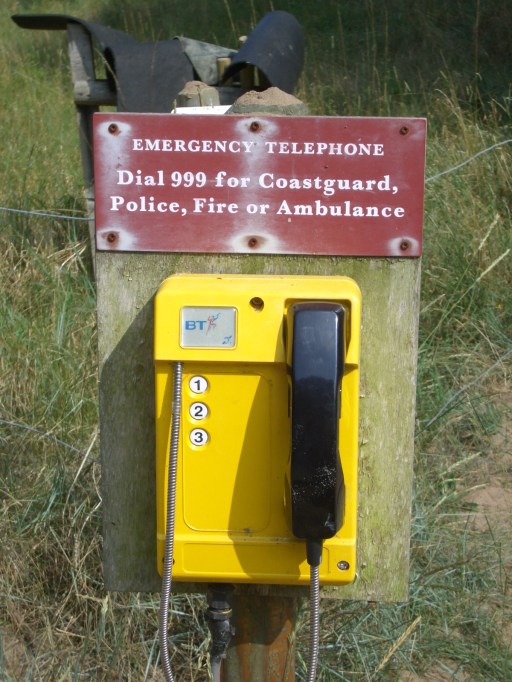
This post simply shows some photographs that I have found amusing for one reason or another in the past, in the hope that others may also find them enjoyable. They have been collected over the last couple of decades, and I am afraid I don’t know the source of some of them, but if any reader can supply the missing information, I would gladly acknowledge the photographer, or remove the pictures if required.

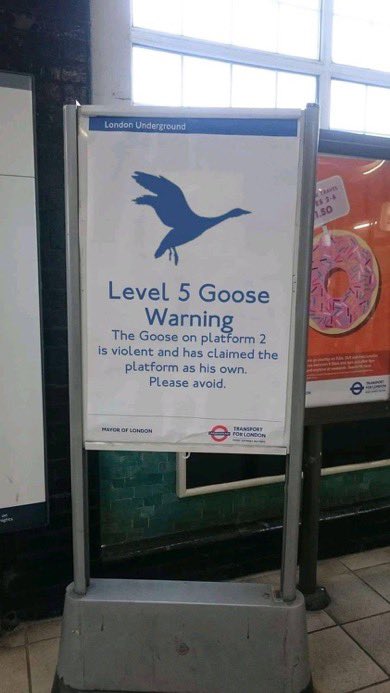


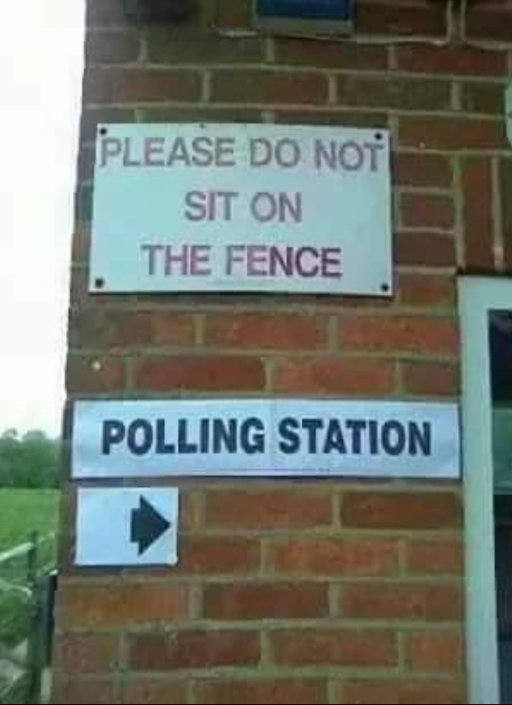

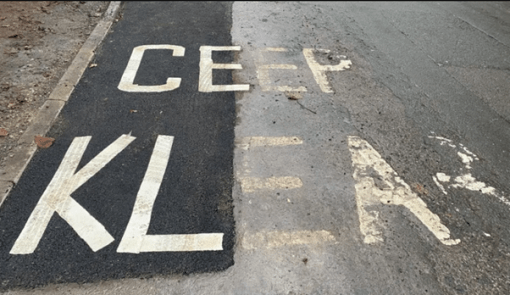
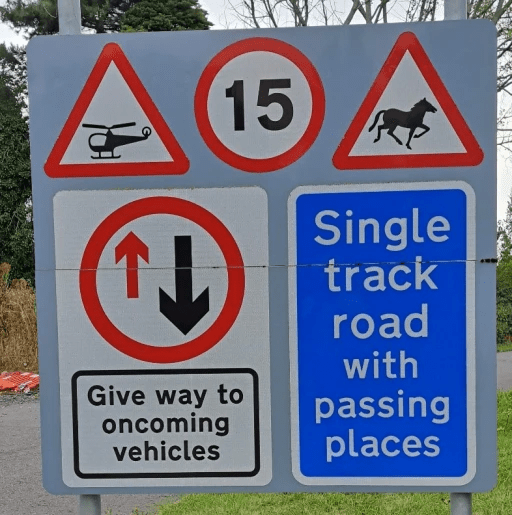

St. Michael’s Churchyard, Lichfield through the year
A picture blog featuring the photographs of Maureen Brand – evocative pictures of the churchyard of St Michael in Lichfield through the changing seasons.


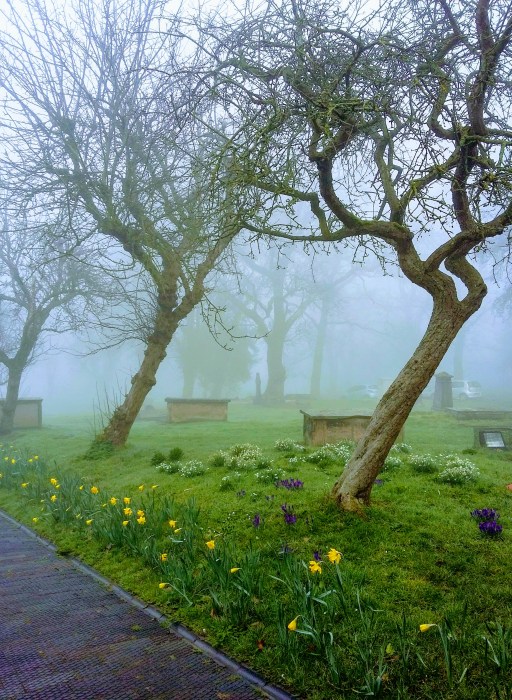

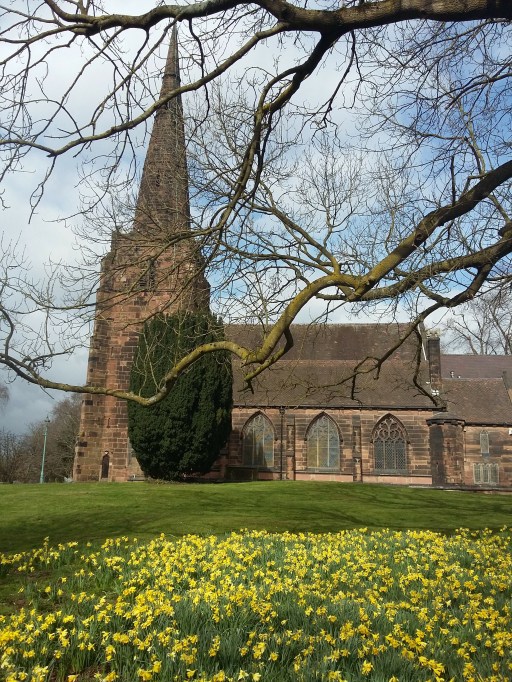


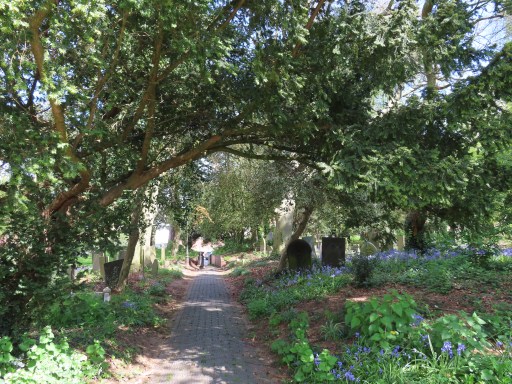

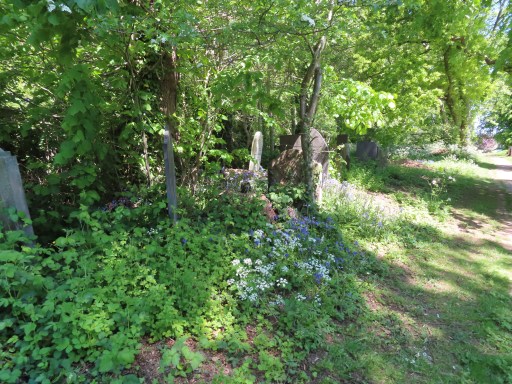


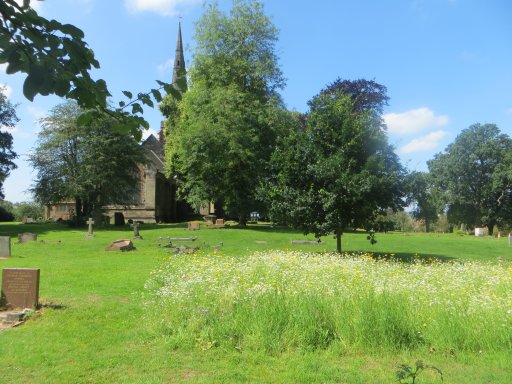

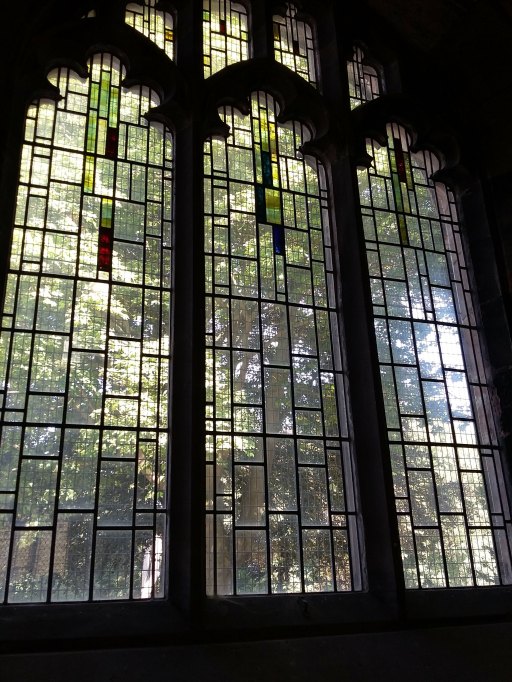
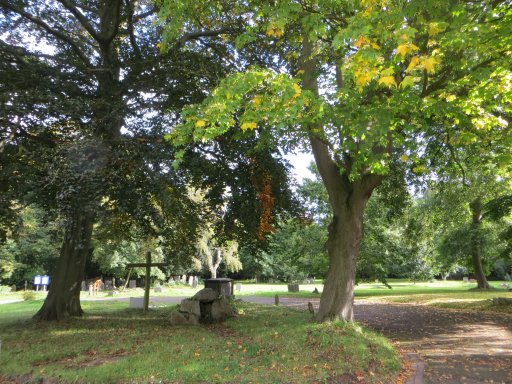
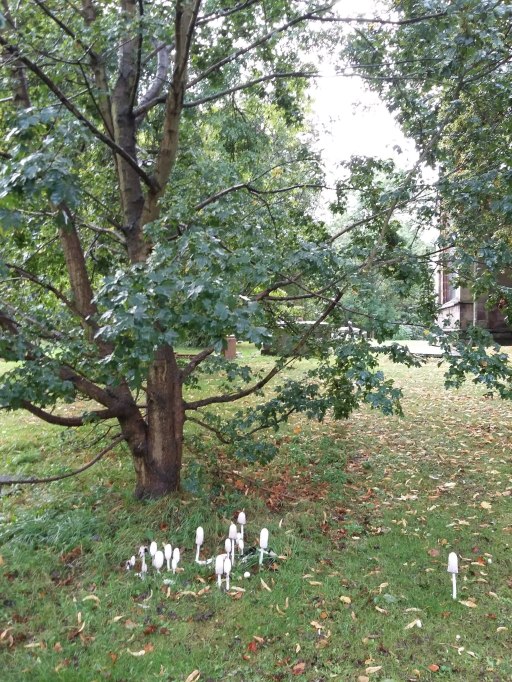
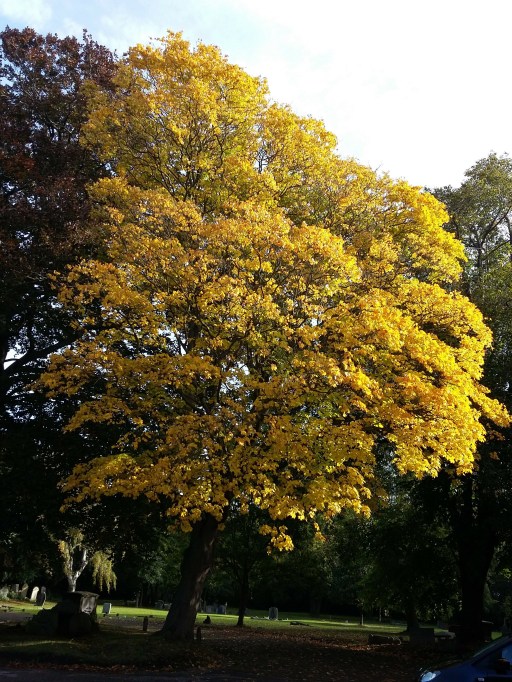
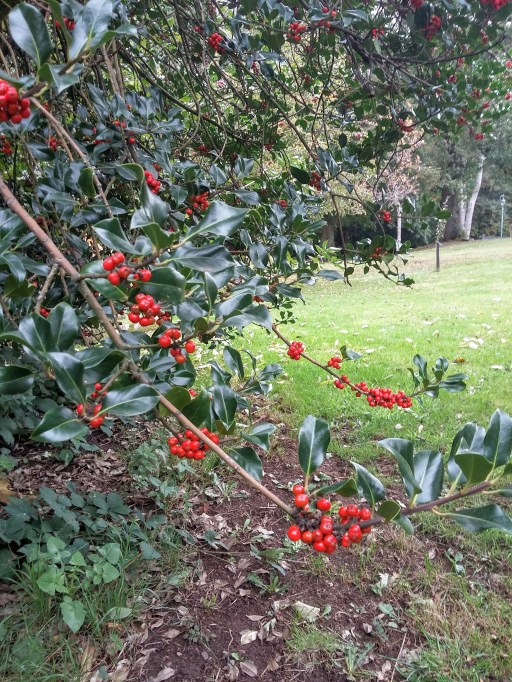
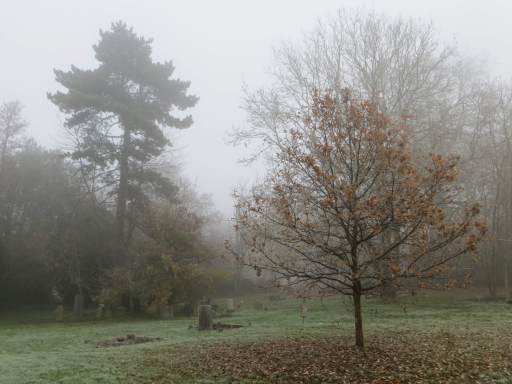
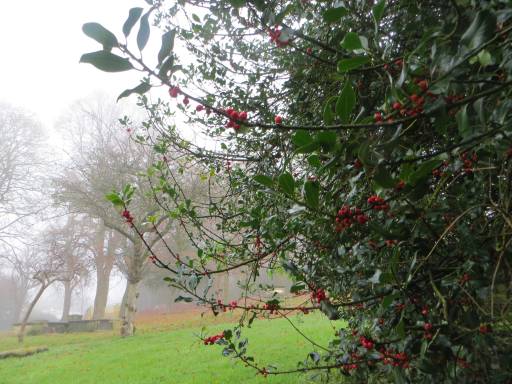
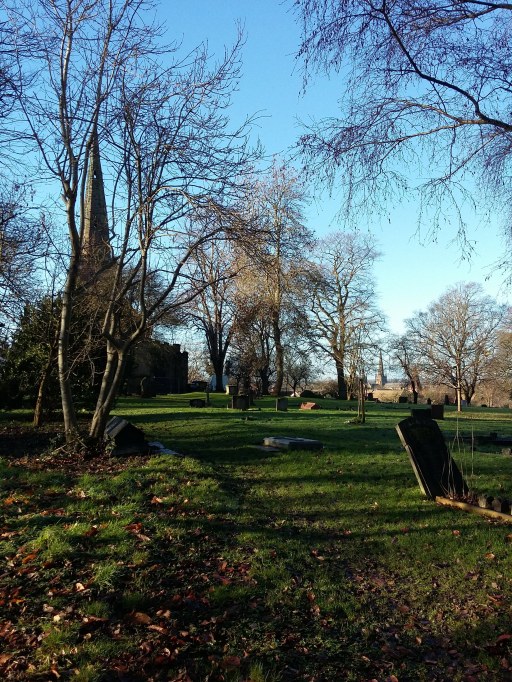

Nore information on the church and churchyard can be found using the buttons below.
Ghost signs
A new interest of mine – the old, faded painted signs on buildings whose function has changed. There are just a few photos for now, and I will add more as I come across them. For those interested there is a much greater selection at this Historic England site.
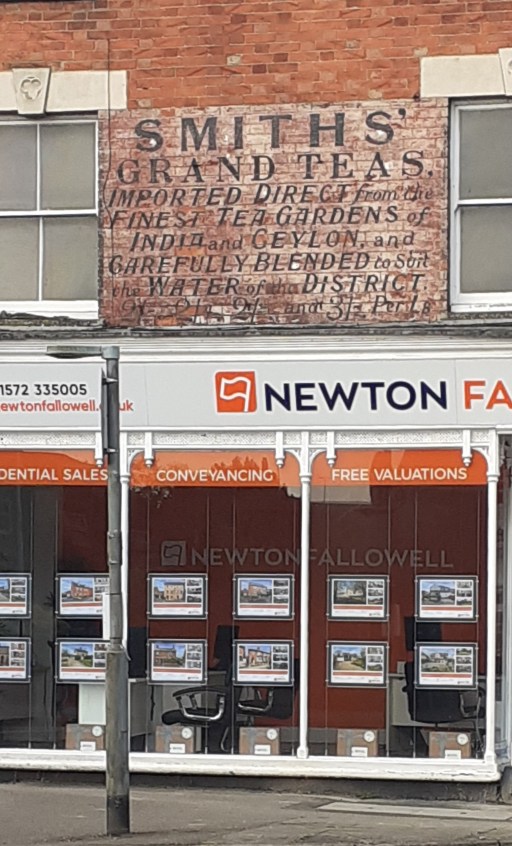
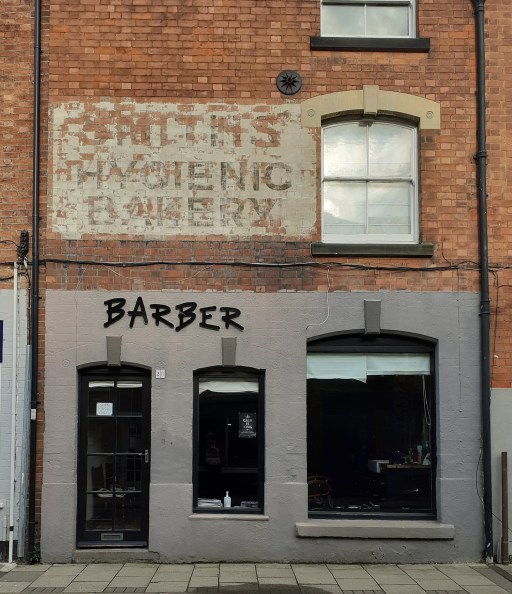
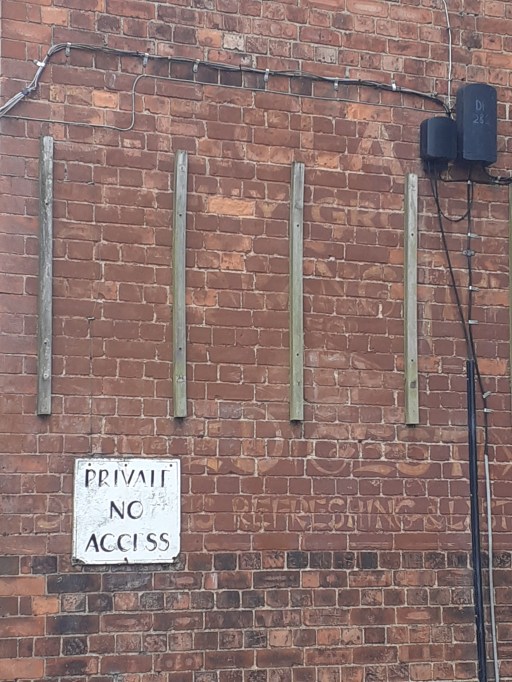
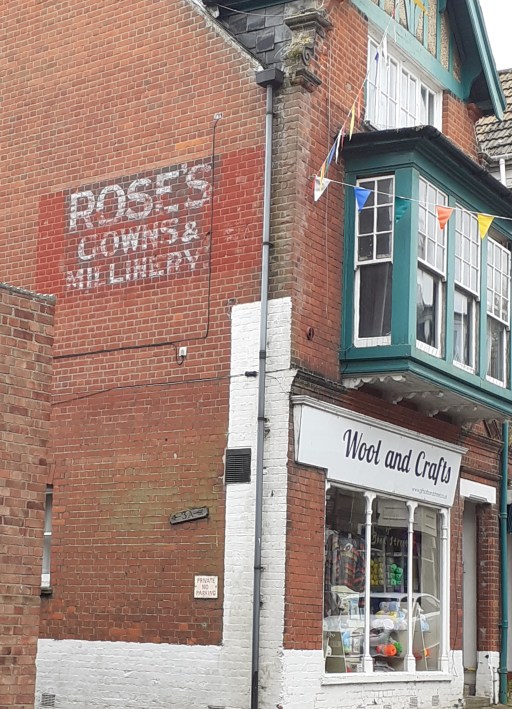
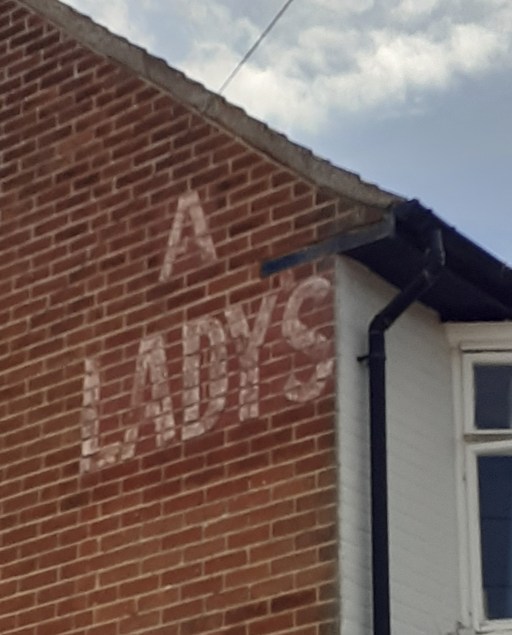

And from November 2024, the sign in Mill St, Oakham has been repainted or perhaps resurrected or re-embodied?
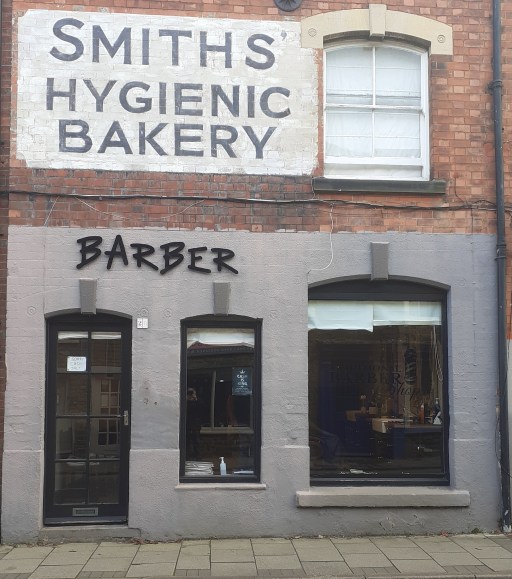
A memory of Dudley Sports Centre

Dudley Sports Centre was a large football and cricket ground of the Tipton Road in Dudley. I guess these days it would be called a multi-sports complex! A 1950s map is shown below. The football ground was to the south with the main stand backing onto the cricket ground, with the cricket ground to the north, with the Pavilion and terraces in front of the back of the football stands. There were playing fields to the north and the west. It dated from the 1880 but was much expanded in the 1930s when the football ground was opened. It was used by Dudley Cricket Club and Dudley Town FC. Over 16000 spectators attended Dudley Town’s first match in 1932. Worcestershire CCC used it as an out ground from 1911 to 1977 for first class and list A fixtures.
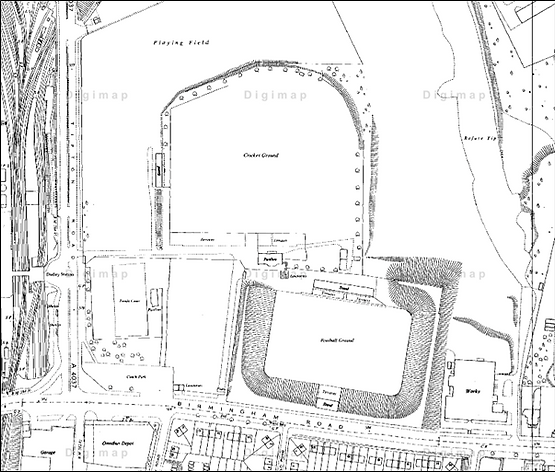
The Sports Centre in the 1950s
As a teenager, I watched games at the ground on many occasions – football matches between Dudley Town and my team, Brierley Hill Alliance, and a variety of other games including county cup finals; and cricket games when Worcestershire were in town. It is one of the latter that sticks most in my memory. This was the game between Worcestershire and Warwickshire on 5th September 1971, when I was 17. This was a 40 over John Player league game (in the days when it was felt acceptable for manufacturers of carcinogenic products to sponsor sports competitions). Worcestershire had had a good season and in this, their last game of the season, needed to win the match to have any chance of winning the league. As ever with cricket, the situation was complicated, and not only did they need the four points from the win, they needed to ensure that their run rate (runs / over) over the season was such that it surpassed that of Essex, the team below them. Even then they could not be sure of the title, as the third placed team, Lancashire had a game in hand, and played the following week. Lancashire had to lose that game, even if Worcestershire won on September 5th. I remember sitting on the terraces to the west of the Pavilion shown on the above figure. The TV cameras were in attendance, and my mother spent the entire afternoon watching a cricket match on BBC3 to see if she could see me in the crowd. Warwickshire batted first, and their scorecard is below. The only managed to make 126 – a very low score even in those pre-T20 days. Of the bowlers, Basil D’Oliveira, Vanburn Holder, the overseas signing for the year, and Brian Brain did most of the damage.
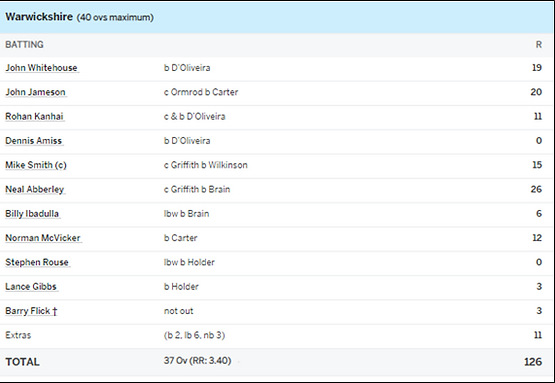
The Warwickshire Innings
In the Innings break it was announced that, in order to achieve the required overall run rate for the season, Worcestershire needed to surpass that total in 17.5 overs – so the match became a T20 match 30 years before that concept was invented. I remember little of the innings other than its frantic nature. The scorecard is again given below. Nearly all of the runs were scored by three players – Ron Headley, the son on the West Indian batsman George, Basil D’Oliveira again and Alan Ormrod. Worcestershire made the required total with two balls to spare, resulting in raucous celebrations. Lancashire obligingly lost the match the following week, and Worcester were proclaimed as champions.
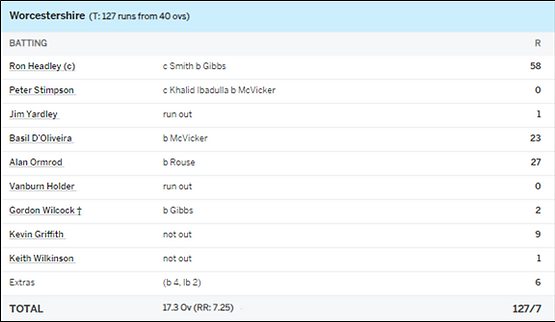
The Worcestershire Innings
I went off to university a year after the match, and I don’t remember seeing any more cricket there. As is well known, the Sports Centre was shut in 1985 after a large hole appeared and part of the pitch disappeared into a limestone cavern beneath the site. Worcestershire never played there again, and Dudley CC, a long-term member of the Birmingham League, folded. Dudley Town have led a peripatetic existence ever since, playing at a number of grounds within and without the borough – the Round Oak stadium, the Dell stadium, Tividale and (currently) at Willenhall. The site is now the home of the Castle Gate complex.
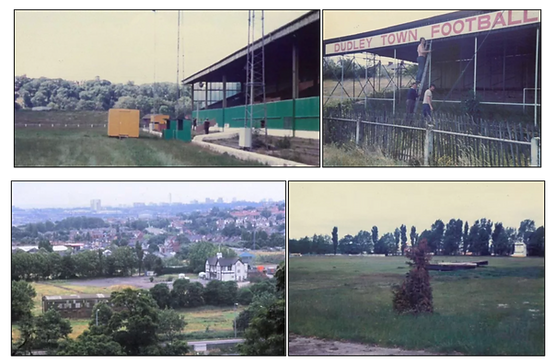
The Sports Centre after closure
An election manifesto for Transport
Introduction
As the journalist Christian Wolmar has discussed in a recent article, the UK does not have any sort of agreed National Transport Policy that could be used as a rational way of developing transport infrastructure in a politically non-partisan way. Such a policy will certainly not emerge from the current government, and there is little to suppose that any future government will give priority to developing such a plan. Without it, transport policy is vulnerable to ill thought-out ad hoc initiatives and, as at present, in ad hoc cutbacks. In this post I will suggest a pragmatic way forward on this.
What I propose is based on the assumption that the next Government will be formed by the Labour Party, either as a majority party or with some sort of agreement with the Liberal Democrats. This is certainly what would be suggested by the opinion polls where at the time of writing Labour have a 22% lead over the conservatives. The Labour party has proposed five “missions” that will direct their approach to the 2024 elections and any subsequent government. None of these missions mentions transport at all, but there are transport issues embedded in each one of them. In what follows, I set out these missions, the transport issues that arise from them, potential policy objectives, and potential policy proposals. I then bring these proposals together to form a list of Transport policies that could be used, no doubt in a modified format, both for the next election and in any subsequent government.
Readers should not assume from this that I am a Labour Party supporter. I have never been a member of a political party, and never intend to be. Politically I am a centrist, but with somewhat radical environmental views, formed partly by my professional work as a Professor of Environmental Fluid Mechanics at the University of Birmingham (now retired). The proposals below are simply pragmatic – a possible way of influencing the next government to do something sensible in transport terms.
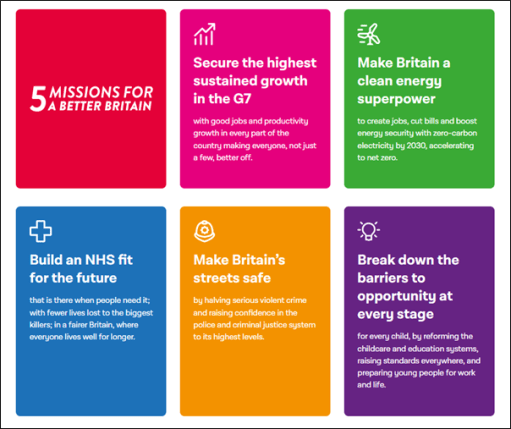
The Labour Part Missions
Secure the highest sustained growth in the G7, with good jobs and productivity growth in every part of the country making everyone, not just a few, better off.
Transport issues
- Transport congestion on road and rail, for both people and products, leading to reduced productivity.
- Poor workforce mobility, leading to inflexibility in employment locations.
- DfT methodology for assessing CBR of transport infrastructure does not take proper account of induced flows on highways – i.e. new roads encourage traffic growth and can increase congestion.
Transport policy objectives
- Revise DfT methodology for assessment of congestion reduction of new roads to include induced flow effects.
- Infrastructure interventions to reduce road and rail congestion.
- Encouragement of modal shift from road to rail, for both people and products.
Transport policy proposals
- Revision of DfT methodology for assessing congestion reduction of new road schemes to include proper consideration of induced flow.
- Small number of specific congestion-reducing road schemes (consistent with Mission 2).
- Speed up development of rail enhancements and new build (HS2, EWR and NPR).
Make Britain a clean energy superpower to create jobs, cut bills and boost energy security with zero-carbon electricity by 2030, accelerating to net zero.
Transport issues
- DfT methodology for assessment of contribution new transport schemes to carbon production and climate change has been shown to be flawed, particularly in relation to new roads.
- UK Carbon based transport emissions levelling off or increasing.
- Transport is now major carbon producing sector of economy.
Transport policy objectives
- Reassessment of DfT methodology for assessing environmental impact and carbon production of new transport schemes.
- Development and roll out low carbon technologies (electric and hydrogen vehicles, electric trains) including electric car recharging infrastructure.
- Encouragement to use low carbon modes of transport and active travel modes.
Transport policy proposals
- Revision of DfT methodology for assessing environmental impact of new road schemes to be revised.
- Investment in electric and hydrogen vehicle research and production
- Development of electric vehicle recharging infrastructure.
- Electrification programme for railways
- Fiscal incentives to encourage low carbon mode use.
Build an NHS fit for the future by reforming health and care services to speed up treatment, harnessing life sciences and technology to reduce preventable illness, and cutting health inequalities.
Transport issues
- Poor air quality in urban areas mainly due to transport, leading to vulnerability to respiratory illness and, possibly, increased dementia risk.
- Contribution to high levels of obesity due to short journeys being made by car.
- Poor access to health facilities for those without cars (20% of households)
Transport policy objectives
- Improve urban air quality through encouraging low emission vehicles.
- Improve air quality through traffic reduction and modal shift to public transport.
- Encourage active travel (cycling and walking).
- Improve public transport (primarily bus) links to health care facilities,
Transport policy proposals
- Fiscal incentives for ULEZs and LTNs.
- Support for public transport
- Fiscal incentives to local authorities to provide active travel infrastructure.
Make Britain’s streets safe by reforming the police and justice system, to prevent crime, tackle violence against women, and stop criminals getting away without punishment.
Transport issues
- Safety issues due to high road speeds in urban areas.
- Safety issues due to pavement parking.
Transport policy objectives
- Make urban streets safe for pedestrians and cyclists.
Transport policy proposals
- Fiscal incentives for LTNs.
- Lower and enforce urban speed limits.
- Enforce pavement parking laws.
Mission 5
Break down the barriers to opportunity at every stage, for every child, by reforming the childcare and education systems, raising standards everywhere, and preparing young people for work and life.
Transport issues
- Poor access to childcare and education for those without cars (20% of households)
Transport policy objectives
- Improve access to childcare and education for those without cars.
Transport policy proposals
- Support for public transport
- Fiscal incentives to local authorities to provide active travel infrastructure.
The policies
From the consideration of the individual missions, the following specific transport policies can be developed.
Policy 1
Revision of DfT methodologies for assessing new transport schemes to take proper account on induced flow and environmental effects. (Missions 1 and 2)
Policy 2
Invest in new transport infrastructure with a small number of congestion-relieving road schemes, electric car charging facilities, and major investment to rail infrastructure, including staged development of HS2, NPR and EWR) and a rolling programme of electrification. (Missions 1 and 2)
Policy 3
Support for public transport (trains and buses) for increasing employment opportunities and providing access to healthcare and education. (Missions 1, 3 and 5)
Policy 4
Reduction of urban speed limits and enforcement of pavement parking laws. (Mission 4)
Policy 5
Fiscal incentives and support to local authorities to encourage low carbon vehicles and modal transfer to low carbon modes; for the development of ULEZs and LTNs, and provision of active travel infrastructure. (Missions 2, 3 and 5)
Commentary
Policy 1 is not going to set any electoral debate alight, but it is quite crucial. In the past the DfT has used flawed policies to assess road building schemes against other transport schemes, knowing that they were flawed. This needs to change. Indeed, I would regard the DfT as no longer fit for purpose in many ways (as an example, its current handling of the railway network, the ongoing industrial action and major cutbacks to active travel budgets can be cited) and there is an argument for a complete re-organisation here to establish a wide ranging Department for Infrastructure that brings together transport, the utilities and construction. This would allow proper consideration to be given to the transport effects of new housing build (often built without public transport provision) and conversely the effect of a move to electric vehicles on the development of the electricity grid.
Policy 2 is wide ranging and expensive, and any specific proposals would need to be carefully phased in terms of expenditure. The basic point however is that high quality transport infrastructure for people and products is a fundamental requirement for a productive economy, the more so as the switch to the “green economy” proceeds.
Policy 3 is important for many, and in particular those on low incomes. The provision of a high-quality public transport network (particularly buses) that is comprehensive in its coverage would make access to employment, healthcare and education very much easier for many people.
Policy 4 is essentially aimed at public safety. It would no doubt be categorised as a “war on motorists” by sections of the press, but this is a battle that needs to be fought for the public good.
Policy 5 is another proposal that might be electorally contentious as (weirdly to my mind) LTNs, ULEZs and active travel have become very politicised. Fiscal incentives could be a way forward here, as proposed in the more detailed description of Mission 2 recently released by the Labour Party. This might include the possibility of both support for the initiatives and a wider reduction in rates for those Local Authorities that develop such schemes. This would be basically a bribe, and would need to be carefully costed and targeted, but could help in the establishment of such schemes. In terms of encouragement to use low carbon modes, a study should be initiated to look at how road pricing, aviation fuel duty and rail fares could be used to encourage the necessary modal shift.
The 292 bus route from Kidderminster to Ludlow – an important transport link?
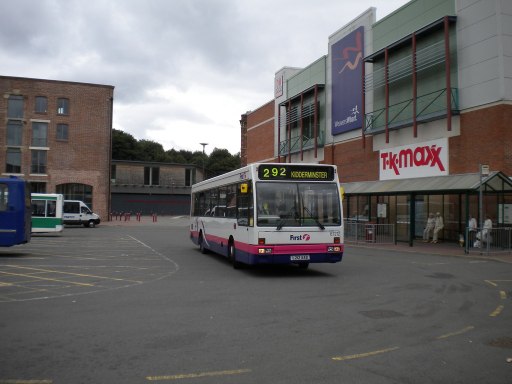
292 at Kidderminster Bus Station in 2010
I have recently been on a short break to Cleobury Mortimer in Shropshire, travelling there by train and bus from where I live in Lichfield. The train journeys, from Lichfield to Birmingham and Birmingham to Kidderminster went very smoothly and were quite a pleasant experience. There were a number of route permutations, but we chose to walk between Birmingham New Street and Birmingham Moor Street, both on the way there and back. The bus leg from Kidderminster, on the Diamon bus 292 was rather less easy. The bus didn’t stop at Kidderminster railway station, with the nearest advertised stops (on Google and various websites) being 400m away in Oxford St. Arriving there however, we found this was not the case, with no mention of the 292 on the timetables at the stop, so we walked on to the bus station, another 400 yards away. There we eventually did get the bus, which was running over half an hour late. The journey itself was fine, and as we were in no hurry, the delay was of no particular concern to us.
Over the days that followed, I kept track of the buses on the 292 route between Kidderminster, Bewdley, Cleobury Mortimer and Ludlow, and it soon became clear that the lateness was endemic. The journey was timetabled for 50 to 55 minutes, with a two-hour frequency, with one bus shuttling backwards and forwards – see the timetable below – from https://bustimes.org/services/292-kidderminster-ludlow . This timing was simply too tight to ensure punctual running throughout the day. Whilst some of the delays came from congestion in the towns at either end of the route as might be expected, the most critical delays were due to parked cars on the A4117 between Bewdley and Ludlow requiring single file traffic through the towns and villages along the road. Such delays could of course be quite easily eliminated, given the political will.
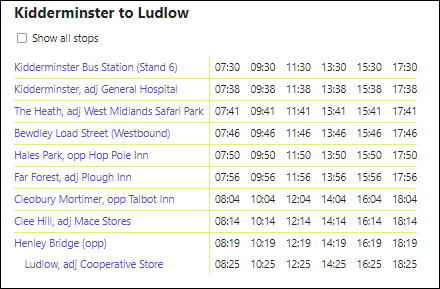
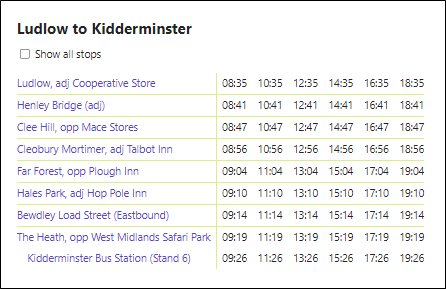
Current 292 Timetable
Now service 292, currently operated by Diamond buses, is actually the truncated remains of a much longer Midland Red service with the same number, that ran from Birmingham to Kidderminster, Ludlow and Hereford. A time table for this service is shown below from 1991 for the Birmingham – Hereford direction – from http://midlandred.net/service/timetable/display.php?routeID=1007. The service was withdrawn, apart from the Kidderminster to Ludlow leg, in the early years of the current century. It can be seen at that time there was an hourly service between these two towns, rather than the current two hourly service. This represents a considerable degradation in service provision.
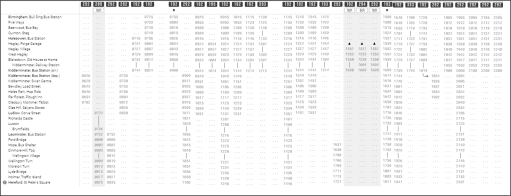
292 Timetable 1991
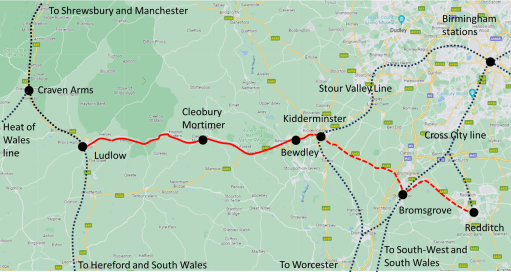
But the transport context has changed in many ways over the last few decades. The role of the long-distance bus has been largely taken over by trains, with a much greater frequency than 30 years ago. On the original 292 route there are now 4 trains an hour to Kidderminster from Stratford upon Avon through Birmingham, either terminating there or continuing to Worcester, and two from Worcester to Birmingham; at Ludlow there are two trains per hour in each direction between Manchester, Shrewsbury, Hereford and various destinations in south Wales. So in this sense, the truncation of the service was sensible and appropriate. It now serves a purely local market for those who live on its route. But I would argue, in any sane country that takes seriously the need to reduce carbon emissions and the need for modal change (i.e. not the one in which I reside), the Kidderminster to Ludlow route would be of some strategic importance. With improvements in frequency and connections with rail at Kidderminster and Ludlow, it would offer a route from the West Midlands conurbation, via the Stour Valley line, into south Shropshire and the Marches, with major tourist potential. Further, if the route were combined with the hourly 52 from Kidderminster to Bromsgrove (and ultimately Redditch), it would offer connections from the south west at Bromsgrove into the same area, and also from the Cross City line that serves the north of Birmingham and the city centre. The 52 actually runs past both Bromsgrove and Kidderminster stations. Continuation of the service north of Ludlow to Craven Arms (in parallel with the railway) would offer connections to the Heart of Wales line, whose tourist potential has not been fully developed, and perhaps further to Welshpool for connections to the Cambrian line. All these possible connections are shown in the figure below.
But life is of course not that simple. For such a service to be a success other changes would be necessary. Firstly, efforts would be required to split the local markets in Ludlow and Kidderminster from the longer-distance markets to make overall journey times on through services as short as possible. There is no reason why this should not be possible but would require extra resources in terms of service provision to meet the requirements of the very local market. This mix of markets has been a major reason for the demise of long distance inter-urban buses in the past – perhaps most recently in the truncation of the Oxford to Cambridge X5 at Bedford, because the local market between Bedford and Cambridge resulted in significantly increased journey times. Secondly, attention would need to be paid to the interchange points at either end of the route. For example, the bus stops of the Bromssgrove to Kidderminster route at Kidderminster Railway Station are on narrow pavements on a road bridge over the railway line – a very uninviting and inconvenient place for mode transfer. Attention would also o fcourse need to be paid to timetabling to ensure suitable connection times.
The other issue is of course more structural in that there is no overall transport policy in the UK that would facilitate such developments – see the recent blog by Christian Wolmar on this. And this lack of an overall policy means that resources cannot be channeled to such schemes, despite the fact that their benefits would be significant in terms of carbon emission reductions and stimulating local economies. It has always been thus as far as I can remember. I still want to believe that a competent government will one day realise that this is the road to take. But perhaps I am here opening myself up to a charge of naivety.

