The Lady Chapel at All Saints Church in Oakham is to the south of the chancel and is entered from the south transept. It is a high roofed open space dating from around 1480, that has had a number of functions in the recent past – as a location for the organ, as a choir vestry, and as a small side chapel. Indeed there is still an altar with its associated communion rails at the east end of the chapel. It is currently mainly used as an area for after church coffee, small meetings etc.
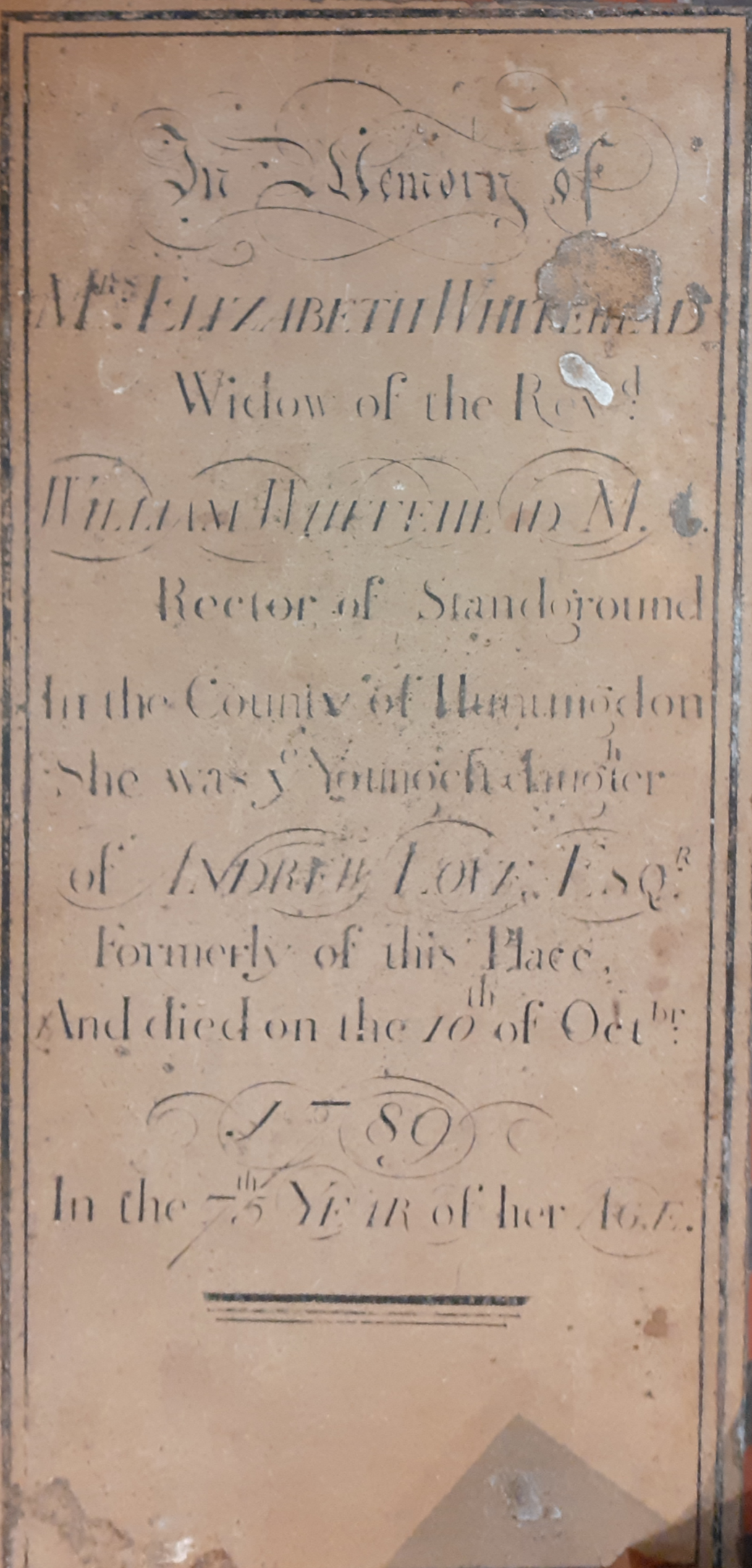
The floor of the chapel consists of memorial slabs from the late 17th to the early 19th centuries, a number of which contain inscriptions indicating that there are burials beneath them. Thus it would seem that in the 18th century this area was an internal burial space of some sort. Why this area was used in this way and what determined who was buried in this area is not clear. Now over the years some of the memorials have been worn down very badly, particularly those between the priest’s entrance and the vicar’s vestry on the south side of the chapel and the entrance to the chancel on the north side. With its current use as a fellowship area, it is likely that the other memorial slabs will experience a rapid deterioration over the coming years. Thus the purpose of this post is twofold – firstly to record the current layout and inscriptions that are still visible, and secondly to try to come to some understanding as to why the area was used as a mortuary space.
The layout of the Lady Chapel
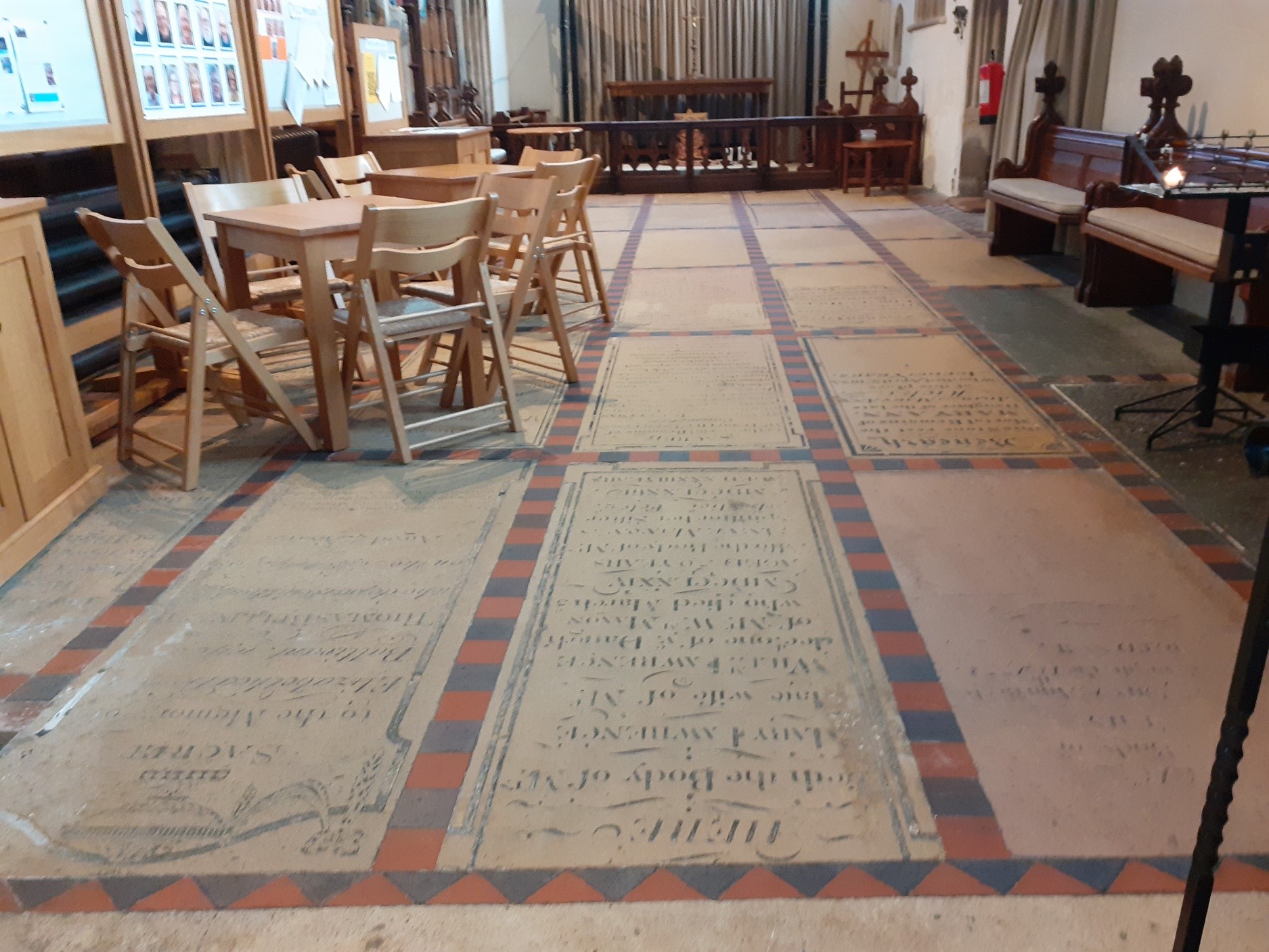
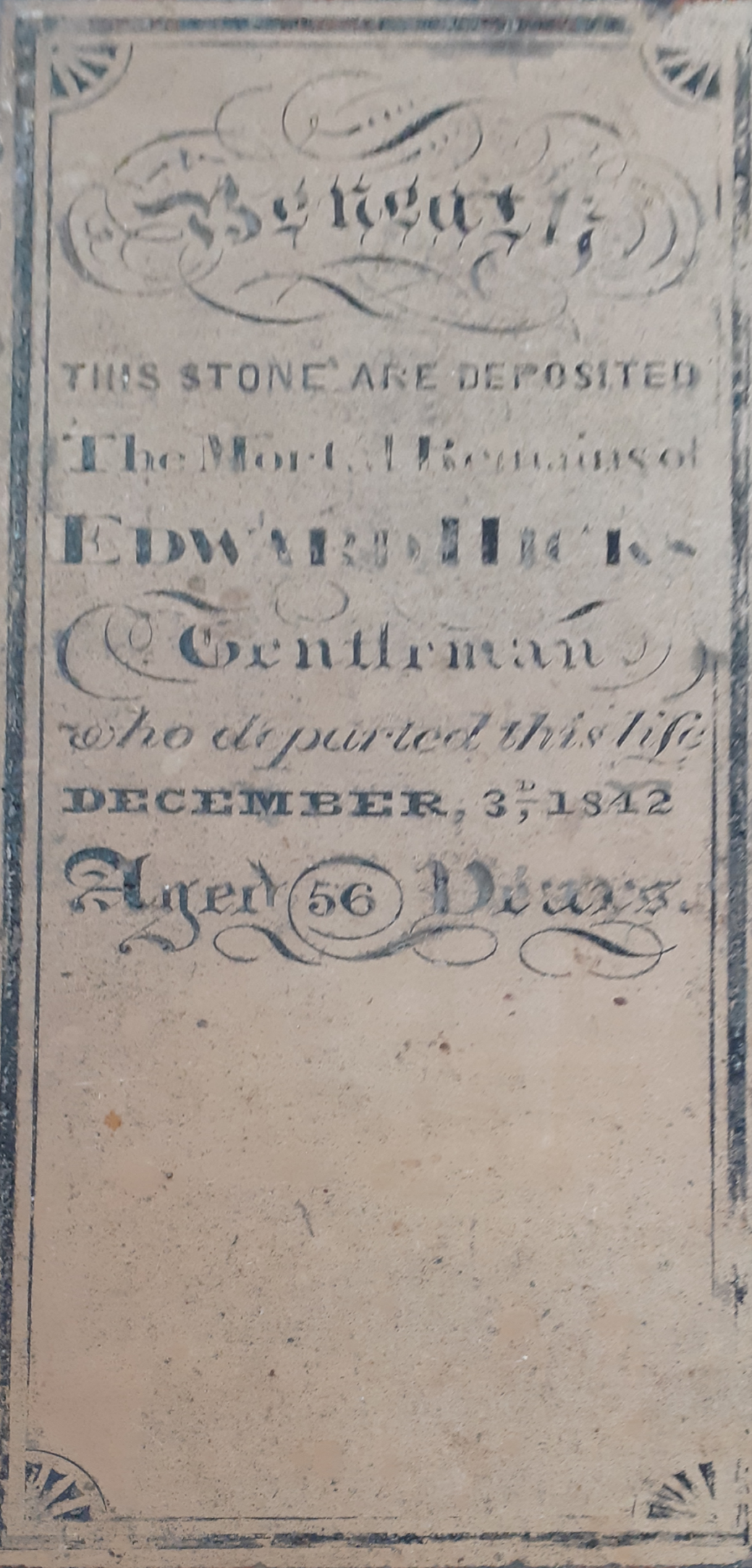
Figure 1 shows a view of the Lady Chapel from its entrance from the south transept, looking east. The altar and communion rail can be seen in the background. It can be seen that the floor consists of a regular grid of memorial slabs, separated by a pattern of tiles. In total there are seven rows of slabs between the entrance and the communion rail (which will be denoted by the letters A to G, with A being at the transept entrance. There are five columns of slabs, which will be denoted by the letters A to E, with A being on the south side to the right of the view of Figure 1. Thus, for example, slab AC is the one in the near centre of figure 1 – row A and column C. Most of the slabs are a soft brown stone, with the exception of AA and BA (to the right of the view in Figure 1) which are of a darker colour, although they are both badly worn.. The grid of memorials is regular in columns B, C and D, but the rows are displaced somewhat in columns A and E due to the presence of structural columns at the transept end.
Figure 1. The layout of the Lady Chapel
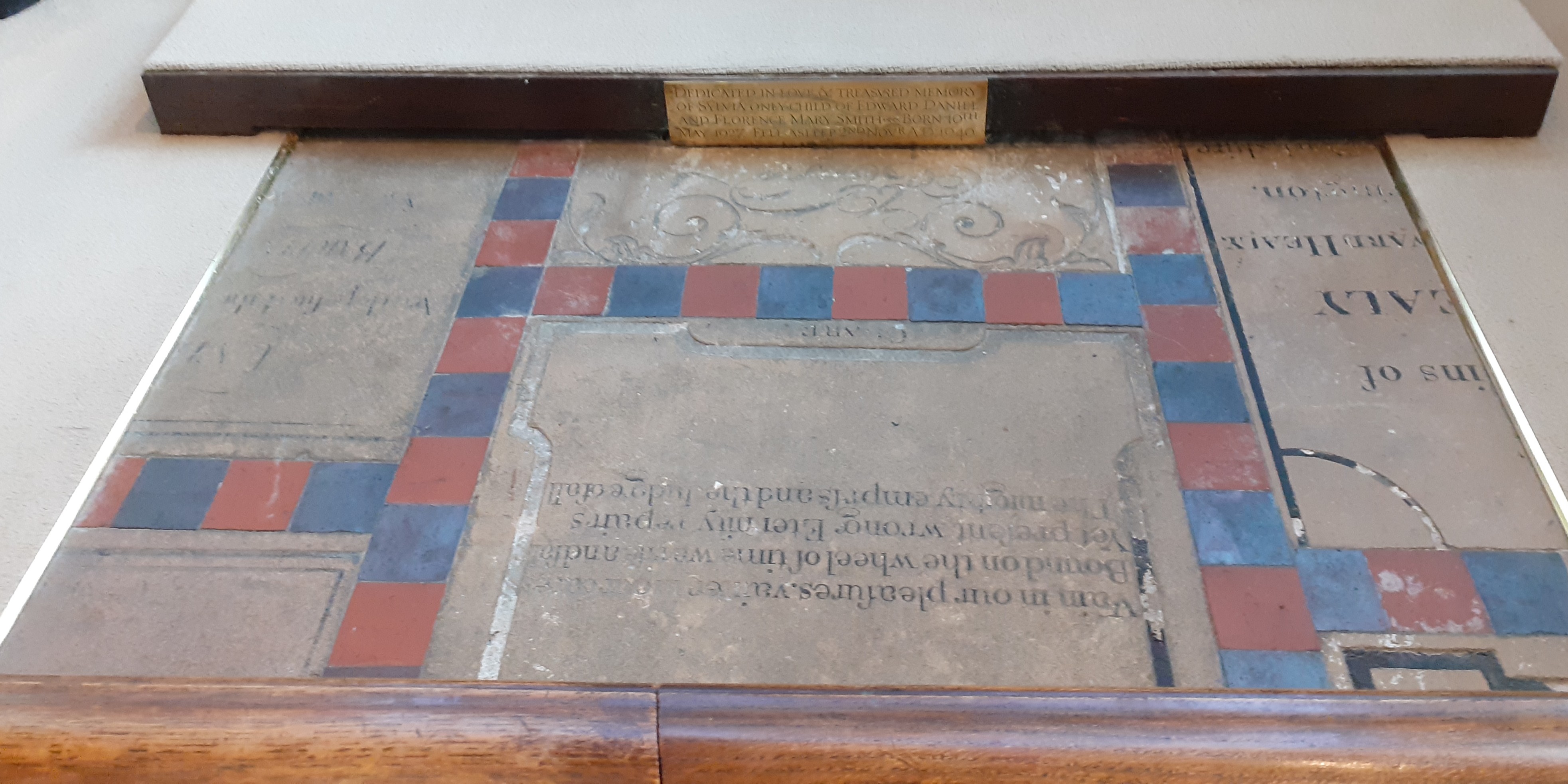
Figure 2 shows a view of columns B to D in rows F and G from just in front of the altar rail at the east end of the chancel. It can be seen that the rail cuts across a number of slabs, and there is a carpeted area that obscures part of columns B and D and all of columns A and E. Indeed very little can be seen of the slabs in row G, which extend beneath the altar. In this region the regularity of the grid in columns B to D is lost and the slabs become staggered – presumably to fit into the space available at the east end of the chapel beneath the current altar.
Figure 2 Detailed view of the slabs in front of the Lady Chapel altar
The memorials
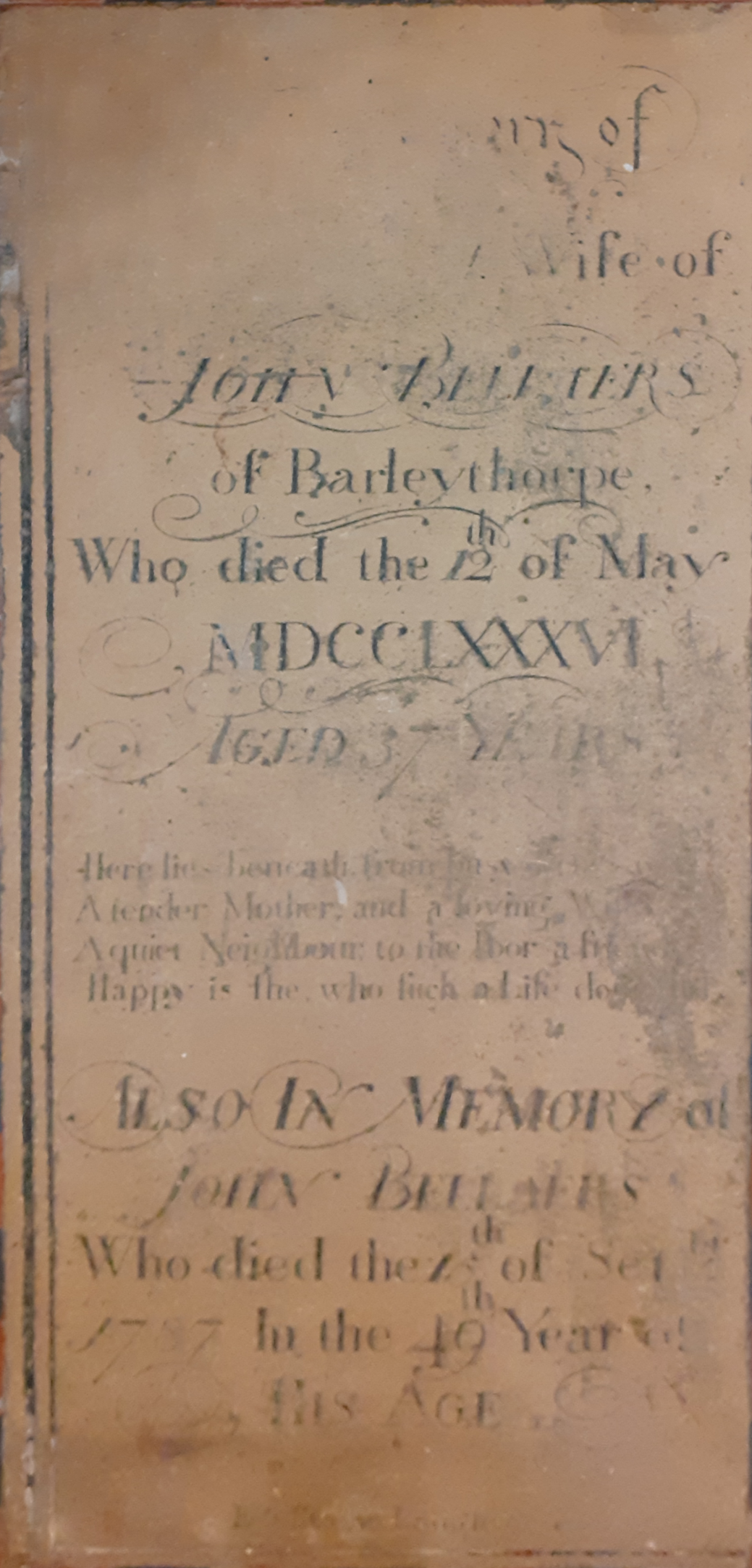
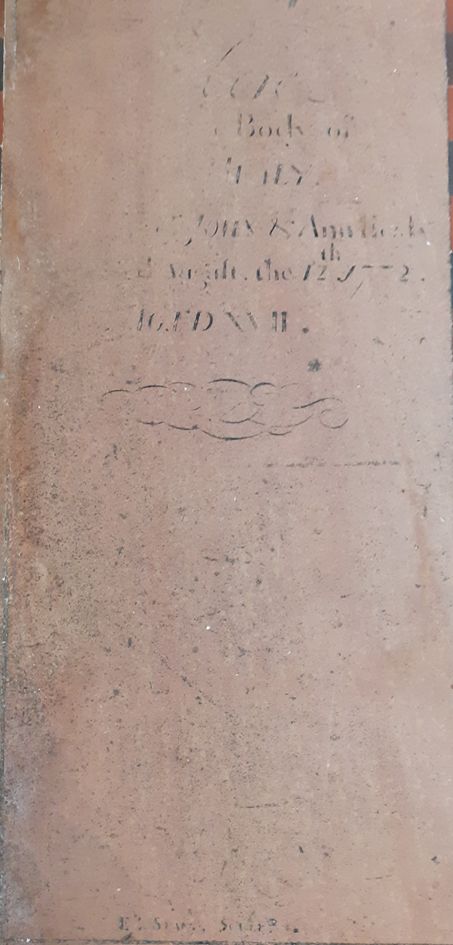
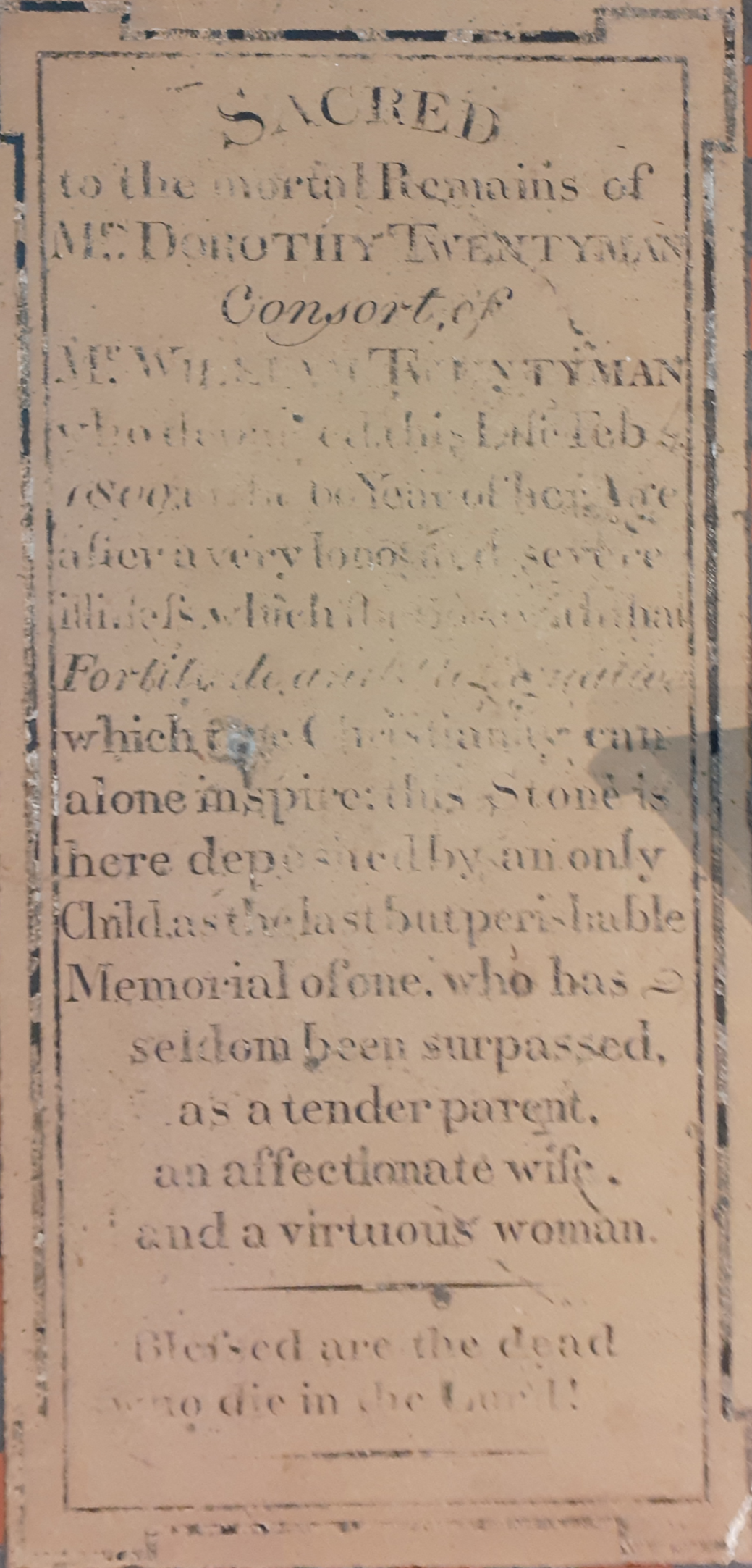
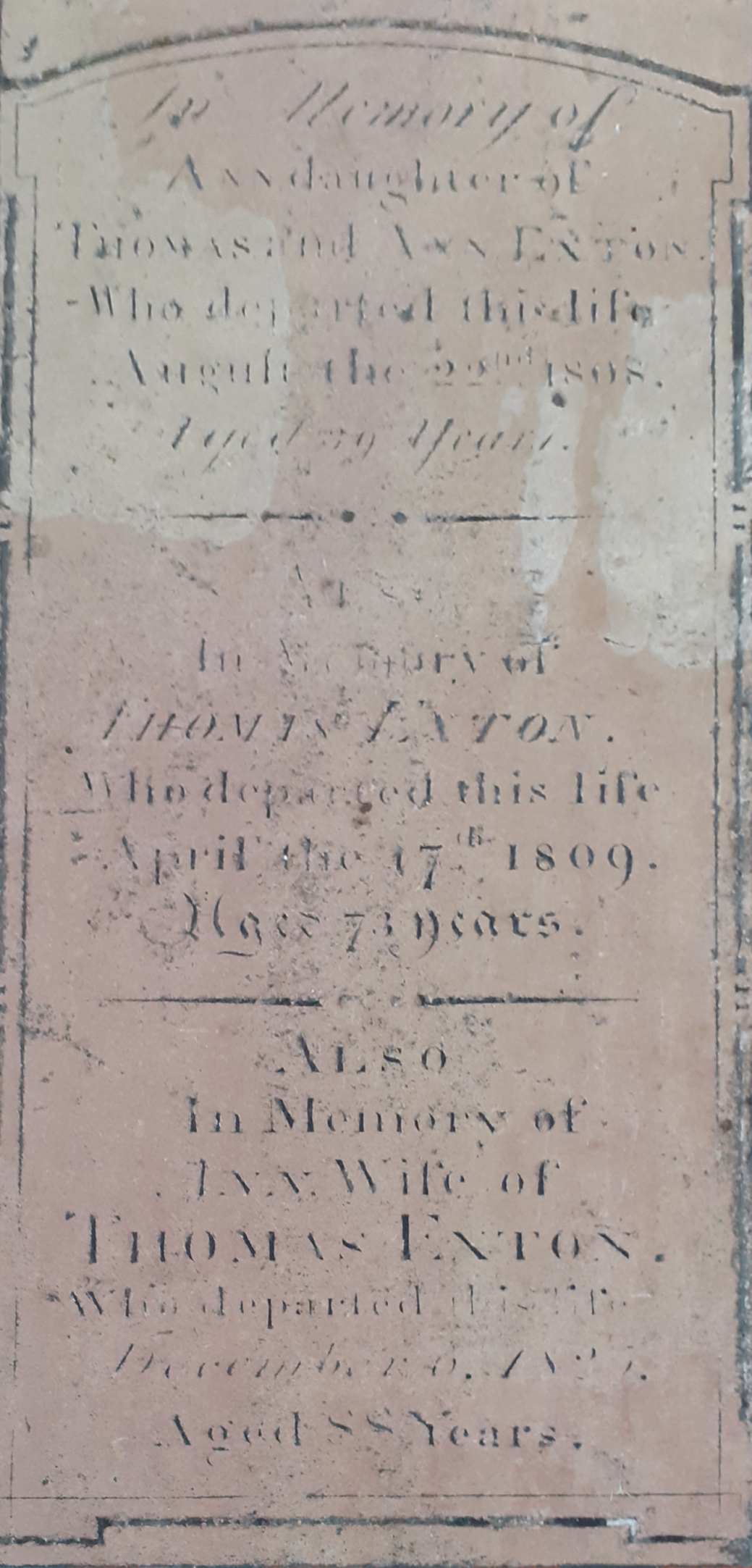
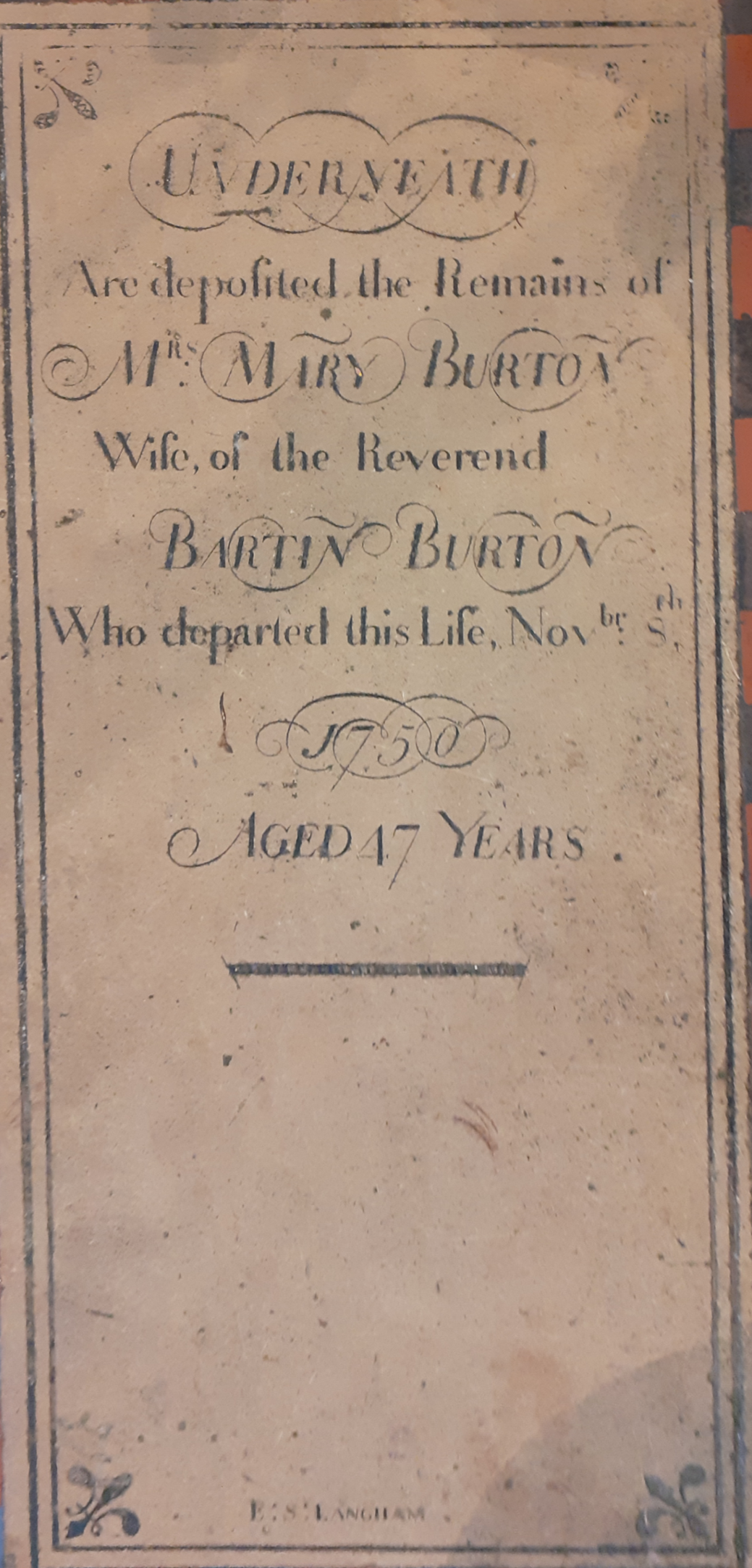
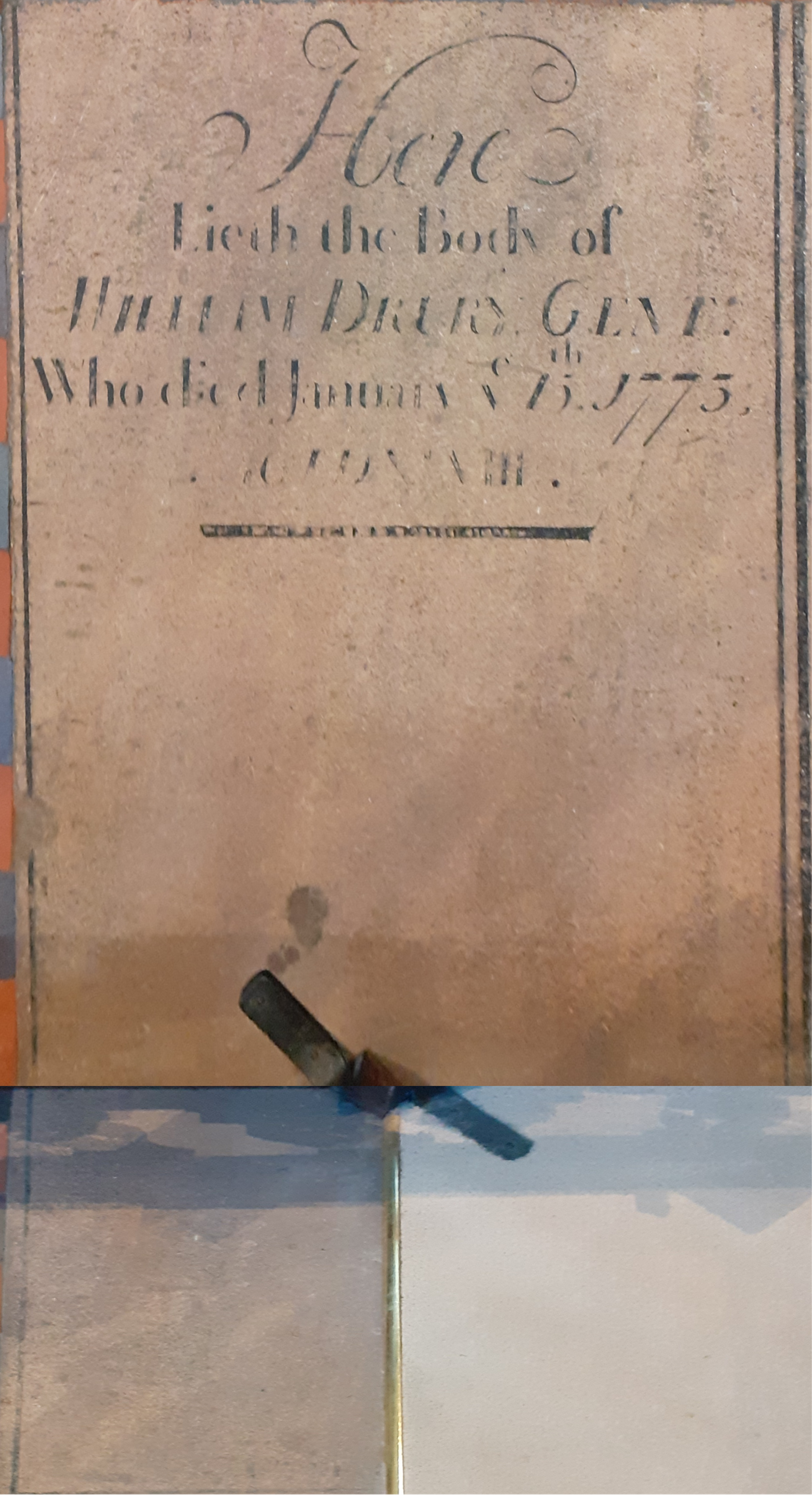
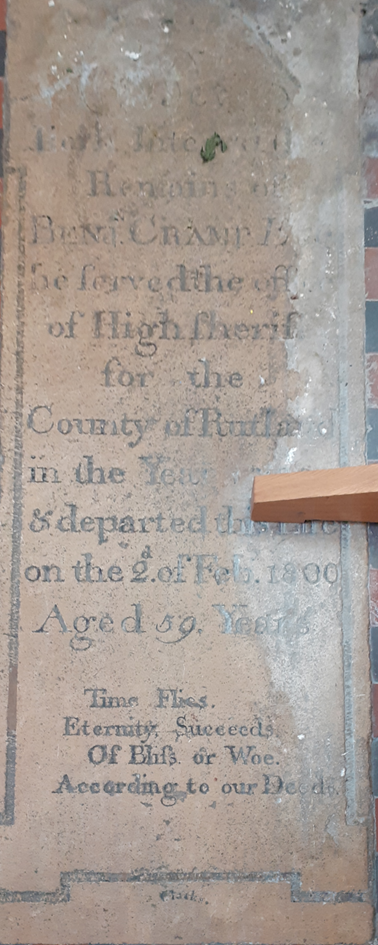
The layout of the meorials is shown in Figure 3 below. The photos of the slabs are in roughly the correct position relative to each other, although the correspondence with the actual layout in the Chapel is not exact. They are identified using the notation given above. The discontinuity in the photographs of slabs FB, FC and FD indicates the position of the altar rail.
AABACADAEA
ABBBCBDBEBFB
ACBCCCDCECFC
ADBDCDDDEDFD
AE BECEDEEEFE
Figure 3. The layout of the memorial slabs
The inscriptions
In the inscriptions that follow, I have (deliberately) not reproduced the details of the typogrpahy on the memorials (capitalisation, punctuation etc.) but have tried to put them in a form where they are more easily read with modern typography. The texts in italics are not on the memorials.
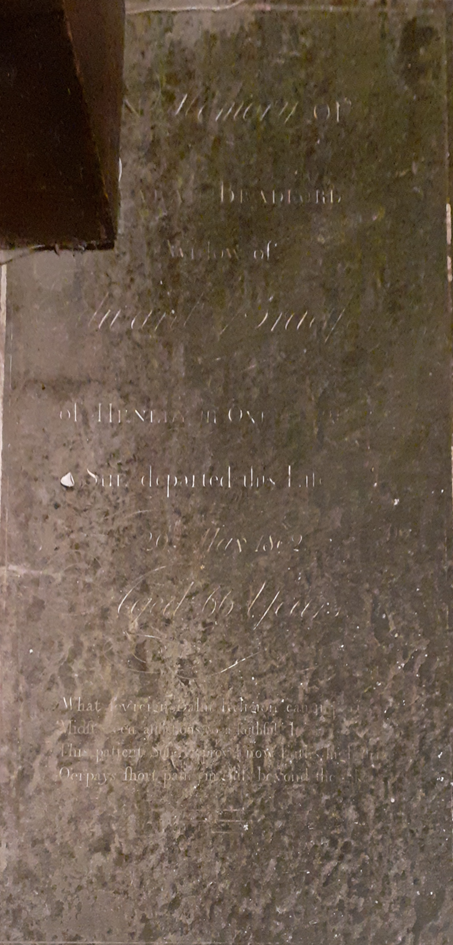
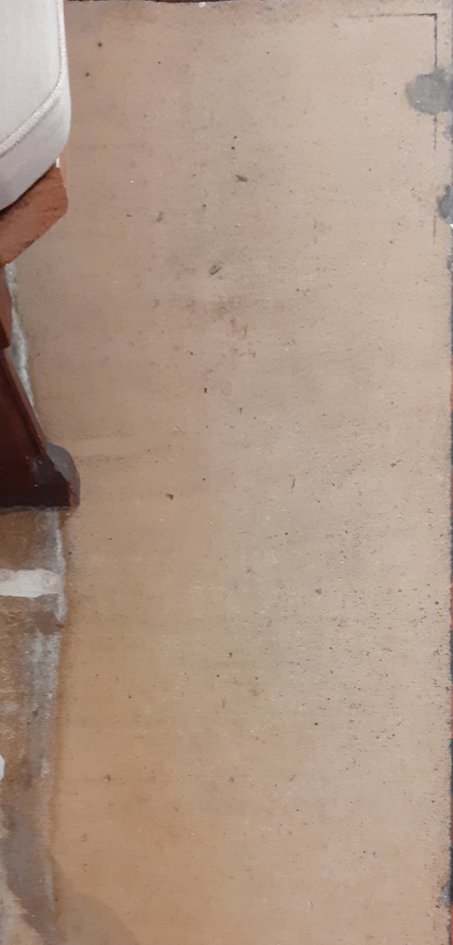
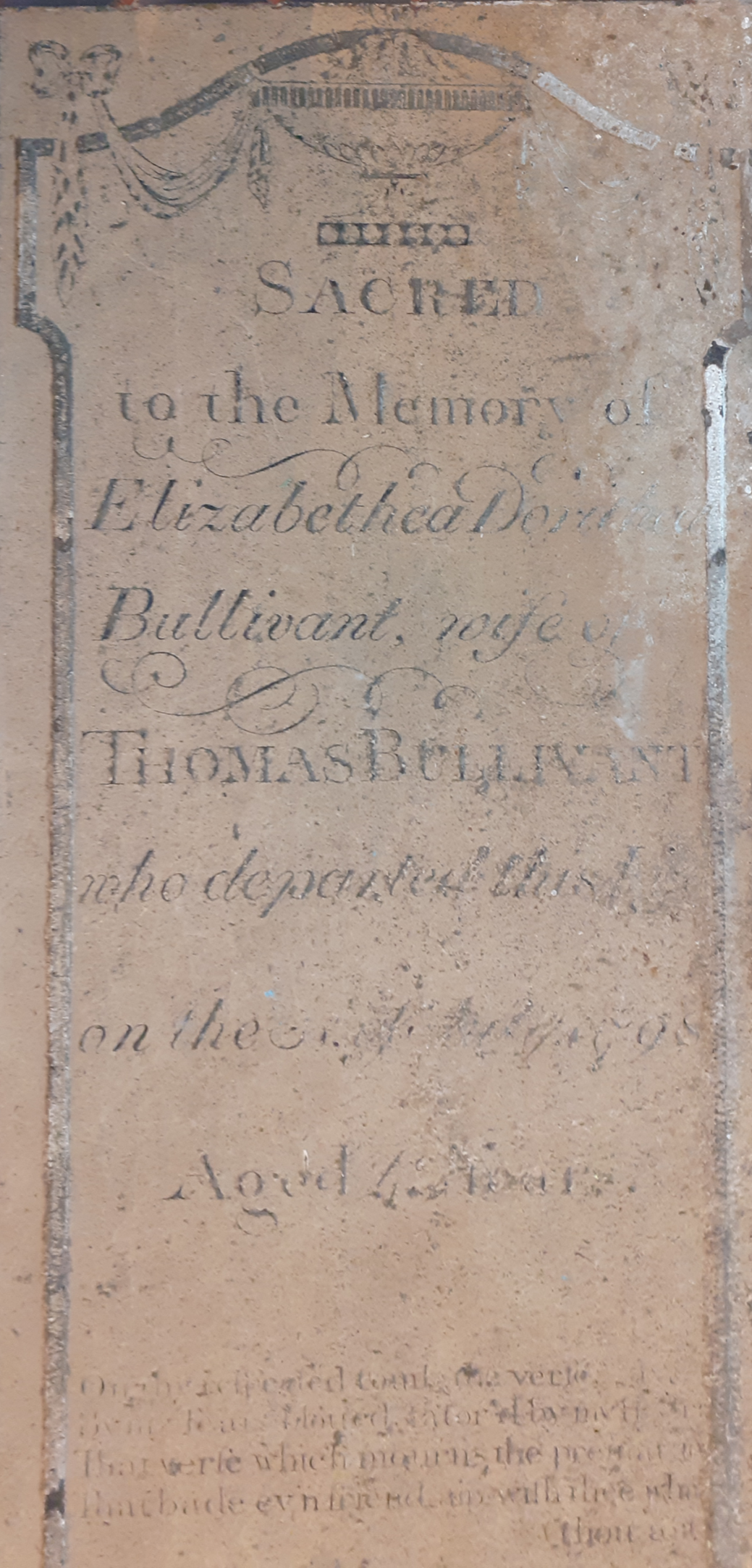
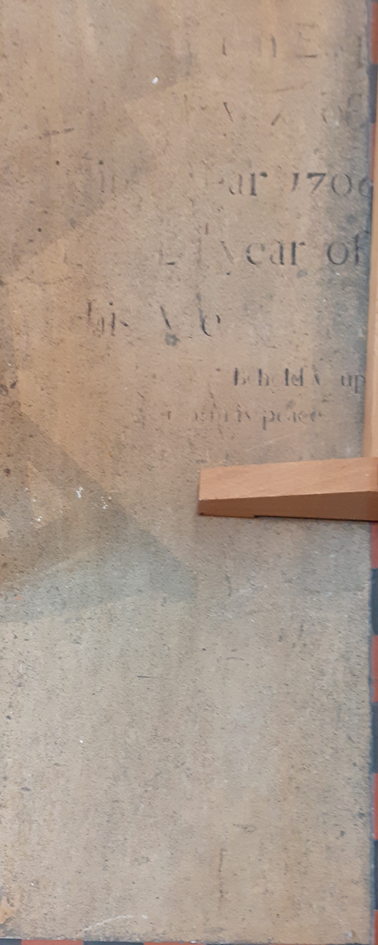
AA. …Bradford….Widow of … of Henley in Ox… departed this life .. 20th May 1802 aged 66 years ….. Undecipherable verse AB. … body of …. 12th 1772…. AC. Here lieth the body of Mary Lawrence, late wife of Mr William Lawrence, dec., one of ye daughters of Mr William Maxon, who died March 5th MDCCLXXIV (1774) aged 39 years. Also the body of Anne Maxon…her sister who died February 2nd MDCCLXXIII (1773) aged XXXIII (33) years. AD. Sacred to the memory of Elizabeatha Doris Bullivant, wife of Thomas Bullivant who departed this life on the ….. 1798 aged 42 Years………. AE. … remains … Benjamin Cramp Esq. He served the office of High Sheriff for the County of Rutland in the year … departed this life on the 2nd February 1800 aged 59 years. Time flies; Eternity succeeds; of bliss or woe; according to our deeds.
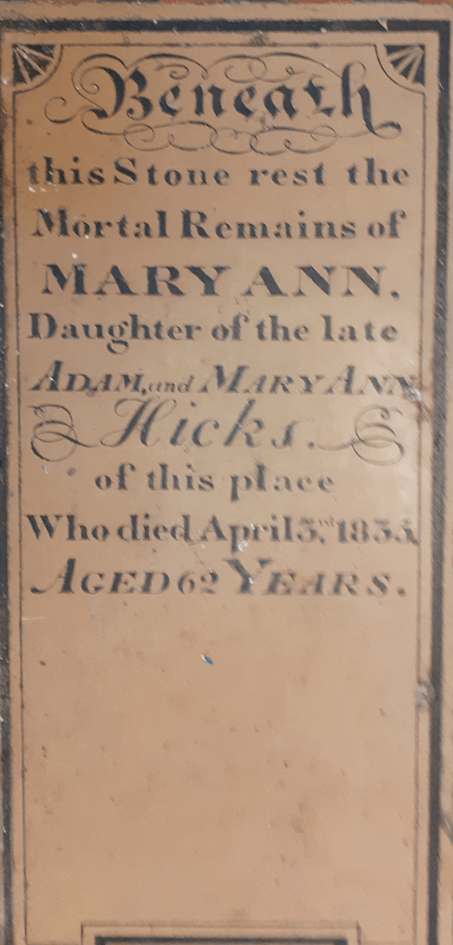
BA. Not readable BB. Beneath this stone rests he mortal remains of Mary Ann, daughter of the late Adam and Mary Ann Hicks of this place who died April 3rd 1835 aged 62 years, BC. Sacred to the mortal remains of Mrs Dorothy Twentyman, consort of Mr William Twentyman who departed this life February … 1809 in the ,,, year of her age after a very long and severe illness which…..Christianity can alone inspire. This stone is here deposited by an only child as the last but perishable memorial of one who has seldom been surpassed, as a tender parent, an affectionate wife and a virtuous woman. Blessed are the dead that die in the Lord! BD. In memory of Mrs Elizabeth Whitehead, widow of the Revd William Whitehead MA, Rector of Stanground in the county of Huntingdon. She was ye youngest daughter of Andrew Love Esq. formerly of this place, and died on the 10th of October 1789, in the 75th year of her age. BE. …. Hind Gent who died February the 17th MDCCLXXI (1771) aged LXXIX (79) years. Likewise ….are buried the remains of Elizabeth …who was buried March …MDCCII (1702) Also five … sons if the above died…infants
CA. No inscription visible CB. Beneath this stone are deposited the mortal remains of Edward Hicks, Gentleman who departed this life December 3rd, 1812 aged 56 years. CC. In memory of Ann, daughter of Thomas and Ann Exton, who departed this life August the 22nd 1808 aged .9 years. Also in memory of Thomas Exton who departed this life April the 17th 1809 aged 73 years. Also in memory of Ann, wife of Thomas Exton, who departed this life November …18… aged 88 years. CD. Here lieth the body of Frances Davie, the wife of Thomas Davie Senior who died January 12th 1721 aged 67 years. Full happy man that dies in faith, His good works follow him…; …….are his saints …. to be; To live with Christ his face to see. Also the remains of Frances Ashby, who died September 6th 1792 aged 66 years, The sweet remembrance of the just … shall flow … they sleep….. CE. ….year 1706 .. year of his age ….peace
DA. No inscription visible DB. No inscription visible DC. No inscription visible DD. No inscription visible DE. No inscription visible
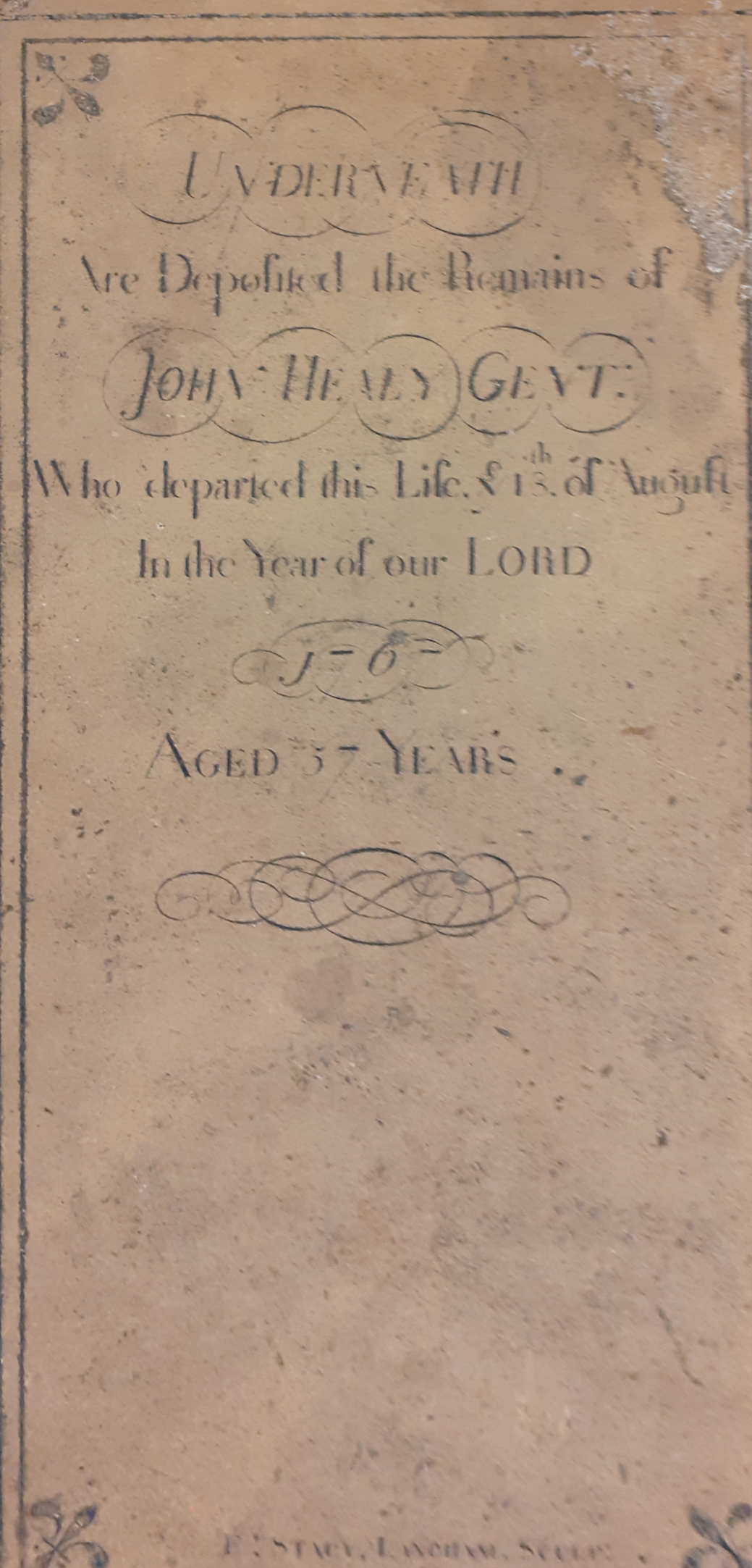
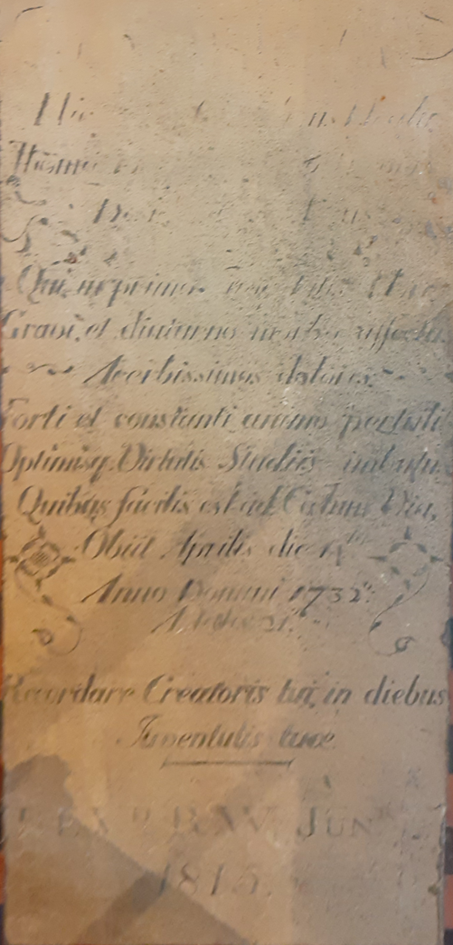
EA. …memory of ….. wife of … John Bellaers of Barleythorpe, who died the 12th May MDCCLXXXVI (1786) age 37 years, Her lies beneath…; A tender mother, a loving wife; A quiet neighbour, to the poor a friend; Happy is he who finds a …. Also in memory of John Bellaers who died the … of September 1787 in the 49th year of his age. EB. Here lies the body of John Bellaers who died August 18th MDCCCIX (1789) aged .2 years. Affliction … long time I bore; Physician skill was vain; Till Christ the chief sent me relief; And cured me of my pain. EC. Underneath are deposited the remains of John Healy, Gent.. who departed this life on 13th August in the year of our Lord 1767 aged 57 years. ED. Underneath are deposited the remains of Mr Mary Burton, wife of the Reverend Bartin Burton, who departed this life November 8th 1750 aged 47 years. EE. ……forti et constanti …….opptimiissii vertutis studies…..quibus finerlis est… obit aprilis …4th Anno Domini 1732…19…21. Recordare creatoris tin in oliebus. Juventulis tiroe……Jun 1815 (latin text very uncertain)
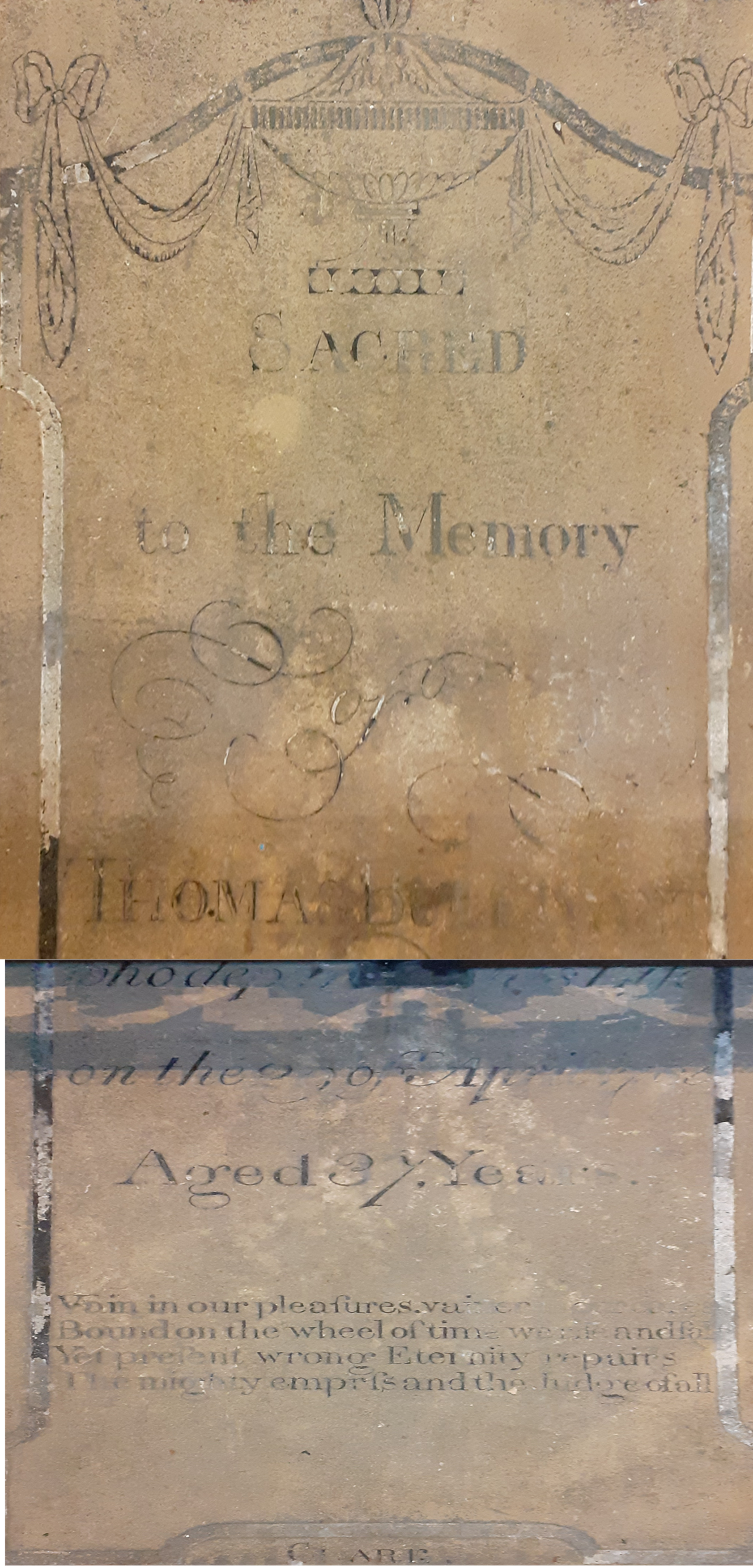
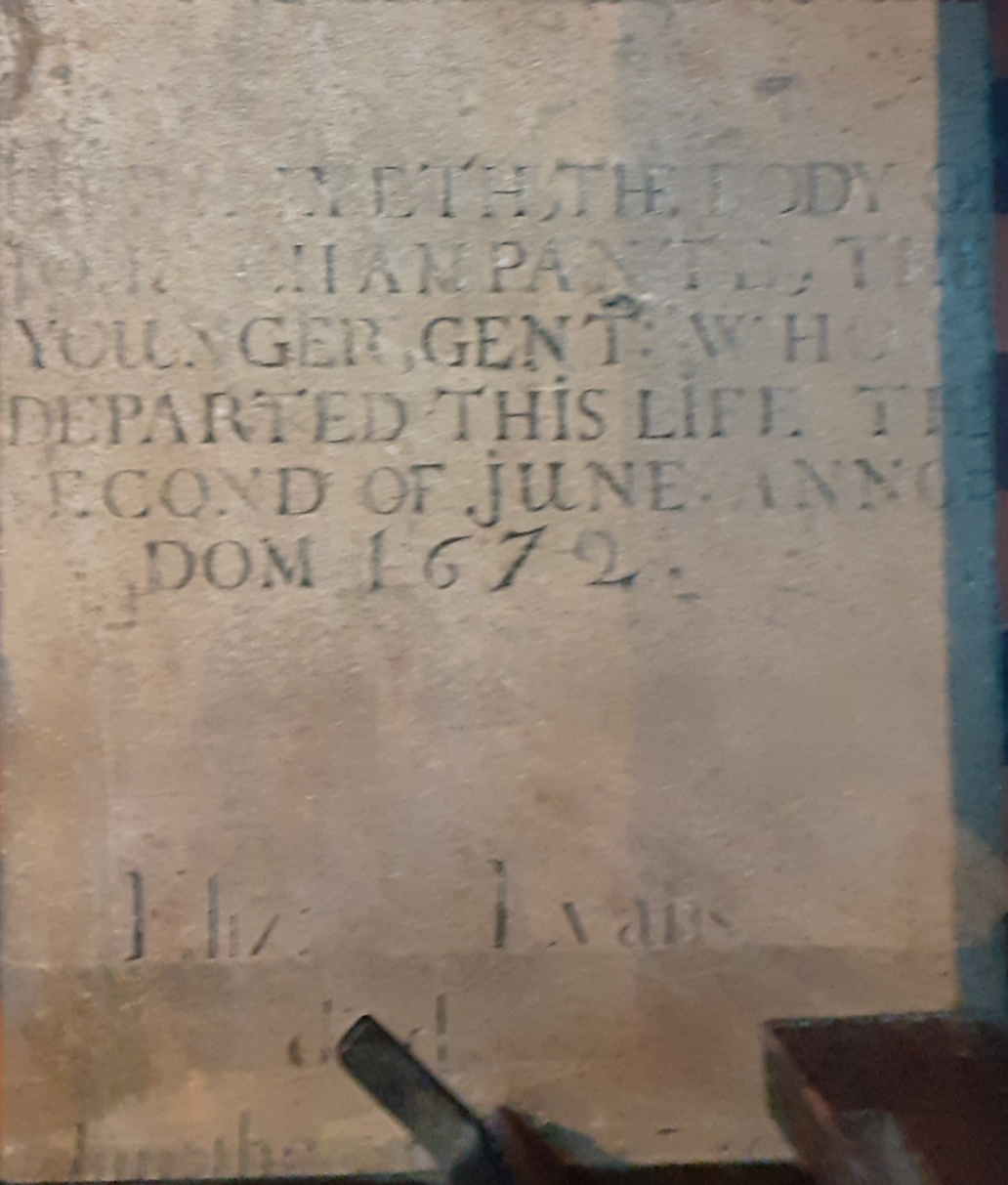
FA. Covered by altar rail and carpet FB. Part covered by altar rail and carpet. In memory of Martha Ades wife of …..this day .. year 1846 … years. FC. Part covered by altar rail. Sacred to the memory of Thomas …on the …. April … Aged 37 years. Vain in our pleasures…..; Bound on the wheel of time … and ….; Yet present wrong eternity repairs; The mighty empires and the …. of all FD. Part covered by altar rail and carpet. Here lieth the body of … Drury, Gent., who died January 15th 1775 ….. FE. Part covered by altar rail and carpet …lieth the body of William Pante the younger, Gent. who departed this life the second of June Ann. Dom 1672
GA. Covered by carpet. GB. Partially covered by carpet and altar. …. remains of Healy …. Edward Ealy…. GC. Mostly covered by altar. No inscription visible. GD. Parially covered by carpet and altar. Inscription not legible GE. Covered by carpet
When and Who
Two questions arise in association with the floor memorials. Firstly, when was the Lady Chapel used for burials and secondly what sort of people were buried there? To answer the first consider Table 1 below which shows the dates from the memorial slabs where they could be found. The pattern is not wholly consistent, but it is clear that the earlier graves are on the north side next to the chancel and the later ones on the south side next to the outside wall. The earliest grave of all – FE- dates from 1672, and the latest – FA – from 1846. The larger majority date from the 18th century. The pattern suggests that the early graves might have been a continuation of graves in the chancel. In the late 17th and 18th centuries, the chancel was configured very differently and was rebuilt in the restoration of 1858, so if there were similar graves there, the memorial slabs have been lost.
AA 1802
AB 1772
AC 1773
AD 1798
AE 1800
BA
BB 1835
BC 1809
BD 1789
BE 1702
CA
CB 1812
CC 1808
CD 1721
CE 1706
DA
DB
DC
DD
DE
EA 1786
EB 1789
EC 1767
ED 1750
EE 1732
FA
FB 1846
FC
FD 1775
FE 1672
GA
GB
GC
GD
GE
Table 1. Memorial dates
In terms of who is commemorated on the memorials, on the eighteen inscriptions where one might expect to find some designation, there are four identified as Gent., two as Esq. and two as clergy (not necessarily referring to the one who is buried). A web search revealed that there are the memorials of four High Sherrifs – William Lawrence 1765, Thomas Bullivant 1771, John Bellaers 1783 and Benjamin Cramp 1789. In addition William Twentyman was the Supervisor of Excise in Oakham Lordshold in 1787. Thus it is clear that those interred in the Lady Chapel were, as one might expect, members of the Rutland Gentry.
Finally it is worth noting that the family of Rev Bartin Burton, whose wife is interred in ED, also has a wall memorial in the south transept (figure 4). It may be that Burton himself and his son are also interred in one of the plots in the Lady Chapel with an illegible memorial inscription.
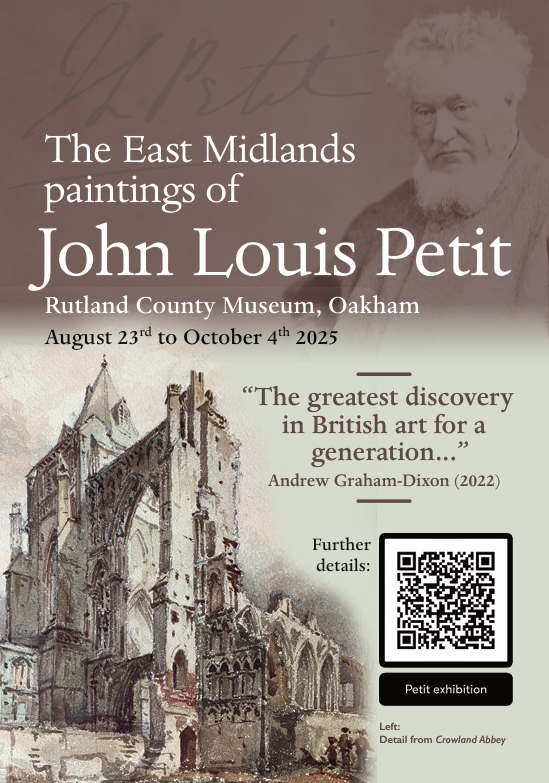
Rutland County Museum, Oakham, August 23rd to October 4th, 2025
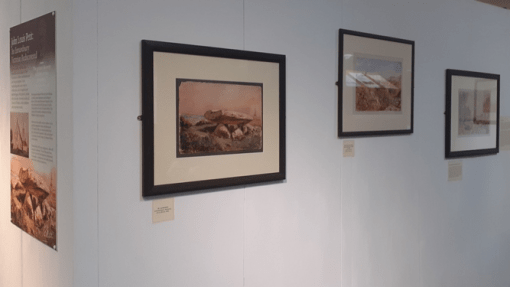
During his career Petit painted many thousands of pictures, but his work was never sold, and after his death in 1868, they were passed on to relatives. A century later they were discovered in an attic in Surrey, dumped in auctions and were widely scattered. Only now is their artistic merit and historical value being recognised. The art critic Andrew Graham-Dixon the greatest re-discovery in British Art for a generation, and the first book about his art, by the chairman of the Petit Society, describes him as Britain’s lost pre-impressionist. Petit’s art of the East Midlands is part of this re-discovery. Close to his home base in Lichfield, Petit visited and painted across the region many times. Often, he paints locations and subjects no other historical artist touched. Some 40 of these pictures were gathered together to be shown to the public for the first time ever at an exhibition held in Rutland County Museum between August and October 2025.
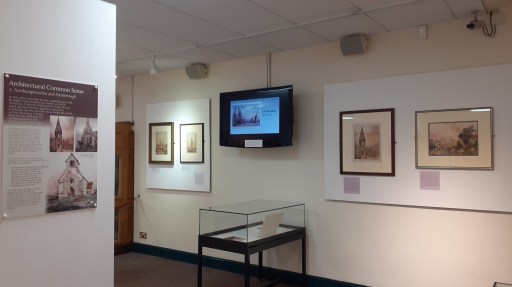
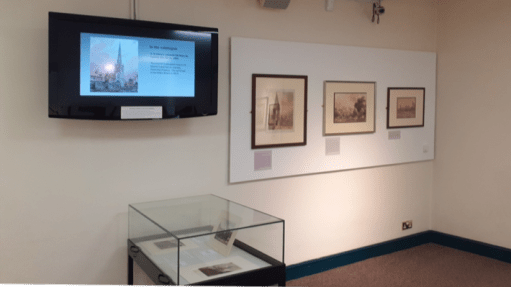
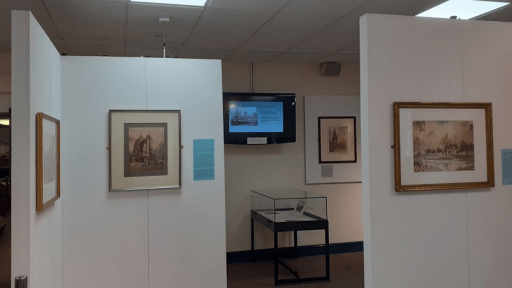
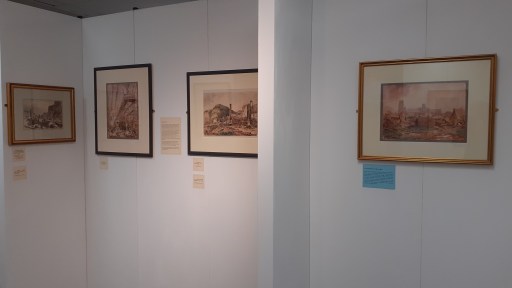
In this blog post we gather together a range of material related to the exhibition – the advertising material and display boards; photographs of the exhibition area itself; and the exhibition catalogues and slideshow that was shown on the screen in the exhibition area.
Exhibition flyer and display boards
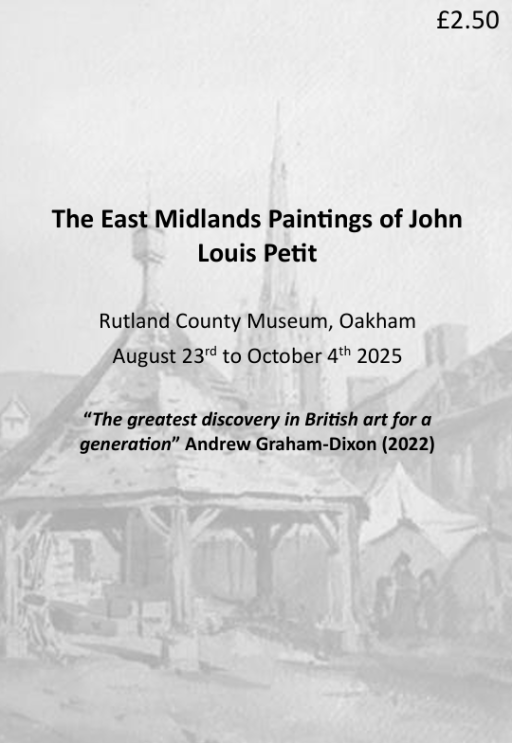
Exhibition flyer
Exhibition display boards
The flyer formed the basis of advertising the exhibition and was widely distributed by email and Social Media, with a small number of hard copies distributed locally around Oakham. There were five display boards – a general introduction (A1) and four others relating to the four geographical sections of the exhibition – Leicestershire and Rutland, Northampton and Peterborough, Lincolnshire and Cambridgeshire and Further Afield (A2).
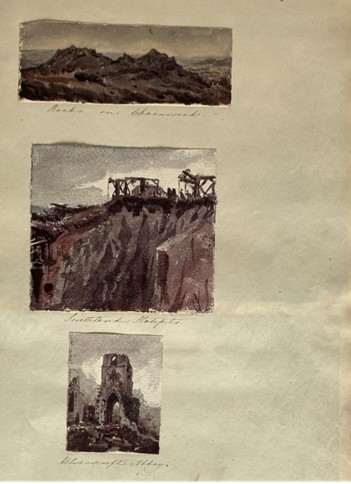
The simply produced catalogue contained brief details and a small photos of all the pictures that were planned to be exhibited. In the event a small number were not hung due to space limitations. These were shown as a slide presentation on a screen in the exhibition area, together with pages from an 1830 Album (see catalogue for description) and a selection of other East Midlands paintings.
Exhibition Catalogue
Slide show
Acknowledgements
The contributions of the following groups of people to the success of the exhibition need to be mentioned – the sponsors who provided much needed financial support; those friends of the organisers who helped with transport, mounting pictures and catering at the opening event; those who loaned paintings that were shown (identified in the catalogue); and most importantly the staff at Rutland County Museum for making the exhibition space available and constructing the exhibition. The help of all of them is very gratefully acknowledged.
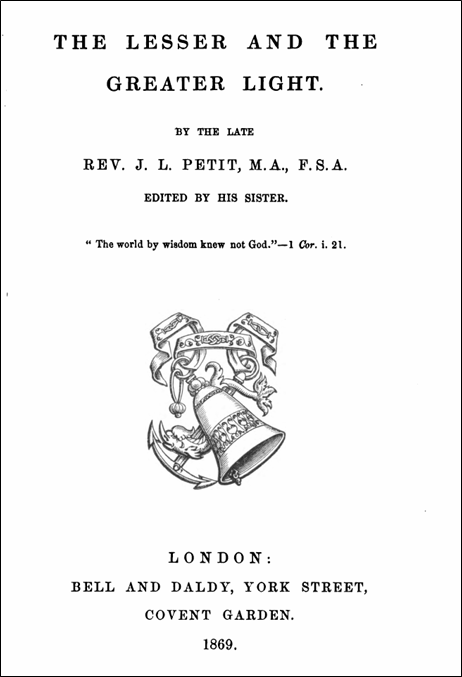
John Louis Petit was an Anglican clergyman, ordained deacon in 1825 and priest in 1826, both at Lichfield Cathedral. He served two curacies – the first from 1825 to 1828 at St. Michael’s Lichfield and the second from 1828 to 1832 at Bradfield in Essex. He then retired from parish ministry to concentrate on his artistic and architectural interests. He remained a priest however, and was much interested in the theological developments of the mid-19th century – in particular the revelations of the earth and astronomical sciences. At his death he left a long unfinished poem “The lesser and the greater light” that was a meditation of the relationship between theology and science, which was edited and published by his sister. This poem has many contemporary echoes and reveals that Petit was a serious theological thinker.
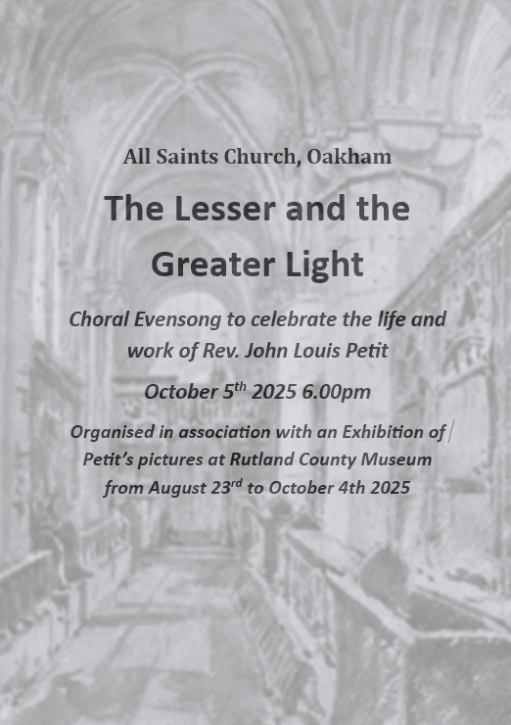
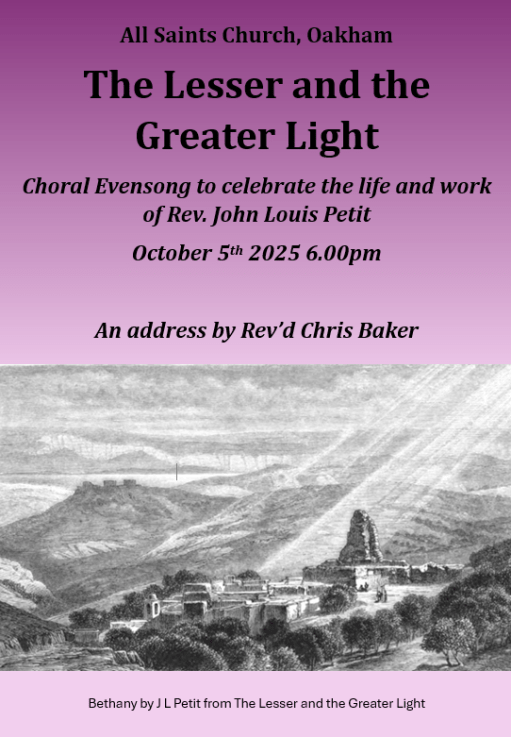
To celebrate and reflect on Petit’s role as a clergyman and theologian, a Choral Evensong was held at All Saints church at 6.00pm on Sunday October 5th with the service sung by the Laudamus (Oakham Team Ministry) choir. The choral setting and hymns reflected Petit’s period and an address was delivered by Revd. Professor Chris Baker on the subject matter of “The lesser and the greater light” and its implications for both the Victorian period and for today. All Saints church was itself heavily restored by Gilbert Scott in the 1850s.
In this post we gather together some material associated with the event – the advertising poster, a copy of The Lesser and the Greater Light, the Order of Service and a transcript of the address.
Evensong flyer
The Lesser and the Greater Light (from Google Books)
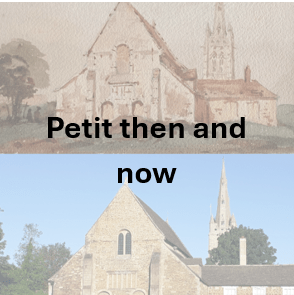
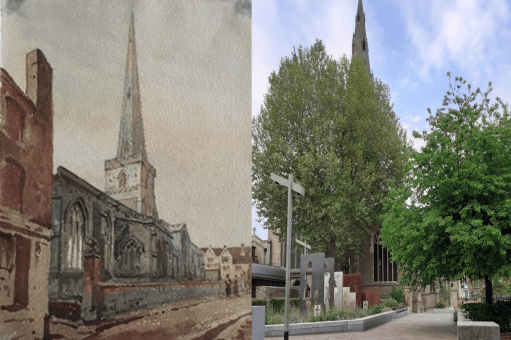
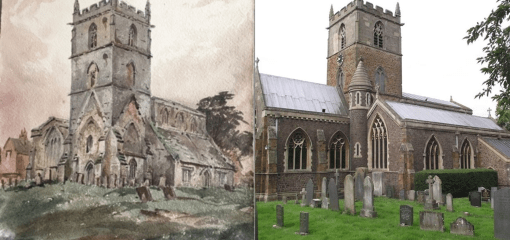
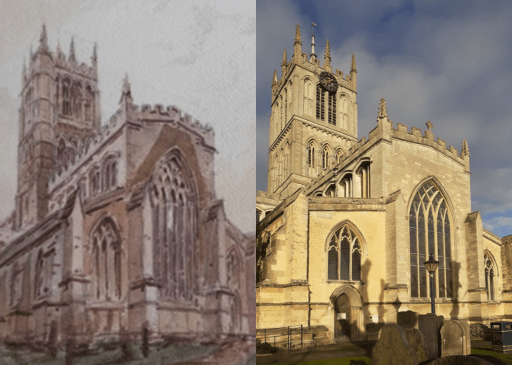
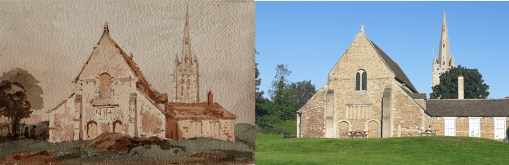
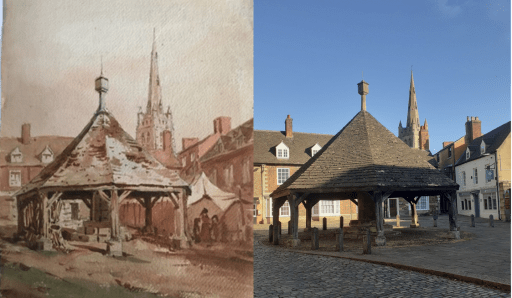
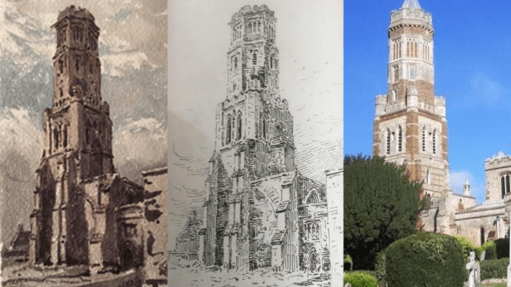
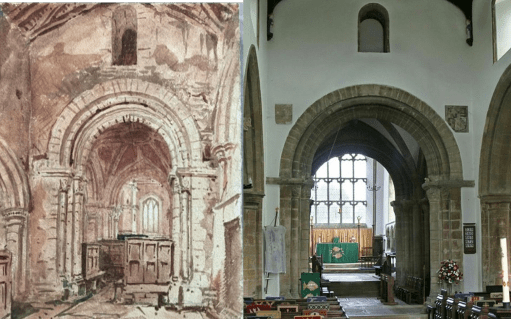
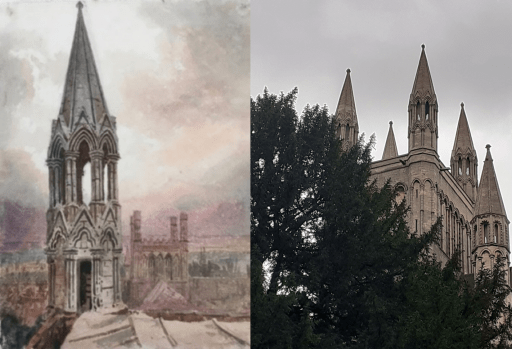
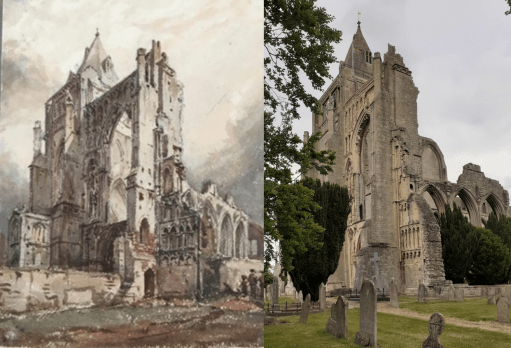
An Exhibition of the East Midlands paintings of John Louis Petit was held at Rutland County Museum from August to October 2025. During the preparation for that exhibition, I looked at whether the scenes that Petit painted were still recognisable today, and built up a collection of “then and now” photographs. Some of these have already appeared on various social media channels. In this post I show around 20 such comparisons and give brief notes as to locations and vantage points. Some of the modern photographs were taken by me, whist others were taken from publicly available sources. They are divided into the four sections used in the exhibition – Leicestershire and Rutland, Peterborough and Northamptonshire, Lincolnshire and Cambridgeshire and Further Afield. I hope they will be of interest to some readers.
(Click on the pictures for full view versions)
Leicestershire and Rutland
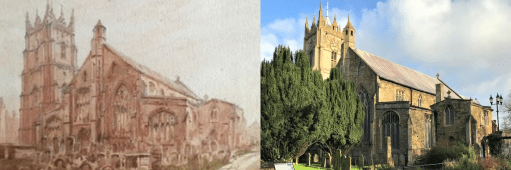
St Mary de Castro, LeicesterSt Martin’s, LeicesterSt Luke’s, ThurnbySt Mary’s, Melton MowbrayKirby Muxloe CastleOakham Castle and All Saints ChurchOakham ButtercrossSt Peter and St Paul, Exton
St. Mary de Castro, Leicester – JLP 1845, Author 2025. The obvious difference between the 1845 and the modern picture is the lack of a spire- this was removed for safety reasons in 2013.
St Martin’s, Leicester – JLP 1845, Author 2025. St Martin’s became Leicester Cathedral in 1927 and has been considerably extended since Petit’s day, not least with the bones of Richard III. The 1845 view is now much obscured by trees and the new work.
St Luke’s, Thurnby – JLP 1845, Tim Glover, Creative Commons license. Petit painted his picture in the period in the period the church was without its chancel. The church was substantially rebuilt in 1870 by Slater and Carpenter with a new chancel and south aisle.
St Mary’s, Melton Mowbray – JLP 1850, Author 2025. Obtaining the modern picture required sitting on the ground at low level in a car park. One hopes the ground level was different in Petit’s day. There are some interesting differences between the pictures – specifically a door in the right hand aisle in Petit’s picture, and one in the left hand aisle in the modern picture – perhaps as a result of the restoration by Scott of the 1860s and 70s?
Kirby Muxloe Castle – JLP 1845, Ashley Dace 2010, Creative Commons license. The pictures are from very similar vantage points, and show little difference in the tower.
Oakham Castle and All Saints Church – JLP 1850, Author 2024. Both pictures are from the same vantage point. The major difference between them is the extent of the outbuilding on the right hand side.
Oakahm Buttercross – JLP 1850, Author 2024. Again the pictures are from very similar, but not identical positions – the position from which Petit painted is now behind a hedge in the Oakham School grounds. The house roof lines and windows in the background are very similar. The building on the right hand side in 1850 has been replaced by the Sorting Office in the modern photograph.
St Peter and St Paul, Exton – JLP 1845, Author 2024. The locations of the two pictures are similar but not identical – to achieve Petit’s position would have required climbing over a fence and a boundary between the churchyard and the Exton Estate of the Gainsborough’s. The photograph was taken from very close to the church and significant perspepctive correction was required.
Peterborough and Northamptonshire
St Andrew’s, NorthboroughSt Peter’s, IrthlingboroughSt Mary’s, Higham FerrarsSt Kynerburghia, CastorPeterborough Cathedral, North AislePeterborough Cathedral, North Tower Pinancle
St Andrew’s, Northborough – JLP 1841, J Haywood, Creative Commons Licence 2025. The Petit line drawing is from his book “Remarks on Church Architecture” from 1841. The two views are very similar
St Peter’s, Irthlinborough – JLP 1830,1841, Discover Northampton 2025. The line drawing is again from “Remarks on Church Architecture”, and was drawn for the 1830 painting. The tower in the modern picture shows the results from a major rebuild in the 1890s.
St Mary’s, Higham Ferrars – JLP 1830, Bearas 2024, Creative Commons license 2025. The major change here is to the chancel which was substantially rebuilt with a lower roof in the 19th century.
St Kynerburghia, Castor – JLP 1845, Alan Murray-Rust, Creative Commons license 2016. Both painting and photograph are from a position below the central tower. Petit’s painting shows a much more cluttered interior in the chancel area – possibly indicating an Elizabethan communion room arrangement.
Peterbrough Cathedral North Aisle – JLP 1845, Author 2024. The modern picture shows the location of the tomb of Catherine of Aragon. This was behind the screen that fills the aisle in the 1845 painting.
Peterborough Cathedral North Tower Pinnacle – JLP 1845, Author 2025. Petit painted the pinacle on the north tower from a location on the roof of the tower itself. It is looking east along the nave and chancel. I had neither the access or the inclination to get to the same vantage point, so the modern photo is from ground level, looking west from the side of the north aisle.
Lincolnshire and Cambridgeshire
Crowland AbbeySouth KymeSt Peter and St Paul, WisbechCrowland Trinity Bridge
Crowland Trinity Bridge
Crowland Abbey – JLP 1845, Author 2025. The location of the 1845 picture, possibly one of Petit’s most impressive, is now in the midst of a clump of trees, so the modern picture is from a slightly different location. The tree growth around the Abbey is significant.
South Kyme – JLP 1845, British Express 2025. The vantage points of both painting and photograph are very similar – and the tower has changed little in the interim.
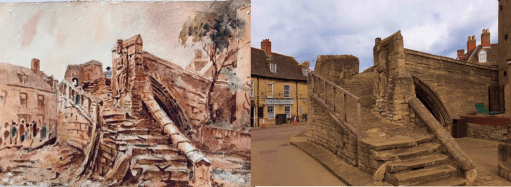
Crowland Trinity Bridge – JLP 1861, Author 2025. I managed to take the photo of Trinity Bridge in Crowland from almost the exact position from which Petit painted it and it can be seen the bridge is little changed. However Petit did not have to contend with cars and lorries wanting to occupy the same space.
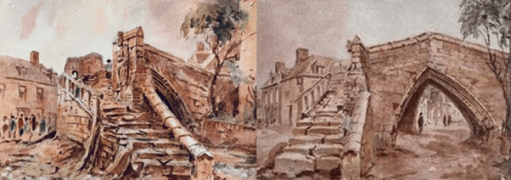
Crowland Trinity Bridge – JLP 1861(x2). Finally I include a comparision of two pictures of Trinity Bridge in Crowland, almost certainly painted on the same day from slightly different vantage points. The right hand picture has recently been sold on eBay and is a screen shot from that site. The very similar representations of detail is astonishing, showing the accuracy of Petit’s representations.
Further afield
Crystal PalaceLocmariaquer
Both of these pictures are not really “then and now” – more “then and then” – and show the view that Petit painted against other historical views.
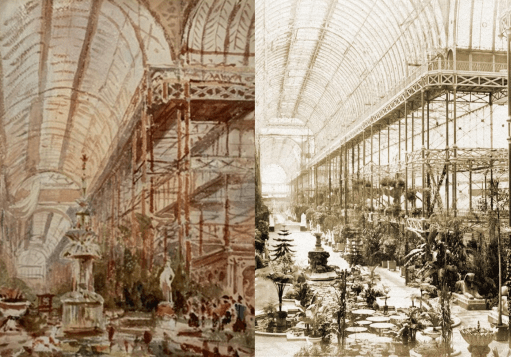
Crystal Palace – JLP 1867, Historic England 1859. The views are from similar vantage points, but show different exhibits in the same space. Comparing Petit’s painting of the superstructure with the photograph shows the accuracy of his representation.
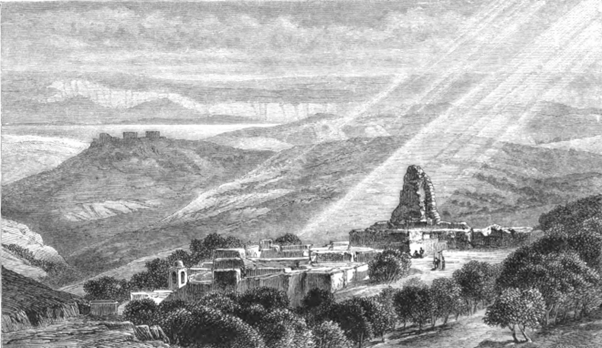
Locmariaquer – JLP 1851, Postcard c 1900, Cartorum, Jules Coignet 1836, Public Domain. Petit painted his view of the dolmen at Locmariaquer in 1851. The painting by Jules Coignet is 15 years earlier, and the postcard view around half a century later. The similarities is in the rock formation in all three are striking, indicating again something of the accuracy with which Petit painted.
Closing Remarks
Perhaps the major point to emerge from this exercise for me is how Petit seems to have painted views from vantage points that were difficult to access, or from locations that most others would not have chosen. There are many churches for which I have not been able to make a comparison of Petit’s picture with the modern day situation, simply because there seem to be no published photographs from the location Petit used. He seems to have sought out the unusual viewing points.
For family reasons, I often make the journey from Oakham to the Chesterton area of Cambridge, travelling by train from Oakham station to Cambridge North, changing at Ely, and then either walking or taking one or more buses to reach my destination. The last leg is actually quite time consuming, and adds considerably to the overall travel time. Now in July 2025, I learnt of the existence of a new bus service from Huntingdon to Fenstanton and then along the Cambridge Busway, through Chesterton to Cambridge, passing very close to my destination (the Whippet Coaches T1). This seemed to me to offer an interesting, and potentially quicker journey, travelling to Peterborough by Cross Country trains, then to Huntingdon on Thameslink, and then onto the bus to my final destination. What follows is a report on the journey there and back via this route, highlighting both its good and bad points.
The journey
I trevelled to Cambridge very early on a Saturday morning, catching the 5.47 East Midlands Trains service from Oakham to Peterborough, and then, after a 9 minute connection, the 6.24 Thameslink service to Huntingdon. The connection was straightforward, although there was some conflict between the online information and what actually happened on the ground with regard to the platforming of the Thameslink train at Peterborough. I arrived at Huntingdon on time at 6.38.
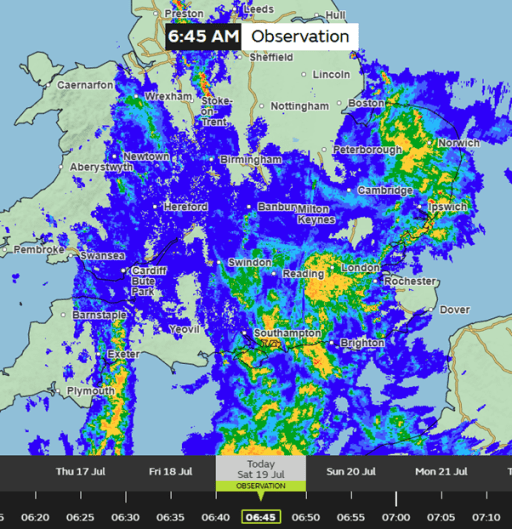
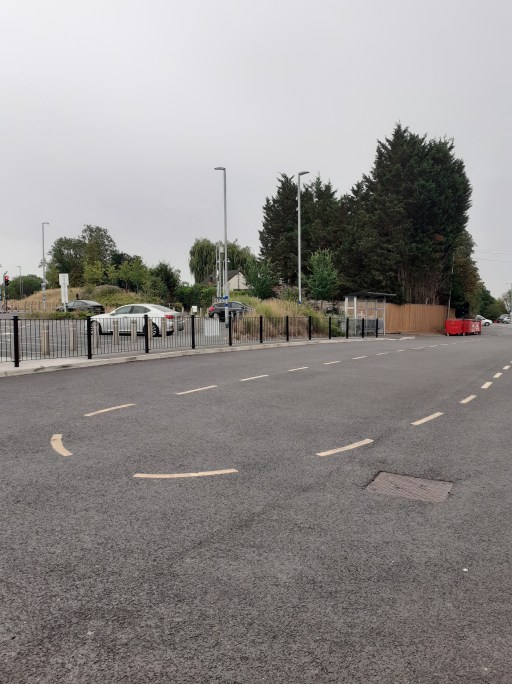
Now the weather that day was “interesting” to say the least, as can be judged from the weather radar screen shot below (Figure 1). The T1 was due to leave the station at 7.19, so I was anxious to find somewhere dry to wait. On leaving the Huntingdon station buildings, I found a convenient bus turning circle, with a respectable shelter (Figure 2). The only problem was that this was obviously not in use, and I was directed to a bus stop on the side of the ring road outside the station, which had no facilities other than a bus lay by and a stop sign (Figure 3). Why this change had occurred I have no idea – presumably something to do with operational convenience – but it had nothing to do with the comfort and convenience of passengers. Not good.
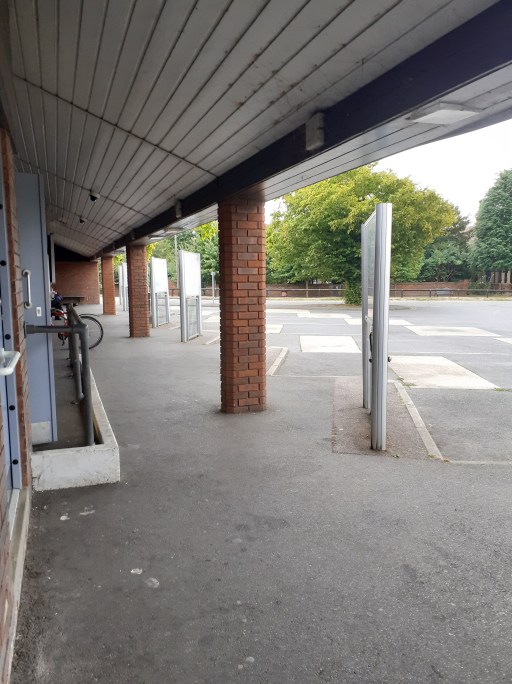
I was not anxious to wait to get soaked in such a situation, so I followed the signs to Huntingdon Bus Station, about a 5 to 10 minute walk away (including crossing the ring road) where the T1 was due to call after the railway station. This was a perfectly acceptable facility, with covered seating and adequate information – the only problem was that it wasn’t at the railway station (Figure 4).
Figure 1. Weather RadarFigure 2. The bus turning circle at HuntingdonFigure 3. The bus stop and layby at Huntnigdon stationFigure 4. Huntingdon Bus Station
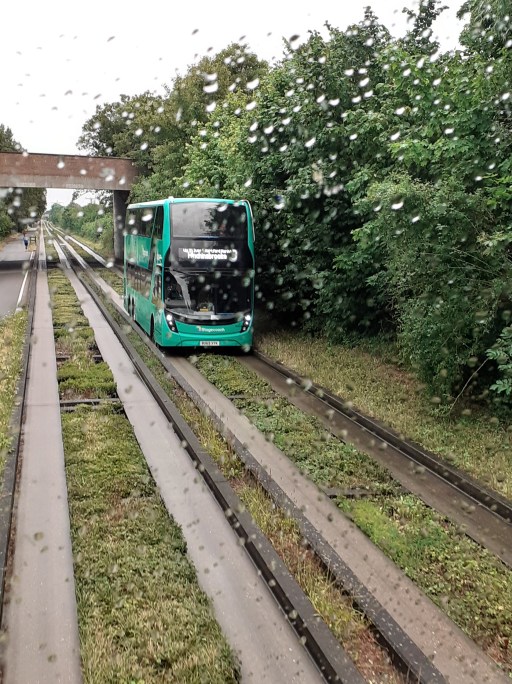
The bus arrived precisely on time. The driver was cheerful and efficient and everything ran smoothly. the bus ran non-stop to Fenstanton, then travelled quite slowly over some minor roads (with cars very dubiously parked) to the Busway at Swavesey. From there the trip was fast and smooth along the busway. The weather by this time was horrible as can be seen from figures 5 and 6. Loadings were light throughout, perhaps because it was a wet Saturday morning. It left the Busway at Milton Road in the north of Cambridge, and stopped at a number of stops along that road (unlike the standard Busway buses that run limited-stop into the city centre). I arrived at the stop I wanted a little after 8.00. The journey time was about 2 hours and 20 minutes, even with the 40 minute sojourn in Huntingdon. That was about the same time that the journey would have taken by train to Cambridge North. It was however rather cheaper, partly thanks to my Bus Pass!
Figure 5. The BuswayFigure 6. The Busway again
The return journey was uneventful, except for the weather. Around about Fenstanton, the persistent rain became a deluge which persisted until after the bus arrived at Huntingdon. The drop off in the layby outside Huntingdon station and the walk into the station building was unpleasant to say the least. I got on the bus at around 12.30 and arrived back at Oakham at 14.20 – half an hour quicker than the outward journey thanks to good connections in Huntingdon and Peterborough.
Reflections
So what was my overall view of the journey. The T1 bus service itself was very pleasant and convenient and Whippet Coaches are to be congratulated. The journye times and stopping places suited me very well. The service has the potential to be more than just a local service and could have a more inter-urban role, if the connections into the rail network were better. The hourly service inevitably means some extended connection times at Huntingdon and / or Peterborough and a more frequent service would be nice, although whether this would be financially viable is perhaps doubtful.
The unpleasant part of the journey was the lack of proper bus connection facilities at Huntingdon station. It is difficult to see how this could have been made worse, and is a classic example of the neglect of the most basic principle of integrated transport. Whoever is responsible (Cambridgeshire County Council perhaps?) should hang their heads in shame.
In this series of three related posts, I present transcripts of the press reports concerning the re-opening of All Saints church in Oakham in November 1858. This is done primarily to make the source documents for that event available and easily readable, and there is no discussion of their contents. That will come later. The material is all found in the British Newspaper Archive and the archive OCR text forms the basis of the transcripts, although. As with any OCR text, this has needed considerable editing, which, as I am sure the reader will find, has been imperfectly done. The material presented in the three parts is as follows.
Part 1 contains the notice of the re-opening the from the Leicester Journal of 5th November 1858 and a report on the event itself from the Stamford Mercury of 12th November 1858. The latter contains the text of the report by Gilbert Scott that describes the state of the church before the restoration and what, in his view, needed to be done.
Part 2 contains a report of the opening from the Leicester Journal of 12th November 1858. This covers some of the same ground as the Stamford Mercury report, and whilst not including Scott’s report, does give details of the opening event, including the sermon that was preached.
Part 3 (this part) is from the Lincolnshire Chronicle of August 24th 1860, and gives the text of a lecture that was given at Oakham Castle entitled “Gothic Architecture” by the Rev Canon James, one of the principal proponents of the Gothic in the region, where the changes that were made to the church are explained and justified.
Lincolnshire Chronicle 24th August 1860
LECTURE AT OAKHAM. ON ” GOTHIC ARCHITECTURE,” by the RE V. CANON JAMES.
Last Wednesday afternoon, the Rev. Thomas James., M.A.- hon. canon of Peterborough, vicar of Theddingworth, and one the secretaries of Architectural Court of the Archdeaconry of Northampton—a gentleman extensively known as an accomplished ecclesiologist and erudite and painstaking antiquary—delivered a lecture at the Old Castle Hall of Oakham, on ” Gothic Architecture,” with especial reference to the history and arrangements of the Church and Castle Hall in Oakham. The lecture was for the benefit of the Oakham Literary Institute —a young but progressing association, having for its object the advancement literature, art, and science, and the improvement the humbler classes of society. The weather, unfortunately, was of the most dreary and cheerless character, heavy searching rain descending during the whole of the day. Notwithstanding this very material draw back, a numerous and fashionable audience assembled in the Hall at the hour announced for the lecture at three o’clock. Geo. Finch, Esq., of Burley Hall, the owner of the Castle, presided on this occasion, and amongst the ladies and gentlemen present we noticed the following :—The Rev. W. S. Wood, the Rev. T. Byers, the Rev. J. E. Prescott, the Rev. J. M. Wingtield, the Rev. H. Jones, the Rev. C. Palmer, the Rev. H. J. Biggs, the Rev. R. T. King, tho Rev. Scudamore, Lord Campden, – Barnard, Esq., B. Adam, Esq., R. Harvey, Esq., J. Morton, Esq., H. Samson, Esq., &c, &c. The Oakham brass band was in attendance, and intervals played selections of music.
The Chairman opened the proceedings by observing that they had met in that venerable fabric for the purpose of hearing a lecture from the Rev. Mr. James, on Archaeology, as more especially connected with the Church of Oakham and the Old Castle in which they were at that time assembled. The date of its erection, which they saw upon the wall, was, he believed, incorrect, the hall having, in all probability, been constructed about the time William Rufus. It was a remnant of time when the country, both as regarded laity and clergy, were intently interested in the Crusades to the Holy Land—at a time when the country groaned under the Norman tyranny, and the people were the victims of regal despotism and of feudal violence. that age, the custom was to wear long-pointed shoes, and as the people had a very peculiar art of interpreting Scripture, they connected the prevailing fashion with the text, that ” No man can add one cubit to his stature,” and during the reigns Kings Henry the Second and John, the populace were firm believers in the long-pointed shoes as having something to do with religion. (Laughter.) But, happily, these ages of darkness and superstition had long since passed away, and the country no longer trembled ‘neath regal tyranny or baronial oppression. (Hear, hear.) Civil and religious liberty now prevailed through the length and breadth our highly favoured land, and all that now remained visible of these dark ages were splendid specimens of architecture. He would only mention that four out of the possessors of the Castle in which they were assembled had been executed for high treason ; the first was the Earl of Kent, in the reign of King Edward the Third, the second, the Duke Buckingham, in the reign Richard the Third; of whose fate Shakespere had informed them when he w rote :
“The Duke of Buckingham, my lord. Then off with his head “
— a second Duke of Buckingham in the reign of Henry the Eighth; and the fourth, Lord Thomas Cromwell, beheaded in the year 1540. He could only say that he sincerely trusted that the present and future possessors might never meet with a similar fate. (Loud cheers.) He might go much further in referring to the history and associations of Oakham Castle, but he would not intrench upon the province so erudite and able lecturer as Mr. James, who was, he was quite sure, much better qualified interest them. He begged to introduce to the meeting Mr. James. (Loud applause.)
The Rev. T. James then entered upon a most elaborate, instructive, and interesting lecture on the character, progress, arrangement, and utility gothic architecture, divided as it were into two parts, the first being illustrated by references to the Castle of Oakham, and the second descriptions of the church which has been recently restored, and which is one the finest specimens of gothic architecture to be found among the churches of England. The Committee of the Oakham Literary Institute desire to publish the lecture in its entirety for the benefit of the society, and therefore, their request, we only present our readers with a brief outline of Mr. James’ paper. He commenced by observing at one of their architectural meetings, a gentleman had accosted him by the enquiry whether he was Mr. James the architect and of course he told him, as he now told them, that he was not Mr. James the architect or the architect either. He much regretted that in undertaking a subject of such magnitude his knowledge of it was so superficial ; and he might as well tell them at the outset that he should in the course of his lecture draw largely upon the researches which the eminent knowledge of his friends (Mr. Poole and Mr. Hartshorn) had enabled them to make ; and he did this with the more confidence because he should not think for one moment of placing himself on a level with those gentlemen. As its name implied, architecture was the mistress art. With the gentleman who addressed him as an architect, many believed that the name architecture was derived from its connection with arches; but this was not so, although it might be said to begin with the arch. In fact, there could be architecture without the span of the arch stretching from pillar to pillar. The lecturer referred to some diagrams illustrating the early and progressive styles architecture, commencing with the stones placed one” upon another as at Stonehenge, next the Saxon, then the Norman, and finally the Gothic. These styles he lucidly described and illustrated. He observed that the various styles of architecture, more or less, ran into one another. It was quite impossible for anyone to say —here the Norman ends, and here the Saxon begins. Our forefathers never paid attention to styles—they went on building, putting the very best materials they could find into the best possible forms, just the same as they used to write, without any regard to the rules of grammar. Mr. James then pointed out that the arches of the windows inside the Castle Hall were round, while outside they were pointed. Oakham Hall marked the transitional period in architecture. It was the site of a Royal Hall, for a hall at Oakham was mentioned when King Edward the Confessor made his survey. Referring to the remarks of the chairman, the lecturer gave some interesting details of the early possession of the Castle of Oakham. Of these he made special mention of Walcheline de Ferrars, a younger son the Earl of Derby, lo whom Henry II. granted the manor, and created Baron of Oakham. This same Walcheline de Ferrars was a bit of poacher and a bit of a roystjer, having displayed a fondness for hunting the Royal game, while many time he Old Hall in which they sat had been the scene of feasting and merriment. De Ferrars joined King Richard I. in his crusade to the Holy Land and was last heard of the romantic siege of Acre, where he died. Alluding to the fact that four possessors of the Castle of Oakham had been executed for treason, the lecturer said it was not at all improbable that more than these had been guilty of treasonable practices, although they were not perhaps detected
Treason doth never prosper. What’s the reason? When it doth prosper, Men don’t call it treason.
After describing the persons through whose hands the Castle of Oakham successively passed until it came into the possession of its present most worthy and respected owner, Mr. James said it had been supposed some that the Castle was a chapel to some great building, but that was a most erroneous impression, formed through a notion that the piers and arches were peculiar to ecclesiastical edifices. They were not so, the Gothic in olden times being the prevailing style for buildings domestic as well as ecclesiastic. Oakham Castle Hall regarded as the finest domestic room in England, and, in »’* probability, it was the finest part of the Castle. They must not suppose that the ancient Castle was fortified with keep, bastions, and towers, as in the neighbouring Castle of Rockingham. Oakham Castle never had any defensive works, except the outer wall. The entrance door in the hall, he observed, was not now in the proper place. It was mentioned in Wright’s History of Rutlandshire that the door was in the corner, but it had been removed to the centre of the building- At the end of the hall which he stood the King’s chamber, all probability, existed, and he had been told Mr. Heneage Finch that in dry summers—which, of course, this was not —traces of buildings were to be found on the west as well ** the east side. Mr. Heneage Finch had also told him that remembered a tower on the east wall, and there probably existed the postern which connected the Castle with the town. Mr. H. Finch also remembered a round tower on the westside. The lecturer next went on to describe the purposes for the hall had been used in olden times and gave a graphic word picture of what he supposed it to be in the days of Walcheline de Ferrars. There, in all probability, a sort of rough justice was administered the Baron, and there also the reveling and feasting took place. They must imagine the hall cleared of its present furniture, and substitute stout oaken benches for seats, with boards placed upon plain for tables, the only deviation from the arrangement being an arras of tapestry at the west end, where the lord sat. The windows were unglazed; the fire was placed on a raised platform in the centre of the hall, the smoke escaping by the windows after the fashion prevalent in the cabins of the Irish. In the evening the custom was to put wooden shutters to the windows, which it would be observed be admirably shaped for the purpose, and this they did at an early hour, showing that in those days they were supporters of the early closing movement. (Laughter.) The hounds crouched by their masters’ side, and their hawks perched above their heads. Here they quaffed wines from Greece and Cyprus and feasted upon lamprey and herring pies. The ladies and gentlemen sat at tables alternately, and it was the height of refinement then to eat off the same plate. (Laughter.) The only knife used was the claspknife, which the gentleman most likely took unsheathed from his girdle, and napkins would be in considerable request considering that large proportion of the food had to taken with the fingers. He (the lecturer) observed that it was well known that finger napkins were commonly used as early as the 13th and century. The chief Personages in those days sat at the upper end the table, and the humbler ones at the lower end—the salt cellar—which by way ought to spelled with the s and not the c—dividing the upper and under crusts of society. (Laughter.) He had thus endeavoured to introduce a few somewhat interesting details with the dry dish which he had to place before them; and determined to do so as soon as he knew he was to speak in hall, which was to them all so rich in association. (Applause)
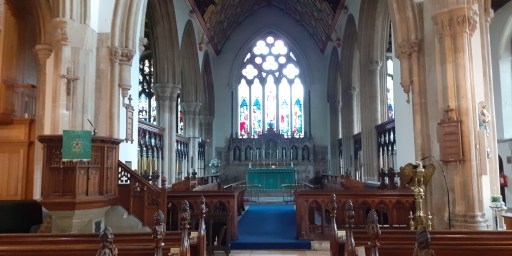
Chancel, showing pulpit, screens between side chapels, choir stall, altar and reredos (from 1898), prayer desk and lectern
The lecturer then proceeded to the more direct portion of his subject, pointing out on the diagrams the three styles of c architecture, viz., Early English, 13th century”; Decorated. 14th century; Perpendicular, 15th century. The first or early English arch they would observe was round, from one centre, the second or decorated arch, sprung from two centres; and the third arch he believed came from four centres- These styles were all to be found in the church of Oakham- enumerated the different parts of the church in which the three styles of Gothic architecture were observable, specially, remarking upon the pillar-shafts in the chancel, which were the 14th century, while the capitals and bases were Tudor work, at least 150 years later. The lecturer quoted some elaborate remarks of the Rev. A. Poole’s on this subject, as also an translation from the Latin, referring to the transfer of Simon de Langham (who was not very popular) from the see of Ely to Canterbury. About the middle the 16th century, strict attention to ecclesiastical architecture ceased, and modern commenced. People had their attention occupied in ways. Gothic architecture was essentially un-Romish in its character, and he believed there was only one church in Rom which affects this style. The great Papal Church of St. Peter’s at Rome is in the classic style of architecture, and not in the Gothic, to which it is totally opposed. If faith were judged by architecture, then it would be more proper to condemn St. Paul’s than Westminster Abbey, for the former was far more in the Romish style. (Hear, hear.) He then adverted to the arrangements of Oakham Church and congratulated the inhabitants on the good feeling they had manifested in the restoration of the church. They had now obtained a building most suitable for the proper and reverential worship of Almighty God. No square room could ever have been appropriate, or of half so much utility. They had a church of which they ought to be indeed proud, and any apology for a beautiful structure would very much like Bishop Watsons apology for the Bible. He contended that Gothic churches had tendency to produce devotional feeling in the hearts the worshippers. Alluding to the arrangements of Gothic churches, the lecturer said originally the porch of the church was intended for the unbaptised, the nave for the great body of the people, and the chancel for the clergy for the celebration of the Holy Communion; the upper part being the presbytery, and the lower part was apportioned to the choir. These churches were built in the form of the or the Greek cross, plans which he pointed out to the audience. minutely referred to the general arrangements and particular features in Gothic churches, ably associating his remark with Oakham church. He alluded to its condition before its restoration, and said in that respect its history was the history of nearly every church in the country. Pleasantly touching upon bygone days when it was said that old ladies sat in church with their umbrellas up, and the pulpit to the last in mourning for George III. Mr. James drew attention to two plans—one of the church before the restoration with its high boxed-up pews, and the other since its improvement, remarking that they had, indeed, much cause for thankfulness and congratulation at such a pleasing change. As they entered the church they would observe the font, emblematical of regeneration; at the east end the altar, devoted to tb second and higher sacrament, not shutout from the laity. reverently guarded the pulpit on the north or gospel side (called from the Gospel being read on the north side of the altar) not hiding the Communion table ; the Bible desk or lectern standing facing the people in order that all might hear the words addressed to them ; the Prayer desk more lowly as in accordance with the spirit of prayer, and not facing the as if the supplication was to them and not to God ; the congregation seated themselves in the nave in open and uniform seats that there should be no distinction in God’s house ; and so there might be no distraction all looked to the east, from where the Sun Righteousness arose. (Hear). And while on subject he might observe that the practice of placing the altar the east end of churches was copied from the Primitive and not from the Romish church. The altar in most Romish places of worship was placed at the west end, as at St. Peter’s Rome. Some slight divergence from the east was observable in the chancel of Oakham church, for which several reasons had been given, but they were not worthy of credence. The triple divisions of nave, chancel, and altar were still preserved but no rood screen now shut out the laity—it was open alike to all. (Applause.) It was held by some that the multiplied pillars in gothic churches were an obstruction to properly seeing what was going on, but he thought broken church induced feelings more reverential, more solemn, and more able for worship than would be produced by four square walls like a concert room. (Hear, hear.) In speaking of the costly decorations in Oakham church, the lecturer mentioned masks, &c, to be found there; and also, a very curious representation of a fox running away with a goose on its back followed the disconsolate goslings, and a man running after Reynard with a broom in his hand. All the carving in the church with one exception—which he had himself detected was of the 14th and 15th century. He mentioned that a cupboard in the eastern wall, behind the altar, which might have been used as a receptacle for relics, or for receiving the stoup of holy water which stood at the chancel door*. This receptacle was often confounded with the piscina, —which as they were doubtless aware of had a drain connected with it — used for washing out the chalice from the communion table. The tower of the church was what is called engaged tower from the fact of the east side being within the church. On the exterior there were figures in niches in the toner, which in days of fanatical excitement were rarely spared. The vestry was two storied, in all probability it was formerly used as the dwelling of an anchorite, that being a prevailing custom at one time. There was a similar instance of a two storied room attached to the church at Barnack, near Stamford. Of Gilbert Scott he must say that had carried out the work restoration in the most Conservative spirit, preserving thing interesting and valuable, clearing away only what was unseemly and unnecessary. The restoration committee did everything in their power to promote the work, and they the satisfaction of having their labours crowned with success. He had the more pleasure in speaking upon this subject, ‘ much as he was asked to take part in the work, which, the exception of his own church, afforded him more pleasure than any labour he was ever engaged in. (Applause.). There were yet a few matters to be done to place the church in finished state which they all desired to see-; and he felt sure that the energy and liberality of private individuals would not leave them long to wait. (Hear, hear.) Among other matters, he should like to see two official pews for the church wardens, who held a high and responsible office in the church (Hear, hear.) Oakham Church, as a whole, was very effective and beautiful, and there could be no better proof than that of its architectural excellence. The various styles in the combined to make one effective whole, and he quite with Mr. Scott that it ought not to be spoiled by superfluity ornamentation. (Hear, hear.) After some further observations, Mr. James concluded by reiterating the pleasure b received from being permitted to take part in the work restoring that noble church, which he regarded with unmitigated satisfaction.
The Rev. W. S. Wood (headmaster of Oakham Grammar School) as president of the Literary Institute, proposed a vote of to the Rev. Mr. James for his able lecture, and the vote was accorded with acclamation.
The Chairman, in announcing that the meeting was closed, expressed the great interest and gratification he had received from the lecture which Mr. James had just delivered to and for which they all thanked him so much. He (the Chairman) was glad Mr. James had set him right as to the date of the hall, which would be 1100. In the other remarks made relative to the hall, it appeared that he was in the main correct. Mr. James, to whose valuable and zealous labours in the work of restoring the church he could bear testimony, had given them a most complete history of Gothic architecture. – many valuable interesting details of that old hall and their noble church. He was very glad that its arrangements more after the Primitive than the Romish Church, although if the Papal church erred in no graver matters than its architecture, it would be well (Loud applause.)
The band then played the National Anthem, and the company left the hall.
* There is a similar receptacle in the east wall, behind the altar, in the parish church of Navenby by Lincoln.






























 Engineering, history and ecclesiology


