
Introduction
Recently I have come across a number of old, framed prints of one sort or another in All Saints Church in Oakham. These were obviously intended for hanging somewhere in church or in a building associated with church and are in wooden frames. They are now in a very poor state of repair, and if they were again to go on view, would need complete remounting. In this short post, I present photos of them, with some historical background. Their dates are not certain, but the subject matter covers a wide period of the church’s history from the 11th to the 20th centuries.
The Spurious Charter
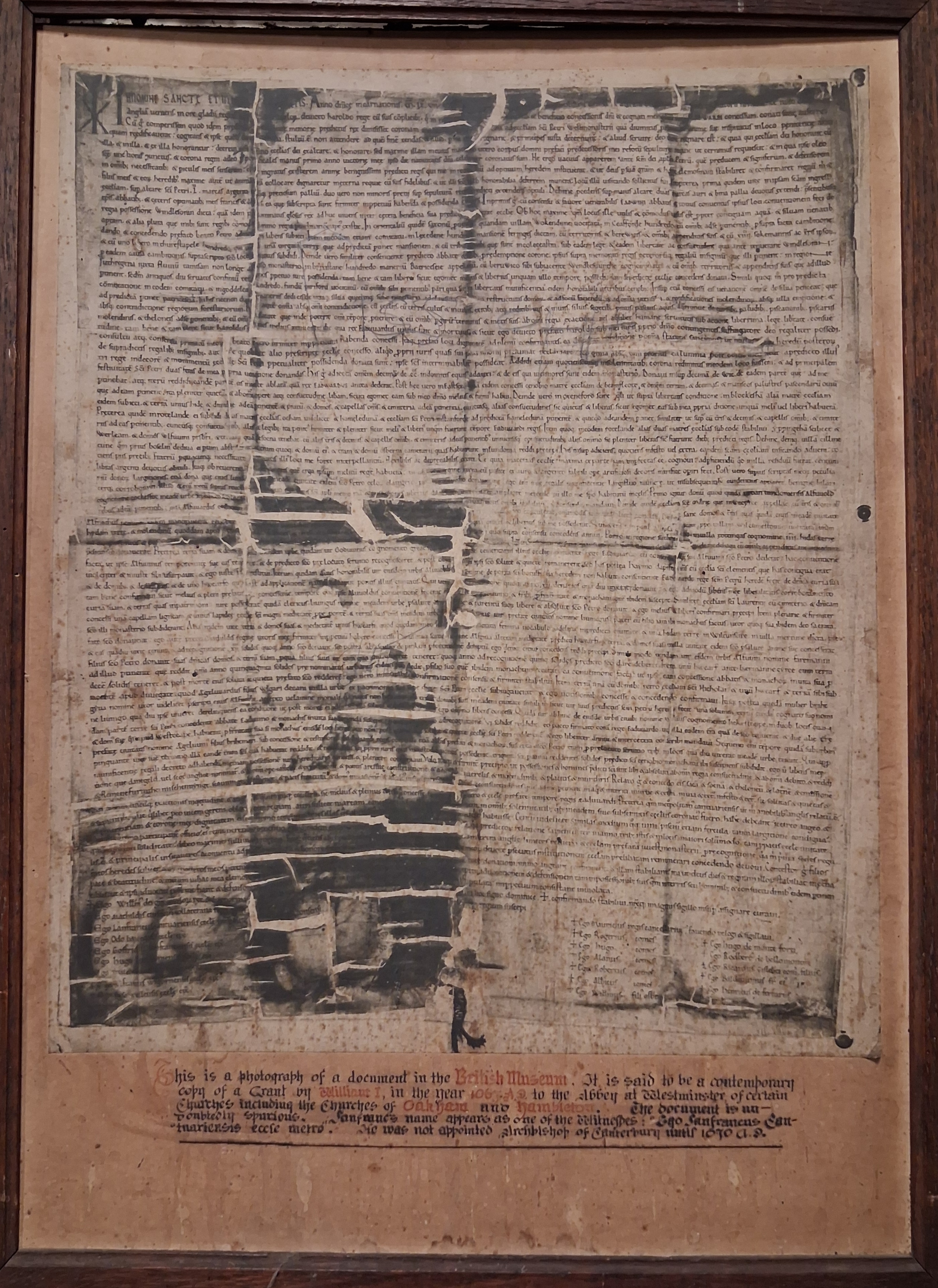

The caption at the bottom of the text (shown above) is set out below, and needs no further explanation.
This is a photograph of a document in the British Museum. It is said to be a contemporary copy of a Grant by William I, in the year 1066 A.D., to the Abbey at Westminster of certain Churches including the Churches of Oakham and Hambleton. The document is undoubtedly spurious. Lanfranc’s name appears as one of the witnesses: “Ego Lanfrancus Cantuariensis eccles metro”. He was not appointed Archbishop of Canterbury until 1070 A.D.
The illegitimate patron
The portrait to the right is identified by a caption (not shown) as George Finch. This is almost certainly George Finch of Burley House who was the patron of the living at the time of the 1850s restoration, and contributed £800 towards the work. He was a distant cousin of the vicar at that time, Heneage Finch.
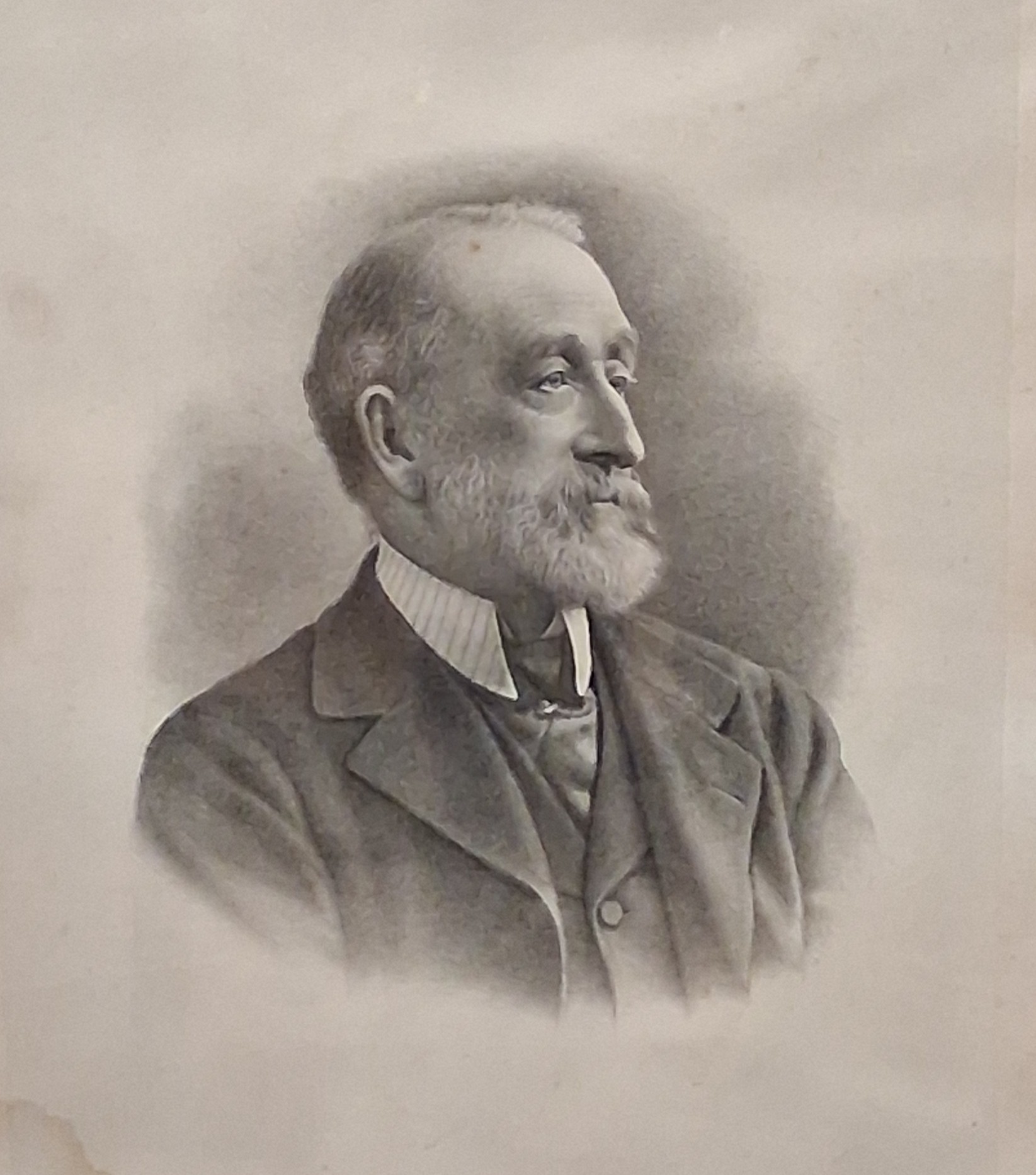
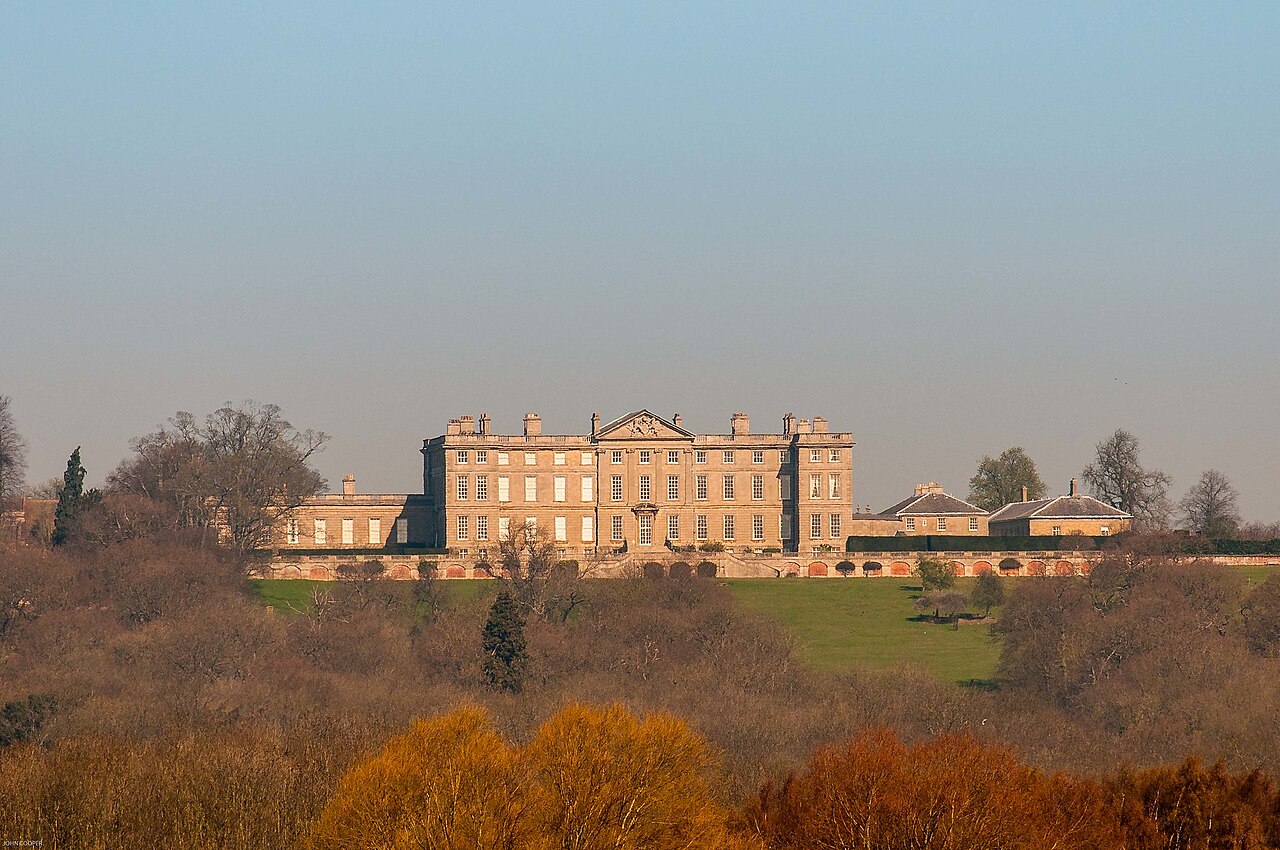
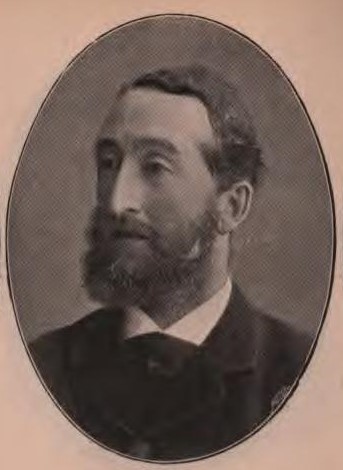
George Finch (1794-1870) was the illegitimate son of another George Finch, the 9th Earl of Winchilsea (1752-1826) of Burley House, and Mrs Phoebe Thompson. However the title and the estates were not linked, so on the death of the elder George his title passed to a cousin and Burley House passed to his illegitimate son. It is estimated to have had a value of £29,000 per year. This puts the donation to the Restoration Fund for All Saints of £800 into some sort of perspective. No doubt living in Burley House and £29000 per year was more than sufficient compensation for the social stigma of being illegitimate. The younger George sat as Member of Parliament for Lymington between 1820 and 1821, for Stamford between 1832 and 1837 and for Rutland between 1846 and 1847. He was High Sheriff of Rutland for 1829–30. His son, another George (1835-1907), was also a politician, and was MP for Rutland from 1867 to 1907, becoming Father of the House in 1906. His portrait, shown below, bears a striking resemblance to his father, at least in terms of his nose.
Unfinished restoration
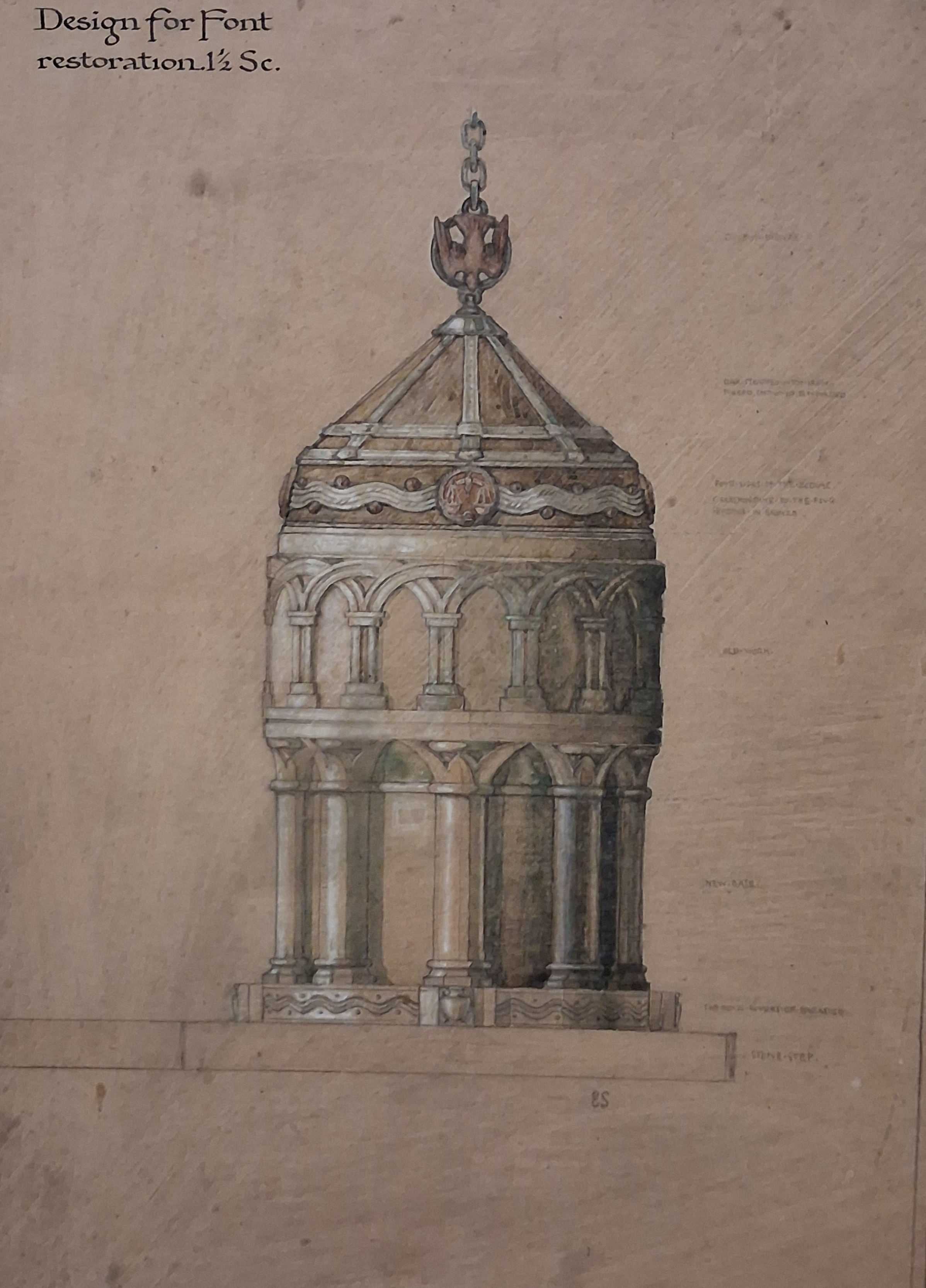
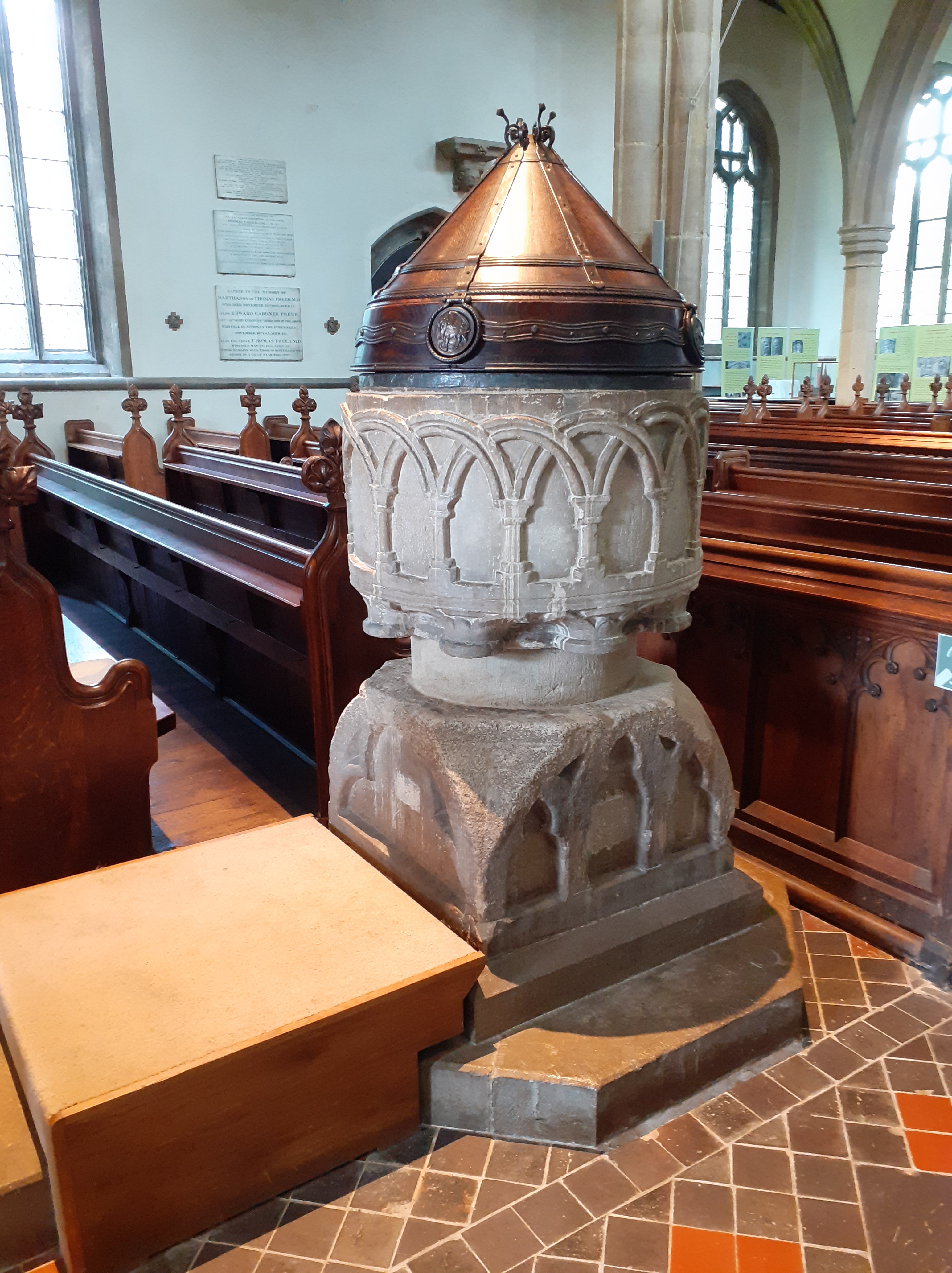
The drawing on the left shows a scheme for the restoration of the font, that dates either to the period of the main restoration in the 1850s or sometime in the decades that follows. It was not taken forward and the font remains in its pre-restored state. The font bowl itself is Norman, and is notable for the fact that the arcades around the side aren’t all identical, presumably due to a mason’s error. It is currently mounted on what appears to be the base of a preaching cross, perhaps from the churchyard, but the stonework around the base of the font bowl suggests it would originally have been mounted on pillars such as those shown in the restoration sketch.
Seats for all
The poorly preserved document shown to the right is the deed authorising the provision of free seats in the church, following a grant of £200 from the Incorporated Society for Buildings and churches. The text is given below. The terms of this grant required the almost complete filling of the nave and aisle with pews – a condition that has limited the liturgical flexibility of the church since they were installed.
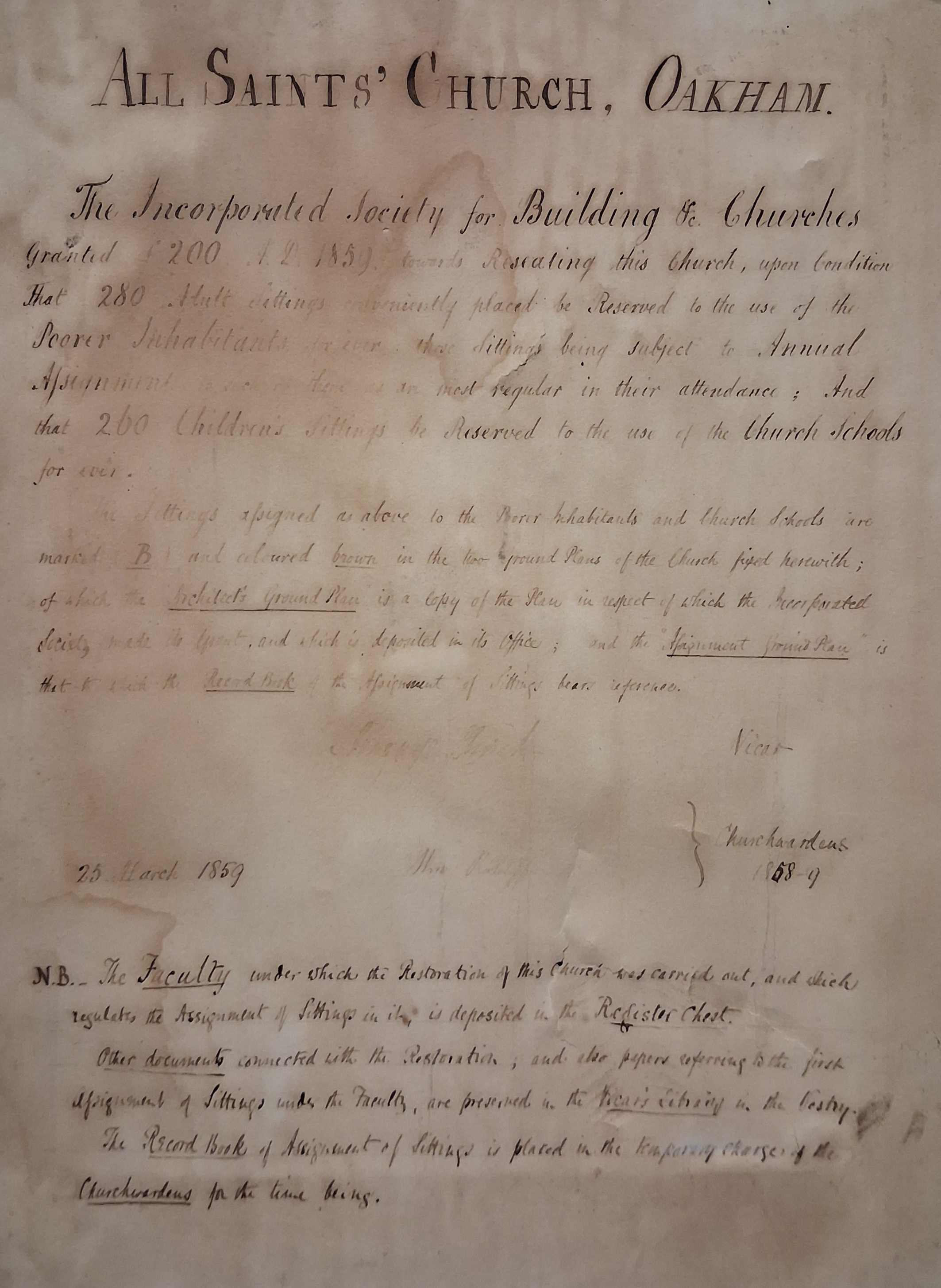
The Incorporated Society for Building & Churches Granted £200 A.D. 1859 towards Reseating this Church, upon condition that 280 Adult sittings conveniently placed be Reserved to the use of the Poorer Inhabitants (order, these sittings being subject to Annual Assignment such of them as are most regular in their attendance; And that 200 Children’s sittings be Reserved to the use of the Church Schools for ever).
The sittings assigned as above to the Poorer Inhabitants and Church Schools are marked B and coloured brown in the two Ground Plans of the Church filed herewith; of which the Architect’s Ground Plan is a copy of the Plan in respect of which the Incorporated Society made the Grant, and which is deposited in its Office; and the Assignment Plan is that to which the Record Book of the Assignment of Sittings bears reference.
N.B.1. The Faculty under which the Restoration of this Church was carried out, and which regulates the Assignment of Sittings in it, is deposited in the Register Chest. Other documents connected with the Restoration, and also papers referring to the first Assignment of Sittings under the Faculty, are preserved in the Vicar’s Library in the Vestry. 2. The Record Book of Assignment of sittings is placed in the temporary charge of the Churchwardens for the time being.
The window sketch
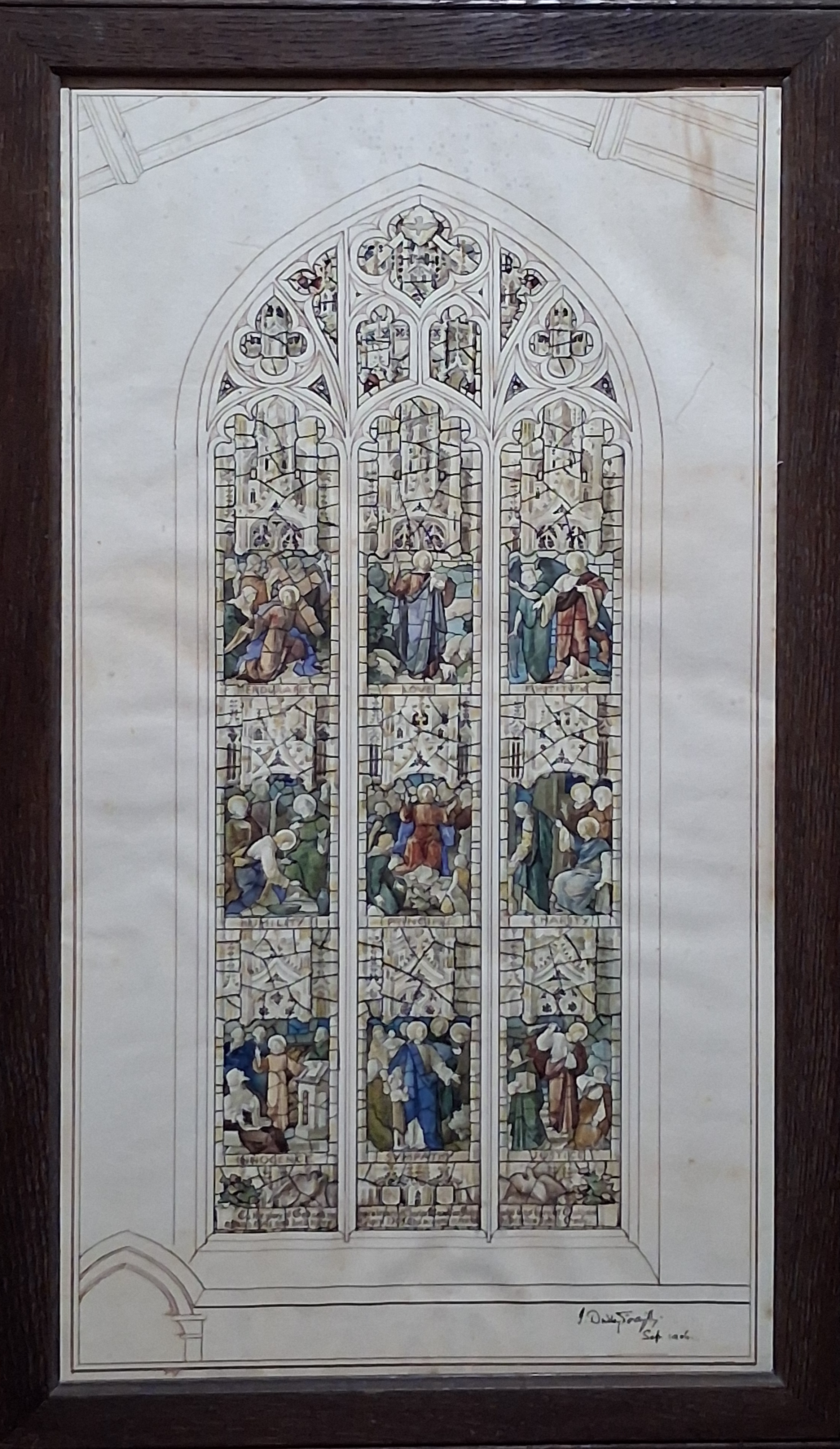
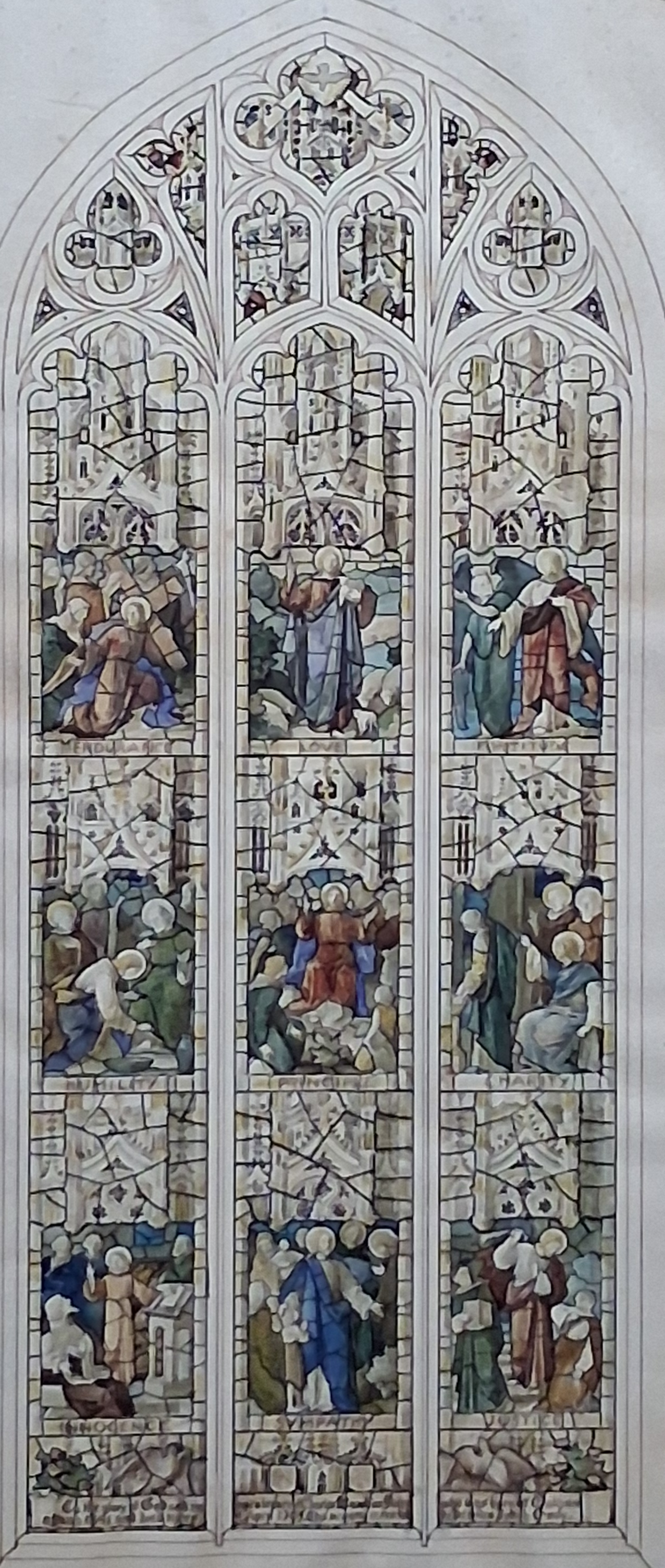
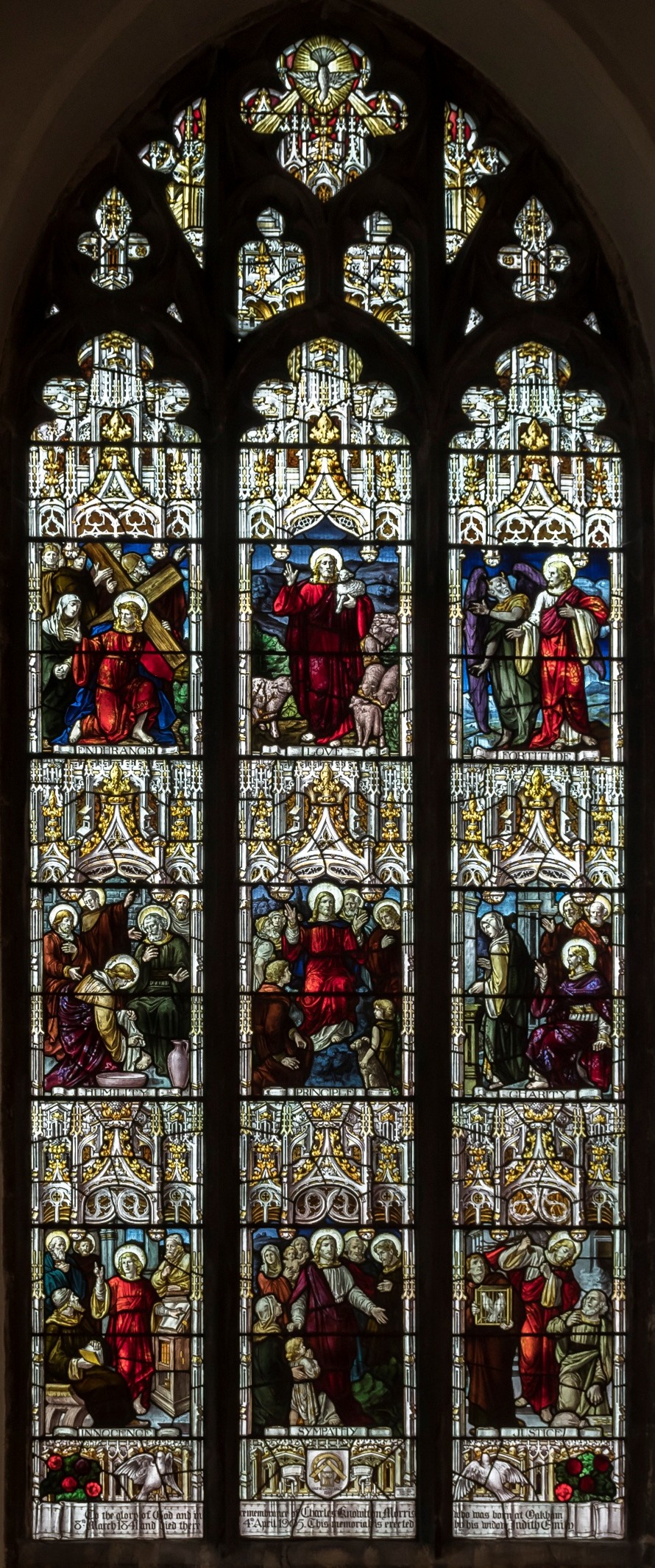
The frame for this picture was in a poor state of repair, broken glass needed to be removed, and the picture lightly cleaned of dust and grime. It shows a sketch for the “Morris” window which has been discussed in an earlier post The Morris memorials in All Saints Church in Oakham. This window illustrates the “virtues” through biblical scenes, I cannot decipher the signature at the bottom of the picture, but the date is September1906 – the window itself was dedicated at the start of that month. Thus the sketch was made somewhere around the dedication. Or perhaps it was a design sketch presented to the church at that time?
A direct comparison with the window itself is shown below.
The long serving vicar
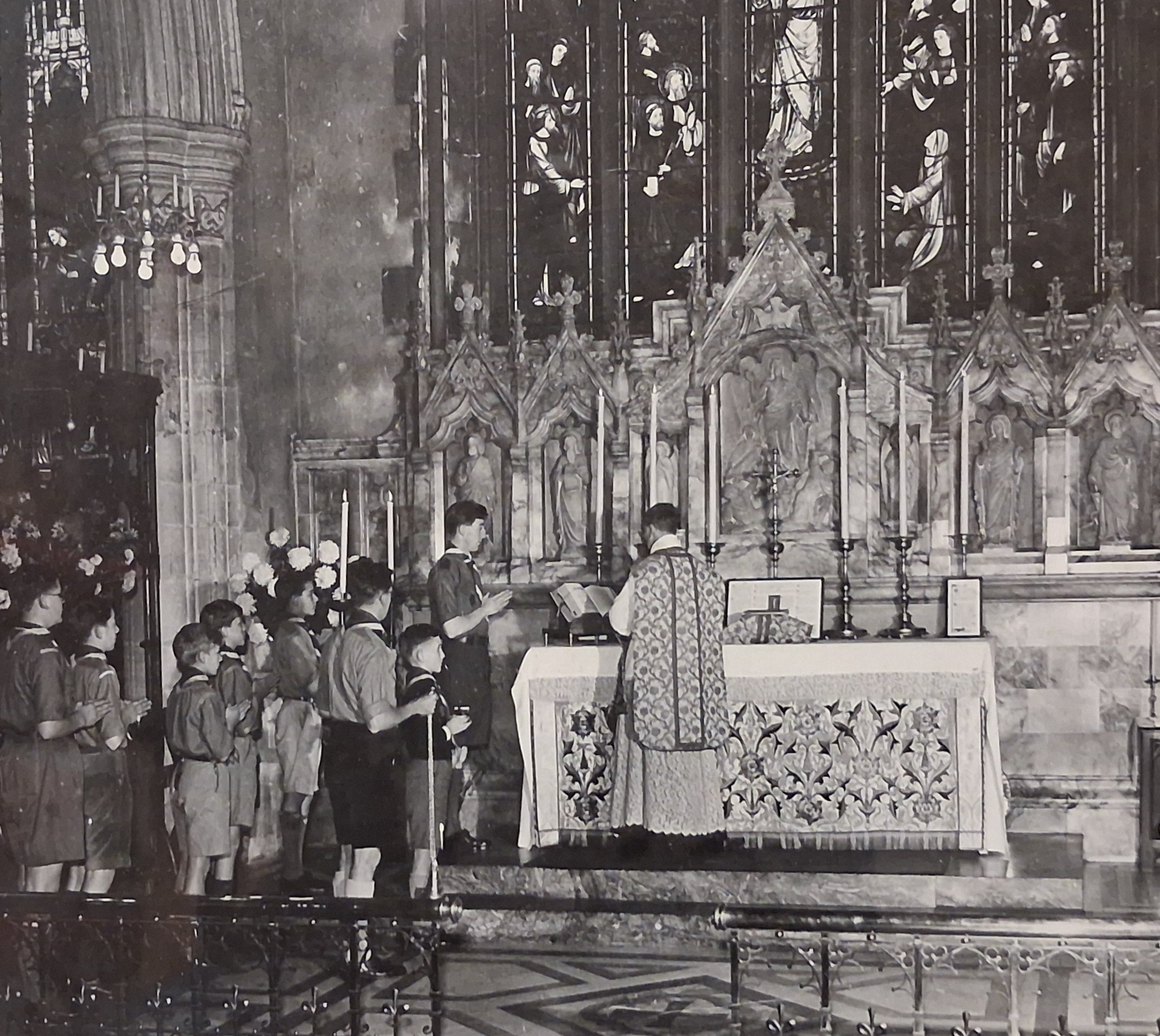
This photograph shows some sort of service with scouts present, presided over by the Rev Harry Prytherch, vicar from 1951 to 1967. The date is given as 1953. There is a memorial to Rev. Prytherch on the floor of Holy Trinity Chapel, and the seats in the chancel sanctuary were given in his memory


