The Black County environment of the mid-20th century through the poetry of Jim William Jones

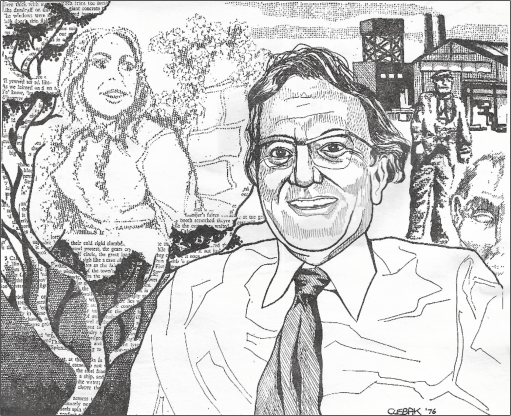
This post contains a transcript and a re-recording of the presentation I gave at the Black Country History Day at the Black Country Museum on November 9th 2024. The title for the day was “Buildings, Heritage and the Built Environment in the Black Country” and was organised by the Black Country Society. It focused on how local buildings and sites are being protected, preserved and presented and how the built environment has been described and visualised by artists, writers and photographers.  The programme for the day was as follows.

  • Tube Town Tales – what the world owes to Wednesbury, Keith Robinson
  • Rev John Louis Petit’s 19th-century Black Country art: the impact of the Industrial Revolution on the built environment, Philip Modiano
  • The challenges of rescuing industrial heritage buildings, Mark Davies
  • Rubery Owen: Exploring the archives of one of Britain’s largest historic privately owned companies – documents, photographs and film
  • Forging Ahead: Bringing the Halesowen & Hasbury Co-op to Life, Clare Weston
  • The Black County environment of the mid-20th century through the poetry of Jim William Jones, Chris Baker.

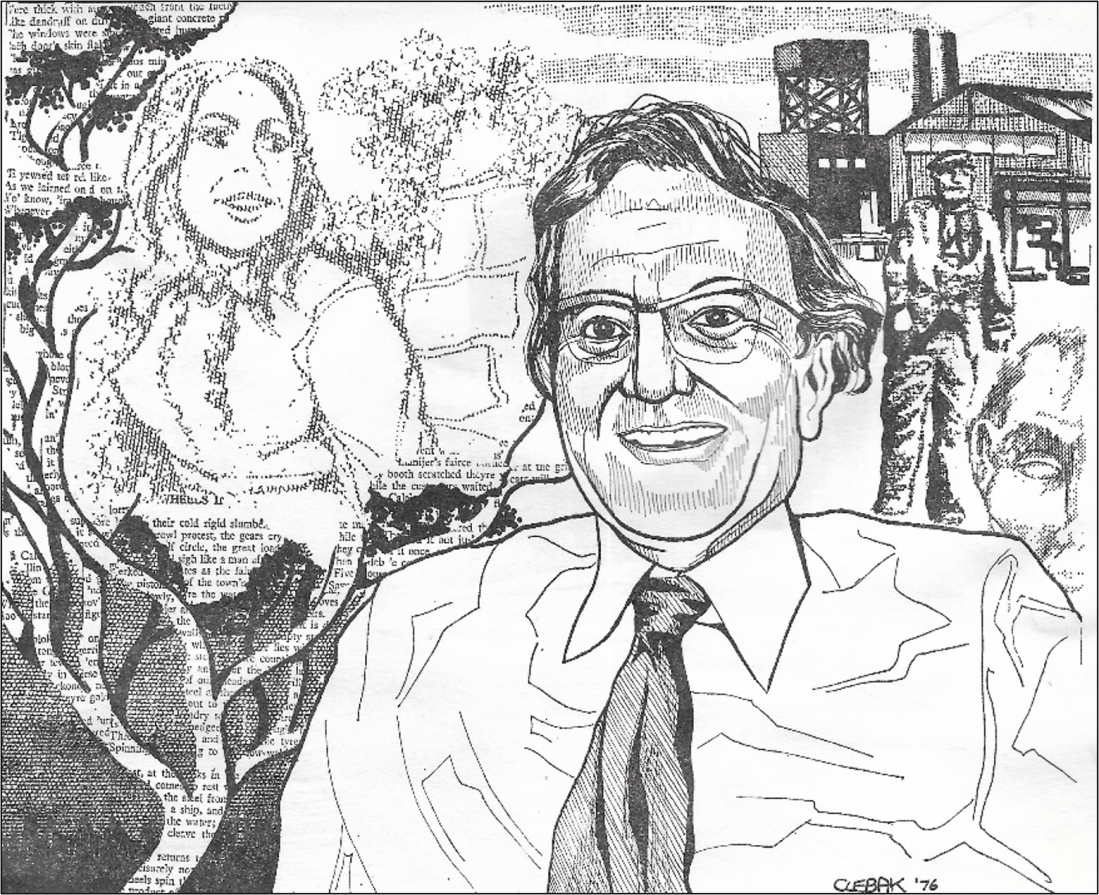
More details of Jim Jones’ life can be found in both the presentation and the transcript below as well in an earlier blog post. The presentation contains both the audio of the poems being read, as well as background slides with illustrative material. The transcript itself contains only one picture, which is of particular relevance to one of the poems.

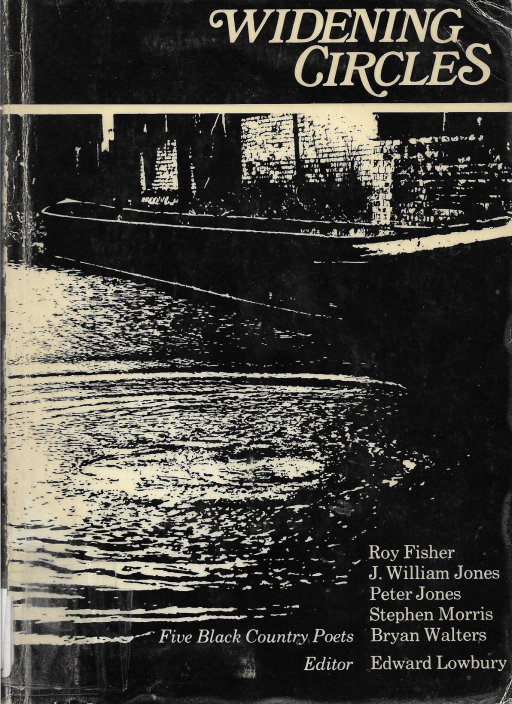
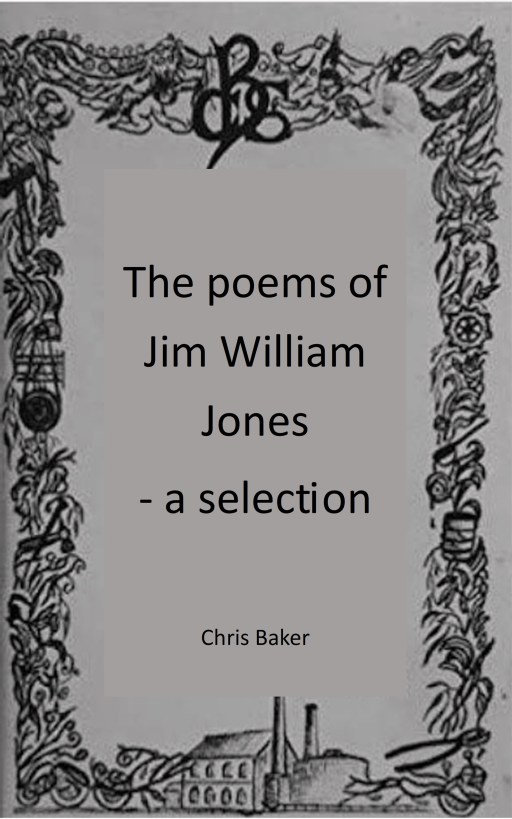
For those interested in reding more of Jim Jones’ poetry, pdfs of two publications from the 1970s, and a compilation of his Blackcountryman poems can be purchased from the Black Country Society online shop.

The chancel and chapels of All Saints church Oakham – Gilbert Scott’s legacy

Three recent blog posts here, here and here, contain transcripts of newspaper reports that describe the restoration of All Saints Church in Oakham in 1858, under the direction of Gilbert Scott. It is clear from these reports that at the time the church was in a very bad state of repair and most of the restoration was concerned with repairing defects, particularly to the roofs, renovating historical features and replacing much of the internal furnishings. However there was one major area of the church where significant work was carried out that went far beyond simple repairs – to the chancel and to the east end in general. In his condition assessment Scott (1) wrote

The chancel has a roof of modern date concealed by a flat plaster ceiling which cuts across the chancel arch. The same roof extends over the north chancel aisle, thus deforming the east end, by placing two divisions under one gable. The north aisle has most beautiful oak panelled ceiling, which happily conceals its roof from within. The south aisle of the chancel has modern roof, of the very meanest description, so that in the interior of the chancel and its aisles we have first a plain flat plaster ceiling to the chancel itself; then to the north aisle a beautiful oak ceiling, showing the manner in which the ancient builders treated their work; and on the south aisle the roof of modern hedge-carpenter, such as would disgrace a cart-shed.

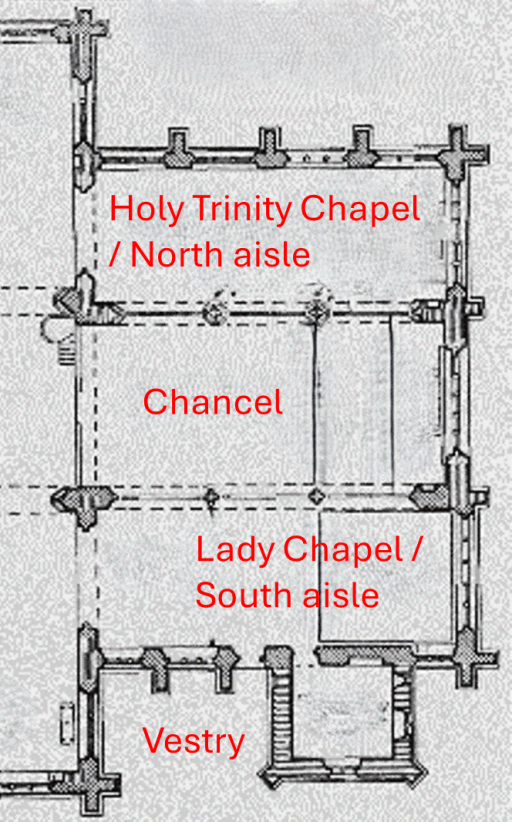
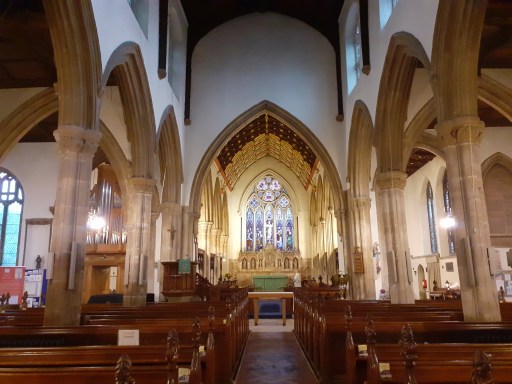
It is not altogether clear what is being described here, particularly in the first sentence, and this is the aspect of the work that will be considered in this post. First of all, let us consider the current (2024) state of that area of the church. A plan is given in figure 1 and shows the chancel, with the 13th century Holy Trinity chapel to the north and the Lady Chapel (built around 1480) to the south (the chapels are the north and south aisles referred to in the above quotation) (2). Figure 2a,b,c,d shows views of chancel and the chapels from the west end of the church. The chancel arch, referred to by Scott can be seen in figure 2d. It can be seen that the chancel itself is higher than the chapels to either side and certainly higher than the chancel arch, so the ceiling that Scott took exception to has been removed.

Figure 1. Plan of the east end of the church

a
b
c
d

Figure 2. a – North aisle / Holy Trinity chapel; b -Chancel; c – South aisle / Lady chapel; d – view from nave showing chancel arch.

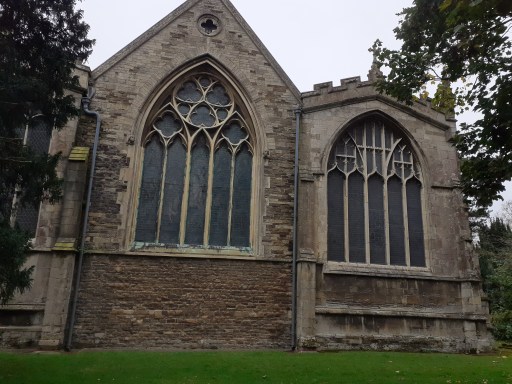
Photographs of the east end of the church from the outside are shown in figure 3. There is no natural viewing point to take an overall photograph and the view is obstructed by trees in the churchyard, but, despite the odd perspective, both chapels and the chancel can be seen. The change in stonework around and above the chancel window shows the rebuilding of the 1850s.

a. Lady chapel and chancel
Chancel and Holy Trinity chapel

Figure 3. The east end of the church

Happily we can gain an understanding of what this end of the church looked like before the restoration from an 1851 model kept in the church (3). This is in a glass display case, currently in the north transept, and was not altogether easy to photograph, largely because this entailed standing on a pew, turning through ninety degrees and trying to photograph something in a glass case next to a window, with multiple reflections. Nonetheless, a rather poor quality photograph is shown in figure 4. The caption on the display case reads

In loving memory of Mary Grinter who passed to her rest on 10th February 1950. Age 87 years. This model was made by her father John Pitt Coulam (1833-1898)

Figure 4. The 1851 model

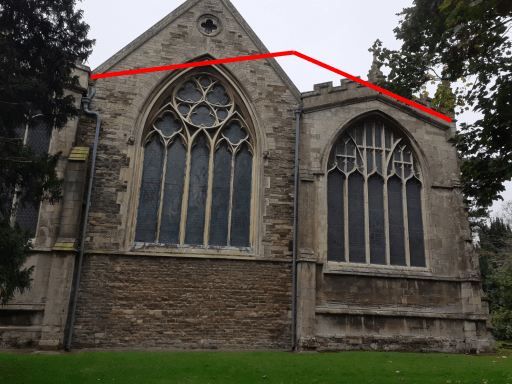
Figure 5. Photograph of the east end of the church showing the roof line of the 1851 model.

The east end in this photograph can be seen to be very different from the photographs of figure 3. Figure 5 shows the 1851 roof line from figure 4 superimposed on the photograph of figure 3b. And from this one can understand what Scott meant. The chancel seems to have been reduced from its original height (which the height of the chance arch suggest was similar to today), and a pitched roof added over both the north aisle / Holy Trinity, chapel and the chancel itself. Thus, the two chapels indeed share a gable, and the roof / ceiling of the chancel would cut across the chancel arch in a very un-elegant fashion. The window at the east end would also seem to have been deliberately lowered to fit into the new arrangement. Figure 6 shows, in an edited version of figure 2b, how Scott would have seen the interior of the church, with the top of the chancel arch blocked, a lower flat ceiling in place, and a smaller east window

Figure 6. The chancel as would have been seen by Scott, with chancel arch blocked, lowered flat ceiling and smaller east window

Scott’s work changed all this, restoring the chancel to its original height and adding sound roofs and spectacular internal ceilings. A new east window was inserted, which, the 2003 church guide (3) tells us, was criticised at the time for being of “decorated” rather than “perpendicular” form. Funny what folk get upset about.

So why on earth did this happen – why was the original rather elegant design of the chancel and chapel changed in this way, presumably sometime in the 15th to 17th centuries. I can think of two possible reasons. The first is wholly utilitarian – the chancel, and in particular the roof, may have been in a very poor state of repair, and required extensive renovation and repair. The arrangement criticised by Scott could have been a cheap way of making that end of the church reasonably sound, if rather ugly. The second reason has a more theological basis. After the Reformation, the Elizabethan settlement enforced conformity of practice – in particular taking down the altars at the eats ends of chancels and replacing them, for the purpose of celebrating holy communion, with a table placed lengthways in the chancel, around which communicants would have gathered, with the celebrant on the north (long) side of the table. The combined chancel and north chapel would thus have provided a typical Elizabethan “communion room”. A surviving example of such an arrangement can be seen locally at Brooke. (figure 7) where the spacious chancel is separated from a north chapel by a simple screen. This arrangement was only temporary and after the restoration of the monarchy in 1660, with the Laudians in the ascendency, the altars at the east ends of chancels were reinstated with little opposition. Some clergy however continued to celebrate from the north end even with the altar in the new positions, and indeed, this is still the case in a few places.

Figure 7. Interior of Brooke church showing chancel from adjacent north chapel (from Wikipedia File:St Peter’s Church, Brooke, Rutland 13539728115.jpg – Wikimedia Commons)

Whatever the reason, I have to admit (albeit grudgingly) that Scott was correct in this case in his desire to restore the chancel to its gothic glory from what seems to have been a somewhat botched Elizabethan / Stuart arrangement.

One further point arises. In the north aisle / Holy Trinity chapel there is a large chest tomb, with no dedication, placed lengthways next to the chancel (figure 8). It is said in (2) to be early 16th century – perhaps around the time of the Reformation. The images of sheep bells or wool weights on the side have led to the suggestion that it might be the tomb of a wool merchant. In the chancel arrangement before Scott’s restoration this would have been very prominent – indeed in the centre of the gable, possibly between two altar positions. One can speculate that the tomb was either placed in this position deliberately or indeed whoever was responsible might also have rebuilt the chancel / chapel to give the tomb such  a prominence.

Figure 7. Chest tomb in Holy Trinity chapel.

  1. Re-opening of Oakham Church. Stamford Mercury 12th November 1858
  2. ‘Parishes: Oakham’, in A History of the County of Rutland: Volume 2, ed. William Page (London, 1935), British History Online  [accessed 21 October 2024].
  3. Aston N (2003) All Saints Oakham, Rutland. A guide and history.

A time to mourn, and a time to dance – the All Saints season through the ages

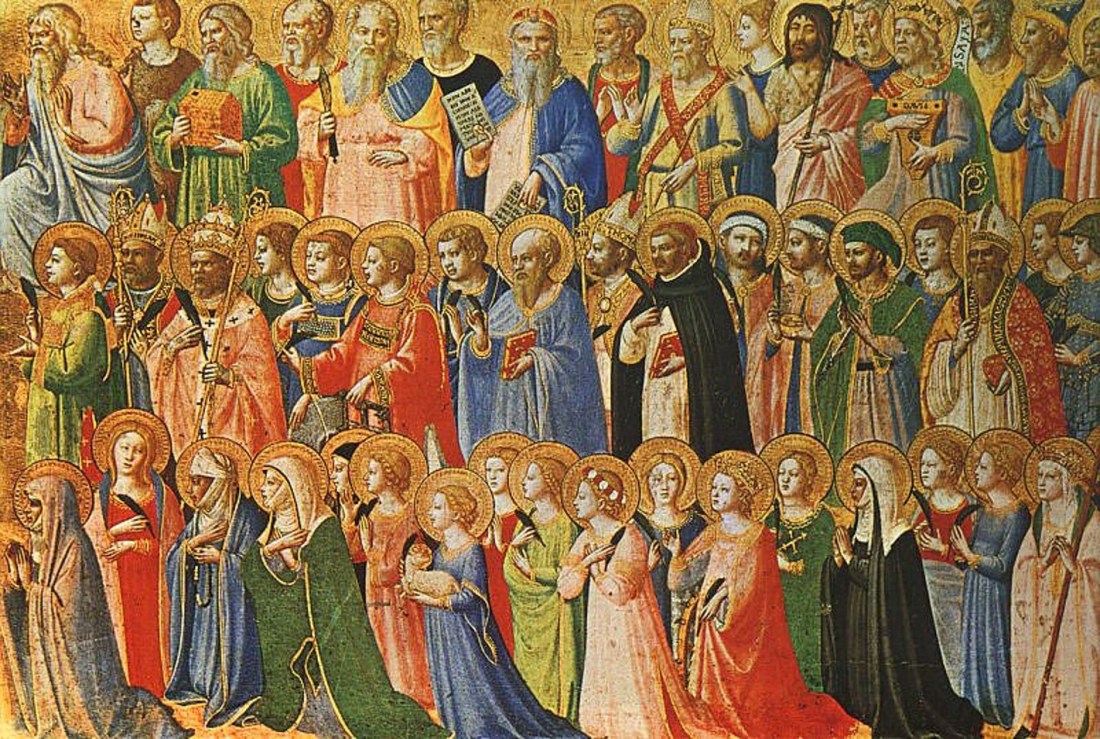
“Communion of the Saints” in a Baptistry in Padua (José Luiz)

On October 31st 2024, I gave a lecture at All Saints church entitled A time to mourn, and a time to dance – the All Saints season through the ages, which explored how the season between Halloween had developed over the centuries and millennia. This was part of a wider celebration of the festival of All Saints that included a musical concert; church tours; a tower climb, a pop up cafe and a number of services of worship.

In the church notices for the Sunday beforehand I wrote the following introduction to the talk.

The start of November marks the beginning of winter in seasonal terms, and is the time of a number of festivals and celebrations – Halloween, All Saints Day, All Souls Day, Bonfire Night and Remembrance Day.  In this talk I will explore how all these evolved through the ages from pre-Christian times, through the medieval period to the Reformation and from then to the 21st century.  A few other festivals which haven’t made it to modern times will also be mentioned. There will be a large cast  of popes and bishops, kings and queens, saints and sinners with a few fairies and witches thrown in. I will of course be using PowerPoint, the academics comfort blanket, with some audio tracks, so if nothing else the almost inevitable failure of technology may be entertaining. But I found putting the talk together  really quite interesting, and I l learnt a few things that were new to me on the way, so hopefully others will find it interesting too – and possibly even enjoyable!  

This web page contains links to a transcript of the talk, and a re-recording of the talk made after the event. The latter contains the PowerPoint slides I used; the former is just the text. The presentation does not include the audio clips I used in the talk – YouTube would not have allowed me to upload these for copyright reasons.

For those interested in reading further about the development of seasonal celebrations in England I would recommend the following book by Prof Ronald Hutton – from which I took much of the information for the talk.

Hutton R. (2008) Stations of the Sun: A History of the Ritual Year in Britain OUP

The lighter side

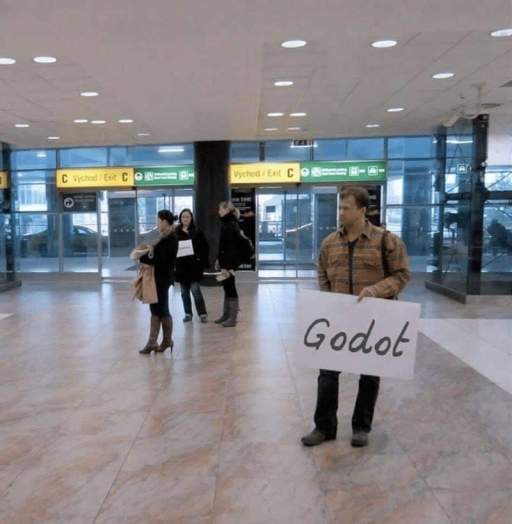
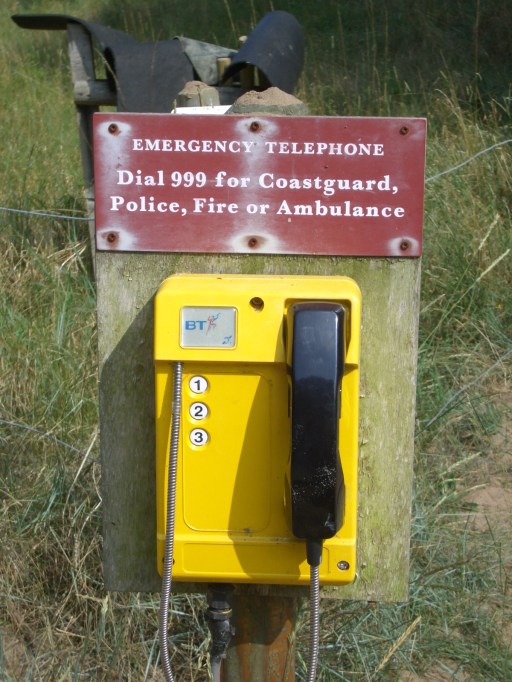
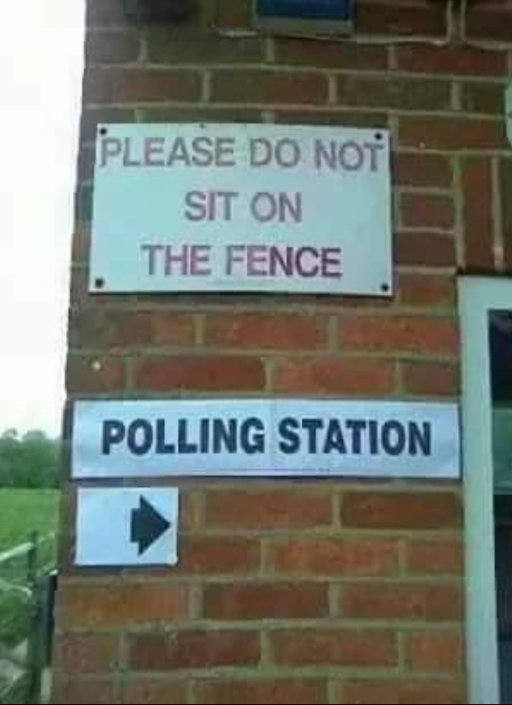
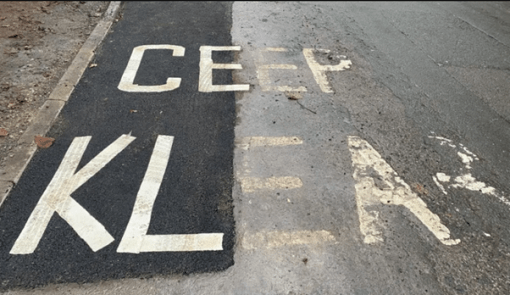
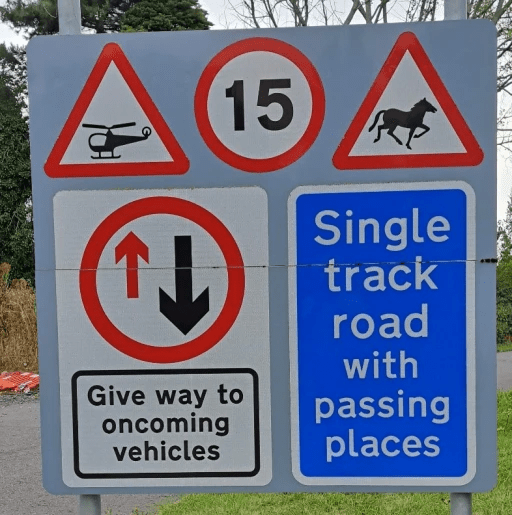
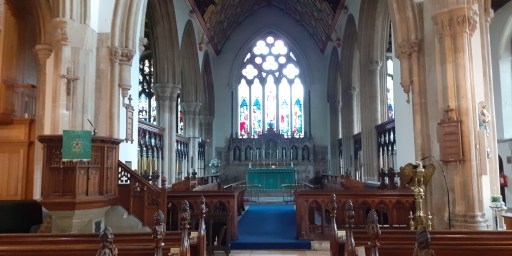
This post simply shows some photographs that I have found amusing for one reason or another in the past, in the hope that others may also find them enjoyable. They have been collected over the last couple of decades, and I am afraid I don’t know the source of some of them, but if any reader can supply the missing information, I would gladly acknowledge the photographer, or remove the pictures if required.

Unknown source. From around 2015
Unknown source (from 2023/4)
From Prof Roger Goodall, Loughborough University
Unknown Source, 2020?
Unknown Source, 2023?
Jim Baker, Cromer 2024
Oakham, 2024
From Twitter 2014 “Thomas the Tank Engine: The crystal meth years.”

From @OonaghKelleher 24/1/25

The 1858 Restoration of All Saints church in Oakham – Part 3

Introduction

In this series of three related posts, I present transcripts of the press reports concerning the re-opening of All Saints church in Oakham in November 1858. This is done primarily to make the source documents for that event available and easily readable, and there is no discussion of their contents. That will come later. The material is all found in the British Newspaper Archive and the archive OCR text forms the basis of the transcripts, although. As with any OCR text, this has needed considerable editing, which, as I am sure the reader will find, has been imperfectly done. The material presented in the three parts is as follows.

  • Part 1 contains the notice of the re-opening the from the Leicester Journal of 5th November 1858 and a report on the event itself from the Stamford Mercury of 12th November 1858. The latter contains the text of the report by Gilbert Scott that describes the state of the church before the restoration and what, in his view, needed to be done.
  • Part 2 contains a report of the opening from the Leicester Journal of 12th November 1858. This covers some of the same ground as the Stamford Mercury report, and whilst not including Scott’s report, does give details of the opening event, including the sermon that was preached.
  • Part 3 (this part) is from the Lincolnshire Chronicle of August 24th 1860, and gives the text of a lecture that was given at Oakham Castle entitled “Gothic Architecture” by the Rev Canon James, one of the principal proponents of the Gothic in the region, where the changes that were made to the church are explained and justified.

Lincolnshire Chronicle 24th August 1860

LECTURE AT OAKHAM. ON ” GOTHIC ARCHITECTURE,” by the RE V. CANON JAMES.

Last Wednesday afternoon, the Rev. Thomas James., M.A.- hon. canon of Peterborough, vicar of Theddingworth, and one the secretaries of Architectural Court of the Archdeaconry of Northampton—a gentleman extensively known as an accomplished ecclesiologist and erudite and painstaking antiquary—delivered a lecture at the Old Castle Hall of Oakham, on ” Gothic Architecture,” with especial reference to the history and arrangements of the Church and Castle Hall in Oakham. The lecture was for the benefit of the Oakham Literary Institute —a young but progressing association, having for its object the advancement literature, art, and science, and the improvement the humbler classes of society. The weather, unfortunately, was of the most dreary and cheerless character, heavy searching rain descending during the whole of the day. Notwithstanding this very material draw back, a numerous and fashionable audience assembled in the Hall at the hour announced for the lecture at three o’clock. Geo. Finch, Esq., of Burley Hall, the owner of the Castle, presided on this occasion, and amongst the ladies and gentlemen present we noticed the following :—The Rev. W. S. Wood, the Rev. T. Byers, the Rev. J. E. Prescott, the Rev. J. M. Wingtield, the Rev. H. Jones, the Rev. C. Palmer, the Rev. H. J. Biggs, the Rev. R. T. King, tho Rev. Scudamore, Lord Campden, –  Barnard, Esq., B. Adam, Esq., R. Harvey, Esq., J. Morton, Esq., H. Samson, Esq., &c, &c. The Oakham brass band was in attendance, and intervals played selections of music.

The Chairman opened the proceedings by observing that they had met in that venerable fabric for the purpose of hearing a lecture from the Rev. Mr. James, on Archaeology, as more especially connected with the Church of Oakham and the Old Castle in which they were at that time assembled. The date of its erection, which they saw upon the wall, was, he believed, incorrect, the hall having, in all probability, been constructed about the time William Rufus. It was a remnant of time when the country, both as regarded laity and clergy, were intently interested in the Crusades to the Holy Land—at a time when the country groaned under the Norman tyranny, and the people were the victims of regal despotism and of feudal violence. that age, the custom was to wear long-pointed shoes, and as the people had a very peculiar art of interpreting Scripture, they connected the prevailing fashion with the text, that ” No man can add one cubit to his stature,” and during the reigns Kings Henry the Second and John, the populace were firm believers in the long-pointed shoes as having something to do with religion. (Laughter.) But, happily, these ages of darkness and superstition had long since passed away, and the country no longer trembled ‘neath regal tyranny or baronial oppression. (Hear, hear.) Civil and religious liberty now prevailed through the length and breadth our highly favoured land, and all that now remained visible of these dark ages were splendid specimens of architecture. He would only mention that four out of the possessors of the Castle in which they were assembled had been executed for high treason ; the first was the Earl of Kent, in the reign of King Edward the Third, the second, the Duke Buckingham, in the reign Richard the Third; of whose fate Shakespere had informed them when he w rote :

“The Duke of Buckingham, my lord. Then off with his head “

— a second Duke of Buckingham in the reign of Henry the Eighth; and the fourth, Lord Thomas Cromwell, beheaded in the year 1540. He could only say that he sincerely trusted that the present and future possessors might never meet with a similar fate. (Loud cheers.) He might go much further in referring to the history and associations of Oakham Castle, but he would not intrench upon the province so erudite and able lecturer as Mr. James, who was, he was quite sure, much better qualified interest them. He begged to introduce to the meeting Mr. James. (Loud applause.)

The Rev. T. James then entered upon a most elaborate, instructive, and interesting lecture on the character, progress, arrangement, and utility gothic architecture, divided as it were into two parts, the first being illustrated by references to the Castle of Oakham, and the second descriptions of the church which has been recently restored, and which is one the finest specimens of gothic architecture to be found among the churches of England. The Committee of the Oakham Literary Institute desire to publish the lecture in its entirety for the benefit of the society, and therefore, their request, we only present our readers with a brief outline of Mr. James’ paper. He commenced by observing at one of their architectural meetings, a gentleman had accosted him by the enquiry whether he was Mr. James the architect and of course he told him, as he now told them, that he was not Mr. James the architect or the architect either. He much regretted that in undertaking a subject of such magnitude his knowledge of it was so superficial ; and he might as well tell them at the outset that he should in the course of his lecture draw largely upon the researches which the eminent knowledge of his friends (Mr. Poole and Mr. Hartshorn) had enabled them to make ; and he did this with the more confidence because he should not think for one moment of placing himself on a level with those gentlemen. As its name implied, architecture was the mistress art. With the gentleman who addressed him as an architect, many believed that the name architecture was derived from its connection with arches; but this was not so, although it might be said to begin with the arch. In fact, there could be architecture without the span of the arch stretching from pillar to pillar. The lecturer referred to some diagrams illustrating the early and progressive styles architecture, commencing with the stones placed one” upon another as at Stonehenge, next the Saxon, then the Norman, and finally the Gothic. These styles he lucidly described and illustrated. He observed that the various styles of architecture, more or less, ran into one another. It was quite impossible for anyone to say —here the Norman ends, and here the Saxon begins. Our forefathers never paid attention to styles—they went on building, putting the very best materials they could find into the best possible forms, just the same as they used to write, without any regard to the rules of grammar. Mr. James then pointed out that the arches of the windows inside the Castle Hall were round, while outside they were pointed. Oakham Hall marked the transitional period in architecture. It was the site of a Royal Hall, for a hall at Oakham was mentioned when King Edward the Confessor made his survey. Referring to the remarks of the chairman, the lecturer gave some interesting details of the early possession of the Castle of Oakham. Of these he made special mention of Walcheline de Ferrars, a younger son the Earl of Derby, lo whom Henry II. granted the manor, and created Baron of Oakham. This same Walcheline de Ferrars was a bit of poacher and a bit of a roystjer, having displayed a fondness for hunting the Royal game, while many time he Old Hall in which they sat had been the scene of feasting and merriment. De Ferrars joined King Richard I. in his crusade to the Holy Land and was last heard of the romantic siege of Acre, where he died. Alluding to the fact that four possessors of the Castle of Oakham had been executed for treason, the lecturer said it was not at all improbable that more than these had been guilty of treasonable practices, although they were not perhaps detected

Treason doth never prosper. What’s the reason? When it doth prosper, Men don’t call it treason.

After describing the persons through whose hands the Castle of Oakham successively passed until it came into the possession of its present most worthy and respected owner, Mr. James said it had been supposed some that the Castle was a chapel to some great building, but that was a most erroneous impression, formed through a notion that the piers and arches were peculiar to ecclesiastical edifices. They were not so, the Gothic in olden times being the prevailing style for buildings domestic as well as ecclesiastic. Oakham Castle Hall regarded as the finest domestic room in England, and, in »’* probability, it was the finest part of the Castle. They must not suppose that the ancient Castle was fortified with keep, bastions, and towers, as in the neighbouring Castle of Rockingham. Oakham Castle never had any defensive works, except the outer wall. The entrance door in the hall, he observed, was not now in the proper place. It was mentioned in Wright’s History of Rutlandshire that the door was in the corner, but it had been removed to the centre of the building- At the end of the hall which he stood the King’s chamber, all probability, existed, and he had been told Mr. Heneage Finch that in dry summers—which, of course, this was not —traces of buildings were to be found on the west as well ** the east side. Mr. Heneage Finch had also told him that remembered a tower on the east wall, and there probably existed the postern which connected the Castle with the town. Mr. H. Finch also remembered a round tower on the westside. The lecturer next went on to describe the purposes for the hall had been used in olden times and gave a graphic word picture of what he supposed it to be in the days of Walcheline de Ferrars. There, in all probability, a sort of rough justice was administered the Baron, and there also the reveling and feasting took place. They must imagine the hall cleared of its present furniture, and substitute stout oaken benches for seats, with boards placed upon plain for tables, the only deviation from the arrangement being an arras of tapestry at the west end, where the lord sat. The windows were unglazed; the fire was placed on a raised platform in the centre of the hall, the smoke escaping by the windows after the fashion prevalent in the cabins of the Irish. In the evening the custom was to put wooden shutters to the windows, which it would be observed be admirably shaped for the purpose, and this they did at an early hour, showing that in those days they were supporters of the early closing movement. (Laughter.) The hounds crouched by their masters’ side, and their hawks perched above their heads. Here they quaffed wines from Greece and Cyprus and feasted upon lamprey and herring pies. The ladies and gentlemen sat at tables alternately, and it was the height of refinement then to eat off the same plate. (Laughter.) The only knife used was the claspknife, which the gentleman most likely took unsheathed from his girdle, and napkins would be in considerable request considering that large proportion of the food had to taken with the fingers. He (the lecturer) observed that it was well known that finger napkins were commonly used as early as the 13th and century. The chief Personages in those days sat at the upper end the table, and the humbler ones at the lower end—the salt cellar—which by way ought to spelled with the s and not the c—dividing the upper and under crusts of society. (Laughter.) He had thus endeavoured to introduce a few somewhat interesting details with the dry dish which he had to place before them; and determined to do so as soon as he knew he was to speak in hall, which was to them all so rich in association. (Applause)

Chancel, showing pulpit, screens between side chapels, choir stall, altar and reredos (from 1898), prayer desk and lectern

The lecturer then proceeded to the more direct portion of his subject, pointing out on the diagrams the three styles of c architecture, viz., Early English, 13th century”; Decorated. 14th century; Perpendicular, 15th century. The first or early English arch they would observe was round, from one centre, the second or decorated arch, sprung from two centres; and the third arch he believed came from four centres- These styles were all to be found in the church of Oakham- enumerated the different parts of the church in which the three styles of Gothic architecture were observable, specially, remarking upon the pillar-shafts in the chancel, which were the 14th century, while the capitals and bases were Tudor work, at least 150 years later. The lecturer quoted some elaborate remarks of the Rev. A. Poole’s on this subject, as also an translation from the Latin, referring to the transfer of Simon de Langham (who was not very popular) from the see of Ely to Canterbury. About the middle the 16th century, strict attention to ecclesiastical architecture ceased, and modern commenced. People had their attention occupied in ways. Gothic architecture was essentially un-Romish in its character, and he believed there was only one church in Rom which affects this style. The great Papal Church of St. Peter’s at Rome is in the classic style of architecture, and not in the Gothic, to which it is totally opposed. If faith were judged by architecture, then it would be more proper to condemn St. Paul’s than Westminster Abbey, for the former was far more in the Romish style. (Hear, hear.) He then adverted to the arrangements of Oakham Church and congratulated the inhabitants on the good feeling they had manifested in the restoration of the church. They had now obtained a building most suitable for the proper and reverential worship of Almighty God. No square room could ever have been appropriate, or of half so much utility. They had a church of which they ought to be indeed proud, and any apology for a beautiful structure would very much like Bishop Watsons apology for the Bible. He contended that Gothic churches had tendency to produce devotional feeling in the hearts the worshippers. Alluding to the arrangements of Gothic churches, the lecturer said originally the porch of the church was intended for the unbaptised, the nave for the great body of the people, and the chancel for the clergy for the celebration of the Holy Communion; the upper part being the presbytery, and the lower part was apportioned to the choir. These churches were built in the form of the or the Greek cross, plans which he pointed out to the audience. minutely referred to the general arrangements and particular features in Gothic churches, ably associating his remark with Oakham church. He alluded to its condition before its restoration, and said in that respect its history was the history of nearly every church in the country. Pleasantly touching upon bygone days when it was said that old ladies sat in church with their umbrellas up, and the pulpit to the last in mourning for George III. Mr. James drew attention to two plans—one of the church before the restoration with its high boxed-up pews, and the other since its improvement, remarking that they had, indeed, much cause for thankfulness and congratulation at such a pleasing change. As they entered the church they would observe the font, emblematical of regeneration; at the east end the altar, devoted to tb second and higher sacrament, not shutout from the laity. reverently guarded the pulpit on the north or gospel side (called from the Gospel being read on the north side of the altar) not hiding the Communion table ; the Bible desk or lectern standing facing the people in order that all might hear the words addressed to them ; the Prayer desk more lowly as in accordance with the spirit of prayer, and not facing the as if the supplication was to them and not to God ; the congregation seated themselves in the nave in open and uniform seats that there should be no distinction in God’s house ; and so there might be no distraction all looked to the east, from where the Sun Righteousness arose. (Hear). And while on subject he might observe that the practice of placing the altar the east end of churches was copied from the Primitive and not from the Romish church. The altar in most Romish places of worship was placed at the west end, as at St. Peter’s Rome. Some slight divergence from the east was observable in the chancel of Oakham church, for which several reasons had been given, but they were not worthy of credence. The triple divisions of nave, chancel, and altar were still preserved but no rood screen now shut out the laity—it was open alike to all. (Applause.) It was held by some that the multiplied pillars in gothic churches were an obstruction to properly seeing what was going on, but he thought broken church induced feelings more reverential, more solemn, and more able for worship than would be produced by four square walls like a concert room. (Hear, hear.) In speaking of the costly decorations in Oakham church, the lecturer mentioned masks, &c, to be found there; and also, a very curious representation of a fox running away with a goose on its back followed the disconsolate goslings, and a man running after Reynard with a broom in his hand. All the carving in the church with one exception—which he had himself detected was of the 14th and 15th century. He mentioned that a cupboard in the eastern wall, behind the altar, which might have been used as a receptacle for relics, or for receiving the stoup of holy water which stood at the chancel door*. This receptacle was often confounded with the piscina, —which as they were doubtless aware of had a drain connected with it — used for washing out the chalice from the communion table. The tower of the church was what is called engaged tower from the fact of the east side being within the church. On the exterior there were figures in niches in the toner, which in days of fanatical excitement were rarely spared. The vestry was two storied, in all probability it was formerly used as the dwelling of an anchorite, that being a prevailing custom at one time. There was a similar instance of a two storied room attached to the church at Barnack, near Stamford. Of Gilbert Scott he must say that had carried out the work restoration in the most Conservative spirit, preserving thing interesting and valuable, clearing away only what was unseemly and unnecessary. The restoration committee did everything in their power to promote the work, and they the satisfaction of having their labours crowned with success.  He had the more pleasure in speaking upon this subject, ‘ much as he was asked to take part in the work, which, the exception of his own church, afforded him more pleasure than any labour he was ever engaged in. (Applause.). There were yet a few matters to be done to place the church in finished state which they all desired to see-; and he felt sure that the energy and liberality of private individuals would not leave them long to wait. (Hear, hear.) Among other matters, he should like to see two official pews for the church wardens, who held a high and responsible office in the church (Hear, hear.) Oakham Church, as a whole, was very effective and beautiful, and there could be no better proof than that of its architectural excellence. The various styles in the combined to make one effective whole, and he quite with Mr. Scott that it ought not to be spoiled by superfluity ornamentation. (Hear, hear.) After some further observations, Mr. James concluded by reiterating the pleasure b received from being permitted to take part in the work restoring that noble church, which he regarded with unmitigated satisfaction.

The Rev. W. S. Wood (headmaster of Oakham Grammar School) as president of the Literary Institute, proposed a vote of to the Rev. Mr. James for his able lecture, and the vote was accorded with acclamation.

The Chairman, in announcing that the meeting was closed, expressed the great interest and gratification he had received from the lecture which Mr. James had just delivered to and for which they all thanked him so much. He (the Chairman) was glad Mr. James had set him right as to the date of the hall, which would be 1100. In the other remarks made relative to the hall, it appeared that he was in the main correct. Mr. James, to whose valuable and zealous labours in the work of restoring the church he could bear testimony, had given them a most complete history of Gothic architecture. – many valuable interesting details of that old hall and their noble church. He was very glad that its arrangements more after the Primitive than the Romish Church, although if the Papal church erred in no graver matters than its architecture, it would be well (Loud applause.)

The band then played the National Anthem, and the company left the hall.

* There is a similar receptacle in the east wall, behind the altar, in the parish church of Navenby by Lincoln.

The 1858 Restoration of All Saints church in Oakham – Part 2

Introduction

In this series of three related posts, I present transcripts of the press reports concerning the re-opening of All Saints church in Oakham in November 1858. This is done primarily to make the source documents for that event available and easily readable, and there is no discussion of their contents. That will come later. The material is all found in the British Newspaper Archive and the archive OCR text forms the basis of the transcripts, although. As with any OCR text, this has needed considerable editing, which, as I am sure the reader will find, has been imperfectly done. The material presented in the three parts is as follows.

  • Part 1 contains the notice of the re-opening the from the Leicester Journal of 5th November 1858 and a report on the event itself from the Stamford Mercury of 12th November 1858. The latter contains the text of the report by Gilbert Scott that describes the state of the church before the restoration and what, in his view, needed to be done.
  • Part 2 contains a report of the opening from the Leicester Journal of 12th November 1858. This covers some of the same ground as the Stamford Mercury report, and whilst not including Scott’s report, does give details of the opening event, including the sermon that was preached.
  • Part 3 (this part) is from the Lincolnshire Chronicle of August 24th 1860, and gives the text of a lecture that was given at Oakham Castle entitled “Gothic Architecture” by the Rev Canon James, one of the principal proponents of the Gothic in the region, where the changes that were made to the church are explained and justified.

Leicester Journal 12th November 1858

Amidst the numerous church restorations which have recently been made in this county and district, the one at Oakham is certainly one of the most complete and perfect every detail. The church had for some time past fallen into a sad state of decay, and the worthy vicar, the Rev. Heneage Finch, determined, with other friends, if possible, to restore the fabric throughout, besides giving more seat accommodation. The old fashioned, high-backed pews, and west end gallery having long proved inefficient for the requirements of the parish, it was determined once to remove them. After some delay, sufficient sum was raised by subscription to warrant the commencement of the work, Mr. G. Pinch having headed the list with the handsome sum of £1000, the Vicar and others also contributing largely.

Trinity Chapel Ceiling
Chancel Ceiling
Lady Chapel Ceiling

The church itself is mostly in the Perpendicular style, having been built in the 15th century, and is considered to be the finest specimen of ecclesiastical architecture in the county. The roof had fallen into a fearful state of decay and has been thoroughly restored. The Chancel has had entirely a new roof, composed of English oak, very richly panelled in the Decorated style, and contains some very fine tracery. The groundwork of the altar consists of very fine traceried carved bosses, which has a fine appearance. The nave, aisle, and transept have also been entirely restored with English oak. The south chapel has an exceedingly beautiful ceiling in oak, enriched with moulded ribs and carved bosses intersections, with traceried panels. The whole of the roofs are covered with new lead, the old being entirely removed. The western entrance, which was formerly blocked up, only being used the ringers, is now made the principal entrance. The first stage of the tower has now a new ringing floor, and the bells, which are six in number, have been re-hung in new oak frames. Two of the bells have been re-cast by Mears, of London. A new clock is also in course of erection, by Dent, of London, which is to have two faces, one looking south and the other west, and is to strike the quarters. A new east window of five lights has been put into the chancel, glazed with diamond quarries of cathedral glass, with cast-iron saddle bars. The shafts of this window are of fine Derbyshire polished marble. The interior of the church has undergone a thorough reseating, open seats having (as before stated) been substituted for pews, whereby 300 additional free sittings have been gained for the poor. The seats are made of the finest wainscot oak, with moulded ends, having carved terminations. The low screen dividing the chancel from the nave, is also of oak, filled with open tracery, richly carved. The pulpit, which is also of oak, is supported by a bracketed pedestal, the panels being filled with rich tracery. The north and south screens, separating the aisles from the chancel, have very rich moulded tracery and embattled cornices. The stalls in the chancel, and reading desks are exceedingly rich in detail, having foliage, representing the holly, oak, vine, and hop, beautifully carved on the terminations. The altar-rail is also of oak, with lozenge-formed compartments, and the table itself is of massive oak, supported on six octagon shafts, richly moulded. The old South doors have also undergone a thorough restoration, according to their original features, and are of a very massive character. The West and North doors are of oak, framed in small compartments, covered with rustic bordering, with ornamental hinges, &c. The body of the church is laid with black and red Staffordshire quarries, and the chancel and sacrarium are paved with Minton’s encaustic tiles, from designs furnished by the Rev. Lord Alwyne Compton, and are exquisitely beautiful. The south side of the sacrarium is furnished with a credence table in Caen stone. The glazing is entirely new throughout the church, the windows being all filled in with cathedral glass of a light green tint, and of a small lozenge pattern. Ail the stonework has been thoroughly cleaned from whitewash, and brought to its original colour, as well as entirely restored. The old stoves have been done away with, and a new apparatus on the most approved principle of warming by water, has been erected by Messrs. Rosser, of Millbank-street, Westminster. The church is beautifully lighted with rich metal gas standards, of 20 jets each, the two chancel lights being extremely elegant in design and workmanship, every alternate burner forming a star. They were supplied by Messrs. Skidmore, of Coventry. The whole of the woodwork and carving has been done by Mr. Ruddell of Peterborough, in his usual style of excellence; and the masonry has been executed in a very superior style by Mr. Thomson, also Peterborough. Both these gentlemen were the contractors for St. George’s Church at Doncaster. The total cost has been between six and seven thousand pounds, the whole having been subscribed, with the exception of about £300. We had almost forgotten to mention that the old Norman font, which is evidently older than the present church, has been cleaned and restored, and refixed at the west entrance. The whole the work has been carried out under the direction that talented ecclesiastical architect, G. G. Scott, Esq., of Spring Gardens, London; and Mr. Geo. Clarke, clerk of the works of the Lichfield cathedra], has had the superintending of the works.

The re-opening of the church was fixed for Wednesday and Thursday last. Morning service commenced Wednesday, at 11 o’clock, when the church was filled a very large congregation, the admission up ten minutes to eleven being ticket only. At eleven o’clock a procession was formed from the new grammar-school to the church, in the following order:

Sexton
Choir boys
Choir
Committee
Churchwardens, Messrs. Davis and Ratcliffe
Clergy in gowns
Clergy in surplices – Rev. W. L. Wood, Rev. W. King, Hon. and Rev. A. G. Stuart, Rev. Thos. Yard, Rev. Heneage Pinch, and Rev. E. Meyrick Goulbourn.
The clergymen in the procession numbered about 50.

The choir of St. John’s church, Leicester, attended, and Herr Schneider, organist of St. John’s, presided at the harmonium, there being no organ at present.

Morning prayers were read by the Rev. W. Wingfield, assisted the Rev. R. Sorsbie, the Rev. W. J. Wood, the Rev. Heneage Finch, the Rev. J. R. Woodford, the Rev. A. 0. Stuart, and the Rev. T. Yard. The offertory was read by the Rev. J. R. Woodward.

Amongst those who were present we noticed the Hon. H. Noel and party, Hon. Colonel Lowther and party. Lord Wensleydale,  Mr. George and Lady Louisa Finch, Sir John and Lady Trollope, Sir R. Sheffield, Edwd. Cayley, Esq. (Stamford), W. A. Pochin, Esq., W. Rudkin, Esq., W. Sharrard, Esq., J. Painter, Esq., Mr. Buftress(Wymondham),. Messrs. Wellington (Oakham), Hawthorn (Uppingham), the Rev. H. Finch (vicar). Dr. Goulbourn, Hon. and Rev. A. G. Stuart, Rev. Thos. Yard, Hon. and Rev. Leland Noel, Rev. Thos. James, Rev. J. R. Woodford, Rev. W. S. Wood, Bev. R. King, Rev. C. A. Stevens, Rev. C. E. Pritchard, Rev. Nowell Twopenny, Rev. C. H. Atlay, Rev. H. Wingtield, Rev. R. Sorsbie, Rev. J. W. Skevingham. Rev. J. H. Milne, Rev. G. E. Gillett, Rev. H. J. Rev. G. A. Poole, Rev. C. E. Prescott, Rev. J. H. Noyes, Rev. Lovick Cooper, Rev. S. E. Gretton, Rev. Si, G. Bellairs, &c.

The sermon was preached by the Rev. Dr. Goulbourn. of Quebec Chapel, Loudon, from the 3rd chapter of Exodus, and the 5th  verse “ Draw not nigh hither, put off thy shoes from off thy feet, for the place whereon thou standest is holy ground.”  The rev. gentleman said, in the passage he had just read was wrapt up the doctrine of sacred places. Now, what was a sacred place – in what sense could one place be more sacred than another No doubt the popular answer would be, that wherever Christ was present was sacred. Now such a meaning would have the strictest sanction of scripture. It was true that the Lord Jesus was present in every Christian congregation, but was it not also true, that God was present in every district of the universe? Go where you would, you could not escape from Him; He was there. If he scaled the tops of the highest mountains or descended into the bowels of the earth. He was there also. If he took the wings of the morning and remained in the uttermost parts of the seas. He was there. God was present everywhere. How then did it come to pass that such passages as these harmonised with what had been said that his presence was limited to certain places? The answer was very simple. When God was spoken of present certain places. His manifested presence was meant. The definition of sacred place was, where God manifested Himself the eye of the body or the eye of the mind. The rev. gentleman then went on to speak respecting the consecration of churches. He said, as regarded the consecration of a building, it did not make it, it only recognised it as holy. Just the coronation of king did not make that person king, for he was king soon as the breath had left the body of his predecessor; it only made him responsible for his office. In the same way, when a church was consecrated it could only be used for sacred purposes, and the building was made sacred in the truest and highest sense of the word. The ordinary manifestation of the Divine Being was made in the Church. He would now turn to the extraordinary. He then instanced the appearance of the angel to Joshua, and Jacob’s vision, as extraordinary manifestations. But it was not accordance with our new dispensation that such manifestations should now be carried on; yet God manifested himself in Christ even now to the conscience and heart of the true Christian. This was a much higher manifestation than the preceding one. It was the manifestation of Christ through the agency of the Holy Spirit which impressed the house of prayer with that sanctity which possessed. The rev. gentleman then went to refer to the practice that was required be adopted holy places under the old dispensation, The custom was to take off the shoes, on entering a sacred plane, to show allegiance to God; but the custom in our day was different. Instead of uncovering the feet, we uncover the head. The postures also should be distinctly preserved, standing and kneeling at the proper time. This should be attended by all, except those who are prevented by age or bodily infirmity. All communication with each other while in church should avoided milch possible. But the most important point of outward reverential conduct, was to join in the service in an audible voice. It was not at all proper to lay the burden upon few; but let them all join together seeing that the service of prayer and praise, in which they all had common interest, were properly carried out. Let it not thought that this class of duties were as trifling they might seem first sight. They rested upon the purest and most important principles. Man was bound to yield to God the homage of bis entire nature; and the homage of the body ought to be subservient to that of the spirit. But if they merely bowed the head, and had no corresponding feeing at the heart, It was the worst of mockeries. The rev. gentleman concluded bis sermon, of which this is the merest outline, by some observations respecting the restoration of the church. He said great advantages had been rained the alteration, and this above all others, that several hundred free sittings had been secured for the use of the poor by the substitution of open seats for pews. To see a church choked up with high pews, only occupied the higher classes, could not but be revolting to every right mind. But now the case was different; rich and poor could all worship together without any distinction. All grades ought to be on a level while in church. He was sure it must be highly gratifying to those persons who had subscribed towards the alterations, to think that they had been the means of contributing something towards affording greater accommodation for the population of the parish. But the same time there was a deficit on the restoration fund of about £300, which he hoped they would remove.

At the close of the sermon, a collection was made, and the handsome sum of £174. Is. 6d. obtained. At the afternoon service, the church was again filled with a respectable congregation. Prayers were read the Rev. M. Wingfield, Rev. Robt. Sorsbie, Rev. Timothy and the Rev. J. A very impressive sermon was preached by the Rev. Canon James, of Theddingworth, who took for his text the 11th chapter of St. Luke, and the 25th vers ” And when he cometh, he findeth it swept and garnished.”  At the close, the sum of £31.7s 1 ½d  was obtained.

Services were to be held yesterday (Thursday), and also next Sunday, but we have not been able to obtain the amount collected.

We might mention that every accommodation was provided for visitors, refreshments being set out the Agricultural Hall, which was thrown open for free inspection during the day.

On Friday night last, the committee, contractors, and workmen to the number of 60, supped together in the Agricultural Hall, Mr. B. Adam, solicitor, Oakham, presiding, supported by Mr. Wellington and Mr. Mortin. The usual loyal toasts were given, and the health of the Bishop and Clergy of the Diocese was very ably responded to by the Rev. W. S. Wood, head master of the Grammar School.

The 1858 Restoration of All Saints church in Oakham – Part 1

Introduction

In this series of three related posts, I present transcripts of the press reports concerning the re-opening of All Saints church in Oakham in November 1858. This is done primarily to make the source documents for that event available and easily readable, and there is no discussion of their contents. That will come later. The material is all found in the British Newspaper Archive and the archive OCR text forms the basis of the transcripts, although. As with any OCR text, this has needed considerable editing, which, as I am sure the reader will find, has been imperfectly done. The material presented in the three parts is as follows.

  • Part 1 contains the notice of the re-opening the from the Leicester Journal of 5th November 1858 and a report on the event itself from the Stamford Mercury of 12th November 1858. The latter contains the text of the report by Gilbert Scott that describes the state of the church before the restoration and what, in his view, needed to be done.
  • Part 2 contains a report of the opening from the Leicester Journal of 12th November 1858. This covers some of the same ground as the Stamford Mercury report, and whilst not including Scott’s report, does give details of the opening event, including the sermon that was preached.
  • Part 3 (this part) is from the Lincolnshire Chronicle of August 24th 1860, and gives the text of a lecture that was given at Oakham Castle entitled “Gothic Architecture” by the Rev Canon James, one of the principal proponents of the Gothic in the region, where the changes that were made to the church are explained and justified.

Leicester Journal 5th November 1858

ALL SAINTS’ CHURCH, OAKHAM.

THE RESTORATION of this Church, in which great and general interest has been shown, is now so near completion that the of November may fixed for the RE-OPENING. It is purposed, therefore (D.V.), to have Divine Service, on WEDNESDAY, November 10th, Eleven o’clock am., Morning Prayer, with Sermon by


THE REV. E. MEYRICK GOULBURN, D.C.L,
Chaplain in ordinary to Her Majesty, and Minister Quebec Chapel, London;

Three o’clock, p.m., Evening Prayer, with Sermon by

 THE REY. CANON JAMES, M.A.
Rural Dean, Vicar of Theddingworth and Sibbertoft.

On THURSDAY, November 11th, Seven o’clock p.m., Evening Prayer, with a Sermon by

THE BEV. J. R. WOODFORD, M.A.
Vicar of Kempsford, Gloucestershire.

On SUNDAY, November 14th, Eleven o’clock, in, Morning Prayer and Holy Communion, with a Sermon by

THE HON. and REV. CANON STUART, M.A.
Rector of Cottesmore.

 6.30. p.m., Evening Prayer, with Sermon by

THE REV. THOMAS YARD, M.A.
Rural Dean and Rector of Ashwell.

A Collection will be made each service in aid the Restoration Fund. A deficit of about £300. remains this; to meet which the sum raised these Collections the only resource available.
The presence and aid of all who take interest this important work is respectfully invited.
In order to secure accommodation for those who reside out of the town, admission until 10.50 a.m. on Wednesday morning will be by cards only; at 10,50 the doors will be thrown open.
Those who propose to attend, are requested to apply for as many Cards as they desire, to one of the Churchwardens ; or to any resident member of the Restoration Committee; or to the Secretary, the Rev. C. A Stevens.

Heneage Finch, Vicar
Rich. Davies, Churchwardens. William Ratcllff, Churchwardens

The Agricultural Hall will, by the kind permission of its managers, be thrown open to Visitors during Wednesday, the 10th November. Arrangements have been made for the supply of Refreshments there on the arrival of the Morning trains, and during the day.

Stamford Mercury 12th November 1858

For a considerable period the very filthy and dilapidated condition of the magnificent church of All Saints, at Oakham, was a subject for regret, not only to those who worshipped within its damp and dingy-looking walls, but to all admirers of Christian architecture. At length the noble sum of £800. was given through the Architectural Society of the Archdeaconry, by unknown donors, which originated the fund that has procured the restoration of the edifice, and which was re-opened for divine worship on Wednesday last. When there seemed to be no longer doubt respecting the raising sufficient amount for beautifying the church the services of Mr. G. G. Scott, the eminent architect, were sought, and after inspecting the fabric returned to London and drew up the following report, which he forwarded to the Rev. Heneage Finch, the Vicar.

 I have made a careful survey of your parish church, with a view to forming an opinion as to the extent of the reparations and restorations which are requisite to putting it into a satisfactory condition, and as to the probable cost of the work. The church is, as you are aware a remarkably fine one. It is the work of several different periods, extending from the end of  the 12th to the commencement of the 16th century. I have not been able to trace out the course of alteration and addition which has brought to its present form but may mention that its earliest feature is the inner doorway of the porch which is of the end of the 12th century. The next date are the interior of the porch itself and the lower parts of the south wall, with blank recess or window in the east side of the south transept, which are of the first half of the 13th century. Then come the corresponding parts on the north side, with the single pillars in both transepts. The chancel arch, and some minor portions, which are the beginning of the 14th: and the tower, with perhaps the pillars and arches, of the same, and some other portions, which are of the latter part of the same century; while the chancel and the clerestory, and probably the north chancel aisle, are of the 15th, and the south chancel aisle of the 16th centuries. Various, however, as are the dates of these different portions the church, they unite to forming a symmetrical and harmonious whole, having generally the aspect of a church of the 15th century.
In describing the present condition of the church, I will commence with the roofs. The roof of the nave (which pretty good roof in design, though constructed as to press somewhat severely upon the clerestory walls) is a very sad state of decay : one half of it was repaired some years ago, and means were taken to reduce the pressure upon the walls, It will be necessary to do the same throughout; but at the same time the roof will require thorough reparation. I fear that it will be found that a very large proportion of the timbers are decayed. These must be replaced with new oak, the boarding and lead renewed, and the whole restored to a perfect condition. The roofs of the nave aisles are ancient, and better condition than that of the nave itself, but require considerable repairs, and the lead and boarding must be re-laid. The roofs of the transepts have been repaired some thirty years since, and much of the timbers concealed by plastering. I would recommend the substitution of oak panelling for this, and such general repairs as may be found necessary. The chancel has a roof of modern date concealed by a flat plaster ceiling which cuts across the chancel arch. The same roof extends over the north chancel aisle, thus deforming the east end, by placing two divisions under one gable. The north aisle has most beautiful oak panelled ceiling, which happily conceals its roof from within. The south aisle of the chancel has modern roof, of the very meanest description, so that in the interior of the chancel and its aisles we have first a plain flat plaster ceiling to the chancel itself; then to the north aisle a beautiful oak ceiling, showing the manner in which the ancient builders treated their work; and on the south aisle the roof of modern hedge-carpenter, such as would disgrace a cart-shed.
The mode of treatment I would recommend would as follows. First, as the chancel roof has been originally of high pitch, would renew it in that form, and in a manner suited to the beauty of the church. Secondly, I would thoroughly restore the ceiling the north aisle, bringing the external roof to its original level Thirdly, I would put over the south aisle a ceiling corresponding in some degree with that on the north aisle. The roof of the porch and vestry would also require reparation. The walls of the church seem generally pretty substantial, but have suffered much from mutilation, and require careful reparation throughout. The cusps of the windows have nearly everywhere been cut out. The east window has been renewed on a most extraordinary design. Many of the mullions are shattered, and must be renewed, Generally, all mutilated and decayed parts must be renewed, the internal stonework cleaned, the plastering of the walls repaired or renewed as the case may be, the clerestory walls, which have been thrust out must be strengthened, the parapets reset where necessary, the pinnacles restored, and the whole rendered  perfect and substantial The tower has either through settlement, or through the effects of lightening been somewhat split  down its south-eastern angle, and has some few other defects. – These must be substantially repaired, and I would recommend the insertion of a tier of strong iron ties to prevent their re-appearance. The floor of the tower immediately over the church must be renewed, and the other floor and the bell timbers substantially repaired. Of the internal fittings I have but little to say.  They exceed in meanness even what is usual in country churches.  And there must be but one opinion about them – they must entirely cleared away, and the whole refitted in proper manner with good oak seats. There are numerous remnants of old screen work of very character, and some remains ancient seats. These will be useful guides in designing the new fittings The floors must almost entirely new. The doors must be new, excepting that to the south porch, which is ancient and ornamental, but requires restoration. The glazing should be renewed throughout, and stained glass introduced from time-to-time opportunity may offer. While these reparations are in hand, it would be very desirable that the church should be efficiently warmed.
I estimate the probable cost of the works as follows. Those connected with the church and tower with £2300; those to the chancel fabric £575 and fittings £225, (£800); those to the south aisle of the chancel, fittings £320, fittings £80 (£400); those to the north aisle of the chancel fabric £275, fittings £7L (£350): making in all about £3850. The above calculation is made on the supposition of everything being done the best manner, the roofs and the whole executed in a manner worthy of so fine a church,  and need I hardly say that the church so restored would be a most noble and beautiful structure.

The above report was dated April 21,1857, and on the 30th of the same month the Vicar convened a meeting of the inhabitants and others interested the restoration and re-seating the church. Geo. Finch Esq. presided. Mr. Scott’s report having been read, the following resolution was passed “That this meeting having heard the report of Mr. Scott on the state of the parish church, and acknowledging  the liberal offer of donations to the amount of 800L towards carrying it into effect, is of the opinion that thus opportunity should be taken advantage of and make an immediate and strenuous effort to restore the church to condition befitting its high purposes. A committee wan immediately formed. Mr. Scott was employed as architect and subscriptions to the restoration fund solicited., the Rev. C. A. Stevens accepting the arduous office of honorary secretary.

The call has been liberally responded to as the following subscriptions will show.

Geo. Finch Esq. £1000 
Anonymous, £400
The Dean and Chapter of Westminster, £300
The Rev. Heneage Finch, the Vicar, £200
The late Wm Ades , Esq., £150
The Church Building Society, £150
The Marquis of Exeter, Lord Aveland, the honourable Colonel Lowther, Miss Jones, Miss B. Jones Mrs. Doria, Mrs. Bicknell, the Rev. Brown (Lyndon), the Church Building Society of the Archdeaconry of Northampton, and the Governors of Oakham Grammar-school and Hospital, £100 each
The Hon. G. H. Heathcote, the Rev. J. Jones (Burley), the Hon G. J.NoeL S. Parke, Esq. (Spalding), the Hon. and Rev. A. G. Stewart (Cottesmore), the Rev Thos. Yard (Ashwell), Mr. Adam, and Mrs. Hicks (Jermyn-terrace), £50 each
Messrs. Crowson and Sons, £40
Mrs-Fydell Morcott, £35L
Messrs. Eaton, Cayley, and Co., (Stamford) £30Major-General FludyeZr (Ayston), Col. Freer (Leamington), Miss Thompson (Ketton), Colonel and Mrs. Talbot Clifton, Mr. Hough, Mr. F. King, Mr. Mackinder, Mr. Clarke Morris, Messrs. Morris and Co., Mr. Samson, and the Rev. W. S. Wood, £25 each
The Rev. c. S. Elbcott (Whitwll), Chiselden Henson, Esq. (Cheltenham), Wm. Hopkinson, Esq. (Stamford), Mr. and Miss Hunt and  friends (Clapton), F.J.Mould, Esq. (Brompton) the Hon. and Rev. Noel (Exton), the Misses Wingfield (South Luffenham), Mr. Dain, Mr. Churchwarden Davies, Mr. Hawley, Miss Mason, and Mr. Wellington, £20 each
H. W. Baker, Esq. (Cottesmore), and Ayscough Smith, Esq. (Leesthorpe Hall), £10 10s each
Miss Belgrave (Preston), the Rev. F. G. Burnabv (Barkestone), General Johnson (Wytham on the Hill), John Keal, Esq. (London), Thos. Lawrence, Esq. (Preston), the Rev D. Royce (Netherswell), Colonel and Mrs. R. W. Wood, Mr. Brown (Melton-road), the Rev. T. Byers, Miss Jane Layng, Mr. Morton (Egleton), Miss Mould, Mrs Rawlings, Mr. R. Simpson, the Rev. C. A. Stevens, Mr. Tirrell (Egleton), and Mr. S. C. Turner, £10 each
The Rev. Thos. Field (Cambridge), the Rev. G. H. Parker (London), Mr. Brown (Ashwell-road), Mr. Burn, Mr. Churchwarden Ratcliff and Mr. Thos. Shuttlewood, £5 5s each
The Rev. H. Applebee (Whissendine), the Rev. Canon Argles (Barnack), the Rev. C. Atlay (Barrowden), the Rev. Jas. Atlay (Cambridge). the Rev. the Master Catherine Hall, Edw. Conder Esq (London), the Hon. and Rev. K Cust (Belton), the Yen. Archdeacon Davys (Peterborough), Mrs. Decker (Lyndon), the Rev T. Dove Dove (Frome Solwood), the Rev. C. J. Ellicott (Cambridge), Mrs. Hayton (Kimbolton), the Rev. Canon James (Peterborough), the Rev. H. Jones (Greetham), the Rev. J. Pullein (Kirkthorpe), Wm. Sheild, Esq. (Uppingham), Mr. E. Wright (Melton), N. W. Wyer, Esq. (Bedford), anonymous, Mr. W. Burnett, Mr. Bell, .Mr. Bruce, Miss Butt Mr. D. Cooke, Mr. E. Cunnington (Barleythorpe), Mr. Furley, Mr. W. KeaL jun., Miss Emma Keal, Mr. S. and Mr. J. Tirrell (Egleton), and Mrs. Whyers, £5 each.
Of the £800 which formed the ground-work of the undertaking, £440  now appears in the subscription list as an anonymous donation, and £100 to each the names of the four daughters of the late J. E. Jones, Esq., of Oakham. The Earl of Gainsborough gave £125 to the fund: the north chantry belongs to his Lordship, and in consideration of the above donation the expense of its adornment will be paid out of the general fund.

For the execution the works several firms were solicited send in tenders, and that of Messrs. Ruddle and Thompson, of Peterborough was accepted, the amount of contract being £4400. In a few days afterwords the unsightly furniture was removed from the church, and the restoration proceeded with. In carrying out the undertaking Mr. Scott has strictly preserved every mediaeval detail; even the triangular lines over the tower arch which show gable form of the roof of the earlier church have not been allowed to be erased. He considers that such details show to some extent the history of the church. A portion of the capital the north pillar of the chancel arch was cut away to admit of the erection of the roodscreen, perhaps in the 15th century: the capital illustrated a subject from scripture, but there is not sufficient of the sculpture left enable Mr. Scott effect a faithful restoration he has left the capital in its mutilated form, believing that course be preferable to inserting that which would not be a simile of that chiselled the 14th century. Amongst the improvements effected are— the chancel is floored with Mutton’s encaustic tiles of a rich design, given by the Rev. Lord A. Compton; the aisles are paved with red and black tiles, in pattern ; the interesting Norman font has been removed and re-fixed; the parapet of the nave clerestory has been taken down and re-fixed; the chancel gable and that of the north aisle the chancel have been taken down and re-built; the debased east window has been replaced by a new one of five lights, having deeply sunk and moulded tracery and arches, with columns of polished Derbyshire marble and moulded caps and bases; the pillars, bases, caps, arches, and seats the south porch arcade have been restored; all the windows, cuspings, defective mullions, tracery, jambs, arches, etc. have been carefully restored; the windows have been reglazed with diamond quarries of cathedral glass; all the carvings have been scraped; the whole of the internal stone-dressings of the doorways and windows, pillars, and arches, including tower arches, corbels, stringcourses, quoins, and other dressings have had all the mortar, whitewash etc. taken off; the two galleries over the tower arch have been taken away, and the arch re-opened; and all the piscinas, lockers, tabernacles, etc. restored. The new seats are plain, low, and open: they are three feet high, the poppy-heads being richly carved, the design being similar to several seat ends found in the church before the restoration, and probably the first introduced here after the Reformation. On the seat ends are carvings from natural foliage, including the vine, oak, holly, ivy, maple, hop, thorn, convolvulus, filbert, fig, etc. The fronts of the seats are filled with tracery, having carved spandrils, Ac. The stalls in the chancel have moulded standards, with richly carved finials and arm rests of varied design, and moulded fronts and book rests. The octagonal pulpit is made of the finest wainscot, having traceried panels, the design being in perfect unison with the fittings. The screen (height 3 feet 4 inches) dividing the nave and chancel is formed of a series of trefoiled headed arches deeply moulded and sunk, the cornice being moulded and tilled with bosses. The two screens at the easternmost end, under archways dividing aisles from chancel, have rich tracery heads, supported by circular shafts and moulded caps and bases. The cornice is moulded and embattled, and enriched with carved bosses, the lower part being solid moulded framing. The altar rail and table are of wainscot, and in keeping with the other fittings. The roofs have been thoroughly restored in English oak. The chancel roof is entirely new, the ceiling of which is panelled, and takes the form of the pointed arch, having moulded ribs and carved bosses at the intersections, the part of the roof over the altar being filled with extremely rich wrought tracery. The whole of the roofs are oak boarded and leaded. The gas fittings have been supplied by Mr. Skidmore, of Coventry: the standards are of blue and gold, four of them being erected in the chancel. The warming apparatus has been erected by firm at Birmingham.

Pew End
Low pews
Pew End

Mr. Dent. of the Strand, the maker of the great Parliamentary and other clocks, has been employed to make a clock for the tower of this church, the cost of which, with its erection, will be about £190. It will chime three of the quarters, but not the hour. The time will be ascertained from dials erected under the belfry windows, on the west and south sides of the tower. The design of the- hon dials is quite new: they are perforated throughout and might, with a little extra outlay, be adapted for illumination. The belfry contains six bells: two them have been recast by Mr. Mears of London. About the middle the 17th century peals of were re-introduced into churches to a very great extent. The most celebrated founder this part of the kingdom was Tobie Norris, of Stamford, and plate of bell metal in St George’s church, in that town, thus records the interment of his remains there “Here lieth the body of Tobie Norris, bell-founder.” On one of the bells in the tower of Oakham church is this inscription “Tobie Norris cast me, 1677. God Save the King, T. Meekings.” And on a larger bell, “Tobie Norris, 1677. G. Burton, A. Burton.” Another bell has this inscription ” Henry Perm made me, 1723. Francis Cleeve, W. M. Maidwell, churchwardens.” Many towers this district contain bells cast by Tobie and Thomas Norns, at Stamford, but the site of their foundry is not now known.

The subscribers to the restoration fund have the satisfaction of knowing that the committee secured the services of gentlemen eminent their calling to carry out the important work now on the eve of being completed. Mr. G. G. Scott, the architect, is one of the leading men the profession, his services being sought in most parts of the kingdom on the most important and extensive ecclesiastical edifices. The contractors, Messrs. Ruddle and Thompson, of Peterborough’, have carried out with satisfaction great undertakings at various cathedral and parish churches: they are now executing the extensive restoration at Higham Ferrers church, and only few days ago the contract entered into by them for the roofing and internal fittings at St. George’s church, Doncaster, for the sum of £10,259*., was completed. Messrs. Minton and Co., who supplied the flooring tiles, Mr. Mears, bell founder, who re cast two of the bells, Mr. Skidmore, of Coventry, who supplied the gas standards, and Mr. Dent, the manufacturer of the new clock, are firms known throughout the kingdom.

Wednesday last will be a “red letter day” in the history of the county town of Rutland. As early as six o clock the church bells reminded the inhabitants of Oakham that the anxiously looked for day had arrived when they were again to possess the privilege of worshipping their Maker in their own parish church. The Agricultural Hall was thrown open for the reception of distant visitors on their arrival, where a supply refreshments and good fires had been provided by direction of the committee. By 10 o’clock the workmen had ceased their labours; the committee of management were seen to be busily engaged; and the police were attendance to prevent the pressure of the crowd at the entrances. At half past ten the visitors began to assemble and were conducted to the seats by the committee. The clergy, in their gowns entered in procession. At ten minutes before eleven the doors were thrown open, when those who had not procured tickets were admitted, and the church was quickly filled.

At eleven the service commenced by the Rev. H. Wingfield reading the service for the day: the Psalms having been chanted, the Rev. R. King read the first and the Rev W P Wood the second lesson; the Litany was read the Rev. R. Sorsbia, the communion service by the Rev H Finch the Epistle for the day by the Rev. J.R Woodford, the Gospel by the Rev. C. Stuart, and the Creed by the Rev T Yard The sermon was preached by the Rev. E. M. Goulburn D.C.L., of London. The text was taken from Exodus iii 5. The sermon was eloquent and appropriate; and the choir (from Leicester) efficient and powerful. The church was well warmed and the arrangements excellent. The inconvenience experienced by the strong sun light through the cathedral glass during the morning service will, it is hoped, at no distant day lead to the introduction of stained glass, which is much wanted to subdue the light.

Amongst the congregation were Lord Wensleydale, the Hon. Calthrop, the Hon. Colonel and Miss Lowther, H. Lowther, Esq., MP. Geo. Finch, Esq., Lady Louisa Finch, the Misses Finch, John and Lady Trollope, Colonel R. and Mrs. Wood, the Hon Hy. and Mrs Noel. Miss Noel and friends, J. M. Wingfield Esq. the Misses Wingfield, H. Wingfield, Esq., the Hon. Evans Freke, Captain Doria, General Fludyer. Miss Fludyer, Mrs. Jackson, W. A. Pochin Esq and friends, Mrs. and Miss Baker, J. F. Mould, Esq. the Misses Arnold (Tinwell), W. Sheild, Esq., E. Cayley, Esq, R. de Capel Brooke Esq., Mr and Mrs. Barnard, Mr. and Mrs. Latham, Mrs. Whitchurch and friends, Mr. and Mrs. Harrison; the Rev. Hon. Leland Noel and family, Hon. A. Stewart and family, H. Fludyer, F. E. Gretton, W .J. Williams, C. Nevinson, Lovick Cooper, N. Twopeny, E. Cayley, H. Jones, S. Rolleston, W. Belgrave, H. Yard, C E. Prichard S. Walters P.J. E. Miles, T. Hoskins, M. Garrett, W. Metcalfe, J Noyes, W Ostler, F P Johnson, E. Brown, T. James J. R Woodford, W. S. Wood, T. Byers, R. King, R. Sorsbie J. W. Sherrington, G. E Gillett, G. A. Poole, W. Jay, H. J. Bigg c. A. Stevens, Prescott, T. Peake, T. Cooke, J. Beresford.

ln the afternoon the sermon was preached by the Rev. Canon James, Vicar of Theddingworth and Sibbertoft, from 11th chapter of Luke and 25th verse. The collections in the morning amounted to £174i 0s 6d and in the afternoon to to £31 7s. 1½d, total £205 7s 7½d.

The early hour at which the first train leaves Peterborough’ in the morning prevented many from attending the re-opening of the above church.

Dudley and its railways 1868

From the County Express October 24th 1868

Preamble

Over the decades I have sporadically and wholly unsystematically been a collector and hoarder of bus and train timetable booklets and leaflets, and despite a recent clear out, the collection still takes up significant shelf space. I have no real idea what to do with it, but it is interesting to look at and ponder. Recently I have become a user of the British Newspaper Archive, and I have just discovered that if you use the correct search terms then a whole load of bus and train timetables published in newspapers can be accessed and downloaded. The positive thing about this is that don’t further reduce my shelf space, although at the moment they are littering my hard drive rather badly. And whilst again, I have no real idea what to do with them, the early ones, from the nineteenth century, are, at least to me, really interesting. In this blog I will discuss just one set of such timetables, from the County Express newspaper that served the areas of Brierley Hill, Dudley and Stourbridge, from Saturday October 24th 1868. In particular I will focus on train services through Dudley station at that time, when there was a very extensive set of services and travel opportunities. Trains no longer serve Dudley of course, so this exercise is somewhat poignant. But first, I will consider Dudley station itself as it would have been in 1868.

Dudley Station

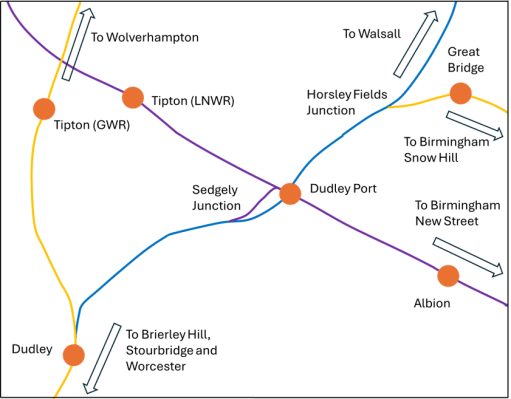
Dudley station is very well described on the Disused Stations web site. In 1868 the track layout had taken on a form that was to continue to exist, with period revisions, for much of the next century. It was in essence two stations. On the west side, there was the GWR station on the former Oxford, Worcester and Wolverhampton line that ran from Oxford, through Worcester, Kidderminster and Stourbridge and on to Wolverhampton. On the east there was the LNWR station that was the terminus of the former South Staffordshire Railway from Burton, Lichfield, Walsall and Dudley Port and also the terminus of the LNWR Stour Valley Line that ran to Dudley Port and joined the main LNWR Wolverhampton to Birmingham New Street Line. Each half of the station consisted of an island platform, with an overbridge connecting them with each other and with the main station entrance on the Tipton Road. There were extensive goods facilities for both the GWR and the LNWR to the north of the passenger station.  The map in the figure below shows the station and the lines that pass through it in relation to the local network.

Dudley station and its locality

Services using the station

The County Express gives timetables for four distinct services that used the station in 1868.

  • Services on the GWR London Paddington to Wolverhampton route via Worcester.
  • Services on the GWR Great Malvern to London Paddington route via Birmingham Snow Hill.
  • LNWR services on the South Staffordshire line to Birmingham New Street and London Euston via Walsall.
  • LNWR services on the Stour Valley route to Birmingham New Street and London Euston via Dudley Port and Smethwick.

I will consider each of these in turn, and try to describe the nature of the services, their frequency and journey times. But first there are two caveats that need to be made. Firstly, as can be judged by the example at the top of this post, the timetables on the scanned pdf of the County Express are not always easy to read, and this might lead to some minor errors in any numbers I quote, although the big picture will not be affected. Secondly, and more importantly, the timetables read as if some of the local services become through trains to long-distance destinations. I suspect that this might, in places, be hiding journeys where a change of train is required. I will try to highlight my uncertainties in this regard as they arise.

GWR London Paddington to Wolverhampton via Worcester

There were eleven southbound services that called at Dudley on this route on weekdays, and five on Sundays. The corresponding numbers for northbound services were thirteen and seven. Those going south called at some combination of Netherton, Round Oak, Brierley Hill, Brettell Lane, Stourbridge, Hagley, Churchill, Kidderminster, Fearnall Heath, Worcester and stations to Oxford and London; and those going north called at Tipton, Princes End, Daisy Bank, Bilston, Priestfield and Wolverhampton. These stations were not always at their final or current locations – for example Netherton was moved northwards when the Dudley to Old Hill line was opened in 1878 to be north of  junction, and Stourbridge was moved south and renamed Stourbridge Junction when the Town branch was opened in 1879.

There were five weekday trains in each direction that ran through to Paddington, with most of the rest running to Worcester. Journey times were approximately as follows.

Dudley to Wolverhampton – 20 to 25 minutes
Dudley to Stourbridge – 30 to 40 minutes
Dudley to Worcester – 1 to 1.5 hours
Dudley to London Paddington – 4.5 to 6.5 hours

GWR Great Malvern to London Paddington via Birmingham Snow Hill

There were eleven trains from Dudley to Birmingham Snow Hill and beyond on this route on weekdays, and six on Sundays, with ten and six in the Great Malvern Direction. Those going to Malvern called at some combination of Stourbridge, Kidderminster and Worcester (and not the intermediate stations) and those going to Snow Hill and Paddington ran along the LNWR line through Dudley Port (not stopping) to Horseley Fields  junction and then called at Great Bridge, Swan Village, West Bromwich, Handsworth, Soho, Hockley, Birmingham Snow Hill , Warwick, Leamington, Oxford and Paddington.

Five weekday services ran through to Paddington with 6 in the reverse direction, with the others terminating either at Snow Hill or Leamington. Some of the Malvern services terminated at one of the intermediate stations. Journey times were approximately as follows.

Dudley to Birmingham Snow Hill – 30 to 35 minutes
Dudley to London Paddington  – 4 to 6 hours
Dudley to Stourbridge – 15 to 20 minutes
Dudley to Worcester – 1 to 1.5 hours
Dudley to Great Malvern – 1.5 to 2 hours

Thus, the times from London to Paddington were similar on both GWR routes.  This route gave a much faster trip to Stourbridge, Kidderminster and Worcester as trains did not call at the intermediate stations. The Disused Stations site suggest that the particular utility of this route was that fast trains could be turned around at Dudley and thus ease potential congestion at Snow Hill.

LNWR Dudley to Birmingham New Street via Walsall

In the County Express this is referred to as the South Staffordshire Railway, (SSR) although by 1868 it was fully incorporated into the LNWR The SSR main route was from Derby to Birmingham New Street via Burton upon Trent, Lichfield and Walsall. The services outlined in the County Express were thus on the southern leg of the SSR and operated as stopping services from Dudley to Walsall and Walsall to Birmingham. The timetable implies that these were through services, although this would have required a quite rapid reversal at Walsall (perhaps a change of engines, or perhaps passengers were required to change). There were thirteen services form Dudley to Birmingham New Street on weekdays and four on Sundays, with thirteen and fivein the opposite direction. The trains called at Dudley Port, Great Bridge, Wednesbury, Walsall, Bescot Junction, Newton Road, Hampstead and Great Barr, , Perry Barr, Aston, Bloomsbury, Lawley Street and Birmingham New Street. Only about half the trains called at Lawley Street, Bloomsbury and the stations from Pery Barr to Walsall. The approximate journey times were as follows.

Dudley to Walsall – 25 to 30 minutes
Dudley to Birmingham New Street – 1 to 1.5 hours

The journey from Dudley to Birmingham was thus a lengthy one and probably not attractive, and the service was clearly aimed at serving local traffic between Dudley, Walsall and Birmingham.

LNWR Dudley to Birmingham New Street and London Euston Square via Dudley Port and Smethwick

This LNWR route is described as the Stour Valley Railway by the County Express. It gained its name from the original intention to extend it over the Dudley ridge into the Stour catchment to the south. This aim was abandoned quite early, and though it retained its name, it remained stubbornly in the Tame catchment. There were fifteen services from Dudley to Birmingham and London on weekdays and seven on Sundays, with fifteen and six in the opposite direction. Trains called at Dudley Port (via the loop at Sedgeley Junction), Albion, Oldbury and Bromford, Spon Lane, Smethwick, Soho, Edgbaston and New Street, and then onto Coventry, Leamington (via the LNWR Kenilworth loop), Rugby and Birmingham. Six weekday up trains continued to London, with the others terminating at either Birmingham or Leamington. Approximate journey times were as follows.
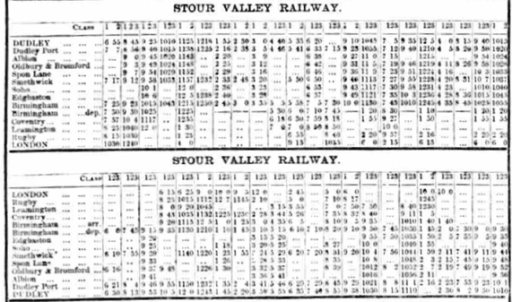
Dudley to Birmingham New Street – 30 to 40 minutes
Dudley to Leamington – 1.5 to 2 hours
Dudley to London Euston – 3.5 to 4.5 hours

The times from Dudley to both Birmingham and London were thus both very competitive with others.

Other services

The County Express gives details of some other services that it no doubt felt were of interest to its readers.

  • LNWR London to Birmingham, via Coventry and Rugby i.e. not diverting to Leamington so offering a more rapid journey to London than the Stour Valley Railway, although a change at New Street would be required.
  • LNWR Birmingham to Wolverhampton and Liverpool, offering connections in both directions at Dudley Port.
  • The GWR Stourbridge Extension Railway – from Stourbridge to Birmingham Snow Hill. At this stage this was still an independent company that wasn’t completely taken into the GWR until 1870.
  • The GWR Severn Valley Railway from Hartlebury to Bewdley, Bridgenorth to Shrewsbury, although travel from Dudley would have required rather lengthy trips to Hartelbury and some rather slack connections and would not have been particularly attractive. In 1868 the Kidderminster to Bewdley line, which would offer a shorter route, had not yet been constructed.
  • The GWR line from Bewdley west to Tenbury and Wooferton, with connections to Hereford, which would have required a change from the Severn Valley railway at Bewdley. It is unlikely that many from the Dudley area made this rather rambling cross-country trip.

A typical day at Dudley station

The table below shows the arrivals and departures at Dudley station on a weekday in 1868. It can be seen to be very busy, even without including the very numerous freight workings, with ninety three services in total from 6.30 in the morning till 22.55 in the evening. Note I use the modern form for specifying time, which has the advantage of being able to be used to calculate journey times using EXCEL.

CompanyFromArriveDepartTo
SVRBirmingham NS06:30
GWR06:40London Paddington
SVR06:55London Euston
SSR07:35Birmingham NS
GWR08:10Leamington
SVRBirmingham NS08:13
GWRWolverhampton08:0508:15London Paddington
GWRBirmingham SH07:5508:15Great Malvern
SSRBirmingham SH08:24
GWRWorcester08:2108:29Wolverhampton
SVR08:45London Euston
GWRKidderminster09:10
SSR09:15Birmingham NS
GWRKidderminster09:1009:20London Paddington
SVR09:25Leamington
GWR09:30London Paddington
SSRBirmingham NS09:34
SSR09:50Birmingham NS
SVRBirmingham NS09:53
SVRLondon Euston10:03
SVR10:10Birmingham NS
GWRWorcester10:3210:33Wolverhampton
SSRBirmingham NS10:35
SSR10:45Birmingham NS
GWRHoneybourne10:5510:57Wolverhampton
GWRWolverhampton10:5511:00
GWRGreat Malvern10:5511:00London Paddington
GWRLeamington10:4611:00Kidderminster
SVR11:25London Euston
SVRLondon Euston12:00
SVR12:18Birmingham NS
SSR12:20Birmingham NS
GWRWolverhampton12:3512:38London Paddington
GWRLondon Paddington12:3312:38Great Malvern
SVRLondon Euston12:43
GWRLondon Paddington12:4512:50Wolverhampton
GWRGreat Malvern12:4512:55Birmingham SH
GWRLondon Paddington13:33
SSRBirmingham NS13:35
SVRLondon Euston13:45
GWRWolverhampton13:4813:50Worcester
SSR13:50Birmingham NS
SVR13:53Birmingham NS
GWRLondon Paddington14:1414:17Wolverhampton
SVRLondon Euston14:20
GWRGreat Malvern14:1414:23London Paddington
SVR14:30Birmingham NS
SVR15:00Birmingham NS
GWRWolverhampton15:0215:04Worcester
GWRLondon Paddington14:3315:04Great Malvern
GWRLondon Paddington15:2015:24Wolverhampton
GWRWolverhampton15:2015:24Worcester
GWRGreat Malvern15:2015:28Leamington
SSRBirmingham NS15:35
SVRLondon Euston15:50
GWRStourbridge16:2516:28Wolverhampton
SSRBirmingham NS16:40
SVR16:40Leamington
GWRLondon Paddington16:3516:44Great Malvern
GWRWolverhampton16:4316:45London Paddington
GWRStourbridge16:2316:45Oxford
SSR17:15Birmingham NS
SVR17:35London Euston
GWRLeamington17:3517:39Stourbridge
GWRWolverhampton17:3517:40London Paddington
SVRLeamington17:55
GWR18:00London Paddington
SVR18:20Leamington
SSR18:30Birmingham NS
SVRLondon Euston18:35
GWRWorcester18:4018:43Wolverhampton
GWRBirmingham SH18:4018:45Stourbridge
SSRBirmingham NS19:05
GWRLondon Paddington19:2819:30Wolverhampton
GWRWolverhampton19:2519:30Evesham
GWRLondon Paddington19:2419:30Great Malvern
SSR19:30Birmingham NS
GWRGreat Malvern18:3819:40Birmingham SH
SVRBirmingham NS19:40
SVRLondon Euston20:33
SSRBirmingham NS20:43
SSR20:50Birmingham NS
GWRWolverhampton20:5521:00Kidderminster
GWRLeamington20:5521:00Kidderminster
SVR21:10Birmingham NS
SVRLondon Euston21:38
GWRStourbridge21:5521:57Wolverhampton
GWRKidderminster21:5521:58Birmingham SH
SSRBirmingham NS22:06
SVRLeamington22:30
GWRLondon Paddington22:3322:36Wolverhampton
SVR22:45London Euston
SSRBirmingham NS22:55
Weekday departures from Dudley in 1868

A reflection

The information set out above causes me to reflect on why such a vibrant railway scene was swept away in the 1950s and 1960s, and has left Dudley as one of the largest towns in England without a mainline railway service. The immediate reasons are to be found of course in the post war situation of the 1950s and 1960s – the decline of old industries, and the increasing dominance of road transport – but it seems to me that the seeds of this decline were planted in the early days of the railways in the region. Firstly, in the early days, the movement of freight, and in particular coal and iron products, was as important to the railway companies as passengers. This led to the locations of railway lines primarily in areas where there was significant industrial activity, rather than in areas of habitation. And when these industries eventually declined, there wasn’t the reasonably affluent population base to continue to support the railway network as a passenger only system. Secondly, inter-company competition resulted in competing lines – and in particular duplication of major stations in Wolverhampton and Birmingham. Again, in a period of post industrial decline, there was bound to be rationalisation, and this rationalisation needed to provide for the remaining freight, express trains and passenger trains. The result of this, the development of spatially constrained two track Stour Valley line as part of the West Coast route, inevitably meant that local services, would be squeezed out for capacity reasons. And thirdly with regard to Dudley itself, its geography made it vulnerable – sitting on top of a north-south ridge that was best approached by railways along the ridge rather than from either side, which resulted in it being bypassed by the major east / west through lines, and left isolated when the downturn came. The only main line to pass through the town was that of the OWWR / GWR, which in reality was a series of linked local services, with the long distance journey times to London being too great to be competitive, at least north of Worcester.

Could things have been different? Perhsps with a more centrally and strategically planned railway system that might have been the case, and a sustainable pos-industrial railway might have emerged in the Dudley area. But that is an unknown – and governments have not always shown themselves as being able to think strategically, at least where railways are concerned. But perhaps there is hope for something better – for example see Andy Street’s ambitious (and probably unrealistic) plan for metro expansion in the graphic below – although the ludicrous costs and construction times of tramways in the UK need to be massively reduced if they are to reach their full potential. But that, as they say, is another story.

The simulation of local tornado wind conditions

Preamble

At the recent Bluff Body Aerodynamics Conference in Brimingham at the end of July / start of August 2024, there was considerable discussion concerning the simulation of tornado and downburst flow for the purposes of measuring structural loads. The current experimental methodology uses large scale tornado / downburst generators that have to be physically very large to have reasonable model scales, with either the whole downflow mechanism being moved across a model, or a model being moved beneath the generator. Such tests are complex and time consuming, the more so because to obtain reliable load statistics multiple tuns are required for each case considered with various tornado or downburst characteristics, building position and orientation relative to the core flow etc.

In the discussions of the various presentations, there was some talk of modelling local flow characteristics around building models, rather than modelling the complete flow field. After mulling over some possibilities for this, in this blog post I set out my preliminary thoughts on how such local simulations might be achieved. I have no access to labs or funding, so these ideas will be for someone else to take forward if they are thought to have merit.

The proposal

The basic idea is as follows.

  • The local wind field around a building should be simulated in a duct, where rapid changes in wind speed such as those found beneath tornadoes and downbursts can be simulated using active control of fans / screens etc. This has been attempted in the past and the technique is clearly possible. The near ground local shear and turbulence could be generated using spires and roughness in the usual way.
  • The rapid horizontal direction changes seen by a building as the flow structures pass over it should be simulated by rotating the model at the required speed.
  • Vertical direction changes (which it will be seen below are usually small) could be simulated in one of two ways – either by tilting the building model vertically (which would result in some ground plane distortion) or perhaps by rapid changes in duct roof profile to produce the appropriate upward or downward vertical velocity component.

In principle there seems to be no reason why it should not be possible to simulate the necessary velocity and direction changes, but there are two issues that need to be investigated. Firstly, what exactly are the local wind velocity and direction changes at a particular point when a tornado or downburst passes over them, and secondly how rapid are these changes – are they possible to achieve at reasonable model scales. We address these issues in what follows.

Specification of wind conditions

There are a number of ways in which wind conditions experienced by buildings as tornados or downbursts pass over them can be specified.

  • Through the use of full-scale data, although this is somewhat sparse, particularly close to the ground.
  • Through large scale LES simulations, a number of which are available, but are usually for certain specific situations and not easily generalized.
  • Through the use of simple analytical models which capture the main features of the flow, and by their nature can be generalized quite easily.

Here we use the latter method (which will come as no surprise to those who know me!). Specifically we use the methods of Baker and Sterling (2017) and Sterling et al (2023).  These give the equations for the three components of velocity, relative to the tornado / downburst centre, shown in Box 1. It is then assumed that the building is stationary as the storm passes over it and the overall horizontal velocity and horizontal and vertical flow directions calculated from assuming a vector sum of a steady wind velocity in the storm direction of travel and the velocity induced by the tornado / downburst (figure 1).

Box 1 Tornado and downburst equations

Figure 1. Co-ordinate system

Clearly the model requires a number of parameters to be specified. These have been taken from the data collation of Baker and Sterling (2019) (which was compiled to assess the adequacy of tornado vortex generators) and four conditions specified – for small, medium and large tornados and for a downburst of similar size to a medium tornado. The parameters for these cases are shown in Table 1. I make no claim as to the overall adequacy or otherwise of this method – as it stands it is simply a convenient tool with which to investigate the broad parameters of the problem, and other methodologies could be used to determine the wind conditions relative to a building.

Table 1. Tornado and downburst parameters used in calculation

Wind speed and direction relative to a stationary building

Clearly the wind speed and wind direction changes experienced by a stationary building as a storm passes over them will depend upon the position of the building relative to the storm track. If the building is directly on the track, then some very rapid changes in speed and direction can be expected. This is shown in figures 2a to 2c for the large tornado case. The x axis is the time at full scale equivalent values as the storm passes over the building. The origin is at the point when the centre of the storm is directly over the building. As might be expected there is a very rapid change in the speed and horizontal direction as the vortex core passes over, and a very large change in vertical direction. Two points can be made, Firstly, in this region the model is at its least realistic as the sharp changes will be smoothed in reality by vortex wandering and viscous effects. However secondly, there will undoubtedly be large vertical flow direction changes as the core passes over, although perhaps not as high or as rapid as shown in figure 2, and the type of model simulation proposed here would be unable to simulate such changes and such simulations are probably not adequate close to the core. In what follows we thus confine our attention to two model positions, at one core radius either side of the vortex direction of travel where one would expect the simulation to be adequate..

(a)

Figure 2. Wind conditions experienced by building directly on the storm track as large tornado passes over

The results of this analysis are shown in figures 3a to 3d for the small, medium and large tornados and figures 4a to 4c for the downburst. The following points can be made.

  • The velocity magnitude variations are the same for both building positions, and all show a rapid rise then a fall as would be expected.
  • The vertical direction change is characterized by a sharp peak. For the tornado cases, this variation is always less than 1 degree, but for the downburst case it is considerably greater.
  • For the downburst, the horizontal direction variation differs in sign between the two positions but are otherwise identical.  However, for the tornado cases the horizontal direction variation is different for the two building positions due to the asymmetry introduced by the rotation of the storm. For the case with the building to the top of the storm track in figure 1, there is a steady, if rapid, change of direction around the building and back to the starting point. For the bottom case, the flow directions move through 130 degrees and then back to the original position.
(a)
(b)
(c)
(d)

Figure 3. Wind conditions experienced by building one core radius away from the storm track as large, medium and small tornados passes over

(a)
(b)
(c)

Figure 4. Wind conditions experienced by building one core radius away from the storm track as downburst passes over

Can the velocity and direction variations be modelled?

The question then arises as to whether these predicted velocity and direction variations can be achieved in practice. As noted above the x axis on figures 3 and 4 is the full-scale time in seconds. If, say, a building model scale of 1:25 is adopted, which is broadly in line with current practice, and a velocity scale of 2:1 is used (ie the simulation velocities are half full-scale velocities, which seems practical), then the model time scale is 1:12.5 i.e. the model changes have to take place 12.5 times faster than the full-scale cases. If we take the modelling above as broadly correct in regard to the time scales of velocity and direction variations, then the horizontal  direction and velocity variations for the large, medium and small tornados and the downburst takes place over periods of around 50, 30 and 10 seconds respectively, resulting in model times of 4, 2.5 and 0.8 seconds. For the direction changes, these time scales seem reasonable and should be achievable by a suitable mechanical system. However, for the velocity changes, that rely on moving air masses with significant inertia, the time scale required for the small tornado would represent a challenge. The vertical direction variations are over much smaller time scales in each case but could probably be achieved with a mechanical system to tilt the model, but probably not with a system that tries to deflect the moving air downwards or upwards.

Concluding remarks

Based on what has been set out above, it would appear that the type of local simulation described in this post has some potential. The use of such a simulation would be restricted however to medium and large storms, as the velocity changes for small storms would be difficult to achieve at model scale. Similarly, the conditions very close to the storm track, in particular the vertical velocity changes, are unlikely to be able to be adequately modelled.

However, I am now retired, with no access to either lab facilities or funding, so if such a simulation is to be further investigated, someone else will need to do it!

References

C J Baker, M Sterling (2017) Modelling wind fields and debris flight in tornadoes, Journal of Wind Engineering and Industrial Aerodynamics 168, 312-321 http://dx.doi.org/10.1016/j.jweia.2017.06.017  

C Baker, M Sterling (2019) Are Tornado Vortex Generators fit for purpose? Journal of Wind Engineering and Industrial Aerodynamics 190, 287-292, https://doi.org/10.1016/j.jweia.2019.05.011

M Sterling, S Huo, C Baker (2023) “Using crop fall patterns to provide an insight into thunderstorm downbursts”, Journal of Wind engineering and Industrial Aerodynamics. 238, July 2023, https://doi.org/10.1016/j.jweia.2023 .105431

A Black Country poet – Jim William Jones

On November 9th 2024 as part of the Black Country History Day to be held the Black Country Living Museum in Dudley, I will be presenting (with help from Emma Purshouse) some of the poetry of the Black Country poet Jim William Jones, to illustrate the industrial, social and built environment of the region in the second half of the 20th century. Jones was a sharp eyed observer of his beloved Black Country and his poems give a deep insight into the area and its people over that period. This is a rather different way of “doing” history, but hopefully one that will both entertain and inform. I write below to give some brief details of his life and work, since this information is not generally available elsewhere.

J W Jones by CLEBAK, From Black Country Society Calendar collection 1976

Jim William Jones was born in Coseley on February 15th, 1923, and spent his childhood and school years there. After leaving school he began work with the engineering firm Joseph Sankey and Sons as a junior clerk. He was conscripted into the army at the age of 18 in 1941, taking part in the Normandy landing in 1944 and also serving in India and Ceylon, reaching the rank of Warrant Officer. After the war he returned to Sankey’s and was trained in works management, before leaving industry to join local government in 1955 where he worked in education administration, marrying Jesse Ralphs at Wednesbury in that year. He was a qualified teacher of speech and drama and a member of amateur dramatic societies, hosting a radio programme on Beacon Radio and working with the Black Country folk music group Giggetty. He had a strong Christian faith and was a gifted speaker and Methodist local preacher. He became a very well-known Black Country poet, both for his dialect poetry (Black Country ballads) and for his poetry in more conventional English. Some of these can be found in three small publications by the Black Country Society – “From under the smoke” from 1972, “Factory and Fireside” from 1974, and “Jim and Kate” from 1986, all sadly long out of print. He contributed numerous poems to the first 25 years of the Society magazine, the Blackcountryman from 1967 to 1992. He died in 1993.

Some of Jim Jones poems were included in a 1976 anthology “Widening circles” edited by Edward Lowbury. Following Jones’ death, Lowbury wrote an appreciation for the Blackcountryman (26.4, 1993). He acknowledged the humour and the pathos in the dialect ballads, which at the time of publication of “Widening Circles” he felt to be more successful than the poems in standard English. By 1992 however he had somewhat modified his views and concluded that his standard English poems were perhaps “nearer to the heart of poetry than the more immediately entertaining dialect ballads”.

In a much later Blackcountryman article (45.3, 2012) Trevor Brookes again writes in appreciation of Jim Jones, and in particular his dialect poetry, emphasising that as well as humour, they contained much that showed a profound understanding of people and their lives. He regretted that these were not easily available, being scattered across many newspapers and other publications, and not accessible to modern readers.

Personally, I first became aware of Jim Jones work in the early 1970s, when my mother gave me a copy of “From under the smoke” as a Birthday present. This little volume became a prized possession and has travelled around the country with me over the last 50 years, regularly read and re-read.

To enable others to either reacquaint themselves with his work, or to enjoy it for the first time, some of Jones’ poems have ben published in a short series of Black Country Society blog posts from 2022 that can be found at the links below.

The Blackcountryman poems of Jim William Jones Part 1

The Blackcountryman poems of Jim William Jones Part 2

The Blackcountryman poems of Jim William Jones Part 3

In addition, the Black Country Society has scanned “From under the smoke” and “Factory and Fireside” and these are available for members on the Society web site (password required). I have also produced a compilation of 33 of his poems that span the period from 1968 to 1992 – from “From under the Smoke”, “Factory and Fireside” and the Blackcountryman. This is again available to Society members on the web site. These three volumes will be available for purchase as pdfs from the Society online shop at some point in the near future.

Most, but not quite all, of the poems in the compilation are in standard English. Another volume could easily be produced containing a selection of his dialect poetry, but as Trevor Brookes noted, these are more scattered, and the collection of them would be a major task. Nonetheless it is perhaps something I will attempt in the future.