The diaries of William Baker 1907 to 1919 – Part 5. Woodside Iron works

Related blog posts

The diaries of William Baker 1907 to 1919 – Part 1. Introduction
The diaries of William Baker 1907 to 1919 – Part 2. The family entries
The diaries of William Baker 1907 to 1919 – Part 3. Local people and events
The diaries of William Baker 1907 to 1919 – Part 4. National people and events

Introduction

William Baker worked at Woodside Iron Works, which was founded in 1840 by Alexander Brodie Cochrane and his son. It became very well known and respected and produced components for many significant structures, including girders for the Runcorn Bridge over the River Mersey and the Farringdon Street Viaduct in London; ironwork for the Rochester Road Bridge, the Swing Bridge over the River Medway and the Clifton Suspension Bridge; and a wrought iron bridge for New Street Railway Station in Birmingham. In the early years of the 20th century it was owned and operated by Alexander’s grandson, Walter Cochrane.

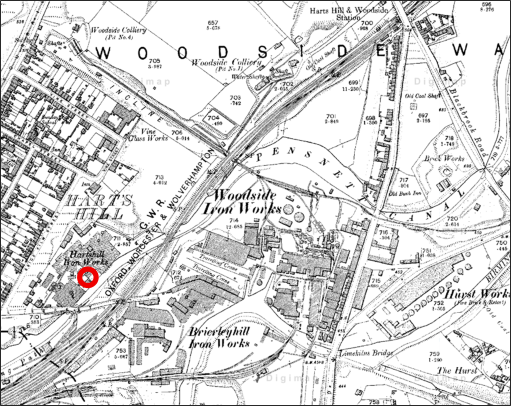
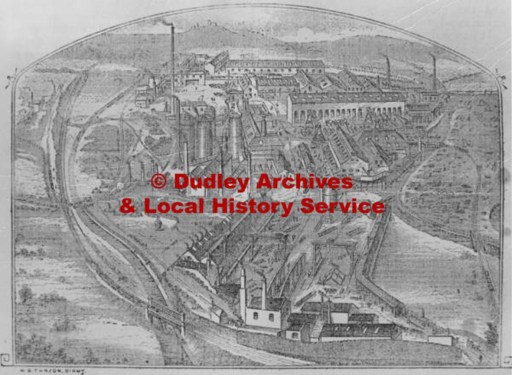
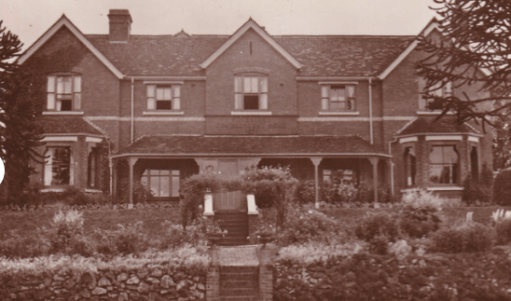
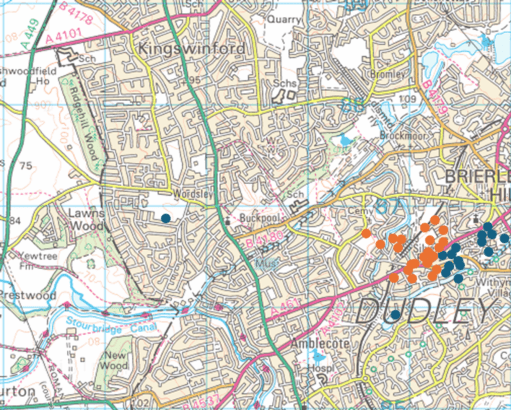
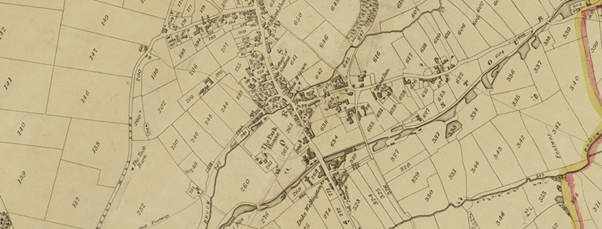
The works were situated between the Dudley and Pensnett Canals , with the Earl of Dudley’s Round Oak Steelworks being on the other side of the Dudley Canal (Figure 1). Woodside was connected to the Great Western Railway which ran to its west (given by its earlier name of the Oxford, Worcester and Wolverhampton Railway on the map). It was supplied with coal from mines on the other side of the railway, through a series of inclines and tramways. A view of the works, roughly from the point marked by a red circle in Figure 1, is given by an engraving in Dudley Archives (Figure 2).

Figure 1. Location of Woodside works from the 1910 OS Map

Figure 2. Engraving of Woodside Iron Works from Dudley Archives

Furnace operation

There are 148 entries in the diary that describe the operation of the Blast Furnace. These are mainly in the earlier period covered by the diaries and become very sporadic after 1913. On the cover of Book 2 we find a list of when the two furnaces (numbers 2 and 3) were “blown” i.e. when they started to produce cast iron.

Dates of Furnaces Blown. No 2 Dec 14 1904; No 3 Aug 15 1906; No 2 Dec 3 1909; No 3 Sept 19 1911; No 2 May 19 1916

There were periods when both were in operation, but also periods when one of the furnaces was being rebuilt or relined.  Furnaces would be in operation for several years before being rebuilt. The starting process for the furnaces was lengthy and extended over several days. As an example consider the start up of Number 3 Furnace in August 1906.

9/8/1906 Started to fill No 3 Furnace.
12/8/1906 Finished filling No 3 Furnace.
12/8/1906 No 3 Furnace fired off 6.18pm.
15/8/1906 Blast put to No 3 Furnace at 9.40am……
17/8/1906 First cast of iron from No 3 Furnace.
17/8/1906 ?? blow out No 3 Furnace at 8.50pm. 2½ lbs.

I am not familiar with the terms used here, and readers might be able to say more, but presumably the “filling” was with coke and ironstone (with the use of the hoist engine), the “firing” was the lighting of the fire, and the “blast was the turning on of the Blast Engine to provide a through flow of air. The 2½ lbs mentioned in the last entry is the pressure of the blast air flow – which should properly be in lbs / square inch. Sometimes at start up the increase in this pressure over several days is recorded.

Furnace “stands” when presumably the blast is turned off, are frequently recorded. In addition we have entries of the following type t roughly annual intervals.

3/10/1907 Mine load On No 3 Furnace…….
30/10/1907 Mine load taken off about 4.00am

I am not at all sure what such entries describe – again reader input would be useful.  Other work in the vicinity was obviously of interest to William Baker, and he may well have been involved in some way – there seems to be some flexibility in the use of manpower across different tasks. For example

19/3/1909 The three new Sankey and Sons boilers put to work. The new reducing valve put to work ……
1/8/1910 Preparing to start new colliery

Repairs

There are 244 entries in the diaries that relate to what might be described as ongoing maintenance or repairs. These cover the entire period of the diaries, but there are more in the period up to about 1914 than afterwards. At roughly three month intervals we have series of entries of the similar to this example from late 1910. 

11/11/1910 Steam valve packed with 5 rolls of 3/8”  white packing.
14/11/1910 Steam Valve packed 2 rolls 3/8”   by 1″ Lapped elastic.
23/11/1910 New rope put on right hand cage . Stand from 9 till 12. 3 hours stand.
30/11/1910 New rope put on left hand cage. Screw loosened out on right hand band.  Stand from 9.20am till 11.40am 2 hours 20 mins
1/12/1910 Left hand band taken up 1½”
4/12/1910 New lamp put on over engines No 32
9/12/1910 Right hand band taken up 1″.
13/12/1910Small steam box packed to back
14/12/1910 Large steam boxes packed to back
16/12/1910 Right hand band taken up  1¼”
21/12/1910 New joints put in lubricator

Again, reader input would be useful. What were these steam boxes and steam valves and what did packing them entail? Presumably they were some part of the hoist engine. The bands seem to have been part of the hoist mechanism and expanded with use and needed to be taken up by an inch or so at regular intervals. Similarly new ropes were required for the “cages” – were these to transport workers to the tops of the furnaces?

Less frequently we have a number of other tasks – the whitewashing of the Engine House (at intervals between 6 months and 2 year); repairs to the “Nelson” locomotive used to move material around the site; and occasionally (recorded only two times) the drainage of a stretch of canal to repair the loading wharfs. Some examples are shown below.

28/5/1908 Engine house whitewashed


17/5/1909 The Nelson loco put in for repairs
31/5/1909 The Nelson loco came out of repairs at 9.00


5/8/1911Started to empty the water out of canal at 4.00am. Started pumps to feed ….. at  5.30am
11/8/1911 Canal started to be refilled
12/8/1911 Pumps stopped at 4.0am

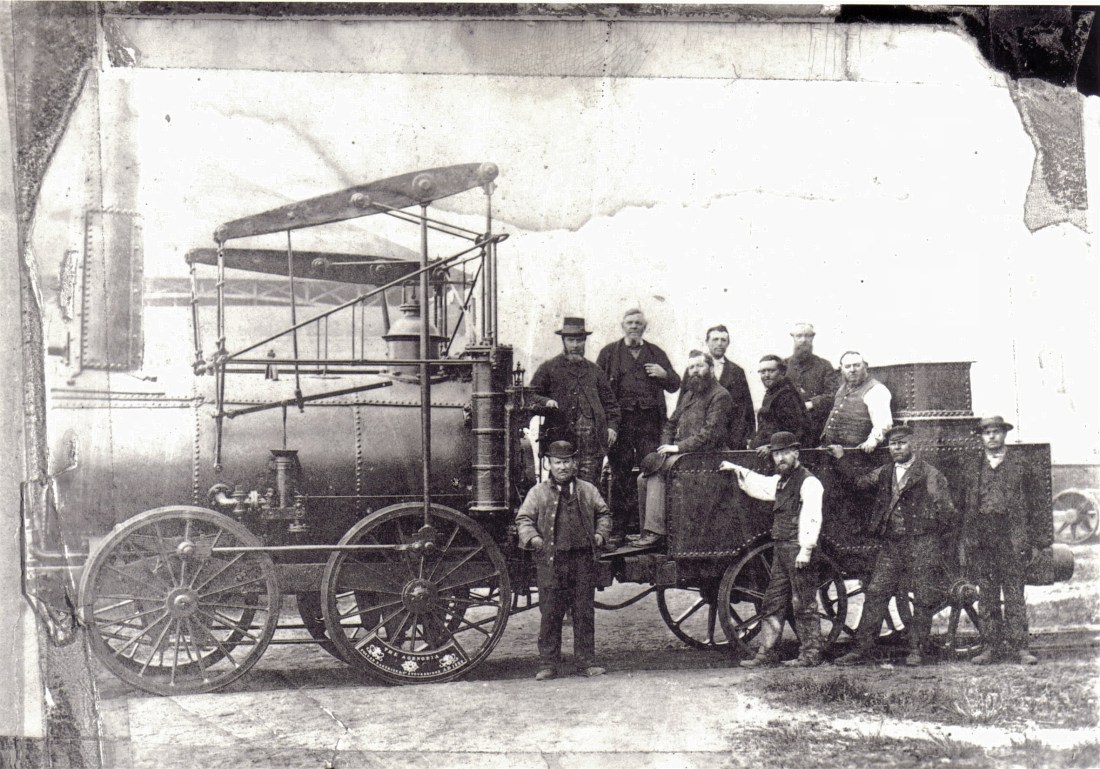
The Nelson locomotive might be a mis-wrting of Neilsen – Neilson and Co. were a Glasgow based locomotive manufacturer in the 19th and early 20th centuries,

People

The diaries mention a large number of individuals in the context of Woodside Iron Works, but most only once or twice. There are 192 such entries in total from across the period covered by the diaries. In this section we mention a few who occurred in many entries. First of all there is J. Lewis, the foreman over the Blast Furnace Men. There is also mention of his son, another J. Lewis, although the entries usually refer to the former.

15/10/1907 J Lewis foreman (in place of) Mr Hughes.
15/12/1907 J Lewis Jun started to work at No 1 Furnace with H Pearson.
1/1/1909 Mr Lewis  has … that his house cost £260
8/2/1909 Mr J. Lewes bought a house in Scotts Green. The amount asked was……
1/3/1909 Mr J. Lewis removed to Scotts Green to live in his own house
20/8/1909 J. Lewis went on his holiday
28/6/1913 Mr J. Lewis went on his holiday
2/7/1913 Mr J. Lewis came back from his holiday
6/4/1914 J. Lewis left Woodside  for Pitt and Co, Shut End Colliery
8/8/1914 Mr J. Lewis went on his holiday
24/8/1914 Mr J. Lewis came back from his holiday
24/9/1914  J. Lewis was buried at the New Cemetery Dudley Thursday
28/9/1914 ? Stockton and W. Baker paid a visit to the Guest Hospital to see Mr J. Lewis. They allowed us 2 mins only. The late John Lewis compensation award £75 to the widow, £100 to the sons
26/4/1915 Mr Lewis came to work after his accident 31 weeks

Clearly the early mentions are quite mundane, with a particular interest in living arrangements and holidays, but in September 1914 there was clearly some (unrecorded) major incident that resulted in the death of John Lewis senior, and a significant compensation payment, and serious injury to the son.

Mr D Colley was a colleague of William Baker’s that clearly suffered significant periods of ill health.

21/2/1907 Mr D Colley was admitted into the Corbett Hospital
25/3/1907 Mr D Colley admitted into the convalescent home at Clent
3/7/1907 Mr D Colley admitted into the Corbet Hospital
4/8/1907 Mr D Colley came out of Corbetts Hospital Sunday after having all his teeth drawn
2/9/1907 Mr D Colley has gone to convalescent home at Clent
16/9/1907 Mr D Colley comes back home from Clent
24/9/1907 Mr D Colley started to work after his second illness
29/3/1908 Mr D Colley was taken ill down the pit and was taken to Corbett Hospital and an operation was performed.
14/5/1908 Mr D Colley admitted into the Convalescent home at Rhyl
17/08/1908 D Colley started to work at his old job.

Mr W Shuker seems to have been a long term colleague of William’s and again the entries express much interest in his holidays. At this point it is perhaps worth saying that William makes no mention of his own holidays at all.

24/3/1907 William Shuker was married at St Luke’s Dudley
14/8/1909 Mr Shuker went on his holiday
23/12/1909 W. Shuker finished on Thursday morning
16/1/1910 W. Shuker started to drive the loco Sunday nights on a night turn
7/8/1910 Mr Shuker went on his holiday for 8 days
12/8/1912 Mr Shuker went on his holiday
17/8/1912 Mr Shuker came back from holiday Saturday night
20/9/1913 Mr Shuker went on his holiday
27/9/1913 Mr Shuker came back from his holiday
26/12/1913 W. Shuker suspended
5/1/1914 W. Shuker started to work after being suspended
24/8/1914 Mr Shuker went on his holiday
2/9/1914 Mr Shuker came back from his holiday
30/1/1915 Mr Shuker sent J Young home and said he was drunk on Saturday night
9/2/1915  …. and Mr Shuker were burned about the face and were taken to the Guest Hospital. Shuker was allowed out
13/3/1915 Saturday night. Had a few words with W Shuker for not telling the bone man where I was going away from about 9.20am. . Realised 9.50am. He accused me that we were paid better than anyone else on the ground . I told him either him or someone else was tampering with the books in the offices if he knew what we were having
11/3/1919 W. Shuker left Woodside. J. Bagger took his place

It may be that the entries refer to more than one person  as there seems to be more than one marriage recorded. Clearly Shuker came to hold some position of authority, in that he could send someone home for being drunk. In February 1915 he suffered from an accident that burned his face and the month after he and William seemed to have some sort of altercation.

S. Powell was another colleague of William’s that we will meet again in the next section. His working career seems to have been relatively uneventful.

19/8/1907 S. Powell started to work on the Hoist Engine in J. Lewis place
28/8/1908 S. Powell went on his holidays to Blackpool 4 days
5/1/1909 S. Powell had his strong book
11/1/1909 S. Powell was taken ill and went on the sick fund till Jan 19
6/2/1913  S. Powell moved to 40 St Andrews St Netherton
11/3/1914 S. Powell left the shop

The war impinged little on the activities at the Iron Works, but inevitably a number left to enlist in the army. From an entry of late 1914

Embarked for the war from Woodside Furnaces and Colliery.  J Mills enlisted August; H Sumner enlisted August; Round enlisted Nov 7; Mr Hughes enlisted Nov 9; S Edwards enlisted December 28; G Shaw enlisted December 28; J Dean enlisted December 28; W Marten enlisted September 1st                                                        

Employment

There were approximately 120 entries associated with employment practices and concerns. Whilst these are mostly concentrated in the period after 1913, from 1909 the issue of meal time working was clearly of concern.

23/6/1909 Meal time work increased to 4 rounds per meal hour
3/7/1909 Machine men received 9d extra for mealtime work. Make 440 tons
24/7/1909 Received payment of 1s per meal time work
19/4/1913 Payment stopped for meal times

Many entries concern wage advances (increases) and reductions. For his own wages, he recorded these in some detail and these are included in the table below from 1912 to 1915. Wages were changed at regular intervals of around 2 to 3 months. The table shows the annual change in each year and compares this with the national inflation rate. It can be seen that broadly wages fell below inflation from 1912 to 1914, but far exceeded inflation in 1915. Overall in the period wages increase by 36.7% against a national inflation rate of 14.7%.

      Change in payInflation
17/02/1215/06/1210/08/1219121912
-2.50%+2.50%+2.50%+2.4%+3.13%
04/07/1314/06/1318/10/1320/12/1319131913
+2.50%+2.50%-2.50%-5%-2.7%-1.01%
14/02/1418/04/1413/06/1415/08/1412/12/1419141914
-2.50%-2.50%-2.50%-2.50%+5%-5.1%0%
20/02/1501/04/1519/06/1514/08/1516/10/1511/12/1519151915
+2.50%+0%+2.50%7.50%+10%+10%+36.7%+12.14%
     Overall+29.2%+14.7%

Some indication of the absolute values of these wages can be judged from the entries below from April 1913 and July 1917. The latter shows how these wages were agreed – through discussion between J. Lewis the foreman and Mr. Cochrane, the Iron Works owner. The wages shown are for one 8 to 10 hour shift in a 6 shift working week.

7/4/1913 2 ……. Blast Furnace Men 6-2, Stokers 4-2, Labourers 3-5
1/7/1916 Blast Engine Men and stokers 7-3, Loco Engine men and stokers 7-3. Hoist Engine stokers 6-330/5/1913 Friday. Hoist Engine. Mr J. Lewis had an interview with Mr Cochrane and he agreed to give us 10% advance on our present wages and to go up and down with the …. but not to go below the mark of 4d per day

As the years passed, the entries concerning employment practice become more regular. Discussion between workers and the owner are frequently recorded.

12/6/1913 Deputation … Mr Cochrane those drivers and labourers and he agreed to give 10%
14/1/1914 Mr Walter Cochrane called a meeting with the Furnacemen about the advances and extra service
29/5/1914 A deputation of Furness Men was sent for by Mr Cochrane and he agreed to give 1% extra for Sundays
11/10/1915 A delegation out of the works waited on Mr Cochrane for advances in wages. He agreed to put the war bonus on the wages 6d per day permanent
13/12/1915 Mr Powel spoke to Mr Bach about the 10% advance. He said he would pay the … workers  which he did
6/6/1916 W Baker had interview with Mr Bach about the 10% due to us

Union activity also seems to have increased from 1914 onwards, with the Blast Furnace Workers joining the Midland Blast Furnace Association, and strikes being recorded.

14/3/1914 The Blast Furnace men and engine men joined the Midland BF Association first payment
4/11/1915 Moulders came out on strike for 4 advances on wages instead of War bonus
29/4/ 1915 The moulders started to work again from strike . The firm sent for them

William himself seems to have become involved in union activities, although this is nowhere made explicit. He had responsibility for distributing collections and for setting up a fund to support disabled ex-soldiers.

2/12/1915 Paid to J Hill the sum of £1-0-2 collected for Mrs Hill’s memorial fund . W Baker
1/3/1916 Started to pay 1 penny to … fund to help the soldiers who come home disabled    
1/4/1916 It was agreed by W. Foster and seconded by B. Hutchinson that Mister Shuker be appointed on the committee of the penny a week fund and E. Clowes suspended         

From April 1916 we have entries of the following rom at roughly three month intervals

21/4/1916 Received payment as President 7-3

I read these as indicating that William had become President of a local union branch and was paid roughly the equivalent of one working shift every three months from the union funds. I could however have completely mis-interpreted these entries.     

The 1921 census identifies William  as a  hoist engine driver at the Woodside Iron Works. However in that year the factory closed after a strike and was bought by John Cashmore’s Limited and used to manufacture a number of products including street lamps. What part William played in the strike and what happened to him and his family afterwards is not known. Did he play some sort of role, for good or bad, in the demise of his place of employment?

The diaries of William Baker 1907 to 1919 – Part 4. National people and events

Related blog posts

The diaries of William Baker 1907 to 1919 – Part 1. Introduction
The diaries of William Baker 1907 to 1919 – Part 2. The family entries
The diaries of William Baker 1907 to 1919 – Part 3. Local people and events
The diaries of William Baker 1907 to 1919 – Part 5. Woodside Iron works

The great and the good, disasters and murders

The diary entries that record national events are every bit as variable as those that describe events in William’s locality. Most of them were undoubtedly derived from reports in newspapers that simply took his fancy. Firstly there are simple reports of the birthdays of the great and the good – Henry Asquith in 1915 and 1917, David Lloyd George and Arthur  Balfour in 1917, and the Earl of Dudley in 1918. The death of Joseph Chamberlain and Lord Frederick Roberts the soldier in 1914.

Secondly a number of “disasters” are noted.

24/8/1907 John Goldie  the famous steeple jack fell from the highest stack in Great Britain which is 488 feet at Glasgow was …… smashed. (More details can be found here.)
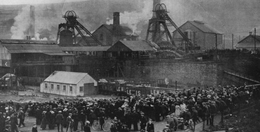
4/3/1908 Hamstead Colliery Disaster (More details can be found here.)
14/4/1912 The Titanic struck an iceberg and was sunk (More here, and of course in very many other places.)
9/7/1912 Cadeby colliery disaster 87 lives lost including 3 government inspectors (More details can be found here.)
16/10/1913 The Welsh Mine Disaster (More details here of the Senghenydd colliery disaster.)
30/5/1914 Empress of Ireland sinking (More details can be found here.)

Figure 1 The Hamstead, Cadeby and Senghenydd disasters

There are surprisingly few mentions of the events of the Great War apart from those outlined in Part 3 about those who enlisted and those who died. There are three other mentions  in total.

7/5/1915 The Lusitania was torpedoes and sunk about 2.30.
8/9/1915 Public Houses and clubs not to be opened till 10.30am Morning  and closed at 9.00pm. Ordered in August in the Dudley district
11/1/1918 Armistice accepted by Germany

Murders and executions also clearly made an impression,

26/3/1907 Joseph Jones was executed at Stafford Gaol for the murder of Edmund Clark of Quarry Bank (More details can be found here.)
14/4/1909  Wednesday Joseph Edwin Jones was executed at Stafford at 8.00am for murdering Charlotte Jones his wife (More details can be found here.)
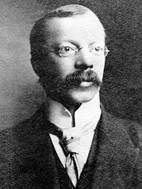
23/11/1910 Doctor Crippen was executed (More details can be found here.)
18/4/1912 H. Seddon was executed at Pentonville Prison (More details can be found here.)
26/2/1914 Ball was arrested at Liverpool for the murder of Miss Bradfield. The murder at Bilston near Wolverhampton was about January 2 (More details can be found here although the murder occurred in Liverpool and not Bilston.)
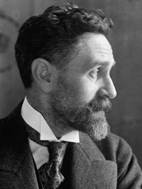
3/8/1916 Roger Casement was executed at Pentonville prison for Tuesday (More details of the Irish Nationalist who was executed for treason can be found here.)
22/12/1916 J. Ashman murdered his father

Figure 2 Dr. Crippen, Henry Seddon and Roger Casement

Finally there are a range of random facts that William clearly found interesting. A few examples.

18/5/1907 Music. The Organ in the Town Hall Birmingham belongs to the General Hospital but the Corporation undertake to look after it and pay the city organist. Weekly Post.
27/3/1909 The cost of a Dreadnaught ship is about £1,800,000 with her guns. Displacement 17,900 tons, when loaded 20,000 tons.
3/4/1909 Metal used for casting bells is 17 parts copper and 5 parts tin.
26/8/1909 It takes about 16000 pennies to the ton.
1/3/1912 National Strike. The colliers came out on strike.

The diaries of William Baker 1907 to 1919 – Part 3. Local people and events

Related blog posts

The diaries of William Baker 1907 to 1919 – Part 1. Introduction
The diaries of William Baker 1907 to 1919 – Part 2. The family entries
The diaries of William Baker 1907 to 1919 – Part 4. National people and events
The diaries of William Baker 1907 to 1919 – Part 5. Woodside Iron works

Introduction

The local entries in the diaries are very heterogeneous, but for the sake of convenience we divide them into three categories – Pensnett People, The Earl of Dudley’s Railway, and Accidents and Disasters.

Pensnett People

Most of the entries in this category are simple records of marriages and deaths, and I suspect many of them are simply those whom William knew as neighbours and friends However there are some entries whose names I recognize from elsewhere.  From September 1st 1906

The Rev C H Cole-Webb died at Holyhead in his 70th year. He came to Pensnett in the year 1875 and left in1883 to go to Penn.

Cole-Webb was the incumbent who followed Rev Charles Atherton. I have written extensively about the events of his incumbency, and the events that shook the village at that time. Cole-Webbs role would thus have been to bring some stability – and to continue the efforts to stop St. Mark’s church falling down old mine workings.

On January 24th 1907 we read of William Barlow, formerly of the Tiled House, a stalwart of St. James New Connexion chapel on Chapel Street, and, in his role as a liberal member of the National School board, was often a vociferous opponent to the tory views of Cole-Webb.

Mr. W Barlow celebrated his 93 birthday and he’s quite well considering his great age.

And two weeks later, on February 12th.

Mr. W Barlow, late of Pensnett, died at Stourbridge Aged 93.

On 20th November of the same year we read of the death of another old Pensnett worthy, Cornelius Chambers.

Mr C Chambers died at Moss Grove Kingswinford aged 69 years.

Chambers was one of the chief characters in the Atherton saga noted above, and I would consider him the chief villain, although that may be unjust. He was an Iron Works Manager and a liberal councilor.

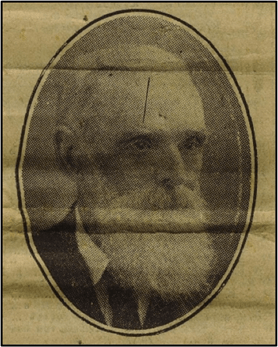
Another to get a mention was David Clark (Figure 1), a pioneering teacher in the area, whom I have written about here. From October 10th 1914

Mr David Clarke of Kingswinford died at the age of 83 years. Late Headmaster of Bromley School

Figure 1 David Clark at the age of 80 in 1911

The deaths of the owners of local engineering firms is also noted – David Parsons of Shut End and the Parsons Engineering Works at the Hollies on May 19th 1909; John Glaze of Glazes Tin Works who lived at Asquith House on Commonside on March 5th 1915; H S Pitt of Shut End Colliery on the 5th April of that year; and George Hingley of N. Hingley and Sons, and Harts Hill Iron Co.

On October 30th 1906 the marriage of a relative of William’s employer, Walter Cochrane, is also noted.

The marriage of Mr J B Cochrane’s oldest daughter Alice Beatrice to Mr R H Boyd Parnall, Solicitor (Christ Church, Monmouth). Married at Pedmore

The  later entries from 1915 onwards report those who have enlisted in the army and, more somberly, those who were killed in action. Just one example, from Christmas Day 1917.

Fred Higgins died from being gassed, in base hospital in France. His brother James was wired for as he was in France when he passed away but he did not see him die.

Not all the personal entries related to deaths however, and there are a few that relate to St. James Chapel, which suggest that William and his family were part of that congregation. From August 18th 1907

Mr Jones of Dudley approved organist of St James, Pensnett

It would seem he didn’t last long and from 24th January 1909.

Mr Tart appointed organist at St James Pensnett ….. house costs £255

Earl of Dudley’s Railway

A significant number of entries relate to accidents on the Earl of Dudley’s railway (or the Pensnett Railway) . I have written about accidents on this system here, but did not include those below. Details of some of them however can be found in the British Newspaper Archive if the correct search terms are used, and I will probably put these into a blog sometime in the future.

5/4/1909  Richard Salters while working on a Lord Dudley Engine slipped and had his two legs cut off and died while going to the hospital.
28/1/1911 A Runaway from Baggeridge New Colliery,  which a collision with the Countess Engine. A youth injured and taken to the General hospital.
6/1/1913 Hiram Plant, son of G Plant Church St, Pensnett,  was killed on the ED railway Sunday.
27/1/1913 Runaway at Himley with the Countess Engine. ED Driver W Mase
17/11/1913 Ada Granger had her left leg cut off with the wagon on the ED railway by the Sampson Bridge.
3/4/1914 Railway accident. Near Sampson Bridge. 4 wagons smashed and one damaged. E.D.
20/11/1914 Robinson Albert of Pensnett had his leg cut on the ED railway coming back from taking his father’s dinner.
17/10/1915 Harry Southall aged 12 had one of his legs crushed very bad.  He had it amputated at the Guest Hospital and the other foot was ….. on the EDR……
29/3/1917 Railway Accident on Barrow Incline with No 13 Engine and 26 wagons. The engine crashed into the Goods shed and was badly damaged. Some wagons damaged.

ED of course refers to the Earl of Dudley’s Railway. The railway was clearly a dangerous place for both those who worked on it and those who crossed it, and safety considerations were not taken as seriously as today.  It was also an organization where there was sporadic industrial unrest. From the 9th of January 1918.

The ED loco drivers and stokers went on strike for the 12½% they were informed of by a man from London that they should either have the 12½% wages advanced so they agreed to go on from day to day.

The exact sense is not clear, but there was clearly some national level involvement in the decision to strike.

Other accidents

William seemed to have a particular fondness for noting accidents of different types, as well as those on the Earl of Dudley’s railway, the more spectacular the better. Firstly there were industrial accidents.

7/7/1906 Cradley Heath Boiler Explosion (More details can be found here.)
3/4/1913 Two sinkers killed in Himley Colliery.
17/9/1913 Samuel Elgeton died from his accident at the Oak Brickyard.
2/12/1913 No 17 pit fired and 4 horses ……. had to be left in the pits.
26/1/1914 Thomas Jones had his hand crushed and was taken to the Guest Hospital.
24/4/1914 Accident at Shut End colliery overwinding.
10/10/1914 Accident at Harts Hill Ironworks. Engine man fell off boiler side and died in the Guest hospital.
3/12/1914 George Burton Engine Driver at No 6 pit Himley  Colliery was scalded when the hooks ….. the roofs lid off at the pump. He lived at 41 High St Pensnett and died in the Guest Hospital. He was 51 years of age.
22/10/1915 A mine explosion at Pennant Hill Colliery Rowley. 5 victims. (More details here.)

Then there were drownings in the canal or the feeder pools.

15/7/1906 Mrs Plovey, the wife of J Plovey,  was found drowned in the canal at 5 o’clock am, the right side of Hadley’s Bridge. She was pulled out by J Harries and S Young.
12/12/1906 A son of Mr Oliver of Pensnett aged … was drowned in Brockmoor Canal.
17/2/1909 John Oakley was found drowned in the canal by No 5 bridge Woodside.
8/8/1911 Man the name of Cooper was drowned in the Middle Pool and got out.
31/1/1913 Two girls Sally Hill and Elizabeth Jevons were dragged out of canal….Brettell.
7/2/1913 Woman found in canal at …. Lane bridge.
27/6/1913 Sarah Ann Green from New Chapel St was drowned in Middle Pool

Suicides were also noted.

2/3/1911 Joseph Whise of Church St Pensnett committed suicide by cutting his throat and was buried at Pensnett Church on March 8.
26/5/1913 The wife of G Dean of Kingswinford hung herself and son cut her down

Finally a couple of tram accidents are reported.

16/1/1916 Tram smash at Dudley near to the Guest Hospital. One died at Guest Hospital and one at Wolverhampton hospital
2/2/1917 Dudley. Tram accident at Scotts Green with J Thompson going to Dudley  ….. One coming from Kingswinford. The driver of the Kingswinford was killed . John Morgan aged 53 from Kingswinford. The driver of the…. was Joseph Wright of Round Oak

A number of the above incidents can again be found in the British Newspaper Archive, and may well be the subject of future blog posts.

The diaries of William Baker 1907 to 1919 – Part 2. The family entries

Related blog posts

The diaries of William Baker 1907 to 1919 – Part 1. Introduction
The diaries of William Baker 1907 to 1919 – Part 3. Local people and events
The diaries of William Baker 1907 to 1919 – Part 4. National people and events
The diaries of William Baker 1907 to 1919 – Part 5. Woodside Iron works

The Family Tree

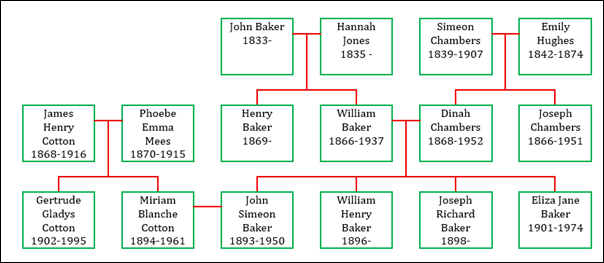
A very simplified family tree is shown in Figure 1, containing the names of most of those mentioned in the diaries, together with some who are not mentioned, but are important in the family story. We will consider specifically the diary entries relating to William’s wife Dinah and his four children John Simeon, William Henry, Joseph Richard and Eliza Jane. We then consider entries relating to other in Figure 1.

Figure 1. A simplified family tree.

Dinah Baker (nee Chambers)

The first mention of Dinah is an entry for March 8th 1909, where we are told  

Dinah was operated on and a polp was taken out of her back passage

Polp is presumably a polyp. This raises all sorts of questions about who did the operation, what the procedure was etc.. Later that same year on September 2nd, we are told

Dinah went to Dudley station and had consent to get on with the job

Again the lack of detail is regrettable. Did she work at Dudley station, or was she employed by a railway company in another way? The other entries are mainly of visits that Dinah paid, often with Eliza to various places in the locality, including to see her brother Joseph in Smethwick.

On January 30th 1916, William wrote

We had photo taken at W Clarke  2 ….. St. Brierley Hill

And two weeks later on February 13th

Mr W Clarke brought ….. photo and post cards

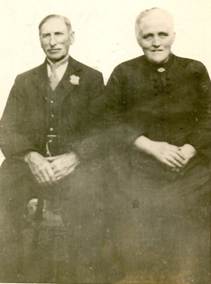
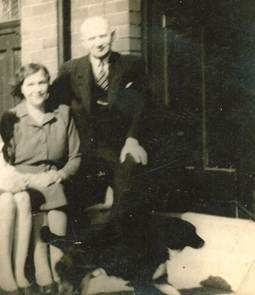
Rather wonderfully that photo has survived and is shown in Figure 2.

Figure 2. William and Dinah Baker, 1916

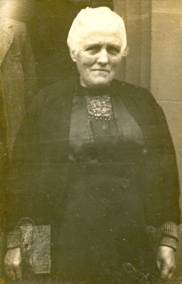
At this point we also include in Figure 3 another photo of Dinah, taken perhaps 35 years later, after Williams death. She cuts a somewhat formidable figure!

Figure 3. Dinah Baker c 1940

John Simeon Baker

The diary entries for John Simeon, William’s oldest son, are extensive, and give hints of more complex events that are not explained. We read first that on June 17th 1907, when he was 14, he began work at Parson’s Leys Foundry. Just two days later he finished working there – why that position only lasted two days isn’t explained. On the 14th of July 1908 he started to work at CIC……… Ltd Bridge End (an almost illegible entry), which probably refers to Bridge End mine in Bromley. The next entry concerning him is from March 24th 1909.

John received last pay of compensation

And a week later

John started to work after his accident at No 16 Colliery

So it would seem that at some point between July 1907 and March 1909 he was injured in some way – presumably quite seriously if compensation were paid.  He remained at the Colliery until June 1910 when he began work at J. Glaze’s Tin Works, and he was clearly still employed there at the 1911 census when he is referred to as a Tin Works labourer. In the next two years he was employed at WW Round Oak, Roberts and Coopers, Brockmoor and at another illegible location. Then on the 7th July 1913 we read of him as being sent to the convalescent home at Clent (see Figure 4). One wonders if these multiple changes of job, and his period at Clent,  were in some way a result of whatever accident he suffered in 1909. After coming out of the home, this succession of jobs continued – Roberts and Coopers at Brockmoor again, J Glazes, Cartwrights at Harts Hill, somewhere in Brettell Lane and on the 6th December 1915, the Earl of Dudley’s Steel Works (Round Oak). And there the entries end. There is no indication that he attempted to enlist in the army as did his brothers (see below). On the 13th April 1916 he married Miriam Blanche Cotton in a civil ceremony in Stourbridge. Mirian was 5 months pregnant at the time, so clearly whatever accident John experience, had no effect on his fertility. But there is no mention at all of his marriage, or of Miriam, in the diaries. Does this hint at some sort of family estrangement perhaps?

Figure 4. Clent Convalescent Home (from an old postcard)

Miriam Blanche was the daughter of James Cotton, a miner from Kingswinford. It can be seen from Figure 1 that her mother Phoebe had died in 1915 and prior to her marriage she worked as a tailoress. After the marriage, John left his Chapel St. home and he and Mirian began their married life with their eldest child at 32, Commonside in Pensnett. In the 1921 census John is described as  a Blacksmith at the  Earl of Dudley’s Ironworks Round Oak, where he had started in 1915, so perhaps he found stable employment at last. In the 1939 register he is described as a constructional fitter. Figure 5 shows a photograph of John and Miriam outside the Commonside house, sometime in the late 1930s, before they moved to a house in Tiled House Lane.

Figure 5 John Simeon and Miriam Blanche in the late 1930s

William Henry, Joseph Richard and Eliza Jane Baker

In contract to the entries concerning John Simeon, the entries relating to his siblings are much more straightforward. William Henry began work around 1910 and in the 1911 census he is described as 1911 Apprentice engine fitter. This may have been at Parson’s works in the Hollies where he remained till 1915. He enlisted in the army on the 21st September 1915 and served in France. The entries thereafter simply give times and dates for his periods of leave when he returned to Pensnett. The 1921 census records him working as an Engineers Fitter at Gibbons and Co. There is no record that he married, and he does not appear on the 1939 register, so presumably died before then.

It is not clear when Joseph Richard started to work, but in 1913 he is recorded as having his foot bruised. He seems to have begun work at Cochranes and Co in Woodside in February 1914 (the same place as his father). In August 1914, at the age of 16, he enlisted and was sent to a Foot Camp at Looe in Cornwall. For some reason he was discharged on January 1st 1915 (perhaps again as a result of an earlier injury) and on January 12th he began to work at “Mr Shaw’s Foundry”. He clearly enlisted again in 1917/18 and we read of further visits home on leave. On the first of May 1919, presumably after his discharge we read,

Jo was taken ill coming home from work and Doctor Plant was sent for. He came to see him

Dr Plant was one of the dynasty of Pensnett doctors from that family, who lived at the Plantation, formerly Shut End House, on he High Street in Pensnett. A few days after this incident Joseph was sent to the convalescent home at Clent where he stayed for two weeks. In the next two years, he found employment at Woodside Iron Works (again), Beans at Tipton and in the local police force. The last that records tell of him is that at the 1921 census he was a patient at a hospital in Birmingham.  Again there seems to be an ongoing history of illness of some form.

Eliza Jane clearly took up the position of domestic worker at home, as was so common for girls in that era. She is recorded in September 1915 as collecting her glasses from Dudley so she clearly had issues with her eyesight – issues which certainly have appeared elsewhere in the family line, not least with me. From January to June 1916 she worked at Dixons’ Green in Dudley, before moving to Miss Rushworth in Dudley High Street, on a wage of 2s 6d per week. Miss Rushworth’ business, whatever it was, folded in 1918 and Eliza went to work at Mason’s Accounts in Wolverhampton St. in Dudley as a clerk. By 1921 she was again engaged in domestic duties. In the 1939 register she was living with Dinah, then recently widowed, and is described as a “Female Examiner. Inspector of Naval Ordinance”. She was to marry in 1941 at the age of 40 and lived until 1974. I remember her as rather a severe unsmiling lady – with very thick spectacles!

Other family members

A number of other relatives are mentioned in the diaries. William’s brother Henry, a Railway Guard for the GWR living at first in Birmingham and then in Stourbridge, was a regular visitor, often with his wife Annie Mary. It may well be that some of the entries that relate deaths in the area refer to one of William’s five sisters under their married names. One such was certainly Merriah Jones who dies on February 3rd 1916.  There were also references to various members of the Chambers family in Smethwick with whom Dinah clearly kept in touch, but it is difficult to determine the precise family relationships here.  Perhaps of most interest, one James Chambers is recorded as having emigrated to Canada in 1910.

The entry that most surprised (and indeed shocked) me however was to James Cotton, Miriam’s father, and my great grandfather.  For June 22nd 1916 we read

James Cotton was killed at the Sampson Colliery Netherton

A little more detail can be found in the Dudley Chronicle of June 24th.

DUDLEY COLLIERY ACCIDENT –  BURIED BY FALL OF COAL. Two miners were buried by a fall of coal at the Dudley Sampson pit, owned by Stourbridge Brick Co., on Thursday, and one—James Cotton, of Commonside, Pensnett—was dead when released. The other, a man named Thomas Treater, had a remarkable escape. He was practically uninjured when liberated, and was able to walk home. The fall was caused by timber supports giving way.

James’ name was given as “Cloteon” in the transcript on the British Newspaper Archive – a result of the fallibility of the OCR system that the Archive uses. This explains why I had hadn’t picked out this accident in earlier searches. In terms of the family it means that Miriam Blanche and her siblings would have lost both parents in a very short time. We find one of them, her younger sister Gertrude Gladys Cotton, living with John and Miriam in the 1921 census.

The diaries of William Baker 1907 to 1919 – Part 1. Introduction

Related blog posts

The diaries of William Baker 1907 to 1919 – Part 2. The family entries
The diaries of William Baker 1907 to 1919 – Part 3. Local people and events
The diaries of William Baker 1907 to 1919 – Part 4. National people and events
The diaries of William Baker 1907 to 1919 – Part 5. Woodside Iron works

Background

Somewhere around 1980, my mother gave me two small notebooks that contained William Baker’s (her grandfather) “diaries” for the period from 1907 to 1919. At that time Willian (1866-1936) worked at the Woodside Iron Works as a Stationary Engine Driver, and lived in Chapel Street in Pensnett. The diaries were far from easy to read, and although my wife and myself transcribed a small portion of them not long after they came to us, we never completed the task. The diaries were put away in a drawer in a large chest that moved from house to house over the coming years without being emptied, and we largely forgot about them. Recently however I have come across them, and, with the leisure that retirement apparently offers (although I remain unconvinced about that), I decided that I would try to transcribe them in full and see what they contained. And they did indeed contain material of interest, even if the grammatical style and spelling is somewhat wobbly throughout. This is thus the first in a series of blogs that describe these diaries and their contents and hopefully illustrates something of the life and times of a Black Country Ironworker in the first two decades of the 20th century. This post gives a brief description of the diaries and their context, and then sets out the different categories of material that they contain – family matters, matters of local and national interest, and details of life at the Woodside Iron Works.

The diaries

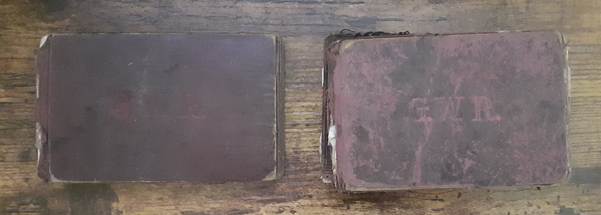
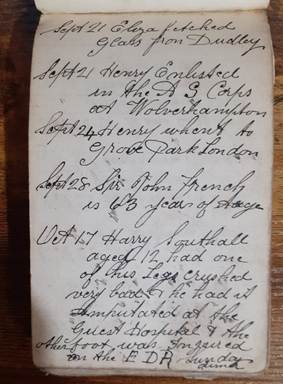
The diaries, if that is not too grand a name for them, are two small notebooks (3” x  6”), clearly produced by the Great Western Railway, with GWR embossed on the front cover – see figure 1. They are now in a poor state of repair. They each contain around 80 or 90 sheets of thin paper, written on both sides. In addition a few loose leaves were bundled with them, and the isolated cover of a (missing) third volume. The entries date from June 1907 to June 1911 for the first notebook and July 1911 to September 1919 for the second. In each volume the entries begin both at the front of the back and work towards the middle. Although there is a tendency for each of the resulting four series of entries to differentiate in terms of subject matter (see below) this is far from always the case the case, and there is much  jumbling up of dates, as entries are added retrospectively. The earlier entries tend to be in pencil and are much faded and difficult to read, but are more frequently in ink for the later entries – see Figure 2. William’s hand is reasonably neat, but not always easy to understand, and his grammar is odd and spelling very inconsistent. Punctuation doesn’t exist.

Figure 1. The diaries

Figure 2. Sample pages – from 1910 (pencil) and 1915 (ink)

The author

William Baker (1866 – 1936) was the son of John Baker (1833 – ) and Hannah Jones (1835 – ). His family are recorded as living on Church St.  in Pensnett in the Black Country.  He married Dinah Chambers from Smethwick in 1892, who he met whist she was working at a Draper’s shop in Dudley. The records show that they lived in Queen St. in Pensnett (1893), Vine St. in Harts Hill (1901) and then at 37, Chapel St in Pensnett in 1911 and 1921. In 1891 the young William is described as a  labourer, and in 1901 and 1911 as a blast furnace engine driver. The 1921 census expands this description somewhat to identify him as a  hoist engine driver at the blast furnaces at  Cochrane and Co. Ironworks at Woodside.  William and Dinah had four children who will feature in later blog posts – John Simeon (my grandfather) born in 1893, William Henry born in 1896, Joseph Richard born in 1898 and Eliza Jane born in 1901.

The contents

To put the material into a workable form, all the entries were transcribed into an EXCEL spreadsheet, where they could be ordered by date and classified by type. This was, inevitably, quite a tedious process, but in the long term very useful. In total the diaries contain just over 1200 entries (although there is considerable interpretation involved in the definition of what makes for an entry). These can be conveniently divided into four categories.

  • Family. Entries concerning family members –  105 entries.
  • Local. Descriptions of local people and events in the Pensnett / Woodside  / Dudley area – 306 entries. The majority of these are recordings of deaths and burials, but contain some material relating to enlistments in the army and major occurrences in the area (often accidents of one sort or another).
  • National.  Descriptions of national and international events or famous people that had come to William’s notice – 62 entries. There are many reports of executions and major disasters included – but surprisingly little about the events of World War 1.
  • Woodside Iron Works. Detail of the operation and personnel at William’s place of work – 734 entries.

These four categories of diary entry will be discussed in turn in the four posts that follow.

 At this point it is perhaps worth noting that there are duplicate entries (written at different ends of the same notebook) and there is little consistency in the recording of sequences of events that are related to each other. Thus it is sometimes difficult to pin down series of events and their consequences and in the blogs that follow there is much conjecture.  Also the commonplace things relating to day to day living and relationships are not recorded – they would simply have been part of the recurring background of William’s life.

Finally it should be noted that in the quotes of diary entries that are given in the following blog posts, spelling and presentation has been “cleaned” up to avoid the reader being distracted. The sense of the entry, and the order of words has not been altered however.

Railway blogs – a compilation

Summer reading for those interested in the early railways around Dudley.

Dudley and its Railways in 1868. A post describing the extensive rail services around Dudley in 1868 (August 25th 2024)

The Pensnett Canal and the Pensnett Railway – a post discussing how the beginnings of these two concerns were tied up together (September 21st 2022)

Kingswinford Junction 1949. A post describing the train movements through and around Kingswinford Junction in the Black Country and the associated marshalling yard in 1949, just post-nationalisation. (April 15th 2021)

The OWWR Kingswinford branch 1854. A post based on a set of drawings that showed proposed changes to an OWWR branch line before it had been built, possibly to accommodate the travel needs of Baron Ward, and incidentally gives early information about the layout of Oak Farm Iron Works (April 14th 2021)

The Earl of Dudley’s Railway – Accidents and Incidents Using material taken from a search of newspapers between 1830 and 1920, this post looks at the sort of accidents that occurred on the Pensnett Railway to both railway workers and those who lived close by, and at the nature of crime on and around the railway. (May 19th 2020)

The railways of Shut End and Corbyn’s Hall A detailed look at the industrial railways within and around the iron works at Corbyn’ Hall and Shut End. (March 2nd 2020)

And finally, something more modern from a little further afield.

The Cross City Line – 1962 to 2024, which looks at the development of the service on the Cross city Line in the West Midlands between the early 1960s and the present day (February 1st 2025)

Pensnett history blogs and presentations – a compilation

Some summer reading and viewing for those interested in the history of Pensnett (which includes the area that used to be known as Shut End).

Blog posts

The railways of Shut End and Corbyn’s Hall A detailed look at the industrial railways within and around the iron works at Corbyn’ Hall and Shut End. (March 2nd 2020)

The Shut End Primitive Methodist Chapel. These three posts are based on the Baptismal Register of the Shut End Primitive Methodist Chapel in Tansey Green, and look at the life of the chapel in the mid to late 19th century. Part 1 Introduction and Chapel Building Part 2 The Baptismal Register Part 3 Ministers and Families (March 21st 2020)

Coal mining in the Shut End and Corbyn’s Hall area This post looks the coal mines in the Shut End and Corbyn’s Hall area, using the extensive database on the Coal Authority website. (April 18th 2020)

Cricket and Football in Pensnett in the Nineteenth Century. a brief description of the sporting scene in Pensnett from around 1860 to 1900. (November 21st 2020). I have also posted an amplification of part of this post (the single wicket cricket match on the Black Country Society web site at Cricket, but not as we know it (September 29th 2022)

The Pensnett Saxhorn Band. A post describing the life and times of the Pensnett Saxhorn Band in the mid-nineteenth century, giving a snapshot of some aspects of Black Country cultural life at the time. (March 30th 2021)

The fields that survived. An investigation of a small unit of land consisting of three late 17th century Black Country fields that escaped the ravages of mining, colliery waste and urban development to remain more or less intact to the present day. (July 23rd 2023)

The early history of the Crooked House. A post looking at the history of the Crooked House, or Glynne Arms, up to the 1870s, mainly based on early maps of the area (September 23rd 2023)

For more blog posts about Pensnett and the wider Black Country see https://profchrisbaker.com/historical-studies/black-country-history/

Presentations

A tale of two maps – the 1822 and 1840 Fowler Maps of Kingswinford. A version of a talk given at a conference entitled “A landscape of the end of the world: the industrial revolution and the Black Country c. 1706-1914” at the Black Country Museum in July 2023

A policeman’s life – Samuel Hicklin (1858-1924). A policeman’s life – Samuel Hicklin (1858-1924). This presentation that describe the remarkable life of Sam Hicklin, the son of a farm labourer who was to progress to the highest ranks of the Staffordshire Constabulary (via Pensnett).

An Ecclesiastical Affair The video tells a true story from 1870, with many contemporary resonances, about the Victorian Black Country parish of Pensnett where the errant clergyman had a flirtation with a pupil teacher at the local school, that led to scandal in the village, a clergy discipline trial, a series of anonymous broadsheets circulating in the village making all sorts of accusations about church members (some comical, some rather nasty), and a nationally reported libel trial. Wayward clergy, scandal and libel – all the hallmarks of a good story!

The Brettells of Kingswinford

Brettell confusion

In the writing of Kingswinford Manor and Parish (KMAP), one of the loose ends was the Brettell family, who were clearly important in the area and married into other major families, but who were very difficult to trace through the historical record, not least because they seemed to have used a very small set of Christian names, with all the confusion that implies. This issue was particularly acute when I considered the Fowler Maps of Kingswinford of 1822 and 1840. In the former we have at least one Thomas Brettell and at least one Benjamin Brettell, and in the latter we have Anna Maria Brettell and Penelope Brettell – all holding quite significant portions of land.

A reader of KMAP, Keith Evans, seeing my confusion, has come to my help. In his family tree studies he has identified the following Brettells in late 18th and early 19th century Kingswinford that are of relevance.

  • Benjamin Brettell (1720-1793) who married Elizabeth Jeavons in 1763, where he was identified as a Malster. He is later referred to as a Coal Master.
  • Benjamin Brettell (1764-1822), the eldest son of Benjamin and Elizabeth, who was apprenticed to Richard Mee of Himley in 1780 and became an attorney. Two children are mentioned in his will – Benjamin and Anna Maria.
  • Thomas Brettell (1769-1835), another son of Benjamin and Elizabeth, who married Penelope Antrobus Cartwright, and was recorded as a Coalmaster. Two children are again identified, Benjamin and Elizabeth.

Using the above as background information, we can consider the Brettells identified in the Directories for the Fowler maps of 1822 and 1840 in a little more detail.

Brettells on the Fowler Maps

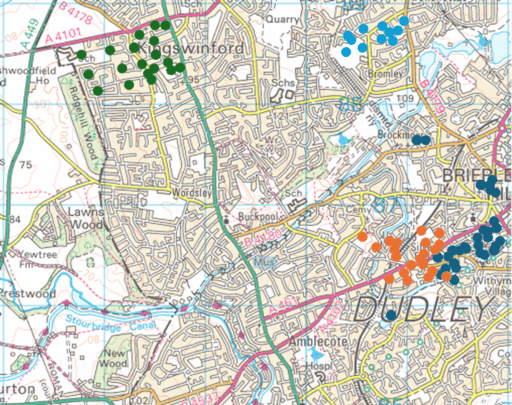
Figure 1. The Brettells on the 1822 Fowler Map – Brown circles – Thomas (Brettell Lane); Dark blue circles – Benjamin; Green circles – Thomas (Summerhill); Light blue circles – Thomas (Tiled House)

In 1822, there were four clusters of land that were either owned or occupied by a Brettell (Figure 1, which shows those plots of land owned or occupied by Brettells, superimposed on a modern map).

  • Those lands owned by Benjamin Brettell at the upper end of Brettell Lane and in Brierley Hill and Brockmoor. These were, as far as can be judged, in the area that was enclosed by the Pensnett Chase Enclosure Act of 1784 and allocated to Benjamin Brettell Senior.
  • Those lands owned by Thomas Brettell along Brettell Lane. These adjoin those of Benjamin, but are on land that was not enclosed in 1784 i.e. land that was either an old enclosure or a more formal old estate.
  • Those lands owned by Thomas Brettell in Summerhill, including Summerhill house where he resided. These were in the area where the 1776 Ashwood Hey Enclosure Act formalised informal enclosures of 1684, so this block of land probably originates in this period.
  • The Tiled House Estate occupied and inhabited by Thomas Brettell, but owned by Richard Mee (the son of the Richard Mee to whom Benjamin junior was apprenticed).

The blocks of land in the Brettell Lane area were not continuous, and werei nterspersed with lands owned by others.

The immediate question is whether or not all these lands were owned by the same Thomas Brettell. The Thomas Brettell at Summerhill is sometimes styled in the Directory of the 1822 Fowler Map as “Esq.” which may differentiate him from the other Thomas’s. Against that is the fact that some of the land  was occupied  by Benjamin Brettell, either Thomas’s brother or his son. It is of course possible there might have been another Benjamin, but this does tend to suggest that the same Thomas owned lands in Brettell Lane and in Summerhill.  If that is the case, then this Thomas would have no need of the Tiled House as a place to live in and one must conclude that the Thomas who lived there was not the same Thomas who held lands in Brettell Lane and Summerhill. All very confusing.

The other point that can be made is that the fact that Thomas and Benjamin’s lands along Brettell Lane adjoin each other suggest that in the previous generation (i.e. Benjamin Senior) they were one land unit.

Figure 2. The Brettells on the 1840 Fowler Map – Brown circles – Penelope; Dark blue circles – Anna Maria

In 1840, it is clear from Figure 2 that all Benjamin’s lands went to Anna Maria and all of Thomas’s Brettell Lane lands went to Penelope. Thus one must conclude (along with Keith Evans) that Anna Maria was Benjamin’s daughter and Penelope was Thomas’ widow. At that time the Summerhill estate was in the hands of Revd. Henry Hill, a cleric from Worcestershire. He rented these out to be farmed, mainly by the large farming firm of John Parrish and Co.

A ghost from the past

The name Brettell seems to originate from Bredhull, or broad hill, in the early middle ages. This seems to have been centred on Hawbush along Brettell Lane, a little to the south west of the land holdings of Thomas were in 1822 (Figure 1). Is it too fanciful to speculate that what we have here is a ghost of an old estate, with much of the land sold to others? We know that such estates existied in the north of Kingswinford parish – Oak Farm, Shut End, Corbyn’s Hall, Tiled House and Bromley House) and perhaps here we have a southern counterpart. It would be unwise to take this speculation much further, ut it is, perhaps, and intriging possibility.

Jonathan Stokes and Wordsley

In a post from 2021, I write about some of the more unusual landowners in Kingswinford parish in the first half of the 19th century. This was based on material in my ebook Kingswinford Manor and Parish. One of those I discussed was Jonathan Stokes, the son of Rebecca and Jonathan Stokes, “Gentleman of Worcester”. He was a member of the Lunar Society, who is remembered for his work on the use of digitalis in medicine. He practiced as a doctor in Stourbridge from 1882 to 1885. The Directory for the 1822 Fowler Map of Kingswinford parish shows that at that time he had extensive agricultural land holdings in the Wordsley area, which, by the time of the Tithe Apportionment in 1840 were held by his son John Allen Stokes.  At the time I did not know how these lands came into his possession.  My only clue was that in 1788, Rebecca Stokes, at that point a widow, was involved in the sale of a plot of land on which the Red House Glassworks in Wordsley was built, and may well have had other land in the area at the time. In the earlier post, I made the following conjecture as to how these lands came into the Stokes’ possession .

One possible route comes from a recorded marriage in 1781 between Nancy Freeman, one of the illegitimate children of John Keeling, the agent and steward of the Dudley estate who owned significant property in the area, and one William Stokes. Links with either Jonathan however cannot be demonstrated, so this must be conjectural. Keeling did however provide generously for his illegitimate offspring, and this might be another example of his provision.

The William Stokes in question however was a “Gentlemen of Wolverhampton” (yes, such did exist!) and no connection with Jonathan’s family could be found.

In this conjecture however, I was absolutely and completely wrong. I would like to say that I discovered the reality of the situation by painstaking archival study, but in fact it was by pure chance. I have recently been helping to set up the Black Country Society Shop web page, and was browsing through one of the books that is for sale – Artists in Cameo Glass by H. Jack Haden from 1993. There I read the following.

The site of the Red House Glassworks was bought on 21 June 1788 by the Wordsley glass manufacturer Richard Bradley from John Southwell, master at Stafford Grammar School, and his wife Ann, and Rebecca, widow of a Worcester glover Jonathan Stokes, Ann and Rebecca being the daughters of Rebecca Allen who was the daughter and heir of John Dancer of Wordsley. Jonathan and Rebecca Stokes were the parents of Jonathan Stokes, M.D., who practiced as a physician in Shrewsbury, Kidderminster Stourbridge and finally Chesterfield. He was also well known as a botanist and a member of the Lunar Society, so well-known to James Keir (1735-1820), the distinguished industrial chemist who resided at Holloway End House, Amblecote, in the mid-1770s and was a partner in the Holloway End Glassworks.

So the Wordsley lands came through the maternal line of Rebecca Allen, rather than the paternal line as I had assumed in my searches. A kick in the teeth for my patriarchal attitudes. Further I should have spotted the clue to the maternal line in the unusual spelling of Jonathan Stokes son’s middle name of Allen. All very humbling, but good for the soul no doubt.

Within a few minutes of reading “Artists in Cameo Glass” I received an email out of the blue that gave me details of another family that appears in Kingswinford Manor and Parish about whom I could find out very little – Thomas and Benjamin Brettell. The Brettells will be the subject of a future blog post.

The Red House Glass Cpne (from Wikipedia)

The Black County environment of the mid-20th century through the poetry of Jim William Jones

This post contains a transcript and a re-recording of the presentation I gave at the Black Country History Day at the Black Country Museum on November 9th 2024. The title for the day was “Buildings, Heritage and the Built Environment in the Black Country” and was organised by the Black Country Society. It focused on how local buildings and sites are being protected, preserved and presented and how the built environment has been described and visualised by artists, writers and photographers.  The programme for the day was as follows.

  • Tube Town Tales – what the world owes to Wednesbury, Keith Robinson
  • Rev John Louis Petit’s 19th-century Black Country art: the impact of the Industrial Revolution on the built environment, Philip Modiano
  • The challenges of rescuing industrial heritage buildings, Mark Davies
  • Rubery Owen: Exploring the archives of one of Britain’s largest historic privately owned companies – documents, photographs and film
  • Forging Ahead: Bringing the Halesowen & Hasbury Co-op to Life, Clare Weston
  • The Black County environment of the mid-20th century through the poetry of Jim William Jones, Chris Baker.

More details of Jim Jones’ life can be found in both the presentation and the transcript below as well in an earlier blog post. The presentation contains both the audio of the poems being read, as well as background slides with illustrative material. The transcript itself contains only one picture, which is of particular relevance to one of the poems.

For those interested in reding more of Jim Jones’ poetry, pdfs of two publications from the 1970s, and a compilation of his Blackcountryman poems can be purchased from the Black Country Society online shop.